
Specialist LCD/OLED Supplier
|
|







What Are the Disadvantages of Sony OLED?
Sony OLED TVs offer stunning picture quality but share common OLED drawbacks like higher cost, burn-in risk, and lower maximum brightness compared to LED alternatives. Understanding these disadvantages helps buyers weigh premium image quality against practical usage factors such as price, durabilit
How Does a Sony Micro OLED Work in High Resolution Devices?
Sony Micro OLEDs achieve high resolution through an innovative "OLED-on-silicon" architecture that integrates microscopic self-emissive pixels on a silicon backplane. This enables ultra-high pixel density, fast refresh rates, and exceptional image quality for near-eye displays used in VR,
What Makes the Sony ECX336C OLED Microdisplay Stand Out?
The Sony ECX336C is a high-brightness active-matrix OLED microdisplay designed for compact devices like AR/VR glasses, electronic viewfinders, and helmet-mounted displays, offering a sharp 640×400 resolution, exceptional brightness of up to 3,000 cd/m², and a tiny 0.23-inch size, making
What Are the Two Types of OLED Displays?
The two main types of OLED displays are Passive Matrix OLED (PMOLED) and Active Matrix OLED (AMOLED). PMOLED uses a simple driving scheme suitable for small, low-resolution screens, while AMOLED employs sophisticated thin-film transistor (TFT) technology, enabling larger, high-resolution, and power
What Is the Sony ECX335 Micro OLED Panel Used For?
The Sony ECX335 micro OLED panel is widely used in advanced near-eye display applications due to its compact size, lightweight nature, and high-resolution performance. It excels in augmented reality (AR) and virtual reality (VR) headsets, electronic viewfinders (EVFs), professional optics, and spec
What OLED Panel Does Sony Use in Its TVs?
Sony uses OLED panels from LG Display’s WOLED technology and Samsung Display’s cutting-edge QD-OLED technology, depending on the TV model. This mix allows Sony to offer a wider range of premium OLED TVs featuring unique image processing that enhances color accuracy, brightness, and view
What Makes the Sony ECX348E an Outstanding OLED Microdisplay?
The Sony ECX348E is a compact 0.55-inch Full-HD OLED microdisplay, featuring 1920 x 1080 resolution, ultra-high 5000 cd/m² brightness, a contrast ratio of 100,000:1, and a lightning-fast 0.01 ms response time. Its advanced single-crystal silicon backplane and 120Hz refresh rate make it ideal f
What Does Soft OLED Mean?
Soft OLED refers to a flexible organic light-emitting diode (OLED) display built on a bendable plastic substrate, allowing screens to flex, curve, or fold without damage. Unlike hard OLEDs with rigid glass, soft OLEDs enable slimmer, tougher, and more innovative designs, powering premium smartphone
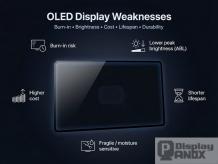
What Are the Weaknesses of OLED Displays?
OLED displays boast amazing picture quality but do have notable weaknesses such as burn-in risk, lower peak brightness, higher cost, and shorter lifespan. These factors affect usage scenarios and long-term durability. Learn more: Flexible Display Screen What I
Panox Display

Browse Articles by Category
OEM SERVICE
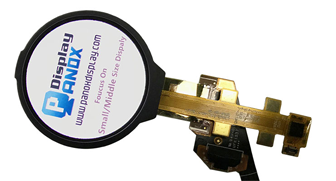
Customized Touch Panel
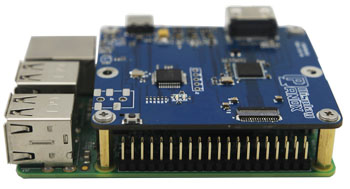
HDMI/Type-C Controller/Driver Board
Custmized LCD/OLED

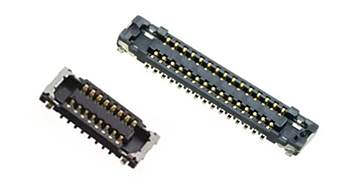
Free Connectors
Find a Display to Fit Your Application
For More OLED/LCD Panels
If our display fit your application, subscrlbe for monthly Insights
Panox Display Professional OLED/LCD Supplier and Manufacturer
- 📍 Shenzhen
- 📞 Phone: 86 755 3396 6409
- 📠 Skype: panoxwesley

If it`s urgent, try to contact
Whatsapp: +86 18665870665
Skype: panoxwesley
QQ: 407417798