
Specialist LCD/OLED Supplier
|
|






Verification Code*

Knowledge
2026-04-30 16:06:24
How 7.8" Flexible OLED Displays Are Reshaping Premium Brand Advertising in 2026
Small-format flexible OLED displays are quietly reshaping how premium brands approach in-space advertising in 2026. From boutique counters and museum vitrines to exhibition booths and automotive showrooms, the 7.8-inch curved OLED has emerged as the practical sweet spot for fixture-integrated, hand-scale, premium digital display.
2026-04-28 14:28:18
Why Round TFT-LCDs Are Quietly Becoming the Default Choice for Robot Eyes in 2026
Why round TFT-LCDs became the default for robot eyes in 2026 — and the two panels every ESP32 maker is using to build them.
2026-04-28 11:18:59
Choosing a Flexible OLED Panel for Humanoid Robot Eyes: 6.5 & 6.7 flexible OLED
As humanoid robot output is set to grow 94% in 2026, the face is becoming the user interface. This article compares two flexible OLED panels built for humanoid robot eye displays — Panox's 6.52" 2520×840 long-strip OLED for visor-style faces, and the 6.67" 2K flexible AMOLED for full-face expressive designs. Specs, use cases, and how to choose between them.
2026-04-24 10:55:19
TriFold vs Foldable OLED in 2026: What Samsung's Galaxy Z TriFold Collapse Reveals About the Future of Multi-Fold Displays
Samsung's Galaxy Z TriFold sold out and was discontinued in just 77 days — a concentrated lesson about the real BOM, yield, and hinge costs behind multi-fold OLED. This article compares trifold vs book-style foldable vs flip, breaks down Samsung and Huawei's opposite display architectures, and shows buyers what to evaluate before committing to a multi-fold flexible OLED program in 2026.
2026-04-23 16:27:08
Micro OLED vs Mini LED: Which Display Technology Actually Wins?
Micro OLED and Mini LED serve different markets. Here's how to choose the right one for your application.
2026-04-23 10:21:33
Micro OLED vs Mini LED Which Display Technology Actually Wins?
Micro OLED and Mini LED serve different markets. Here's how to choose the right one for your application.
2026-04-22 10:43:02
Everything You Need to Know Before Choosing a Flexible OLED Display
Flexible OLED displays are reshaping product design across smartphones, automotive cockpits, wearables, and industrial devices. This guide covers how flexible OLED screens work, the differences between AMOLED and PMOLED, key structural layers, real-world applications, and what specifications and certifications to evaluate when sourcing flexible OLED modules — with insights from Panox Display's decade of display supply expertise.
2026-04-20 10:15:37
Everything You Need to Know About AR Displays and Micro OLED Technology
A complete guide to AR displays and Micro OLED (OLEDoS) technology — covering how AR display systems work, why Micro OLED has become the dominant light engine for smart glasses and headsets, key differences between Micro OLED and Micro LED, real-world applications in consumer AR, automotive HUDs, healthcare, and industrial wearables, and how to choose the right display module for your project. Includes expert insights from Panox Display.
2026-04-17 14:36:49
How Much PPI Does the Human Eye Really Need for an OLED Display?
This article explains how PPI affects OLED display sharpness and examines the practical resolution limit of the human eye. By combining angular resolution, viewing distance, and real-world visual acuity, it shows why mid-400 PPI has become a practical sweet spot for many OLED devices.
Panox Display

Browse Articles by Category
OEM SERVICE
Customized Touch Panel
HDMI/Type-C Controller/Driver Board
Custmized LCD/OLED
Free Connectors
Find a Display to Fit Your Application
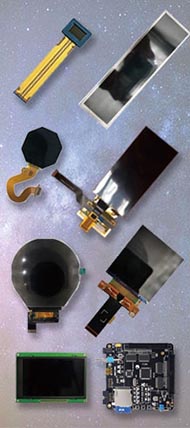
For More OLED/LCD Panels
Get the Latest Displays
If our display fit your application, subscrlbe for monthly Insights
Panox Display Professional OLED/LCD Supplier and Manufacturer
- 📍 Shenzhen
- 📞 Phone: 86 755 3396 6409
- 📠 Skype: panoxwesley
COPYRIGHT © 2015-2025 Panox Electronics Co.,Ltd. ONE-STOP DISPLAY SYSTEM SOLUTION

We got your inquiry and will contact you within one work day.
If it`s urgent, try to contact
Whatsapp: +86 18665870665
Skype: panoxwesley
QQ: 407417798
If it`s urgent, try to contact
Whatsapp: +86 18665870665
Skype: panoxwesley
QQ: 407417798