



For the past decade, OLED has reigned supreme as the gold standard for display technology. Its ability to produce perfect blacks and infinite contrast has defined the premium visual experience. However, as we look toward the next ten years, the landscape is shifting. While OLED continues to improve, it faces a formidable challenger in Micro-LED—a technology often hailed as the "endgame" for displays—and a disruptive third player, QD-EL (NanoLED), that could change the economics of self-emissive screens entirely.
Learn more: Why AR MR Glass Need High Brightness Micro OLED?
The Incumbent: OLED’s Evolution and Limitations
OLED technology has matured significantly. Modern iterations, such as the LG G5, have pushed brightness capabilities into the 2,000 to 2,500-nit range, a figure that was unimaginable just a few years ago. Through advanced manufacturing and software mitigation, the risk of "burn-in" (permanent image retention caused by degrading organic material) has been dramatically minimized.
Despite these strides, OLED relies on organic materials, which inherently limit its maximum lifespan and peak brightness compared to inorganic alternatives. This is where the challengers step in.
The "Holy Grail": Micro-LED
Micro-LED is widely considered the ultimate display technology. Like OLED, it is self-emissive—meaning every pixel generates its own light—allowing for perfect black levels and no light bloom. However, instead of organic compounds, it uses microscopic, inorganic LEDs.
The advantages of this shift are massive:
-
Brightness: Micro-LEDs can hit highlight brightness levels of 4,000 to 5,000 nits, doubling the capability of today’s best OLEDs.
-
Durability: Because they lack organic material, Micro-LEDs are immune to burn-in and offer superior longevity.
Currently, Micro-LED is hindered by extreme manufacturing costs. Existing models are often massive (over 100 inches) and cost upward of $100,000, making them inaccessible to the average consumer. The industry is now racing to miniaturize this tech for wearables and automotive displays, where high brightness and durability are non-negotiable.
The "Micro OLED" Factor in XR
While Micro-LED struggles with mass transfer for large screens, micro oled (often referred to as OLEDoS or OLED on Silicon) has carved out a critical niche in the near-eye display market.
In the realm of VR and AR headsets (XR), pixel density is paramount. Micro oled technology deposits OLED layers directly onto silicon wafers, achieving incredibly high resolutions that traditional glass-substrate displays cannot match. For the next 3–5 years, micro oled is expected to dominate the high-end XR space (seen in devices like the Apple Vision Pro) because Micro-LED manufacturing yields are not yet high enough to compete at this specific pixel density.
However, as the decade progresses, Micro-LED is expected to challenge micro oled in this sector as well, offering the higher brightness required for true optical see-through AR glasses—something current micro oled tech struggles to deliver efficiently.
The Disruptor: QD-EL / NanoLED
While the battle between OLED and Micro-LED grabs headlines, a third technology, QD-EL (also known as NanoLED, QD-LED, or QDEL), is quietly positioning itself as the dark horse of the next decade.
Unlike current "QLED" TVs, which use Quantum Dots merely as a filter over a backlight, QD-EL is a true self-emissive technology. It uses electricity to excite Quantum Dots directly, eliminating the need for a backlight or liquid crystals.
-
The Advantage: It promises the contrast of OLED and the color purity of Quantum Dots, but potentially without the high manufacturing costs of Micro-LED.
-
The Market Entry: Because QD-EL can potentially be manufactured using inkjet printing techniques, it is widely predicted to reach consumers faster than affordable consumer-grade Micro-LEDs.
We will likely see QD-EL emerge first in smaller displays—smartphones, tablets, and laptops—where the manufacturing complexity is lower than that of large TV panels. If successful, QD-EL could disrupt the timeline, offering a "perfect" display at a consumer-friendly price point long before Micro-LED becomes affordable for the masses.
The Next Decade: A Three-Way Race
The next 10 years will not be a simple replacement of OLED by Micro-LED. Instead, we face a segmented future:
-
OLED will remain the dominant choice for premium consumer electronics (TVs, phones) through at least 2028, largely due to sunk manufacturing costs and performance that is "good enough" for most.
-
Micro OLED will rule the headset and spatial computing space until Micro-LED miniaturization breakthroughs occur.
-
QD-EL (NanoLED) serves as the wildcard. If it achieves stability (particularly with blue quantum dots), it could leapfrog Micro-LED in the mobile and laptop sectors, offering the benefits of self-emission without the inorganic manufacturing headaches.
While Micro-LED remains the technological zenith with its blinding brightness and immortality, the race to your living room and pocket is far from over.
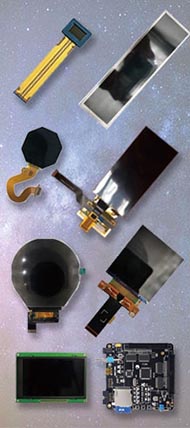
If you’re building XR or near-eye optics today, Micro-OLED (OLEDoS) remains the most practical path to ultra-high PPI and compact optical engines.Explore our Micro-OLED display modules and evaluation kits here: [Micro-OLED Products].
| Panel model | Interface | Type | Size (inch) | Resolution | P.S |
| S032WEM01 | MIPI/RGB | Micro OLED | 0.32 | 800x600 | |
| PMOF039XGAM | RGB | Micro OLED | 0.39 | 1024x768 | Full Color/Monochrome |
| BO039M1920M | MIPI | Micro OLED | 0.39 | 1920x1080 | Highest PPI =5644 |
| EP047M800T | TTL | LCOS | 0.47 | 800x600 | |
| BO049FHPMO | SPI,MIPI | Micro OLED | 0.49 | 1920x1080 | |
| S050M1600M | MIPI | Micro OLED | 0.5 | 1600x1200 | |
| ECX331DB-6 | Mini LVDS | Micro OLED | 0.5 | 1024x768 | |
| S060LDM01 | MIPI | Micro OLED | 0.6 | 1920x1080 | |
| ECX335AF | Mini LVDS | Micro OLED | 0.71 | 1920x1080 | 200 nits brightness version |
| ECX335B | Mini LVDS | Micro OLED | 0.71 | 1920x1080 | 500 nits brightness version |
| ECX335SN | Mini LVDS | Micro OLED | 0.71 | 1920x1080 | 3000 nits brightness version |
| BO071M1920M | MIPI | Micro OLED | 0.71 | 1920x1080 | |
| S072WCM04 | MIPI | Micro OLED | 0.72 | 1920x1080 | |
| S103WAM01 | MIPI | Micro OLED | 1.03 | 2560x2560 |