



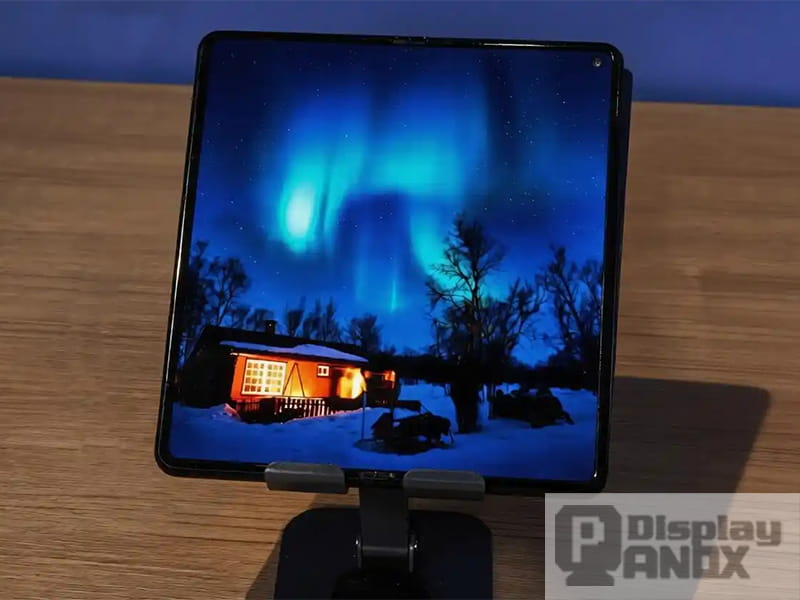
At AWE 2026, one of the most closely watched display developments was BOE’s latest foldable panel innovation, designed to significantly reduce visible crease lines. For years, foldable devices have promised more flexibility in form factor and use case, but the crease has remained one of the most noticeable compromises. This latest showcase suggests that Flexible OLED is moving into a more mature phase, where visual flatness, structural strength, and user comfort are improving together.
For foldable products, the crease has never been only a cosmetic issue. It affects how content looks, how the surface feels during touch interaction, and how users judge long-term quality. A visible fold line can disrupt video viewing, reduce visual consistency, and make the center of the screen feel less smooth during swiping or typing. Just as importantly, it can create a psychological barrier for buyers who associate a strong crease with faster aging or weaker durability.
That is why crease control has become one of the most important directions in the development of Flexible OLED. The industry is no longer satisfied with displays that simply bend. The real goal is to make foldable screens feel more complete, more seamless, and more dependable in daily use.
BOE’s latest solution appears meaningful because it addresses the issue from both material and structural perspectives. Rather than relying on a single improvement, the panel combines updated support design, stronger module architecture, and improved protective layering to deliver a smoother surface and better overall consistency. This is the kind of progress that matters in the real market, because users do not judge foldable devices by engineering language alone. They judge them by whether the display feels polished when opened, touched, and used every day.
Durability is another major part of that equation. Foldable devices need to do more than look advanced in a product demo. They need to maintain performance after repeated opening and closing over long-term use. Improvements in structural support, pressure distribution, and cover protection all help Flexible OLED move closer to that goal. As reliability improves, foldable products become easier to position not as experimental premium devices, but as practical tools for everyday work and entertainment.
This shift also matters because the application space for Flexible OLED is getting broader. Foldable phones remain the most visible category, but they are no longer the only one. As crease reduction and mechanical stability improve, the same technology becomes more attractive for foldable notebooks, tablets, automotive displays, and other large-format smart terminals. A flatter surface can improve handwriting, sketching, gesture control, and multi-window productivity, which makes the technology more useful in real scenarios rather than just more impressive on a spec sheet.
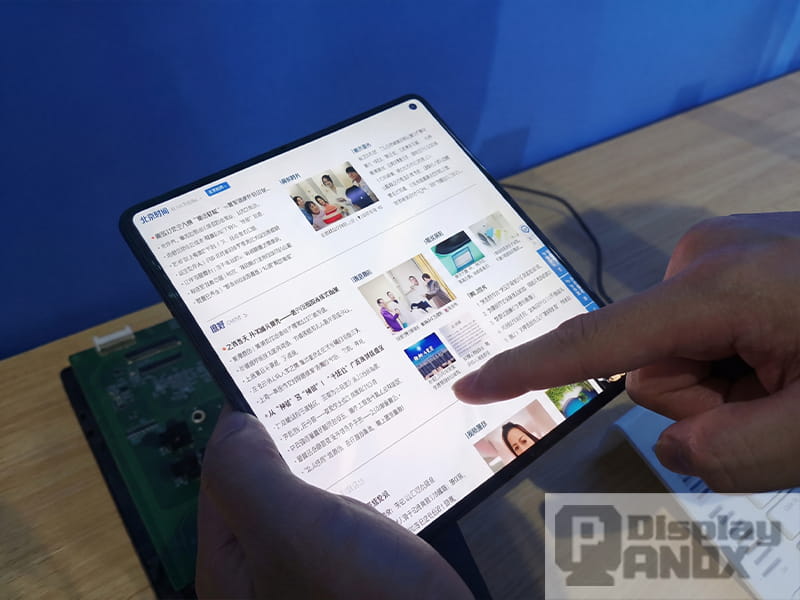
From a market perspective, this is part of a larger transition. Foldable display technology is moving beyond the question of whether a screen can fold and toward the more important question of whether it feels good enough to use without compromise. That change matters. Once foldable devices deliver better touch smoothness, better visual continuity, and better durability, they stop feeling like niche experiments and start making sense for broader groups of users.
The next stage of Flexible OLED is therefore not just about saving space. It is about enabling more adaptable usage scenarios. A foldable device can expand into a larger workspace for productivity, create a more immersive screen for entertainment, or support smoother multitasking in mobile situations. As the crease becomes less visible and the panel surface becomes more even, those advantages become much easier for users to recognize and trust.
BOE’s AWE 2026 display showcase reflects that broader direction. The real value of foldable screen innovation is no longer in proving that bending is possible. It is in removing the small points of friction that have limited user confidence for years. That is exactly where Flexible OLED needs to improve if foldable products are going to move from attention-grabbing devices to long-term mainstream categories.
For brands, buyers, and product teams, this is a development worth watching closely. The companies that can offer a more refined Flexible OLED experience will be better positioned in the next phase of foldable product competition. And if crease visibility, structural durability, and touch consistency continue to improve at this pace, foldable screens may soon feel less like futuristic concepts and more like a natural part of everyday electronics.
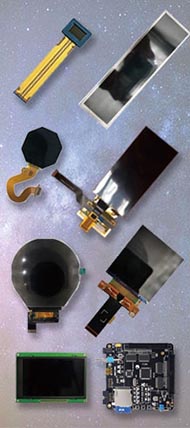
Flexible OLED products list
Looking for advanced display solutions for foldable and custom-shaped devices? Explore our latest Flexible OLED products here.
| Model | Size(inch) | Display Type | Resolution | Interface | Display Brand |
| 1.39 inch Round/Circular OLED Flexible For Wearable Smartwatch | 1.39 | AMOLED | 400(RGB)×400 | MIPI | Innolux |
| 1.5 inch Flexible OLED For Wearable Smart Watch | 1.5 | AMOLED | 120(RGB)×240 180PPI | SPI, MIPI | Innolux |
| 1.8 inch Flexible PMOLED For Wearable Bracelet | 1.8 | PMOLED | 160×32 | SPI | Futaba |
| 5.1 inch Flexible OLED On-Cell PACP For Cellphone | 5.1 | AMOLED | 720(RGB)×1520 330PPI | MIPI | BOE |
| 5.99 inch Flexible OLED On-Cell PACP For Cellphone | 5.99 inch | AMOLED | 1080(RGB)×2160 329PPI | MIPI | BOE |
| 5.99-Inch 1440x2880 Flexible AMOLED Display | BOE OLED for Huawei Smartphone | 5.99 | AM-OLED, OLED | 1440 x 2880 | MIPI | BOE&Huawei |
| 6.52 inch Flexible OLED 2520x840 Touch Panel | 6.52 | AM-OLED, OLED | 2520(RGB)×840 407 PPI | MIPI | CSOT |
| 6.67inch Flexible AMOLED 2K for Smartphone | 6.67 | OLED, AM-OLED | 1080x 2400 | MIPI | Tianma |
| 7.8 inch Flexible Full Color OLED 1920x1440 MIPI | 7.8 | AMOLED | 1440 x 1920 | MIPI | Royole |
| 8 inch Flexible/Foldable OLED | 8.01 | AMOLED | 2480x1860 | MIPI | CSOT |
| 13.3 inch 1536 x 2048 Flexible OLED Touch Screen | 13.3 | AM-OLED, OLED | 1536 (H) × 2048 (V) | eDP | LG |