



Industry Viewpoint: The 2026 Landscape
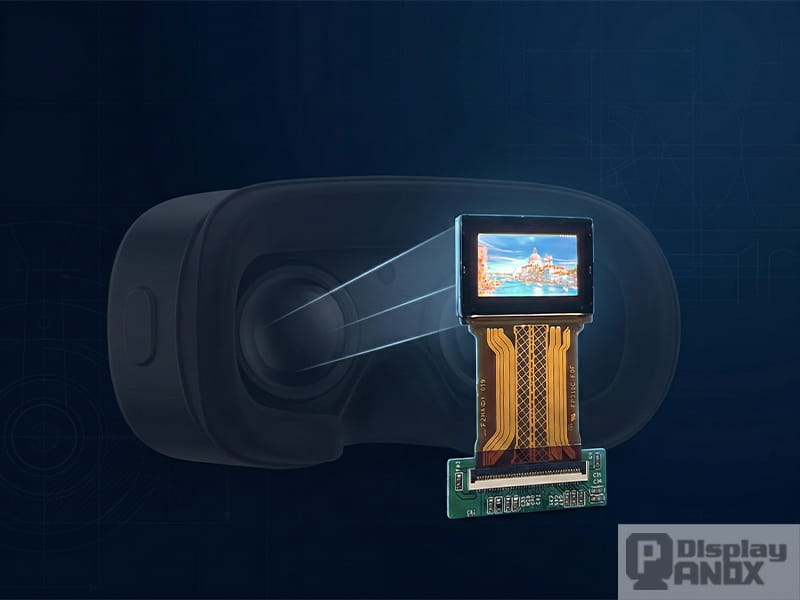
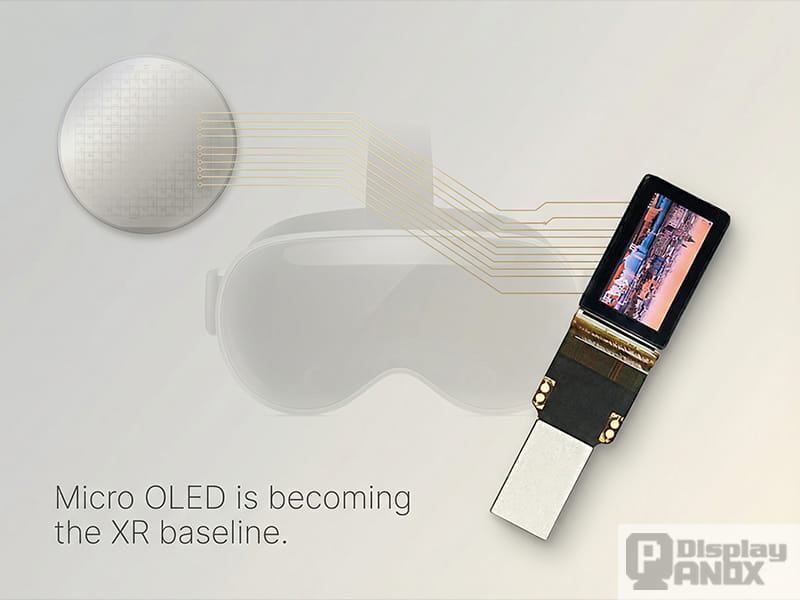
Micro OLED, also known as Silicon-based OLED, has firmly established itself as the premier display technology for the XR industry. Boasting outstanding advantages such as exceptionally small form factors, lightweight design, low power consumption, and ultra-high pixel density, it has become the golden standard for immersive hardware. Benefiting from sustained XR industry demand, the market size is experiencing rapid and continuous expansion.
Key Market Forecasts:
-
XR Micro OLED Shipments: Expected to exceed 23 million pieces globally by 2027.
-
Penetration Rate: Projected to reach 30% of the XR market by 2027.
-
Market Valuation: Anticipated to hit $4.1 billion by 2027.
-
Growth Rate: Displaying a remarkable five-year compound annual growth rate (CAGR) of 136%.
Equipment and Investment Horizon:
-
While Japanese manufacturers have historically held the highest industry share, Chinese display makers (including BOE, Qingyue Technology, SeeYa Technology, Xitai Technology, and Hupan Optoelectronics) are rapidly accelerating their capacity expansion in 2026.
-
Based on estimations of a 200 million yuan equipment investment per 1 million pieces of Micro OLED capacity (at an 80% utilization rate), new investments across the 2023–2026 period are reaching approximately 5.6 billion yuan, signaling a highly promising future for equipment manufacturing.
Demand Side: Benefiting from the XR Industry Tailwind
Technical Structure and Manufacturing
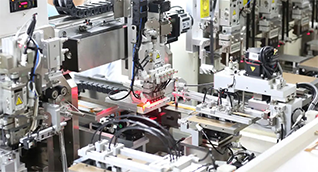
The physical structure of a Micro OLED display device consists of a complex driver backplane integrated directly with an OLED display front end. The highly specialized manufacturing process includes:
-
Silicon-based IC design and manufacturing utilizing mature CMOS processes.
-
Precision OLED evaporation processes.
-
Advanced OLED packaging processes.
-
Comprehensive system development and module engineering.
Inherent Technical Advantages
Compared to traditional glass-based displays, Micro OLED technology delivers transformative benefits for near-eye applications, including a significantly smaller physical footprint, lighter overall weight, reduced power consumption, ultra-high pixel density (PPI), exceptional contrast ratios, and near-instantaneous response speeds. Initially utilized primarily in specialized military applications, Micro OLED has now successfully transitioned into consumer and enterprise Augmented Reality (AR) and Virtual Reality (VR) systems, catalyzing rapid industry growth.
Flagship Implementations: Apple and Meta
The release of Apple's Vision Pro in 2023 served as a major catalyst, utilizing two 4K Micro OLED screens. In that flagship device, the display components cost an estimated $700, accounting for 46% of the total Bill of Materials (BOM) and representing the single highest-value segment of the hardware. Looking at the broader industry trajectory, upcoming devices like the Meta Quest 4 are also widely expected to adopt Micro OLED screens to remain competitive in visual fidelity.
Market Size and Shipment Forecasts
XR Hardware Shipments:
Historical data illustrates the rapid acceleration of the sector, with XR shipments growing from approximately 7.6 million units in 2023 to 11.5 million units in 2024 (a 51% year-on-year increase). Current projections indicate that global XR shipments will reach 38.81 million units by 2027, maintaining a robust five-year CAGR of 30%.
Micro OLED Panel Shipments & Pricing:
Early adoption phases saw global XR Micro OLED panel shipments double year-on-year to 430,000 pieces in 2022, though this only represented a 3% penetration rate. Driven by releases from Apple, Meta, and other tier-one tech companies, this penetration rate is steadily climbing and is expected to hit 30% by 2027. Financially, the global XR Micro OLED market was valued at $0.26 billion in 2021, with an average single-piece price of $130. As the proportion of high-end product shipments increased through 2023 and 2024, industry average prices temporarily rose. However, moving past 2025, yield improvements and scale effects are driving down the average price, pushing the total market size to the projected $4.1 billion mark by 2027.
Supply Side: Market Dynamics and Capacity Expansion
Industry Chain Structure
The Micro OLED industry ecosystem is divided into three main tiers:
-
Upstream: Providers of raw materials, assembly components, and highly specialized manufacturing and testing equipment. Upstream array and evaporation equipment currently still rely heavily on foreign manufacturers from Japan, South Korea, and the United States, though domestic substitution is actively progressing.
-
Midstream: The Micro OLED panel manufacturers themselves. European and American enterprises entered early with mature tech, while Japanese and Korean companies currently command the largest market share. However, Chinese manufacturers are aggressively expanding their footprint.
-
Downstream: Terminal applications across consumer, enterprise, and military sectors.
Market Share and Production Capacity
Historical baseline data from 2022 highlighted Sony's dominance, capturing 65% of global Micro OLED shipments and an overwhelming 78% within the specific XR field. Other early key players included SeeYa Technology (10%), BOE (8%), Guozhao Optoelectronics (3%), and Epson (20% specifically in XR).
Today, the capacity landscape is shifting dramatically:
-
Existing Capacity Leaders: SeeYa Technology, BOE, and Qingyue Technology currently maintain the largest operational capacities.
-
Planned Capacity Expansion: Xitai Technology, BOE, and Hupan Optoelectronics have set aggressive production targets to capture upcoming demand.
Capital Investment Scale
The financial barrier to entry in this sector is substantial. For reference, Hefei SeeYa's investment of 1.28 billion yuan yielded a 12-inch wafer design capacity of 9,000 pieces per month. Similarly, BOE's 3.4 billion yuan investment targets a capacity of 10,000 pieces per month. Based on standard 1-inch screen cutting metrics and assuming a 50% yield rate, a single 12-inch wafer can produce roughly 56 screens. Consequently, scaling up to produce 1 million XR units requires a capital investment ranging from 400 million to 1 billion yuan.
Conclusion
The integration of Micro OLED technology into extended reality hardware marks a definitive turning point in display engineering. By overcoming the physical limitations of traditional glass substrates, silicon-based displays have unlocked the high pixel densities and compact form factors required for true visual immersion. As production yields continue to improve and capital investments mature into active manufacturing lines, the supply chain is well-positioned to support mass-market adoption. The relentless push from global technology leaders guarantees that Micro OLED will remain the foundational pillar of visual computing hardware for the foreseeable future, permanently altering how digital environments are rendered and experienced.
If you’re evaluating Micro-OLED options for an XR build, see our available modules here.
| Panel model | Interface | Type | Size (inch) | Resolution | P.S |
| S032WEM01 | MIPI/RGB | Micro OLED | 0.32 | 800x600 | |
| PMOF039XGAM | RGB | Micro OLED | 0.39 | 1024x768 | Full Color/Monochrome |
| BO039M1920M | MIPI | Micro OLED | 0.39 | 1920x1080 | Highest PPI =5644 |
| EP047M800T | TTL | LCOS | 0.47 | 800x600 | |
| BO049FHPMO | SPI,MIPI | Micro OLED | 0.49 | 1920x1080 | |
| S050M1600M | MIPI | Micro OLED | 0.5 | 1600x1200 | |
| ECX331DB-6 | Mini LVDS | Micro OLED | 0.5 | 1024x768 | |
| S060LDM01 | MIPI | Micro OLED | 0.6 | 1920x1080 | |
| ECX335AF | Mini LVDS | Micro OLED | 0.71 | 1920x1080 | 200 nits brightness version |
| ECX335B | Mini LVDS | Micro OLED | 0.71 | 1920x1080 | 500 nits brightness version |
| ECX335SN | Mini LVDS | Micro OLED | 0.71 | 1920x1080 | 3000 nits brightness version |
| BO071M1920M | MIPI | Micro OLED | 0.71 | 1920x1080 | |
| S072WCM04 | MIPI | Micro OLED | 0.72 | 1920x1080 | |
| S103WAM01 | MIPI | Micro OLED | 1.03 | 2560x2560 |