



1. Executive Summary: The Era of Micro OLED
As of 2026, Micro OLED (Silicon-based OLED) has solidified its position as the premier display solution for high-end Virtual Reality (VR) and Mixed Reality (MR) devices. By integrating OLED emitters onto single-crystal silicon wafers, this technology offers a combination of ultra-high pixel density, lightweight form factors, and low power consumption that traditional LCDs cannot match.
The industry experienced a massive pivot following the 2023 launch of the Apple Vision Pro (Apple MR), which utilized dual 4K Micro OLED panels to achieve resolutions surpassing 3000 PPI.
2. Technical Principles & Process
Micro OLED represents a convergence of Semiconductor CMOS technology and OLED technology. By using single-crystal silicon as the driver backplane, manufacturers can integrate the display chips directly into the backplane, achieving a pixel size roughly 1/10 that of traditional displays.
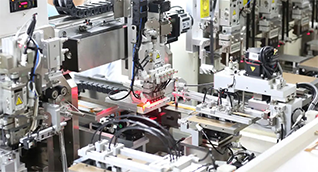
The Four Stages of Production:
-
Silicon-based IC Design: Involves the design and manufacturing of the CMOS driver circuit on silicon wafers.
-
OLED Process: Includes microcavity top emission and the vacuum evaporation of organic light-emitting materials onto the silicon.
-
OLED Packaging: Utilizes PECVD and ALD (Atomic Layer Deposition) to create dense thin-film encapsulation to block water and oxygen.
-
Display Driver & System: The integration of the driver IC and pixel circuit into a single high-density chip.
3. Global Industry Landscape
International Leaders
-
Sony (Japan): Remains the industry leader. Sony pioneered Micro OLED R&D in 2009 and reached a dominant 65% global market share (78% in the XR sector) following its supply deal for the Apple Vision Pro.
-
eMagin (USA): Founded in 1996, it was the first to enter the OLED micro-display field, focusing heavily on military-grade applications with high-contrast and wide-temperature requirements.
-
Samsung & LG (South Korea): Following 2023, both companies accelerated their 12-inch production lines. Samsung targeted full commercialization by 2026, while LG Display partnered with Meta and SK Hynix for specialized wafer production.
Chinese Leading Manufacturers
-
SeeYa Technology: A leader in 12-inch wafer production. With an investment of approximately $300 million, it operates one of the world's largest R&D bases for 12-inch Micro OLEDs, serving clients like Huawei and Qualcomm.
-
BOE: The only domestic company simultaneously operating 8-inch and 12-inch mass production lines. In 2022, BOE showcased a screen with an industry-leading 5644 PPI.
-
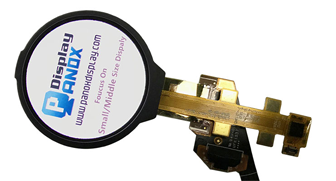
Panox display: Holds the largest 8-inch capacity in mainland China (approx. 5K/M) and has achieved significant breakthroughs in colorization technology.
4. Market Comparison & Evolution
| Feature | Micro OLED | Fast-LCD | Micro LED |
| PPI | >3000 | Medium | Ultra-High |
| Response Speed | Ultra-Fast | Slow | Ultra-Fast |
| Brightness | High | Low (Backlit) | Extreme |
| 2026 Status | Mainstream for MR/VR | Entry-level | High-end AR R&D |
Market Growth: From a market size of $1.3 billion in 2023, global sales doubled to over $2.6 billion in 2024, continuing a steep upward trajectory through 2026 as consumer adoption of spatial computing grows.
5. Challenges and Strategic Risks
-
Upstream Dependence: While midstream manufacturing is progressing rapidly in Asia, key equipment (like evaporation machines) and raw organic materials still rely heavily on suppliers from Japan, South Korea, and the US.
-
Cost Maturity: Despite its advantages, Micro OLED remains more expensive to produce than LCD or standard OLED due to the complexity of the silicon-backplane integration.
-
The Micro LED Threat: For AR devices requiring extreme outdoor brightness, Micro LED remains the "ultimate" long-term solution, posing a potential threat once its manufacturing process matures.
| Panel model | Interface | Type | Size (inch) | Resolution | P.S |
| S032WEM01 | MIPI/RGB | Micro OLED | 0.32 | 800x600 | |
| PMOF039XGAM | RGB | Micro OLED | 0.39 | 1024x768 | Full Color/Monochrome |
| BO039M1920M | MIPI | Micro OLED | 0.39 | 1920x1080 | Highest PPI =5644 |
| EP047M800T | TTL | LCOS | 0.47 | 800x600 | |
| BO049FHPMO | SPI,MIPI | Micro OLED | 0.49 | 1920x1080 | |
| S050M1600M | MIPI | Micro OLED | 0.5 | 1600x1200 | |
| ECX331DB-6 | Mini LVDS | Micro OLED | 0.5 | 1024x768 | |
| S060LDM01 | MIPI | Micro OLED | 0.6 | 1920x1080 | |
| ECX335AF | Mini LVDS | Micro OLED | 0.71 | 1920x1080 | 200 nits brightness version |
| ECX335B | Mini LVDS | Micro OLED | 0.71 | 1920x1080 | 500 nits brightness version |
| ECX335SN | Mini LVDS | Micro OLED | 0.71 | 1920x1080 | 3000 nits brightness version |
| BO071M1920M | MIPI | Micro OLED | 0.71 | 1920x1080 | |
| S072WCM04 | MIPI | Micro OLED | 0.72 | 1920x1080 | |
| S103WAM01 | MIPI | Micro OLED | 1.03 | 2560x2560 |