



Robotics development is moving beyond motors, reducers, cameras, and lidar. These components may define what a robot can sense and how it can move, but they do not work independently. A robot also needs a central computing platform capable of coordinating motion, processing visual data, running local AI models, managing connected devices, and driving the screen through which the machine communicates with people.
This is why the main system-on-chip has become such an important part of robot design. As robots take on more autonomous functions, the controller must handle trajectory planning, device communication, visual perception, obstacle detection, user-interface rendering, and edge AI inference at the same time. Raw processing power matters, but it is only one part of the decision. Interface availability, thermal behavior, software support, power consumption, and long-term reliability are just as important.
The Rockchip RK3588 has become a common choice for humanoid robots, service robots, autonomous mobile robots, and industrial robot controllers because it offers a practical balance of CPU, GPU, NPU, multimedia, and display capabilities. It is powerful enough for many edge workloads, compact enough for embedded systems, and flexible enough to support both industrial I/O and advanced robot displays.
What a Modern Robot Controller Actually Needs
A robot controller is not simply a faster computer placed inside a machine. It must process several different types of workload while remaining connected to a large number of sensors, actuators, safety devices, and communication networks.
Motion planning and multi-axis coordination require predictable processing. Cameras and depth sensors generate large volumes of data. Local perception may involve object recognition, pose estimation, navigation, or human detection. At the same time, the system may need to render animated robot eyes, a touch-based HMI, a maintenance dashboard, or a full facial interface.
This creates three basic requirements.
The first is sufficient computing headroom. A controller may appear fast enough during an early prototype, only to become overloaded after more cameras, sensors, AI models, and interface functions are added. A practical platform should leave enough capacity for future software without forcing a complete hardware redesign.
The second is connectivity. Robots frequently combine servo drives, encoders, industrial cameras, lidar, temperature and pressure sensors, emergency-stop circuits, limit switches, microphones, speakers, and displays. The number and type of interfaces—and whether industrial signals are properly isolated—directly affect wiring complexity, failure points, and maintenance.
The third is reliability. Factory floors, warehouses, outdoor service areas, and mobile platforms create harsher conditions than an office. Temperature variation, electrical noise, vibration, unstable power, and repeated power cycles can expose weaknesses that remain invisible during bench testing.
RK3588 addresses the computing side of this problem, while the carrier board and complete industrial computer must provide the necessary power design, connectors, isolation, thermal management, and environmental protection.
Why RK3588 Fits Robot Computing
The RK3588 is built around a heterogeneous architecture rather than a single type of processing core. Its CPU combines four Cortex-A76 performance cores with four Cortex-A55 efficiency cores. This allows demanding applications to run on the faster cores while lighter background processes, communication services, and system tasks can use the more efficient cluster.
That division is useful in robots because their workloads are rarely uniform. Navigation, image processing, interface rendering, logging, network communication, and device monitoring may all run concurrently. An eight-core CPU gives developers more room to separate these tasks and prevent one application from consuming the entire system.
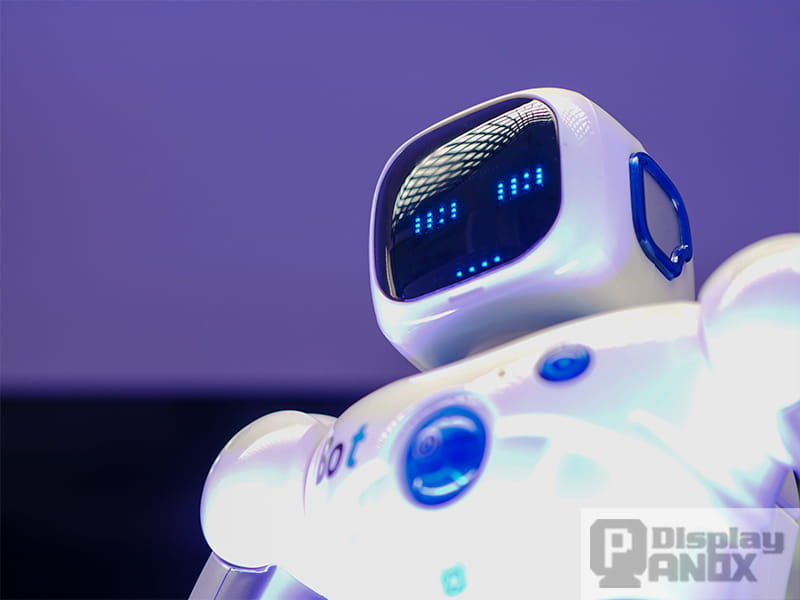
The SoC also integrates a Mali-G610 MP4 GPU with support for modern graphics and compute APIs. In addition to conventional interface rendering, the GPU can support 3D visualization, animated facial graphics, mapping displays, camera previews, and hardware-accelerated graphical applications. For a humanoid robot display, this means the same controller can coordinate robot functions while rendering smooth eyes, expressions, gaze movement, status graphics, or an interactive control interface.
A built-in NPU provides up to 6 TOPS of INT8 AI performance. It can be used for compatible edge inference workloads such as image classification, object detection, face detection, gesture recognition, and selected perception models. An external AI accelerator can also be added through PCIe or an M.2 slot when a project requires more inference capacity.
The quoted 6 TOPS figure should not be treated as a guarantee of application performance. Neural-network throughput depends on model architecture, supported operators, memory movement, precision, and the conversion process used by the Rockchip NPU toolchain. TensorFlow, PyTorch, ONNX, or other models normally need to be converted and validated before they can run efficiently on the NPU.
Video Processing Matters in Vision-Based Robots
Cameras are becoming standard components in service robots and humanoid systems. A robot may use one camera for navigation, another for depth perception, and additional cameras for teleoperation, inspection, or interaction.
RK3588 includes hardware video processing designed for high-resolution media. It supports decoding up to 8K at 60 frames per second for selected formats and encoding up to 8K at 30 frames per second. In practice, robot developers are more likely to use several lower-resolution streams, but the available multimedia capacity still provides valuable headroom.
Hardware codecs can reduce the CPU load when a robot needs to display live camera feeds, record inspection footage, stream video to a remote operator, or show visual feedback on a local screen. The integrated image signal processor and camera interfaces also make the platform relevant to machine-vision applications, although the final camera count and supported sensor modes depend on the carrier-board design and software stack.
The display engine is equally important. RK3588 supports multiple display outputs, including MIPI DSI, HDMI, DisplayPort, and eDP at the SoC level. This gives robot designers several ways to connect a conventional HMI, a maintenance screen, a full-face display, or a curved OLED eye panel.
A Robot Screen Is Part of the Control System
A robot display should not be treated as decoration. It is one of the most direct channels between the machine and the people around it.
On an industrial robot, the screen can show operating mode, production status, alarms, maintenance instructions, camera images, or authorized controls. On a service robot, it may present directions, language selection, payment information, or interaction feedback. On a humanoid robot, the display can communicate gaze direction, attention, emotion, listening state, battery condition, and movement intent.
Research into human–robot interaction has shown that visual interfaces can help operators understand robot status and intent. This is especially relevant when people work close to collaborative robots. A light tower can indicate a basic state, but it cannot easily display text, progress, warnings, or nuanced feedback. A display integrated into the robot’s body or face can communicate more information without forcing the operator to look away at a separate monitor.
This connection between computation and communication is one reason RK3588 is attractive for robot projects. Its CPU and NPU can interpret sensor data, while its GPU and display engine turn that internal state into visible feedback.
Why Flexible OLED Works Well for Humanoid Robot Displays
A robot head is rarely designed around a flat rectangular screen. It may have a curved brow, a narrow visor, a rounded face shell, or very little space behind the front cover. Cameras, microphones, speakers, cooling structures, and wiring compete for the same volume.
A rigid panel can work in a prototype, but it often forces the entire head to be designed around the display. A flexible OLED display gives the industrial designer more freedom. The panel can follow a fixed curved surface, allowing the screen to become part of the robot’s shape rather than a separate tablet mounted on its face.
OLED is self-emissive, so it does not require a backlight. Black pixels remain black, which is particularly useful for robot eyes and facial graphics. Pupils, eyelids, status lines, and expression animations can appear against a dark surface without the grey glow commonly associated with a backlit LCD.
Flexible OLED panels are also thin and light. Reducing weight in the robot head can lower the load on neck actuators and leave more room for sensors. Fast pixel response helps gaze and blink animations follow head movement without obvious smearing, while high pixel density improves the appearance of a face viewed at close range.
A long-strip screen is especially useful for a visor-style robot. One continuous panel can display both eyes, gaze direction, listening status, charging state, and warning indicators without a bezel separating the left and right sides.
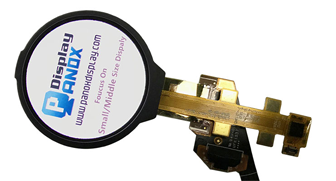
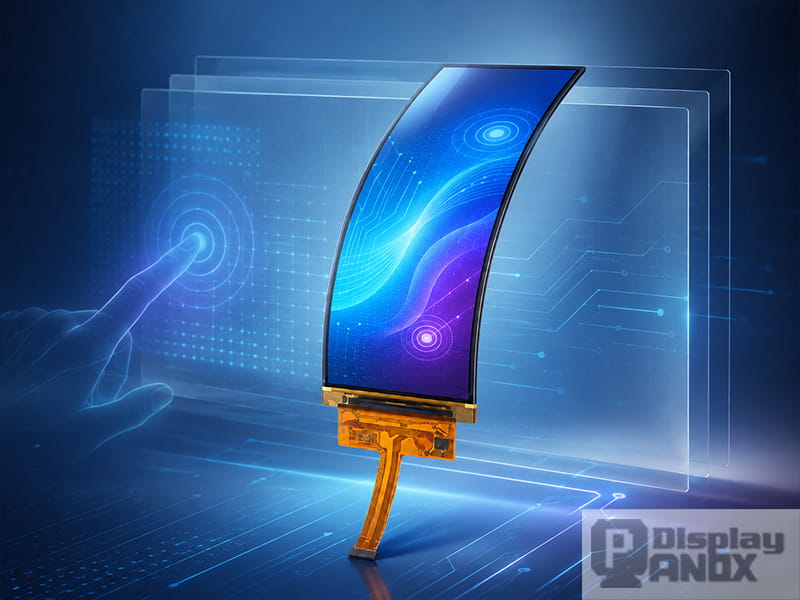
For example, Panox Display’s 6.52-inch flexible OLED touch panel has a 2520 × 840 resolution, a 3:1 aspect ratio, 407 PPI, a 90 Hz refresh rate, MIPI interface, and integrated in-cell touch. Its narrow active area is well suited to a continuous robot eye strip or curved facial display. A specified operating range of −30°C to +80°C also makes it more relevant to embedded equipment than a typical consumer panel, although the completed robot still requires mechanical, thermal, and environmental validation.
Connecting a Flexible OLED Display to RK3588
RK3588 supports high-resolution display output, but panel integration is not simply a matter of matching two connector names.
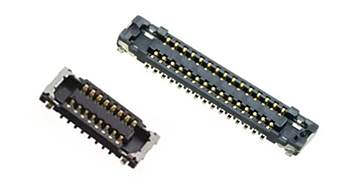
A flexible OLED panel using MIPI DSI requires the correct lane configuration, voltage rails, power-on and power-off sequence, reset timing, display initialization commands, and Linux panel driver. Signal integrity becomes important as lane speed and cable length increase. The FPC position, bend direction, connector orientation, and available space inside the robot head must also be considered before the mechanical design is frozen.
There are two practical development paths.
A direct MIPI connection gives the cleanest production architecture. It can reduce board count, wiring, latency, and power consumption. However, it requires a compatible RK3588 carrier board, correct PCB routing, and software support for the selected panel.
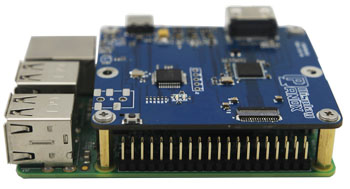
For early prototypes, an HDMI or Type-C controller board can shorten bring-up time. The robot computer sends a standard video signal, while the controller board handles the panel-specific interface. This approach occupies more space and consumes additional power, but it lets developers evaluate image quality, animation design, viewing angle, brightness, and mechanical placement before committing to a custom mainboard.
At Panox Display, panel selection is therefore considered together with the controller, cover lens, touch function, connector, FPC position, and intended mounting radius. A display that looks suitable on a specification sheet may still be a poor choice if its bending direction conflicts with the robot shell or its interface is not supported by the production board.
The Interfaces Around the Processor Matter
The RK3588 may be the computing core, but the carrier board determines whether it can function as a practical robot controller.
A well-equipped industrial implementation may provide as many as five Ethernet ports, including a combination of Gigabit and Fast Ethernet connections. These ports can be used for industrial cameras, lidar, networked servo drives, or a service network.
Two isolated CAN FD channels can connect motor controllers and distributed control modules. Up to eight isolated RS-485 ports and two isolated RS-232 ports can support legacy sensors, actuators, and industrial instruments. As many as 16 optically isolated digital inputs and outputs can handle emergency-stop signals, limit switches, relays, and status indicators.
M.2 storage can provide fast local logging, map storage, model files, and recorded video. Depending on the board design, an M.2 slot may also support an AI accelerator. USB 3.x, MicroSD, Wi-Fi, Bluetooth, and 4G or 5G connectivity expand the platform further.
These figures describe what a complete carrier board can expose, not what every RK3588 product automatically includes. When evaluating a board, the actual schematic, connector definition, electrical isolation, signal levels, and software drivers are more important than the processor name printed on the enclosure.
Industrial Reliability Cannot Be Added at the End
Peak benchmark performance does not guarantee that a robot will operate reliably for months or years.
A production controller should be tested for electrostatic discharge, electrical fast transients, surge, conducted and radiated interference, temperature cycling, long-duration high-temperature operation, full-load operation, repeated power cycling, and supply-voltage variation. The exact tests and acceptance levels should match the robot’s intended environment.
Power-loss protection is also valuable. If the main supply disappears unexpectedly, a short period of hold-up power can allow the operating system to save critical data and complete essential writes. This reduces the chance of corrupted logs, damaged configuration files, or an unbootable storage device.
Temperature specifications require careful interpretation. A controller advertised for −40°C to +85°C operation must use a suitable processor grade, memory, storage, power components, and thermal design. The display needs its own validated operating and storage ranges. A system is only as temperature-resistant as its least tolerant component.
The same principle applies to regulatory claims. CE, FCC, RoHS, vibration, and EMC documentation should be checked for the exact production model. A general product-family statement or a planned certification date is not a substitute for a model-specific report.
Software Support and ROS 2 Integration
RK3588 platforms commonly run Linux or an Ubuntu-based distribution, making them suitable for many ROS 2 applications. ROS 2 provides the communication layer for nodes, sensors, visualization, navigation, and higher-level robot functions, while the ros2_control framework supplies standardized hardware and controller interfaces.
This does not mean that installing ROS 2 automatically creates a deterministic motion-control system. High-frequency servo loops require attention to kernel configuration, scheduling priority, interrupt latency, driver behavior, and communication timing. Many robots use a layered architecture in which RK3588 handles perception, planning, user interaction, and supervisory control, while an MCU, FPGA, dedicated motion controller, or servo drive closes the fastest control loops.
This division of work is often more robust. The RK3588 remains responsible for computationally heavy and rapidly evolving software, while lower-level controllers provide deterministic responses for joints, motors, and safety-related functions.
Industrial protocols such as Modbus, CANopen, MQTT, and OPC UA can also be integrated, but protocol support should be verified at the software, driver, and electrical-interface levels. A protocol library alone does not provide an isolated industrial port, and an isolated port alone does not guarantee a complete protocol implementation.
A Practical Architecture for a Robot with an OLED Face
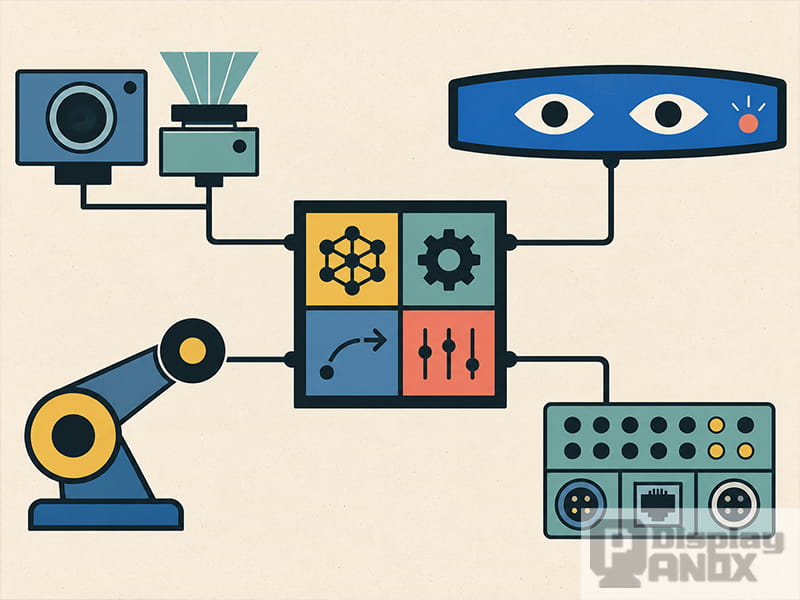
A balanced humanoid or service-robot architecture can place RK3588 at the center of the perception and interaction layer.
Camera data enters through MIPI CSI, USB, or Ethernet. The CPU, GPU, and NPU process vision and interaction models. Navigation and behavioral software determine what the robot is doing and how it should respond. The display renderer converts that internal state into facial animation, status graphics, prompts, or touch controls.
A flexible OLED connects through MIPI DSI or a display controller board. CAN FD and RS-485 connect actuators and industrial devices, while isolated digital I/O handles switches and status signals. An MCU or real-time motion controller manages the most time-sensitive motor loops. Ethernet links lidar, high-bandwidth cameras, and external control systems.
In this architecture, the robot screen is not an isolated accessory. It is the visible output of the perception and control stack. If the robot detects a person, begins listening, plans a movement, encounters an error, or switches operating mode, the display can communicate that change immediately.
Choosing the Right Robot Display
The best robot display is not necessarily the panel with the highest resolution. Selection should begin with the mechanical and interaction requirements.
A visor-style head may benefit from a long-strip flexible OLED that presents two eyes across one uninterrupted surface. A full-face design may need a larger AMOLED panel with more room for expressions, text, and touch controls. A mobile industrial robot may be better served by a rugged flat HMI positioned on the body rather than an expressive face.
Brightness should be evaluated under the real lighting conditions. Resolution and pixel density should match the expected viewing distance. Refresh rate matters for smooth gaze and expression animation, while touch integration may be valuable for service and configuration interfaces.
Mechanical design must account for the permitted bending axis and radius. Flexible OLED does not mean that a finished module can be repeatedly folded in any direction. Most robot applications use a panel bent to a specified fixed curve and then supported by a carefully designed structure. Pressure points, sharp edges, torsion, moisture, and excessive heat can damage the panel.
The final choice should also consider MIPI timing, driver availability, initialization code, controller-board options, FPC geometry, cover-glass bonding, touch performance, product lifetime, and supply continuity.
Why RK3588 and Flexible OLED Make a Strong Combination
RK3588 has become popular in robotics because it brings several useful engines into one embedded platform: an eight-core ARM CPU, Mali GPU, 6 TOPS NPU, high-resolution video processing, multiple camera inputs, and versatile display outputs. It can run robot software, process sensor data, execute compatible AI models, and render a sophisticated user interface without requiring a large desktop-class computer.
Flexible OLED complements that platform at the human-facing side of the robot. It allows the display to follow the product’s shape, reduces the visual bulk of the interface, and produces high-contrast graphics suited to eyes, expressions, and status communication.
Neither component is a complete solution on its own. RK3588 still needs a properly engineered carrier board, reliable power, thermal management, industrial interfaces, and a realistic real-time architecture. The OLED panel still needs mechanical support, interface electronics, display drivers, optical protection, and environmental validation.
When these elements are designed together, the result is more than a robot with a screen attached. It becomes a coherent system in which perception, control, and communication share the same embedded platform—and the display becomes an active part of how the robot works with people.