



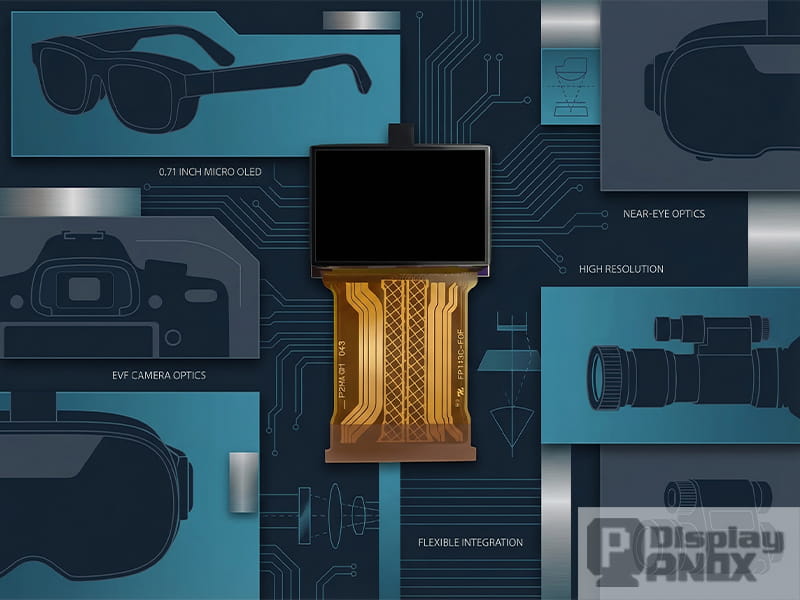
When people search for a 0.71inch Micro OLED, they are usually not looking for a generic display. They are looking for a compact, high-resolution microdisplay that can deliver sharp images, fast response, and reliable integration in advanced optical systems.
That is exactly why the 0.71inch Micro OLED has become an attractive option for near-eye and embedded optical applications. For product teams developing AR devices, EVF systems, portable vision equipment, or compact industrial optics, this display size offers a strong balance between image quality, module compactness, and system flexibility.
At Panox Display, this model is already in mass production, and we have large inventory available for customers who want to move quickly from evaluation to batch purchase.
In applications where brightness matters, our High Luminance display solutions can provide a stronger foundation for professional optical performance.
1. Why 0.71inch Micro OLED is attracting more attention
Micro OLED is widely recognized as one of the key display technologies for near-eye systems because it combines ultra-compact size with high image quality. Official industry sources and supplier references consistently associate OLED microdisplays with EVF, AR, VR, and other optical applications, especially where space is limited and image clarity matters most.
A 0.71inch Micro OLED is especially appealing because it can support advanced optical designs without forcing the device to become too large or too heavy. This makes it suitable for product developers who need a compact display engine but still want Full HD-class visual performance.
2. Main applications of 0.71inch Micro OLED
2.1 AR glasses and near-eye display systems
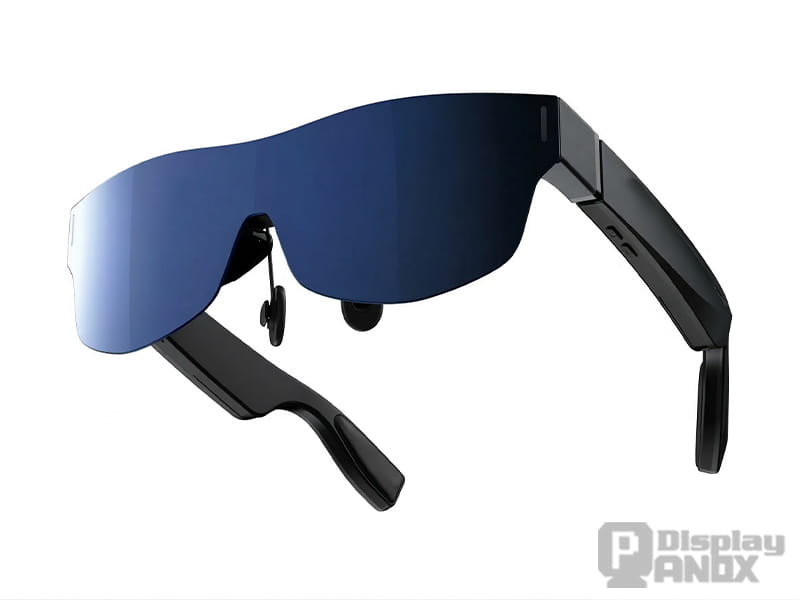
One of the most important applications of 0.71inch Micro OLED is in AR glasses and other near-eye display products. In these systems, display size, weight, contrast, and pixel density all directly affect user experience and optical design difficulty.
A compact microdisplay helps reduce module size while supporting a more premium visual effect. This is why Micro OLED continues to be closely linked with AR product development. Panox’s own Micro OLED product pages also position 0.71-inch models for AR-related use.
2.2 VR headsets and XR devices
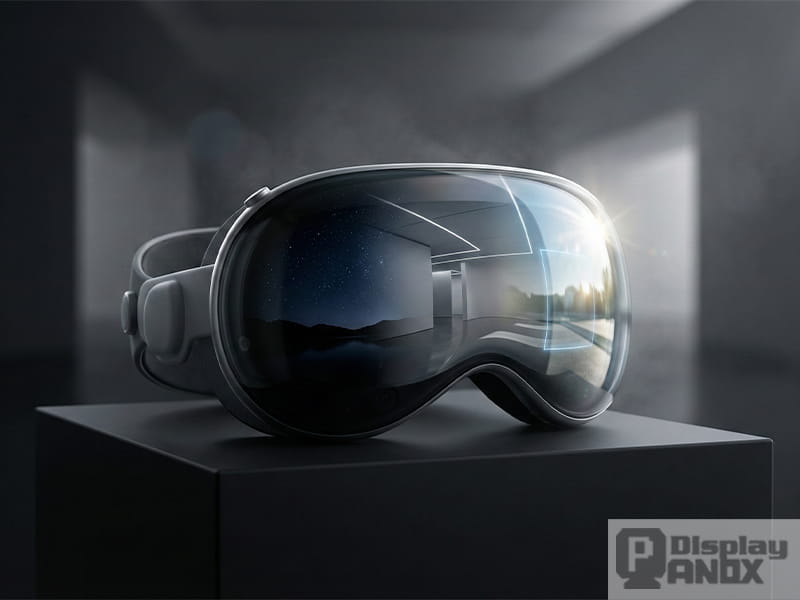
For VR headsets and emerging XR devices, image detail and immersion are critical. Micro OLED is widely used in near-eye display discussions because of its high contrast, fast response, and suitability for compact optical engines. Panox’s Micro OLED knowledge pages repeatedly position Micro OLED as a strong fit for VR and XR deployment.
A 0.71inch Micro OLED can be a practical option for lightweight headset designs, prototype systems, and specialized VR/XR equipment that needs strong image performance in a small footprint.
2.3 Electronic viewfinders for cameras
Electronic viewfinder (EVF) is one of the most established applications for OLED microdisplays. Sony officially states that the main application for OLED Microdisplays is EVFs for cameras, while also expanding into AR and VR.
For camera brands and optical device developers, a 0.71inch Micro OLED can help deliver a sharper and more vivid viewfinder experience in a compact module. This is especially valuable for products where display clarity strongly affects composition, focus judgment, and overall usability.
2.4 Night vision, gunsight, and telescopic sight
In professional optics, compactness and image quality must work together. Panox’s existing 0.71-inch Micro OLED product page specifically mentions gunsight, night vision, and telescopic sight as target applications.
For these products, the display must fit into a limited space while still supporting a clear image path for the user. A 0.71inch Micro OLED is well suited to this kind of integration, especially in advanced optical modules where every millimeter matters.
If your team is developing AR/VR hardware, our Micro OLED products can help shorten the path from concept validation to production.
2.5 Medical and industrial optical equipment
Beyond consumer electronics, Micro OLED is also used in medical optics and industrial optical devices. Public supplier and industry references connect microdisplays with compact medical optics, embedded optical systems, and other space-constrained professional equipment.
This creates opportunities for the 0.71inch Micro OLED in portable diagnostic viewers, industrial inspection systems, and professional eyepiece-type display modules.
3. Why many buyers prefer this size
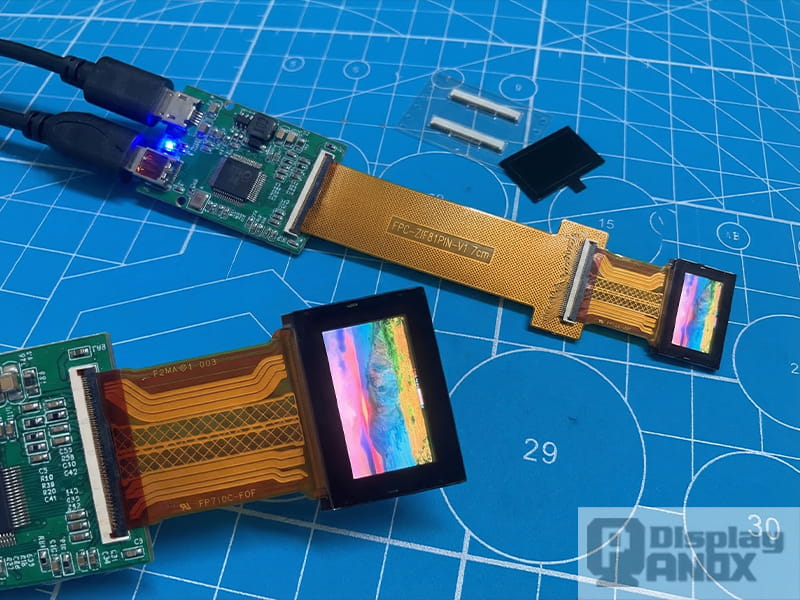
The reason many developers search directly for 0.71inch Micro OLED instead of just “Micro OLED” is simple: they already know their system size window.
This display size is attractive because it can support:
-
compact optical engine design
-
high-resolution visual output
-
lightweight product structure
-
near-eye integration
-
professional optical applications beyond consumer use
On Panox Display’s current product pages, 0.71-inch Micro OLED options are already listed in both Sony and BOE-related product categories, showing that this size has clear practical demand in the market.
4. Panox Display has large inventory and mass production support
For many OEMs and product teams, the biggest problem is not just choosing the right display. It is whether supply can keep up with the project timeline.
At Panox Display, this 0.71inch Micro OLED is already in mass production, and we have large inventory available for customers who need fast sampling, pilot runs, or batch orders.
This matters because display procurement often affects the entire hardware schedule. When the display source is stable, teams can move faster on optics, driver development, structural design, and overall product validation.
5. Panox Display has supported customers using this display
Panox Display focuses on advanced OLED and LCD supply, including Micro OLED, and positions itself as a supplier for OEM customers, startups, developers, and engineering teams worldwide. Panox’s own site emphasizes support for complete display solutions, including boards, connectors, and integration-related services.
For customers working on AR/VR, optical viewer products, and other compact device projects, this means the value is not only the panel itself. It is also about sourcing support, application matching, and faster project execution.
If you are developing a new product based on 0.71inch Micro OLED, Panox Display can support both evaluation and volume supply.
6. Why source 0.71inch Micro OLED from Panox Display
Choosing a supplier is not just about specs on paper. It is about whether the supplier understands where the display will actually be used.
Panox Display already lists Micro OLED products across multiple sizes and application directions, and its published materials consistently focus on practical deployment in AR/VR, EVF, industrial optics, and related microdisplay systems.
For buyers searching 0.71inch Micro OLED, this makes Panox Display a practical sourcing partner for projects that require:
-
quick supply response
-
stable inventory
-
application-oriented support
-
scalable purchasing from sample to batch
7. Conclusion
The 0.71inch Micro OLED is not just a tiny display. It is a key enabling component for modern near-eye and compact optical systems.
From AR glasses and VR/XR headsets to camera EVFs, night vision, gunsights, telescopic sights, and medical or industrial optical equipment, this display size fits a wide range of advanced applications. Public industry sources and Panox’s own product pages both align strongly around these use cases.
If your team is now looking for a 0.71inch Micro OLED supplier with mass production capability, large inventory, and practical support for real-world projects, Panox Display is ready to help.
Contact Panox Display for samples, pricing, and bulk order support.
For projects that demand compact size and premium image quality, our Micro OLED solutions offer a practical path from prototype to volume production.
| Panel model | Interface | Type | Size (inch) | Resolution | P.S |
| S032WEM01 | MIPI/RGB | Micro OLED | 0.32 | 800x600 | |
| PMOF039XGAM | RGB | Micro OLED | 0.39 | 1024x768 | Full Color/Monochrome |
| BO039M1920M | MIPI | Micro OLED | 0.39 | 1920x1080 | Highest PPI =5644 |
| EP047M800T | TTL | LCOS | 0.47 | 800x600 | |
| BO049FHPMO | SPI,MIPI | Micro OLED | 0.49 | 1920x1080 | |
| S050M1600M | MIPI | Micro OLED | 0.5 | 1600x1200 | |
| ECX331DB-6 | Mini LVDS | Micro OLED | 0.5 | 1024x768 | |
| S060LDM01 | MIPI | Micro OLED | 0.6 | 1920x1080 | |
| ECX335AF | Mini LVDS | Micro OLED | 0.71 | 1920x1080 | 200 nits brightness version |
| ECX335B | Mini LVDS | Micro OLED | 0.71 | 1920x1080 | 500 nits brightness version |
| ECX335SN | Mini LVDS | Micro OLED | 0.71 | 1920x1080 | 3000 nits brightness version |
| BO071M1920M | MIPI | Micro OLED | 0.71 | 1920x1080 | |
| S072WCM04 | MIPI | Micro OLED | 0.72 | 1920x1080 | |
| S103WAM01 | MIPI | Micro OLED | 1.03 | 2560x2560 |