



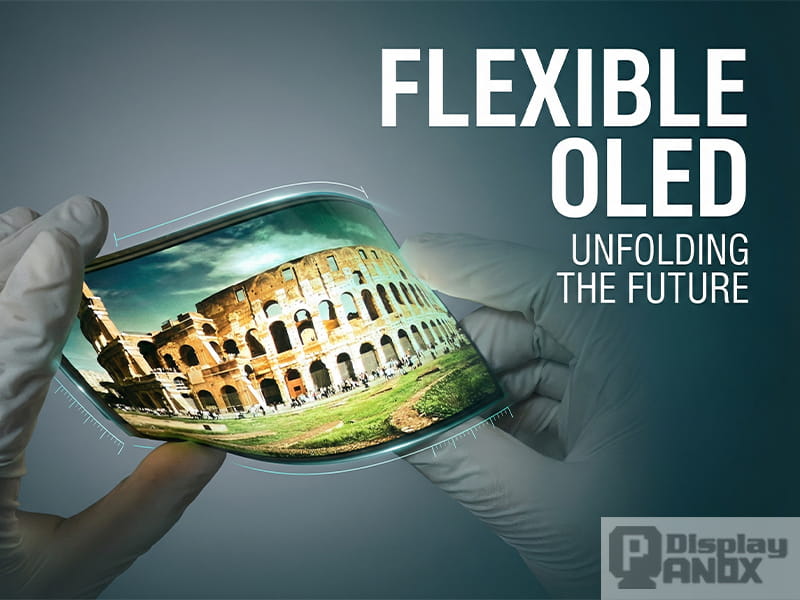
Have you ever stopped to wonder how a screen—something we traditionally associate with rigid glass—can be folded like a piece of paper and slipped into your pocket?
This is no longer a concept limited to sci-fi movies. Devices like the Samsung Galaxy Z Fold and Huawei Mate X are currently dominating the premium smartphone market, seamlessly transforming a 7-inch tablet into a compact phone. The secret behind this structural magic is flexible OLED technology.
But how does an electronic display survive being folded thousands of times without breaking? Why do some screens develop noticeable creases, and how are manufacturers fixing it? The answers lie deep within material science and mechanical engineering. Let's bypass the superficial marketing jargon and tear down the flexible OLED display to understand the mechanics of this portability revolution.
The Material Shift: Replacing Glass with Super Plastics
Why cannot traditional LCD screens bend? The answer is structural. LCDs require a bulky backlight module and rely on liquid crystals sandwiched between two layers of rigid glass. They are inherently brittle.
OLED technology, however, changes the game entirely. Because each pixel is self-illuminating, an OLED screen does not need a backlight. This allowed engineers to discard the thick glass enclosure and replace it with a flexible substrate known as Polyimide (PI). PI is a high-performance "super plastic" that boasts incredible heat resistance and tensile strength.
The thickness of this PI substrate is staggering—often less than 0.1 millimeters, which is thinner than a human hair. When the entire display module is stacked together, the total thickness can be compressed to under 0.3mm, about a third of a traditional LCD. By reducing the weight and thickness, the screen finally gains the physical capacity to bend. Combine this with OLED’s ability to turn off pixels entirely for infinite contrast and true blacks, and you get a display that is both structurally revolutionary and visually stunning.
The Mechanics of Bending: Surviving 200,000 Folds
Having flexible materials is only half the battle. If you fold a piece of paper back and forth enough times, it tears. An electronic display is infinitely more complex, containing TFT transistors, electrodes, and organic light-emitting layers. If even one of these microscopic layers fails, the entire screen dies.
The industry standard approach is "dynamic folding," typically seen as inward or outward folds. In a standard U-shaped fold, the screen retracts along a curve with a minimum bend radius of 3 to 5 millimeters. This precise measurement is crucial: a smaller radius concentrates too much stress and causes snapping, while a larger radius defeats the purpose of a compact, portable design.
To ensure longevity, industry standards (such as JEITA and IEC 62360-2) require foldable devices to survive a minimum of 200,000 folding cycles. That equates to opening and closing the device 100 times a day for over five years.
Achieving this requires a mechanical partner just as advanced as the screen: the precision hinge. Think of the hinge as the spine of the device. A high-quality hinge smoothly guides the screen's trajectory and locks at the end of its extension to prevent over-stretching. Modern premium devices utilize a "waterdrop" hinge design, which allows the bending area to form a wider curvature inside the chassis, significantly dispersing mechanical stress and protecting the fragile light-emitting layers.
Solving Creases, Leaks, and Touch Latency
Early adopters of foldable tech were vocal about their frustrations, primarily regarding the dreaded screen crease—a visible and tactile groove right down the middle of the display.
First-generation devices utilized Colorless Polyimide (CPI) as a protective top layer. While flexible, CPI has poor resilience; over time, it developed a "memory" of the fold. The industry's solution was the introduction of Ultra-Thin Glass (UTG). Measuring just 30 to 50 microns thick, UTG offers superior surface hardness and excellent structural memory, allowing it to spring back into a perfectly flat shape after being bent. Hardware teardowns have shown that switching to UTG can reduce crease depth by approximately 60%.
Engineers also employ "neutral layer optimization." By meticulously adjusting the position of various materials within the display stack, they ensure that the maximum mechanical strain occurs in non-critical areas, effectively shielding the fragile circuits and emitting layers.
Beyond physical wear, OLED materials face two chemical enemies: oxygen and moisture. To prevent display degradation, manufacturers use Thin Film Encapsulation (TFE) combined with edge-sealing adhesives. Some even integrate a microscopic desiccant layer, acting as a built-in dehumidifier.
Touch consistency is another major hurdle. The capacitance distribution changes in the folded area, which can lead to ghost touches or dead zones. Engineers have solved this through a mix of hardware and software innovations:
-
Zonal Touch ICs: Independently calibrating touch sensitivity in different areas of the screen.
-
Firmware Compensation Algorithms: Real-time correction of coordinate offsets caused by physical bending.
-
Serpentine Routing: Designing FPC (Flexible Printed Circuit) wiring in a snake-like pattern so it stretches like a spring without breaking.
The Hidden Ecosystem Behind a Single Fold
Opening a foldable phone feels like a simple, continuous physical motion, but it triggers a complex, split-second synergy between hardware and software.
Within a fraction of a second, multiple systems leap into action:
-
The mechanical hinge ensures a precise physical trajectory.
-
Sensors (Hall effect and accelerometers) instantly detect the state of the fold.
-
The main SoC immediately shifts resources, transitioning the UI layout from a standard phone aspect ratio to a multitasking tablet view.
-
Display driver ICs push high-speed frame updates via the MIPI interface to ensure a seamless visual transition.
If any single component lags, the user experiences stuttering, screen flickering, or system freezing. Therefore, foldable devices represent a masterclass in system-level integration, not just a leap in display technology.
An Engineer’s Checklist for Foldable Design
For hardware developers and product managers looking into foldable architecture, mitigating risk is paramount. Here is a baseline checklist derived from current industry best practices:
-
Bend Radius: Maintain a radius of ≥3mm. Aiming for 4–5mm is highly recommended to maximize the display's lifespan.
-
Surface Protection: Utilize a combination of UTG paired with a shock-absorbing buffer layer (such as silicone gaskets).
-
Hinge Synchronization: The mechanical hinge must perfectly mirror the screen's natural bending curve to eliminate sheer force, which will otherwise tear internal wiring over time.
-
Environmental Tolerances: Devices must pass rigorous testing, including thermal cycling from -20°C to +60°C, 95% relative humidity environments, and high-particulate dust chambers.
-
Repairability: Implement modular designs that allow the screen or the hinge to be replaced independently, reducing repair costs and e-waste.
Beyond the Smartphone: The Future Form Factor
The potential of flexible OLED extends far beyond mobile phones. We are witnessing the dawn of form-factor freedom across multiple industries:
-
Rollable Displays: Televisions that roll down into a compact soundbar housing when not in use.
-
Medical Wearables: Biometric monitors that comfortably wrap around the exact curvature of a patient's arm for continuous, non-invasive tracking.
-
AR and VR: Lightweight, curved display modules that allow for sleeker smart glasses and wider fields of view.
-
Next-Gen Computing: Laptops experimenting with dual-fold or tri-fold screens, effectively doubling a professional's workspace on the go.
The underlying philosophy is shifting. Devices are no longer forcing humans to adapt to rigid, rectangular constraints. Instead, the technology is adapting to the human body and our environments.
As material science, MEMS (Micro-Electromechanical Systems) engineering, and manufacturing yields continue to improve, flexible OLED is rapidly transitioning from an expensive technological flex to an everyday standard. The next time you unfold a device, take a moment to appreciate the invisible engineering within that crease—it represents one of the most significant leaps in modern hardware design.
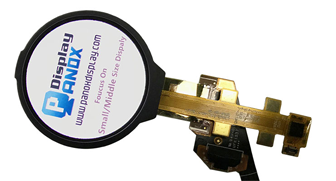
Check out our full catalog of high-performance Flexible OLED panels available for prototyping.
| Model | Size(inch) | Display Type | Resolution | Interface | Display Brand |
| 1.39 inch Round/Circular OLED Flexible For Wearable Smartwatch | 1.39 | AMOLED | 400(RGB)×400 | MIPI | Innolux |
| 1.5 inch Flexible OLED For Wearable Smart Watch | 1.5 | AMOLED | 120(RGB)×240 180PPI | SPI, MIPI | Innolux |
| 1.8 inch Flexible PMOLED For Wearable Bracelet | 1.8 | PMOLED | 160×32 | SPI | Futaba |
| 5.1 inch Flexible OLED On-Cell PACP For Cellphone | 5.1 | AMOLED | 720(RGB)×1520 330PPI | MIPI | BOE |
| 5.99 inch Flexible OLED On-Cell PACP For Cellphone | 5.99 inch | AMOLED | 1080(RGB)×2160 329PPI | MIPI | BOE |
| 5.99-Inch 1440x2880 Flexible AMOLED Display | BOE OLED for Huawei Smartphone | 5.99 | AM-OLED, OLED | 1440 x 2880 | MIPI | BOE&Huawei |
| 6.52 inch Flexible OLED 2520x840 Touch Panel | 6.52 | AM-OLED, OLED | 2520(RGB)×840 407 PPI | MIPI | CSOT |
| 6.67inch Flexible AMOLED 2K for Smartphone | 6.67 | OLED, AM-OLED | 1080x 2400 | MIPI | Tianma |
| 7.8 inch Flexible Full Color OLED 1920x1440 MIPI | 7.8 | AMOLED | 1440 x 1920 | MIPI | Royole |
| 8 inch Flexible/Foldable OLED | 8.01 | AMOLED | 2480x1860 | MIPI | CSOT |
| 13.3 inch 1536 x 2048 Flexible OLED Touch Screen | 13.3 | AM-OLED, OLED | 1536 (H) × 2048 (V) | eDP | LG |