



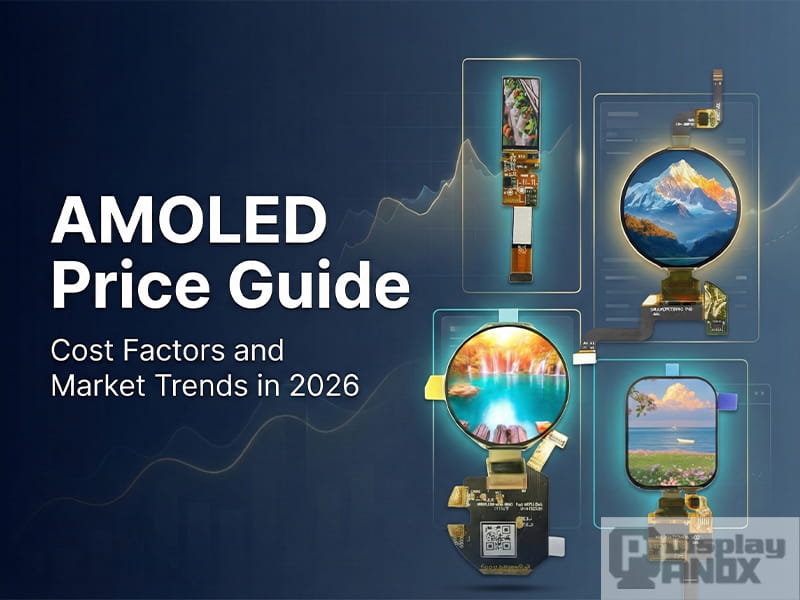
If you are sourcing display panels for consumer electronics in 2026, understanding the intricacies of AMOLED pricing is critical for your bottom line. As the market shifts towards higher refresh rates, flexible form factors, and increased localization in manufacturing, buyers need a clear roadmap to navigate supplier quotes.
This comprehensive guide breaks down the core cost components of AMOLED technology, details the key factors influencing bulk pricing, compares top suppliers, and provides actionable procurement strategies to help you secure the best deals.
1. The Core Components of AMOLED Panel Costs
AMOLED screens carry a premium due to their complex manufacturing process. Generally, an AMOLED display costs 2 to 3 times more than a standard OLED panel, and is about 5 to 10 times more expensive than a traditional LCD.
To understand the final quote from a supplier, it is essential to look at the bill of materials (BOM). The cost is primarily divided into the raw panel components and additional module costs:
Core Panel Costs:
-
Substrate (Glass/Flexible): This accounts for 15-20% of the total panel cost.
-
OLED Emissive Materials: The organic compounds that create light make up 20-25% of the cost.
-
Driver IC: The integrated circuits required to drive the display account for 10-15% of the cost.
-
Encapsulation Materials: Protecting the organic layers from oxygen and moisture takes up 10-12% of the cost.
-
Backplane Technology (LTPS/Oxide): The thin-film transistor layer accounts for 15-18% of the cost.
Additional Module Costs:
-
Touch Layer (On-cell/In-cell): Adding touch functionality increases the total cost by an additional 8-12%.
-
Cover Glass: This protective top layer accounts for 5-8% of the cost.
-
Module Assembly: The physical assembly of these components makes up 8-10% of the final cost.
2. Average Price Ranges by Display Size
Pricing varies wildly depending on the application and screen size. Here are the baseline price ranges you can expect when sourcing panels:
| Display Size | Primary Application | Estimated Price Range (USD) |
| 1.0 - 2.0 inches | Smartwatches / TWS Earbuds | $8 - $25 |
| 3.0 - 6.0 inches | Smartphones / Small Tablets | $15 - $80 |
| 6.0 - 10.0 inches | Tablets / Automotive Displays | $40 - $150 |
| 10.0+ inches | TVs / Large Monitors | $200 - $2000 |
3. Six Key Factors Influencing AMOLED Prices
When you request a quote, the supplier will adjust the base price depending on several technical specifications and business factors.
3.1. Screen Resolution
Higher pixel density requires more complex manufacturing and lower yields, driving up costs.
-
HD (720p): Serves as the baseline price.
-
FHD (1080p): Adds a 20-30% premium over the baseline.
-
2K QHD: Adds a 40-60% premium over the baseline.
-
4K: Adds an 80-120% premium over the baseline.
3.2. Refresh Rate
High refresh rates require more advanced driver ICs and backplane tuning.
-
60Hz: Serves as the baseline price.
-
90Hz: Adds a 10-15% premium.
-
120Hz: Adds a 15-25% premium.
-
144Hz / 165Hz: Adds a 30-45% premium.
3.3. Form Factor (Rigid vs. Flexible)
The substrate material heavily dictates the price.
-
Rigid AMOLED: Serves as the baseline price.
-
Flexible AMOLED: Adds a 25-40% premium.
-
Foldable AMOLED: Adds a massive 60-100% premium.
3.4. Brightness Levels (Nits)
Peak brightness requires more efficient, high-quality emissive materials.
-
500 - 600 nits: Serves as the baseline price.
-
800 - 1000 nits: Adds a 10-15% premium.
-
1200+ nits (High Brightness): Adds a 20-35% premium.
3.5. Supplier Brand Tier
Who you buy from impacts the quote just as much as what you buy.
-
Tier 2 Suppliers: Usually quote at 80-90% of the market baseline price.
-
Tier 1 Suppliers (BOE, Tianma, Visionox): Represent the baseline market price.
-
Top-Tier Suppliers (Samsung, LG): Command a premium of 120-150% over the baseline price.
3.6. Minimum Order Quantity (MOQ)
Volume is your strongest negotiation tool.
-
< 1,000 units: Incurs a 30-50% surcharge.
-
1,000 - 5,000 units: Incurs a 15-25% surcharge.
-
5,000 - 20,000 units: Secures the baseline price.
-
20,000+ units: Secures a 5-15% discount.
-
100,000+ units: Secures a 15-25% discount.
4. Mainstream Supplier Price References & LCD Comparison
If you are evaluating top-tier and Tier 1 suppliers, here is a reference for a standard 6.7-inch smartphone display (Bulk orders >10K units). Note: Actual prices fluctuate based on yield rates, exact specs, and payment terms.
Supplier Comparison (6.7-inch Displays)
| Supplier | 6.7" FHD+ Price (USD) | 6.7" 2K Price (USD) | Foldable Price (USD) |
| BOE | $72 - $80 | $112 - $152 | $160 - $240 |
| Tianma | $68 - $92 | $104 - $140 | $150 - $220 |
| Visionox | $68 - $96 | $108 - $144 | $156 - $230 |
| CSOT (HuaXing) | $72 - $104 | $112 - $80 | - |
| Samsung Display | $88 - $128 | $140 - $200 | $200 - $300 |
| LG Display | $80 - $120 | $128 - $180 | $180 - $280 |
Cost Comparison: AMOLED vs. LCD (6.7-inch)
Choosing between LCD and AMOLED is a common product development dilemma. Here is how the total cost breaks down for a 6.7-inch smartphone screen:
| Tech Type | Panel Cost (USD) | Module Cost (USD) | Total Cost (USD) |
| LCD | $48 - $60 | $32 - $48 | $40 - $54 |
| Rigid AMOLED | $64 - $88 | $40 - $60 | $52 - $74 |
| Flexible AMOLED | $88 - $120 | $48 - $72 | $68 - $96 |
| Foldable AMOLED | $200 - $320 | $100 - $160 | $150 - $240 |
When to choose AMOLED: Ideal for premium products where the markup covers the cost, devices requiring ultra-thin designs, products needing under-display fingerprints/cameras, and for gaining a differentiated competitive edge.
When to choose LCD: Better suited for highly cost-sensitive products, devices where eye protection (DC dimming) is a marketing focus, and devices requiring long standby battery life.
5. Popular Specifications & Reference Quotes
Prices vary heavily by application. Below are standard configurations across different consumer electronics categories.
5.1. Smartphone Mainstream Specs
-
6.5" / 720p / 60Hz: $72 - $96
-
6.7" / 1080p / 60Hz: $90 - $120
-
6.7" / 1080p / 120Hz: $108 - $150
-
6.7" / 2K / 120Hz: $168 - $228
-
6.9" Foldable / 1080p / 120Hz: $150 - $200
5.2. Smart Wearable Specs
-
1.4" Circular / 454x454 / 500 nits: $12 - $20
-
1.43" Circular / 466x466 / 600 nits: $16 - $24
-
1.9" Square / 484x396 / 500 nits: $16 - $24
-
2.0" Square / 540x440 / 600 nits: $20 - $30
5.3. Automotive Display Specs
-
6.7" Center Console / 1080x1920 / 800 nits: $90 - $130
-
12.3" Dashboard / 1920x720 / 1000 nits: $160 - $240
-
15.6" Center Console / 1920x1080 / 800 nits: $200 - $300
-
17.3" Rear Entertainment / 1920x1080 / 400 nits: $180 - $260
6. Market Trends & Price Forecast (2026 - 2028+)
The display market is constantly evolving. As we move through 2026, several macroeconomic and technological trends are shaping the pricing landscape.
Current 2026 Short-Term Trends
-
Factors driving prices down: Yield rates on newer production lines are significantly improving, local manufacturing is capturing more market share, and manufacturing equipment costs are falling. Overall, short-term prices are predicted to drop by 5-10%.
-
Factors keeping prices high: Rising costs in memory and silicon-based materials, the AI boom driving high demand for HBM (which squeezes overall semiconductor production capacity), and an overwhelming demand for foldable displays that currently outpaces supply.
Mid-Term Outlook (2026 - 2027)
-
The highly anticipated Generation 8.6 production lines will begin operating, which is projected to drive costs down by a further 10-15%.
-
Localization (specifically in China) will exceed a 70% share, heavily boosting price competitiveness across the globe.
-
The price of foldable displays is expected to plummet to roughly 60% of their current costs.
Long-Term Outlook (2028 and beyond)
-
The commercialization of Micro LED technology may trigger a new wave of technological replacement.
-
As high-end tech shifts to Micro LED, AMOLED will likely become the standard for mid-range devices, pushing AMOLED prices even further down.
7. Pro Procurement Strategies: How to Get the Best Deal
Sourcing AMOLED displays isn't just about reading a price sheet; it's about strategic negotiation.
How to Choose Your Supplier:
When evaluating suppliers, consider a weighted approach:
-
Price Competitiveness (30% weight): Look toward BOE, Tianma, and Visionox.
-
Technical Capability (25% weight): Samsung and BOE lead the pack.
-
Production Stability (20% weight): BOE and Samsung offer the most reliable output.
-
Service & Response (15% weight): Tianma and Visionox are highly rated.
-
Geopolitics (10% weight): Prioritizing domestic/localized suppliers helps mitigate risk.
Expert Negotiation Tactics:
-
Timing is Everything: The best time to procure is during Q3 and Q4 when production capacity is fully released, offering you much larger room for price negotiation. You should also time large orders right after a new production line completes its yield ramp-up phase, or during a downturn in raw material prices.
-
Long-term Frameworks: Sign annual framework agreements to lock in current favorable prices.
-
Incremental Rewards: Commit to scaling your purchase volume over time in exchange for extra discounts.
-
Payment Terms: Negotiating a 60-day Letter of Credit (L/C) is vastly superior to a 30-day L/C.
-
Bundle Your Purchases: Negotiate your AMOLED panels bundled with Driver ICs and polarizers for a lower total package cost.
-
Joint Technology Development: Co-developing technology with the supplier serves as a strong endorsement, often resulting in technical support discounts.
Procurement Risks to Watch:
-
Exchange Rates: Prices are quoted in USD; always hedge against currency fluctuations.
-
Capacity Crunches: Peak seasons often result in severe supply shortages.
-
Rapid Tech Iteration: Ensure you don't over-commit to a specification that will be outdated in six months.
-
Inventory Cycles: Panel inventory cycles are incredibly short, requiring highly accurate stocking strategies.
Learn more: What Are the Key Differences Between AMOLED and OLED Displays?
Frequently Asked Questions (FAQ)
Q: Why are AMOLED screens so much more expensive than LCDs?
A: AMOLED pricing is driven by complex manufacturing. The organic emissive materials, specialized encapsulation required to protect those materials from oxygen, and lower production yields (especially for high resolutions and foldable formats) make AMOLEDs 5 to 10 times more expensive than LCDs.
Q: Who are the most cost-effective AMOLED suppliers in 2026?
A: For buyers strictly prioritizing price competitiveness and value, Chinese suppliers like BOE, Tianma, and Visionox are the recommended choices, often coming in noticeably cheaper than top-tier brands like Samsung and LG.
Q: When is the best time of year to negotiate AMOLED display prices?
A: Q3 and Q4 are the optimal times to negotiate bulk pricing. During this period, supplier production capacity is typically fully released, which gives procurement managers significantly more leverage to negotiate a lower cost.
Q: How does order volume (MOQ) affect my final quoted price?
A: Volume is your strongest asset. Ordering fewer than 1,000 units can result in a 30-50% surcharge over the baseline price. Conversely, massive bulk orders exceeding 100,000 units can secure you a 15-25% discount.
Ready to secure competitive pricing for your next project? Explore our comprehensive catalog of high-quality panels on our [AMOLED Product Page].