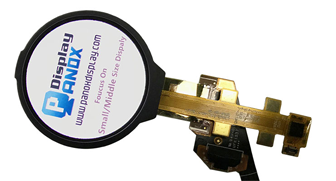




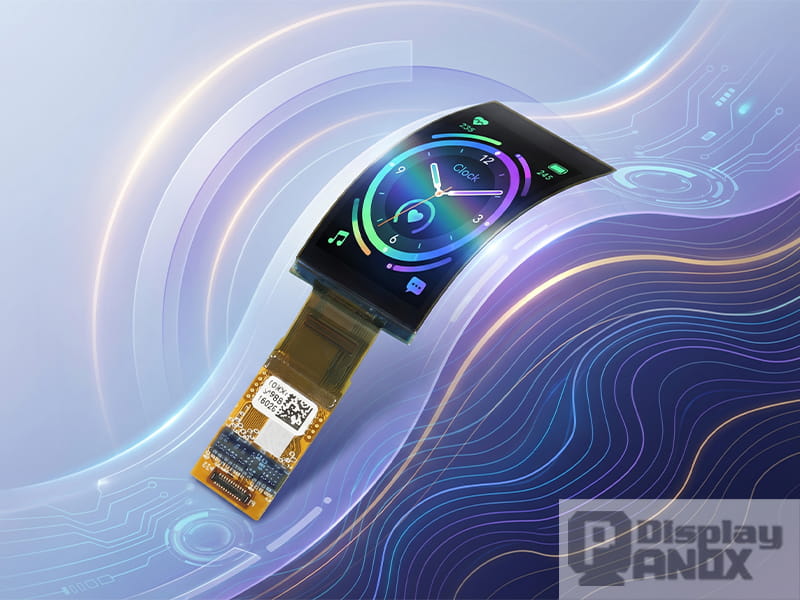
1.5 inch Flexible OLED For Wearable Smart Watch
Flexible OLED displays are no longer just a premium smartphone talking point. In 2026, they are shaping product decisions across foldables, wearables, automotive interiors, and compact smart devices because they combine self-emissive image quality with lighter structures and more adaptable form factors. For brands evaluating next-generation hardware, the real question is not simply whether a flexible OLED screen looks better, but where it creates the most practical value in design, integration, and user experience.
How should a flexible OLED display be evaluated in 2026?
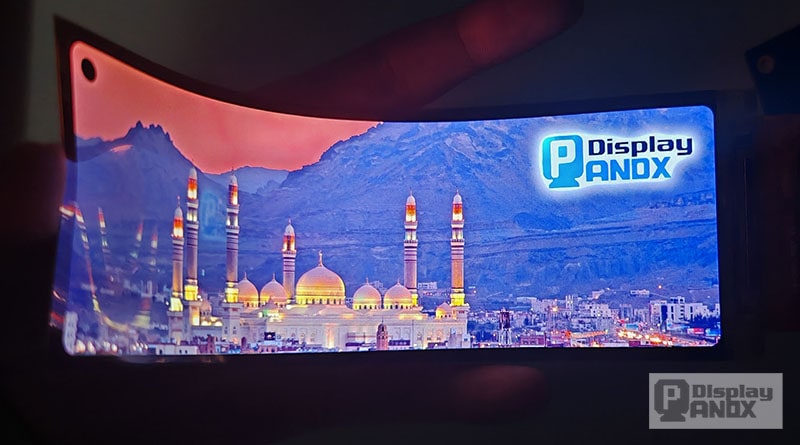
6.52 inch Flexible OLED 2520x840 Touch Panel
A strong flexible OLED display should be judged on more than brightness or resolution alone. In real projects, the important factors are bendability, panel thickness, weight, power behavior, color performance, outdoor readability, integration freedom, and long-term mechanical reliability. Flexible OLED panels differ from rigid OLED panels because they use polyimide-based substrates instead of glass, which allows curved, foldable, and other non-flat product designs that would be much harder to achieve with conventional structures.
That is why flexible OLED is now being considered not only for flagship consumer devices, but also for smart wearables, premium cockpit displays, and specialized products where industrial design matters as much as image quality. Samsung Display and LG Display both continue to position OLED flexibility as a core advantage for new device categories and interior concepts.
Where does a flexible OLED display perform best?
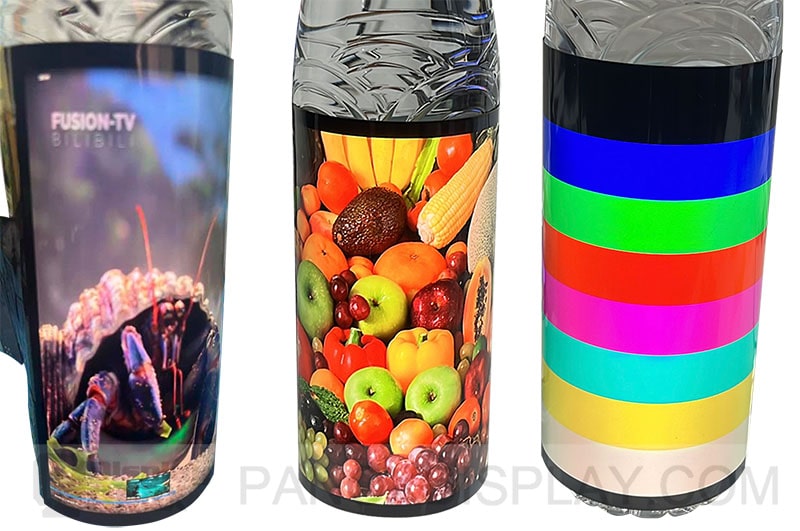
7.8 inch Flexible Full Color OLED 1920x1440 MIPI
In 2026, flexible OLED screens make the most sense in five types of products: foldables, curved smartphones, smart wearables, automotive cockpit displays, and compact premium devices that need thin and lightweight panels. The reason is simple: OLED is self-emissive, so it can deliver deep blacks, strong contrast, and vivid color without the backlight structure required by LCD. That simpler stack also helps reduce thickness and weight. Samsung says OLED can be about 30% thinner and lighter than LCD because it does not require a backlight, while its flexible OLED structure further reduces weight by replacing glass-based rigidity with polyimide.
For foldables in particular, the category still matters. Counterpoint’s March 2026 outlook projects global foldable smartphone shipments to grow about 20% in 2026, which reinforces that flexible OLED remains one of the clearest commercially viable form-factor drivers in the display market.
Why are flexible OLED screens attractive for premium product design?
The biggest reason is design freedom. A flexible OLED display can be curved, folded, rolled, or shaped into layouts that help brands differentiate their hardware. Samsung and LG both emphasize this point in their latest product showcases, especially in foldable devices and automotive interiors where display geometry is becoming part of the product identity. Samsung’s CES 2026 materials specifically highlighted free-form automotive OLED solutions, while LG Display’s recent flexible OLED communications focused on curved, bendable, foldable, and rollable form factors.
This matters for industrial design teams because the display is no longer just a rectangular part to be fitted into a housing. It becomes a structural element that can support thinner edges, more immersive front surfaces, smoother cockpit lines, and more compact wearables. For brands trying to make hardware look more advanced without simply increasing screen size, flexible OLED often delivers that upgrade more elegantly than rigid panels.
How does flexible OLED screen performance compare in daily use?
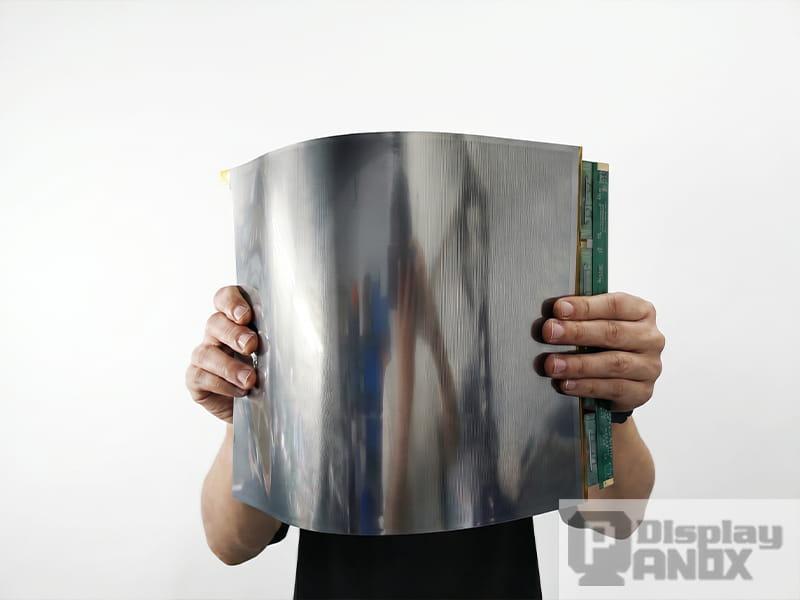
16.3 inch 2024*2560 flexible OLED
Image quality is one of the category’s strongest selling points. Because OLED lights only the pixels it needs, it can achieve deep blacks, strong perceived contrast, and excellent visual punch in media-heavy interfaces. Samsung also notes that OLED can reduce power consumption on darker content compared with LCD, and its adaptive refresh technologies further cut panel driving power in variable-use scenarios.
For portable devices, sunlight readability also matters. Samsung states that its OLED panels combine high luminance with low reflectivity and reports around 21% higher outdoor visibility than existing displays in its certified testing, with brightness above 1,500 nits in bright environments. In other words, flexible OLED is no longer only about shape; it is also expected to compete on practical visibility and premium visual clarity.
For applications that demand strong outdoor readability and vivid image performance, our High Luminance display solutions offer a more practical path for advanced product design.
Are flexible OLED displays mainly for phones?
No. That idea is already outdated in 2026. Flexible OLED still has strong roots in smartphones and foldables, but the commercial conversation has expanded. Samsung’s CES 2026 showcase used OLED flexibility in automotive, AI device concepts, round display formats, and thin mobile computing products. LG Display also continues to frame plastic OLED and flexible OLED around smartphones, wearables, and automotive use.
That shift is important for B2B buyers. If your brand is not centered on mobile phones, flexible OLED can still be highly relevant for smartwatches, health devices, portable terminals, luxury control panels, curved center displays, and premium handheld electronics. The technology has moved from a niche form-factor trick to a broader platform for differentiated product design.
What are the limitations buyers should understand?
Flexible OLED is not the right answer for every project. Cost remains one of the biggest barriers, especially outside premium segments. Omdia noted in early 2026 that automotive OLED adoption is still constrained by pricing pressure and the challenge of delivering enough user-visible differentiation to justify the premium over LCD in many mass-market vehicles.
There is also an engineering reality: once a product moves from flat to curved or foldable, the display is only one part of the problem. Cover materials, hinge structure, lamination, thermal management, touch integration, yield, and reliability testing all become more demanding. That means buyers should evaluate flexible OLED as a system-level choice, not just a prettier panel option. This is one reason sourcing support and customization capability matter so much.
How does Panox Display fit into the flexible OLED market?
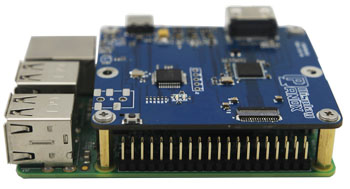
For companies exploring flexible OLED display integration, the challenge is often not finding a concept, but finding a practical supply path. Panox Display can be presented as the bridge between advanced panel technology and real product development needs: standard modules, custom support, touch integration, controller solutions, and project-oriented communication rather than catalog-only selling. That positioning works especially well for buyers who want flexible OLED screens for wearables, automotive-related concepts, handheld terminals, or other compact devices but do not want to manage every supply-chain detail alone.
If you want the article to convert rather than only inform, this section should stay. It continues the original article’s lead-generation rhythm while making the Panox role more aligned with flexible OLED projects instead of generic phone-screen commentary.
What flexible OLED trends are shaping 2026?
Three themes stand out in 2026. First, foldables are still an active growth driver, with industry forecasts expecting renewed expansion. Second, automotive use is advancing, but mainly in premium and design-led applications rather than mass-market dashboards. Third, flexibility is increasingly tied to broader device categories, including round, slidable, and concept-driven AI hardware, rather than only standard smartphone slabs.
That makes the 2026 flexible OLED story more mature than the early hype cycle. Buyers now care less about whether a display can bend in a demo and more about whether the technology improves packaging efficiency, user interaction, and perceived product value in a commercially realistic way.
Learn more: The Future of Foldable Phones in 2026: Apple's Entry, Creaseless Screens, and AI
Flexible OLED Display Comparison Table for 2026
| Application | Why Flexible OLED Fits | Key Advantage | Main Caution |
|---|---|---|---|
| Foldable devices | Supports inward/outward folding and premium form factors | Product differentiation and larger usable display area | Higher mechanical complexity |
| Curved consumer devices | Enables slimmer, more seamless industrial design | Better visual integration with housing | Added design and lamination cost |
| Smart wearables | Thin, light, and adaptable to compact shapes | Premium appearance and lower structural bulk | Size-specific sourcing and integration challenges |
| Automotive cockpit displays | Supports curved and free-form interiors | High-end visual impact and design freedom | Cost sensitivity remains high |
| Premium handheld/industrial devices | Helps reduce thickness and improve product feel | Lightweight structure and strong contrast | Project validation needed for durability |
Panox Display Perspective
“At Panox Display, we see flexible OLED not as a one-category solution, but as a design platform. The real value is the ability to help brands build thinner, lighter, and more visually differentiated products while still keeping sourcing and engineering decisions practical. As more customers move beyond standard flat displays, flexible OLED opens up better opportunities in wearables, smart devices, and next-generation interface design.”
Conclusion
Flexible OLED displays make the most sense in 2026 when a product needs more than a good-looking screen. They are most valuable when design freedom, reduced thickness, lighter structure, strong contrast, and premium positioning all matter at the same time. For foldables, wearables, curved products, and selected automotive applications, flexible OLED is already a practical technology rather than a futuristic one.
For buyers, the smarter question is not whether flexible OLED is impressive. It is whether the product can turn that flexibility into a better user experience and a stronger market position. When the answer is yes, flexible OLED display and flexible OLED screen solutions become much easier to justify.
To support projects that need both brightness and structural freedom, Panox Display also provides a wide range of Flexible OLED and High Luminance display options.
FAQs About Flexible OLED Display in 2026
What is a flexible OLED display?
A flexible OLED display is an OLED panel built on a flexible substrate, typically polyimide rather than glass, allowing the panel to be curved, folded, or shaped into more advanced form factors.
Is a flexible OLED screen only used in foldable phones?
No. In 2026, flexible OLED is also relevant for wearables, curved smart devices, automotive interiors, and other premium products that benefit from lighter and more adaptable display structures.
Does flexible OLED offer better image quality than LCD?
In many premium applications, yes. OLED’s self-emissive structure supports deep blacks, high contrast, and strong visual impact, while also enabling thinner product design.
Is flexible OLED more expensive?
Usually yes. The panel itself and the overall mechanical design can increase project cost, especially in foldable or highly customized applications. Cost remains one of the main reasons adoption is still selective in some markets such as automotive.
Why would a buyer choose Panox Display for flexible OLED projects?
Because many projects need more than a panel list. Panox Display can support flexible OLED sourcing, product matching, and solution-level communication for brands that want a workable path from concept to integration.
| Model | Size(inch) | Display Type | Resolution | Interface | Display Brand |
| 1.39 inch Round/Circular OLED Flexible For Wearable Smartwatch | 1.39 | AMOLED | 400(RGB)×400 | MIPI | Innolux |
| 1.5 inch Flexible OLED For Wearable Smart Watch | 1.5 | AMOLED | 120(RGB)×240 180PPI | SPI, MIPI | Innolux |
| 1.8 inch Flexible PMOLED For Wearable Bracelet | 1.8 | PMOLED | 160×32 | SPI | Futaba |
| 5.1 inch Flexible OLED On-Cell PACP For Cellphone | 5.1 | AMOLED | 720(RGB)×1520 330PPI | MIPI | BOE |
| 5.99 inch Flexible OLED On-Cell PACP For Cellphone | 5.99 inch | AMOLED | 1080(RGB)×2160 329PPI | MIPI | BOE |
| 5.99-Inch 1440x2880 Flexible AMOLED Display | BOE OLED for Huawei Smartphone | 5.99 | AM-OLED, OLED | 1440 x 2880 | MIPI | BOE&Huawei |
| 6.52 inch Flexible OLED 2520x840 Touch Panel | 6.52 | AM-OLED, OLED | 2520(RGB)×840 407 PPI | MIPI | CSOT |
| 6.67inch Flexible AMOLED 2K for Smartphone | 6.67 | OLED, AM-OLED | 1080x 2400 | MIPI | Tianma |
| 7.8 inch Flexible Full Color OLED 1920x1440 MIPI | 7.8 | AMOLED | 1440 x 1920 | MIPI | Royole |
| 8 inch Flexible/Foldable OLED | 8.01 | AMOLED | 2480x1860 | MIPI | CSOT |
| 13.3 inch 1536 x 2048 Flexible OLED Touch Screen | 13.3 | AM-OLED, OLED | 1536 (H) × 2048 (V) | eDP | LG |