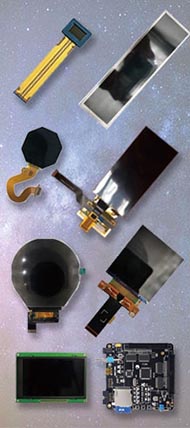







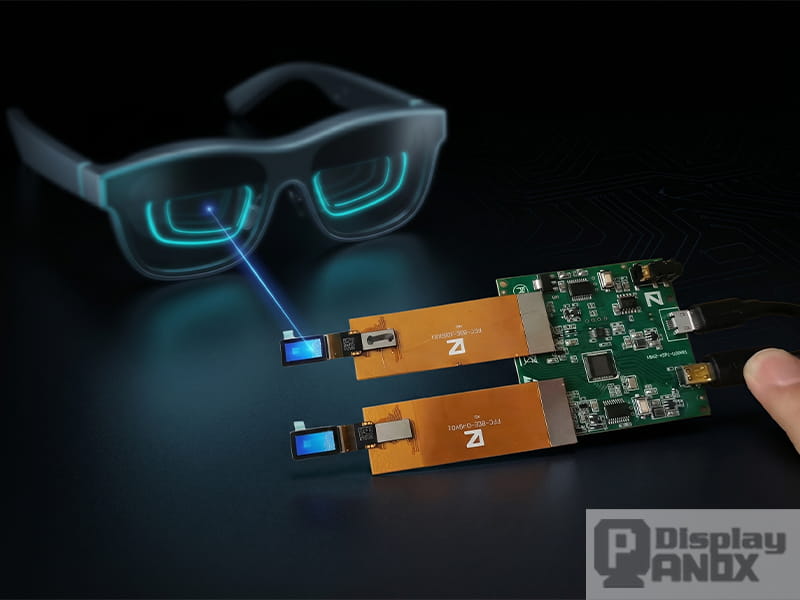
Augmented reality (AR) displays are compact, high-performance visual modules that overlay digital information onto the real world — in glasses, headsets, automotive heads-up displays (HUDs), and industrial wearables. At the heart of the best AR display systems today is Micro OLED (also known as OLEDoS, or OLED-on-Silicon), a technology that is redefining what near-eye visualization can achieve.
What Is an AR Display and How Does It Work?
An AR display is a visual output system that blends computer-generated imagery with a user's real-world environment in real time. Unlike VR displays that completely replace your field of view, AR displays project content — navigation cues, sensor data, annotations, or interactive UI — directly into your line of sight, either via transparent optics or a heads-up projection system.
The core of a modern AR display system consists of three elements: a light engine (the microdisplay itself), an optical combiner (such as a waveguide or birdbath lens), and a driver circuit that manages image rendering. The microdisplay generates the image; the optical system relays and merges it with the real world.
Micro OLED has emerged as the preferred light engine technology for AR because it is self-emissive — each pixel produces its own light without requiring a backlight — enabling extremely thin, power-efficient, high-contrast modules compact enough to fit inside a pair of glasses.
What Is Micro OLED and Why Does It Matter for AR?
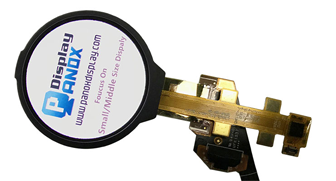
0.71 inch Micro OLED FHD For AR
Micro OLED (OLEDoS) is a display technology built directly onto a silicon wafer using CMOS semiconductor manufacturing processes. This is fundamentally different from conventional OLED panels, which are fabricated on glass substrates. By integrating the pixel driver circuitry into the silicon backplane at a microscopic level, manufacturers can achieve pixel densities exceeding 4,000 PPI — far beyond what any smartphone or TV panel can produce.
For AR applications, this matters enormously. A near-eye display sits only millimeters from the eye, meaning any pixel structure, blur, or low contrast becomes immediately visible. Micro OLED eliminates the "screen-door effect" seen in older displays, delivers deep true blacks (infinite contrast ratio), and produces vivid color — all in a package often smaller than a postage stamp.
Key technical strengths of Micro OLED for AR:
- Ultra-high pixel density: 3,000–5,000+ PPI for crisp near-eye imagery
- Self-emissive: No backlight required, enabling thin and lightweight form factors
- High contrast: Contrast ratios exceeding 100,000:1
- Fast response: Sub-millisecond pixel response eliminates motion blur
- Power efficiency: Significantly lower power draw than LCD-based alternatives
What Are the Main Types of AR Display Technologies?
Not all AR displays use the same underlying technology. The major light engine options in use today include:
| Technology | Key Strength | Best Use Case |
|---|---|---|
| Micro OLED (OLEDoS) | High contrast, compact size, color accuracy | Consumer AR glasses, VR headsets, EVF |
| Micro LED | Extreme brightness (up to 400,000+ nits) | Outdoor AR HUDs, industrial wearables |
| LCoS (Liquid Crystal on Silicon) | High resolution at lower cost | Enterprise AR, projectors |
| DLP / DMD | Fast switching, monochrome | Industrial HUDs, scanning displays |
Micro OLED currently leads for consumer-grade and premium AR glasses due to its balanced performance profile. Micro LED is gaining ground rapidly for scenarios requiring outdoor visibility — such as automotive HUDs — where brightness is the top priority. According to TrendForce, Micro OLED is presently the only display technology that can effectively support AR, VR, and MR applications simultaneously.
How Is Micro OLED Used in AR Heads-Up Displays?
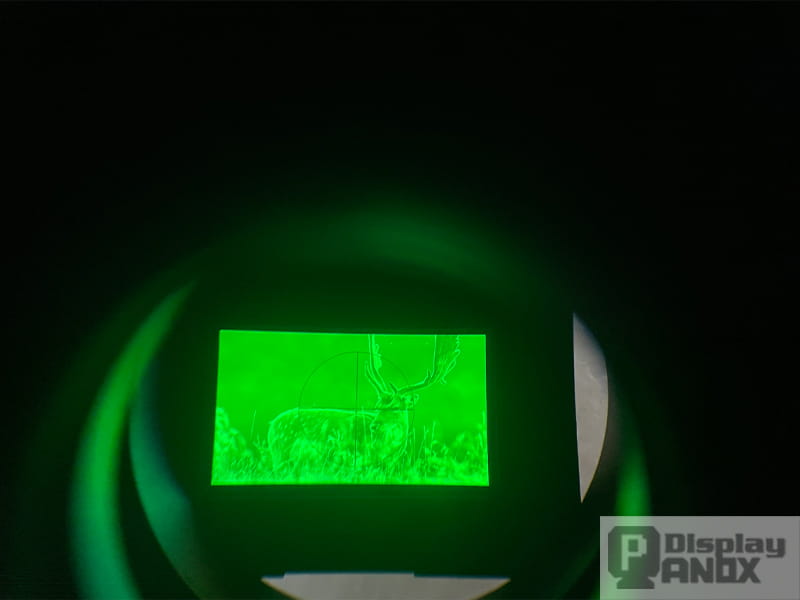
0.71 inch micro oled 3000 nits
AR heads-up displays (HUDs) project information directly into a user's field of view, whether in a pair of smart glasses or onto a vehicle windshield. The display quality of the HUD determines whether the overlay looks natural, readable, and immersive — or distracting and low-fidelity.
In consumer smart glasses such as the XREAL One, Micro OLED panels from Sony (0.68-inch, 1080p, 120Hz) power a native 3DoF AR experience with latency under 3 milliseconds — a level of responsiveness that makes digital overlays feel anchored to physical space. In professional and enterprise applications, Micro OLED HUDs are used in surgical navigation loupes (overlaying vascular maps in 4K), drone FPV goggles, military helmet displays, and quality inspection systems on factory floors.
In automotive, both Micro OLED and Micro LED are competing for the AR HUD segment. BOE's 6.2-inch Micro LED HUD enables a 130cm projection distance with minimal eye offset, with a debut planned in production vehicles in late 2025. AUO has demonstrated a 13-inch Micro LED HUD that remains visible under direct sunlight — addressing one of the biggest challenges for on-road AR overlays.
Which Devices Currently Use Micro OLED AR Displays?
Micro OLED has moved from prototype to mainstream production across several device categories:
Consumer AR/VR Headsets
- Apple Vision Pro — Sony Micro OLED panels, setting the benchmark for spatial computing visual quality
- XREAL One — Sony 0.68" OLED, 1080p, 120Hz, consumer AR glasses
- Pimax Dream Air — Micro OLED per-eye at 3840×3352, under 200g
Smart Glasses & Wearables
- Brands including VITURE, TCL, Rayneo, Thunderbird, and Meizu have shipped Micro OLED-based AR glasses targeting both entertainment and enterprise markets
Electronic Viewfinders (EVF)
- Sony and Canon high-end cameras use Micro OLED EVFs for professional-grade real-time previews
Industrial & Defense
- Military helmet-mounted displays, surgical AR loupes, and factory AR inspection tools are driving steady enterprise adoption
According to Omdia projections, upcoming devices from Apple, Meta, XREAL, and Rayneo through 2026–2028 will all be based on OLED microdisplays, confirming Micro OLED's dominance in the near-term AR hardware pipeline.
What Are the Key Differences Between Micro OLED and Other AR Display Technologies?
| Feature | Micro OLED | Micro LED | LCoS |
|---|---|---|---|
| Brightness | 1,000–5,000 nits (typ.) | Up to 400,000+ nits | Moderate |
| Contrast | Infinite (self-emissive) | Very high | Medium |
| Power Consumption | Very low (~120mW) | Extremely low (~45mW monochrome) | Higher |
| Pixel Density | 3,000–5,000+ PPI | Up to 4,000+ PPI | 2,000–3,500 PPI |
| Outdoor Visibility | Limited without microlens array | Excellent | Limited |
| Maturity / Availability | Mass production | Early mass production | Mature |
| Cost | Premium | Very high | Lower |
For indoor AR glasses, enterprise headsets, and high-fidelity near-eye displays, Micro OLED is the current gold standard. For outdoor and automotive HUD scenarios where sunlight readability is critical, Micro LED holds an advantage.
What Industries Are Driving Demand for AR Displays?
AR display adoption is accelerating across several verticals:
Consumer Electronics & Entertainment: Smart glasses for gaming, media consumption, and spatial computing are the highest-volume segment, with AR glass shipments forecast to grow from 600,000 units in 2024 to an estimated 32 million by 2030 (TrendForce).
Healthcare: Surgeons use AR loupes with OLEDoS displays to overlay real-time imaging data during procedures, reducing complexity and improving precision.
Automotive: Micro LED and Micro OLED HUDs are being integrated into premium and mid-range vehicles to project navigation, ADAS alerts, and speed data directly onto the windshield.
Industrial & Manufacturing: AR smart helmets and glasses assist technicians with hands-free instructions, remote collaboration, and quality inspection on production lines.
Defense & Aerospace: Helmet-mounted displays (HMDs) for fighter pilots — such as the F-35 system — and ground forces use high-brightness OLED microdisplays for targeting, navigation, and situational awareness data.
The global microdisplay market was valued at approximately $2 billion in 2025 and is projected to reach $12.4 billion by 2035, growing at a CAGR of 18.4%, driven primarily by AR/VR adoption.
Why Is Display Panel Selection Critical for AR Product Development?
Unlike standard flat panels, AR microdisplay selection cascades through the entire optical and mechanical design of a product. The physical dimensions of the display determine the waveguide design, which determines the optical path, which determines the overall form factor and weight of the device. Every extra gram of display hardware can reduce daily usage of an AR headset by as much as 13% (IEEE, 2023).
Choosing the right Micro OLED panel involves evaluating:
- Panel size and resolution — smaller panels enable lighter waveguides; higher resolution eliminates screen-door effect
- Brightness and contrast — especially critical for outdoor or high-ambient-light environments
- Refresh rate and latency — 90Hz+ with sub-3ms latency is the current bar for comfortable AR experiences
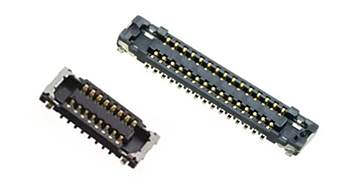
- Interface compatibility — MIPI, HDMI, or custom driver board support
- Optical engine integration — birdbath, pancake, or waveguide optics pairing
Working with an experienced display supplier who understands both the panel specifications and the downstream optical integration requirements is essential to reducing development time and avoiding costly redesigns.
How Does Panox Display Support AR and Micro OLED Projects?
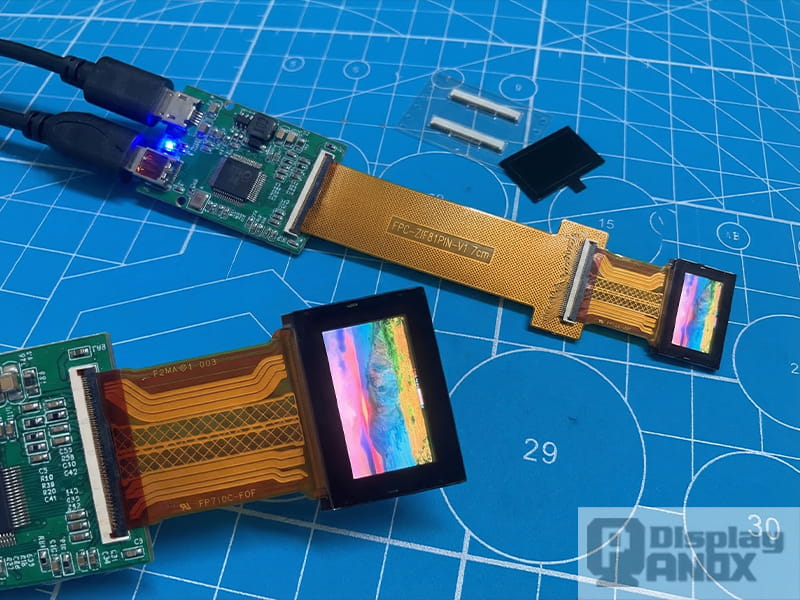
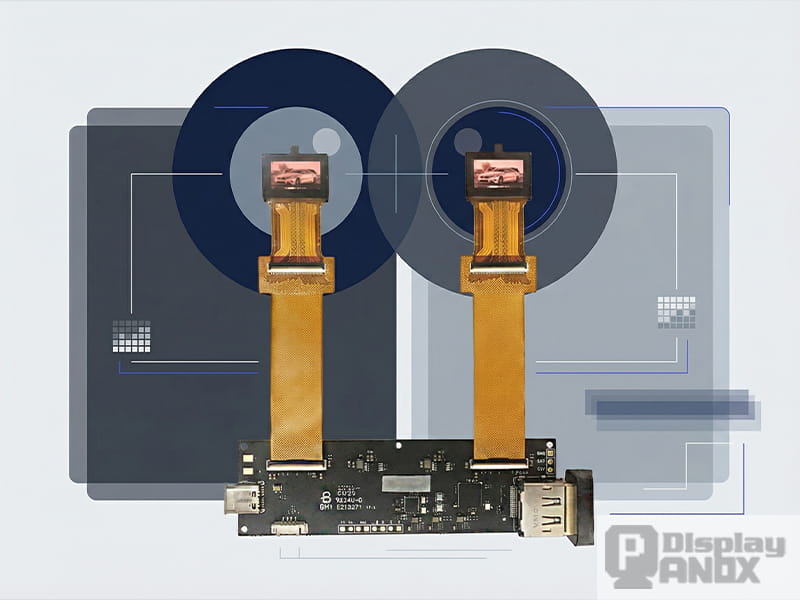
0.71 inch Micro OLED 1920x1080 LVDS 3000 nits
Panox Display, a specialist display supplier established in 2015, provides Micro OLED modules and full-stack display solutions tailored for AR developers, OEM manufacturers, and hardware startups. Sourcing panels from leading manufacturers including Sony, BOE, and other tier-one producers, Panox offers premium Micro OLED modules with the performance specifications that modern AR applications demand — high pixel density, wide color gamut, fast refresh, and compact form factors.
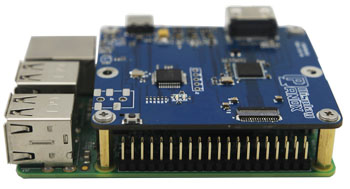
Beyond panel supply, Panox provides controller boards, PCBAs, custom optical integration support, and driver solutions, making them a single-source partner for teams building AR glasses, HMDs, EVFs, and industrial wearable displays. With flexible MOQ policies and OEM/ODM services, Panox Display is accessible to both volume manufacturers and early-stage developers prototyping their first AR hardware product.
Panox Display Expert Views
"The shift to Micro OLED as the de facto standard for AR near-eye displays represents a fundamental platform change in the display industry. At Panox Display, we recognized this transition early and have built our sourcing and support capabilities around the specific needs of AR developers — from panel selection and driver board design to optical module integration. Our goal is to remove the hardware barriers that slow teams down, so they can focus on building the AR experiences that matter. With access to top-tier OLEDoS panels and the engineering support to integrate them, we help our customers bring competitive AR products to market faster and with greater confidence."
How Do You Optimize Power and Thermal Performance in AR Displays?
Power and heat management are critical challenges in wearable AR systems, where battery capacity is severely constrained by weight limits. Micro OLED has a natural advantage here — its emissive architecture means power is only consumed by active pixels, and dark or black content draws almost no power.
Practical optimization strategies include:
- Content-aware rendering: Designing UI with dark backgrounds to minimize pixel activation
- Adaptive brightness: Automatically adjusting luminance based on ambient light conditions
- Local dimming and partial refresh: Updating only regions of the display that change between frames
- Low-power driver configurations: Using sleep modes and frame-rate scaling when content is static
- Thermal interface materials: Properly dissipating heat from the silicon backplane to maintain panel longevity
BOE's OLEDoS panels, for example, achieve approximately 120mW in typical AR operation — sufficient for over 10 hours of use with a compact 300mAh battery, a meaningful milestone for all-day AR wearables.
What Is the Future Roadmap for AR Display Technology?
The next generation of AR display development is focused on several intersecting advances:
Higher brightness for outdoor AR: eMagin (now part of Samsung) has demonstrated direct RGB patterning Micro OLED achieving 15,000–20,000 nits — approaching the threshold required for clear outdoor AR overlays.
Smaller, lighter form factors: BOE's 0.49-inch OLEDoS enables waveguides as thin as 1.8mm, pushing finished AR frames below 65 grams — the threshold for all-day wear comfort.
Micro LED convergence: For applications demanding extreme outdoor brightness, Micro LED microdisplays are targeting mass production in 2025–2027. Meta's planned 2027 AR headset is expected to use Micro LED displays.
AI-integrated displays: Systems that adapt rendering, FOV, and brightness in real time based on gaze tracking and environmental sensing are already in development.
Expanded application domains: Quantum dot enhancements, AI-adaptive displays, and foldable microdisplay architectures will extend AR display use cases into medical imaging, automotive windshields, and next-generation defense systems through 2030 and beyond.
Conclusion
AR displays powered by Micro OLED technology represent one of the most significant shifts in visual hardware since the smartphone display revolution. The combination of self-emissive pixels, silicon-level precision, and ultra-compact form factor makes Micro OLED the defining display technology for the AR era — from consumer smart glasses to surgical navigation to automotive HUDs.
Selecting the right Micro OLED panel, optical system, and integration partner is critical to delivering an AR product that meets the demanding requirements of near-eye visual performance. Panox Display offers developers and OEMs access to premium Micro OLED modules backed by sourcing relationships, engineering support, and the flexibility to serve both prototyping teams and volume manufacturers.
Learn more: What Should You Know About Arduino TFT Display?
FAQs
Q: What is the difference between Micro OLED and standard OLED for AR?
A: Micro OLED is fabricated directly on a silicon wafer (OLEDoS), enabling pixel densities of 3,000–5,000+ PPI in sub-inch display sizes. Standard OLEDs use glass substrates and are optimized for smartphones or TVs — far too large and insufficiently dense for near-eye AR optics.
Q: Can Micro OLED AR displays be used outdoors?
A: Standard Micro OLED panels can struggle in bright sunlight without optical enhancement. Technologies such as microlens arrays, high-luminance panel configurations, or pairing with Micro LED light engines are used to improve outdoor readability for HUD and smart glasses applications.
Q: What resolution do current AR Micro OLED displays support?
A: Current production Micro OLED panels range from 640×480 to 3840×3840+ per eye, with pixel densities from approximately 2,500 to over 5,000 PPI. Sony's latest EVF and AR modules offer full HD in panels as small as 0.44 inches.
Q: What optical systems are used with Micro OLED in AR glasses?
A: The two most common optical architectures are birdbath combiners (compact, good for consumer glasses) and waveguide combiners (thinner, enabling glasses-like form factors). Pancake lens designs are more common in VR headsets but are also being explored for compact AR.
Q: How does Panox Display support custom AR display projects?
A: Panox Display offers Micro OLED module supply, custom driver board and PCBA design, optical integration consultation, OEM/ODM manufacturing services, and flexible MOQ arrangements — supporting teams from early prototype through volume production.
Q: Which companies make Micro OLED panels used in AR devices?
A: Leading Micro OLED panel manufacturers include Sony, BOE, eMagin (Samsung), SidTek, Seeya Technology, and Kopin. Panox Display sources from tier-one producers to ensure panel quality and supply chain reliability for its customers.
| Panel model | Interface | Type | Size (inch) | Resolution | P.S |
| S032WEM01 | MIPI/RGB | Micro OLED | 0.32 | 800x600 | |
| PMOF039XGAM | RGB | Micro OLED | 0.39 | 1024x768 | Full Color/Monochrome |
| BO039M1920M | MIPI | Micro OLED | 0.39 | 1920x1080 | Highest PPI =5644 |
| EP047M800T | TTL | LCOS | 0.47 | 800x600 | |
| BO049FHPMO | SPI,MIPI | Micro OLED | 0.49 | 1920x1080 | |
| S050M1600M | MIPI | Micro OLED | 0.5 | 1600x1200 | |
| ECX331DB-6 | Mini LVDS | Micro OLED | 0.5 | 1024x768 | |
| S060LDM01 | MIPI | Micro OLED | 0.6 | 1920x1080 | |
| ECX335AF | Mini LVDS | Micro OLED | 0.71 | 1920x1080 | 200 nits brightness version |
| ECX335B | Mini LVDS | Micro OLED | 0.71 | 1920x1080 | 500 nits brightness version |
| ECX335SN | Mini LVDS | Micro OLED | 0.71 | 1920x1080 | 3000 nits brightness version |
| BO071M1920M | MIPI | Micro OLED | 0.71 | 1920x1080 | |
| S072WCM04 | MIPI | Micro OLED | 0.72 | 1920x1080 | |
| S103WAM01 | MIPI | Micro OLED | 1.03 | 2560x2560 |