



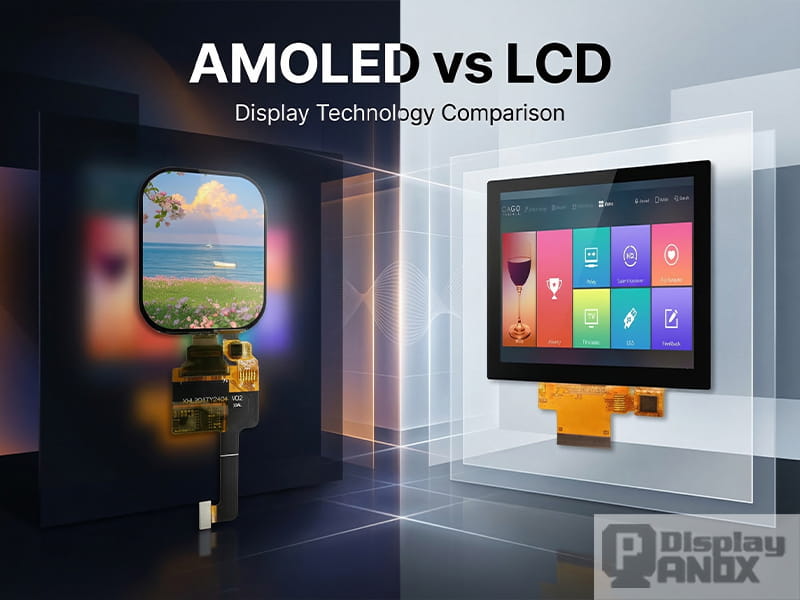
Phone buyers still ask the same question before upgrading: is AMOLED better than LCD, or is LCD still the smarter choice? The short answer is that AMOLED and LCD are built on very different display principles, so the better option depends on what matters most—contrast, battery behavior, outdoor readability, eye comfort, burn-in risk, price, or long-term durability. AMOLED is a self-emissive display technology, which means individual pixels produce light on their own, while LCD relies on a separate backlight behind the panel. That single difference explains most of the real-world gap in black levels, contrast, thickness, and power behavior.
In 2026, this comparison matters more than ever because buyers are no longer choosing between “good” and “bad” screens. Many LCD panels are now bright, smooth, and color-accurate, while many AMOLED panels have become brighter, more efficient, and better protected against image retention than earlier generations. The real question is not whether one technology always wins, but which one fits the actual use case better.
When discussing AMOLED vs LCD for gaming, the real difference often comes down to contrast, motion clarity, and how immersive the screen feels during fast-paced content.
AMOLED vs LCD: Key Specs at a Glance
|
Parameter |
AMOLED |
LCD |
|---|---|---|
|
Display Principle |
Self-emissive pixels |
Backlight-based display |
|
Black Levels |
True blacks, pixels can turn off individually |
Blacks are limited by the backlight |
|
Contrast |
Usually much higher perceived contrast |
Lower than AMOLED in dark scenes |
|
Color Impact |
Often more vivid and visually striking |
Often more neutral depending on tuning |
|
Brightness Behavior |
Can be excellent, but varies by device and content |
Can also be very strong, especially with a powerful backlight |
|
Battery Behavior |
More efficient with dark UI or dark mode in many cases |
More consistent across bright and dark content |
|
Outdoor Visibility |
Depends on panel brightness, reflectance, and tuning |
Also depends on brightness and reflectance, not just the technology |
|
Response Time |
Typically faster |
Usually slower than AMOLED |
|
Burn-In Risk |
Possible over long-term static usage |
Much lower risk |
|
Eye Comfort |
Depends on the specific device and dimming method |
Also device-dependent, but often seen as safer by PWM-sensitive users |
|
Thickness / Flexibility |
Thinner structure, supports flexible designs |
Usually thicker and less flexible |
|
Cost |
Usually higher |
Usually more cost-effective |
|
Best For |
Premium phones, gaming, media, flagship designs |
Budget devices, practical everyday use, static-content-heavy scenarios |
What Is AMOLED?
AMOLED stands for Active-Matrix Organic Light-Emitting Diode. In practical terms, each pixel can light up independently, and black pixels can switch off almost completely. That allows AMOLED displays to deliver extremely deep blacks and very high perceived contrast, because dark scenes are not limited by a glowing backlight behind the screen. Samsung Display describes OLED black levels as “Real Black” with near-infinite contrast.
This is also why AMOLED is strongly associated with premium visual impact. Dark mode looks richer, movie scenes feel more cinematic, and UI elements can appear to float on the screen rather than sit on a grayish background. That visual punch is one of the main reasons AMOLED remains a high-interest keyword and a major selling point in premium consumer electronics.
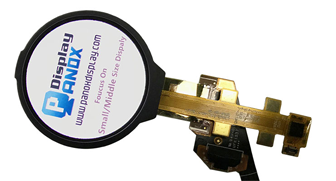
If you want to explore real AMOLED solutions beyond the general comparison, you can also check our product range for different sizes and applications.
What Is LCD?
LCD stands for Liquid Crystal Display. Unlike AMOLED, LCD pixels do not emit light by themselves. They work by controlling how much light passes through from a backlight unit placed behind the panel. Because of that structure, an LCD screen usually cannot achieve the same “true black” effect as AMOLED, especially in dark viewing conditions.
That said, LCD is far from obsolete. It is mature, cost-effective, widely available, and still very competitive in many products. LCD can remain a strong choice for users who care about price stability, long-term image persistence behavior, and a more familiar viewing experience without some of the tradeoffs commonly discussed around OLED-family panels.
For projects that prioritize cost control and reliable everyday performance, our LCD product options are also worth reviewing.
AMOLED vs LCD: The Biggest Real-World Differences
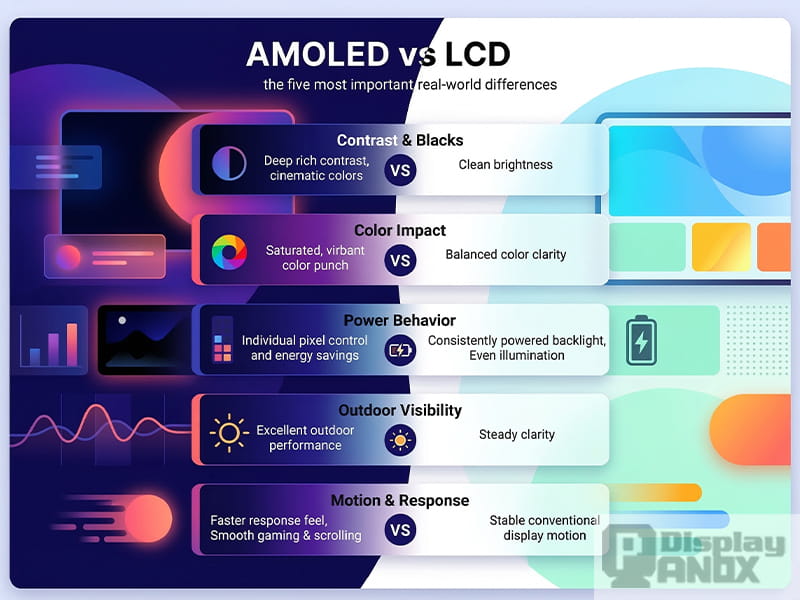
1. Contrast and Black Levels
This is where AMOLED usually wins most clearly. Because AMOLED pixels can switch off individually, black areas can look dramatically darker than on LCD. LCD panels can improve black performance with better backlights, dimming zones, or panel tuning, but the backlight still exists, so dark scenes often show some glow, haze, or reduced depth compared with OLED-family displays.
For movies, night scenes, dark wallpapers, and premium-looking interfaces, AMOLED generally creates the more striking image. That is why people searching “AMOLED vs LCD full comparison” often end up caring most about contrast first, even before battery or brightness.
If your application requires stronger visual impact, exploring High Contrast display options can be a practical next step.
2. Color and Visual Impact
AMOLED often looks more vivid at first glance, especially on phones tuned for saturated color profiles. It can also achieve excellent color accuracy when calibrated well. DisplayMate’s smartphone testing has repeatedly noted strong OLED performance in color accuracy, image contrast accuracy, and screen uniformity. LCD can also be color-accurate, but it does not naturally benefit from pixel-level light control in the same way.
In simple terms, AMOLED usually looks more dramatic, while LCD can look more neutral depending on tuning. Neither outcome is automatically better; it depends on whether the goal is visual punch or restrained realism.
Many buyers searching for the best screen for battery life are surprised to learn that the answer depends heavily on usage habits, brightness settings, and whether dark mode is used often.
3. Battery Life: Which Screen Saves More Power?
This is one of the most misunderstood parts of the AMOLED vs LCD debate. AMOLED does not always use less power than LCD. Because OLED pixels emit their own light, power draw changes depending on image content. Dark backgrounds can reduce power use because black pixels may be effectively off, while bright full-screen white content can increase power draw. Android’s official battery advice specifically notes that dark theme can save battery on OLED screens because individual pixels are turned off to display black.
LCD behaves differently. Since it uses a backlight, power is less tied to whether the image is black or white, and more tied to backlight brightness and panel design. A U.S. Department of Energy presentation on display power trends notes that LCD power is strongly tied to the backlight, while OLED power is tied to emissive materials and driving circuitry.
So which is better for battery life? If a device uses a lot of dark UI, dark mode, always-on display elements, or video content with many dark scenes, AMOLED often has an advantage. If usage is dominated by bright webpages, documents, spreadsheets, and white-background apps, the gap can narrow or even reverse depending on the specific device. That is why “AMOLED battery life vs LCD” has no one-size-fits-all answer.
4. Outdoor Visibility and Brightness
Many buyers assume AMOLED is always brighter, but that is too simplistic. Real-world brightness depends heavily on the specific panel, device tuning, thermal control, reflective behavior, and display stack. Some modern AMOLED panels achieve very high peak brightness, while some LCD implementations remain excellent in bright environments because of strong sustained brightness and backlight-based luminance. DisplayMate has documented the steady increase in OLED peak brightness across flagship devices, while RTINGS’ display testing also shows that bright-room performance depends on factors such as reflections, coatings, and panel structure—not just the technology label.
For buyers searching “AMOLED or LCD in sunlight,” the practical answer is this: do not judge only by AMOLED vs LCD. Judge by the specific panel’s actual measured brightness, reflection handling, and anti-glare implementation. In 2026, excellent outdoor readability is possible on both.
5. Motion, Gaming, and Responsiveness
AMOLED is often preferred for its fast pixel response and high perceived smoothness, especially in fast motion and gaming scenarios. This can help reduce visible smearing and contribute to a cleaner feel in motion-heavy content. LCD can still be excellent for gaming, especially with high refresh rates and strong tuning, but OLED-family panels are widely associated with faster response characteristics.
For users specifically searching “AMOLED vs LCD for gaming,” AMOLED often feels more premium because of the combination of contrast, motion clarity, and visual depth. LCD can still be the better value choice if price matters more than cinematic image quality.
AMOLED vs LCD: The Tradeoffs Most Buyers Actually Care About
1. Is AMOLED Better for Eyes?
This question gets searched constantly, but the answer is nuanced. AMOLED is not automatically worse for eyes, and LCD is not automatically safer. What many users are actually reacting to is not the word “AMOLED” itself, but flicker behavior related to brightness control. Notebookcheck’s analysis explains that many OLED displays use PWM dimming, and low-frequency PWM can cause discomfort for some sensitive users. The same source also notes that not all devices behave the same way, and some OLED devices show little or no problematic PWM behavior.
LCD is sometimes preferred by people who are sensitive to PWM-related flicker, but this is device-specific, not absolute. Some LCD screens also use PWM. So for buyers searching “Does AMOLED hurt eyes?” the better advice is to check measured PWM behavior on the specific model, not assume the technology name alone tells the whole story.
2. Burn-In and Image Retention
Burn-in remains one of the most common objections to AMOLED. OLED-family displays can experience image retention or burn-in under certain conditions, especially when static elements remain on screen for extended periods over time. LG’s official OLED reliability materials acknowledge that burn-in or image retention is possible, while also emphasizing mitigation systems and the fact that average consumer use is less likely to create severe issues.
LCD is generally the safer choice if long-term static UI elements are a major concern—for example, industrial terminals, monitoring dashboards, or very repetitive daily usage with fixed icons. For most mainstream phone users, modern AMOLED protection features have reduced the practical risk, but they have not erased it completely.
3. Why Do Flagship Phones Prefer AMOLED?
The answer is not marketing alone. AMOLED makes it easier to deliver premium contrast, thinner display structures, curved or flexible designs, always-on display features, and modern industrial design aesthetics. The technology also supports the visual style that high-end devices want to project: deeper blacks, stronger perceived contrast, and more dramatic HDR presentation.
So when people ask, “Why do flagship phones use AMOLED?” the answer is usually a mix of image quality, form-factor flexibility, and premium product positioning—not just one isolated specification.
4. Why Do Some Phones Still Use LCD?
Because LCD still solves real problems well. It is usually more cost-effective, often easier for budget product lines, and remains appealing for users who prefer to avoid OLED burn-in concerns or are sensitive to certain OLED dimming behaviors. In many mid-range and entry-level devices, LCD remains a rational choice rather than a “cheap leftover.”
AMOLED vs LCD: Which One Is Better for Different Users?
1. Choose AMOLED if the priority is:
More cinematic contrast, deeper blacks, stronger visual impact, dark-mode efficiency, premium design language, and a screen experience that feels more modern and high-end. AMOLED is usually the better answer for entertainment-focused users, visual-first buyers, and products meant to feel flagship-grade.
2. Choose LCD if the priority is:
Lower cost, practical value, less concern about long-term image retention, and a more straightforward screen choice for general daily use. LCD can still be the better fit for budget-conscious buyers, static-content-heavy usage, and users who prefer to minimize OLED-specific tradeoffs.
3. The best practical answer in 2026
For premium phones, AMOLED is usually the more desirable technology. For value-focused phones and many functional devices, LCD still makes perfect sense. The best buying decision comes from matching the panel to the usage pattern—not from assuming a three-letter acronym automatically wins.
Final Verdict: AMOLED vs LCD
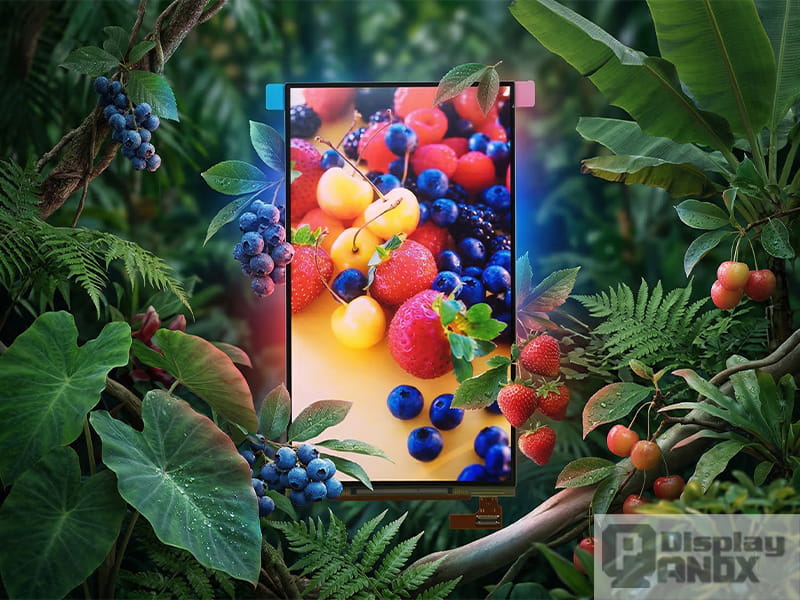
5.55 inch AM-OLED 1280X720
If the goal is the best-looking image, AMOLED usually wins. It offers deeper blacks, stronger perceived contrast, excellent visual punch, and more design flexibility. If the goal is cost efficiency, fewer worries about persistent static elements, and a still-very-good everyday experience, LCD remains highly relevant.
The smartest conclusion is this: AMOLED is often better for premium experience, but LCD is still better for some buyers and some products. “Better” depends on whether the screen is being judged by movies, gaming, battery behavior, eye sensitivity, long-term static use, or price. That is the real answer behind the AMOLED vs LCD debate in 2026.
The OLED vs LCD 2026 comparison is more relevant than ever because both technologies have continued to improve in brightness, efficiency, and overall viewing quality.
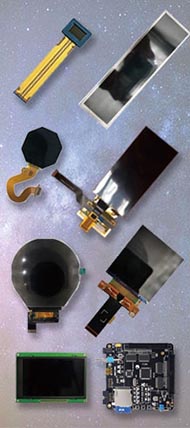
If you are comparing screen technologies for a new device, browsing available AMOLED and LCD modules can make the decision much easier.
FAQs
1. Is AMOLED better than LCD?
Usually yes for contrast, black levels, and premium visual impact. Not always for price, static-content durability concerns, or every battery scenario.
2. Does AMOLED burn in?
It can. Modern OLED devices include mitigation features, and average consumer use is less likely to create severe burn-in, but the risk is not zero.
3. Is LCD better for eyes than AMOLED?
Not automatically. Many complaints are really about PWM flicker and dimming implementation, which varies by device. Some users are more sensitive to it than others.
4. Which is better for battery life, AMOLED or LCD?
AMOLED can save power with dark content and dark mode, while LCD power behavior is less dependent on image color. Real battery results depend on usage and the specific device.
5. Why do flagship phones use AMOLED instead of LCD?
Because AMOLED helps deliver deeper blacks, higher perceived contrast, thinner structures, and a more premium overall screen experience.
6. Is LCD outdated in 2026?
No. LCD is no longer the prestige option in phones, but it is still practical, competitive, and useful in many products and price tiers.
7. Which display is better for gaming?
AMOLED is often preferred for its contrast and fast-feeling motion response, but a high-quality high-refresh LCD can still be excellent for gaming.
8. Which display is better in sunlight?
Neither technology wins automatically. Outdoor readability depends on the actual device’s brightness, reflectance, and display tuning.