



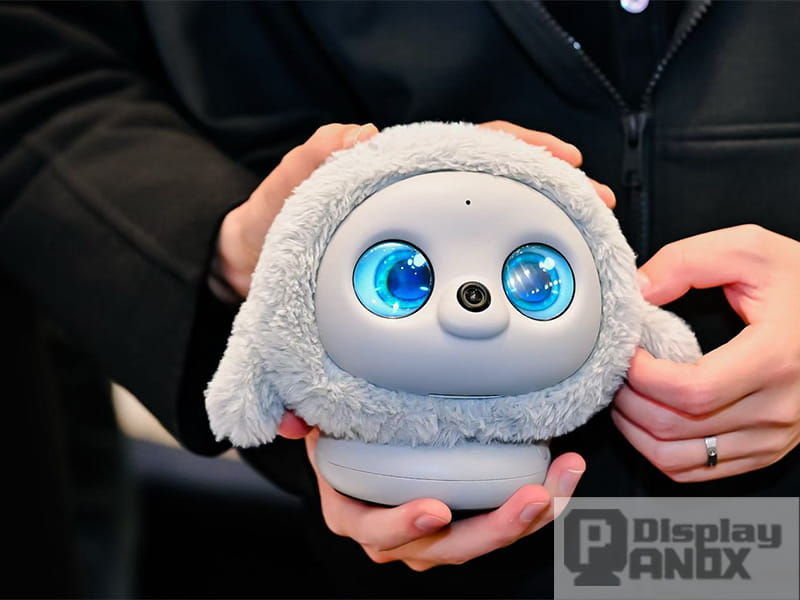
If you have been paying attention to the latest wave of AI toys, smart learning products, and interactive companion devices, one chip appears again and again: ESP32-S3.
From talking dolls and educational robots to voice-enabled story machines and simple vision-based interactive products, ESP32-S3 has become one of the most practical choices for developers building connected, low-power, and cost-sensitive devices. That popularity is not accidental. It comes from a strong balance of processing power, wireless connectivity, AI-friendly features, compact integration, and a mature development ecosystem.
For companies developing products that combine audio, sensors, connectivity, and even small display interfaces, ESP32-S3 offers a highly efficient foundation. That is one reason it appears so often in both ESP32-S3 projects and commercial smart hardware.
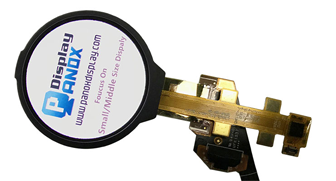
When wireless control is paired with on-device visuals, a wearable display panel can make the product feel more complete.
What Makes ESP32-S3 Stand Out
At the hardware level, ESP32-S3 gives developers more than just a basic microcontroller. It uses a dual-core Xtensa LX7 architecture running up to 240 MHz, includes 512 KB of internal SRAM, integrates 2.4 GHz Wi-Fi and Bluetooth Low Energy, and supports a wide range of peripherals. Espressif also positions it as a chip with vector instruction support that is useful for AI and signal-processing workloads, which helps explain why it is frequently chosen for wake-word detection, lightweight vision tasks, and responsive edge devices.
In simple terms, ESP32-S3 sits in a sweet spot. It is powerful enough for real interactive products, but still affordable and compact enough for mass-market consumer electronics.
A Better Fit for Voice-First Products
One of the biggest reasons behind the rise of ESP32-S3 module adoption is voice interaction.
Many AI toys need to do several things at once: listen for wake words, manage local logic, connect to the cloud, control speakers, and sometimes drive LEDs or small displays. ESP32-S3 is well suited for that kind of multitasking. Your original article highlights local voice wake-up, microphone support through I2S, and the ability to work with low-power audio codecs for features such as noise reduction and echo handling.
Espressif’s official documentation also shows that ESP32-S3 is used in local wake-word solutions, which reinforces its role in audio-first embedded products.
That matters because users expect faster, more natural interaction. A toy or companion device feels much smarter when it can respond immediately to simple commands without always waiting on the cloud.
Built-In Wireless Makes Smart Devices Easier to Build
A connected toy is no longer just a toy. It is part of a broader product ecosystem.
ESP32-S3 combines Wi-Fi and Bluetooth LE in one platform, making it easier to support app pairing, cloud sync, OTA updates, and wireless data exchange without adding multiple chips. Your source article emphasizes this advantage clearly, especially for products such as programmable robots and connected learning devices.
According to Espressif, ESP32-S3 integrates 2.4 GHz 802.11 b/g/n Wi-Fi and Bluetooth 5 LE, which is exactly the kind of connectivity combination developers want when building compact consumer electronics.
For brands, that integration helps reduce board complexity. For users, it means easier setup, smoother updates, and more reliable interaction with phones, apps, or cloud services.
AI-Friendly Without Becoming Overcomplicated
A big reason people search for ESP32-S3 AI or ESP32-S3 for AI devices is that the chip brings practical edge intelligence to small products.
It is not designed to run large language models by itself, but it is very capable when it comes to lightweight on-device workloads such as wake-word recognition, simple classification, sensor fusion, and low-latency interaction logic. Your source article specifically highlights INT8-friendly AI acceleration and floating-point improvements for lightweight neural network tasks.
This is where ESP32-S3 becomes especially attractive. Many products do not need heavyweight AI at the edge. They just need enough local intelligence to improve speed, reduce bandwidth use, and keep the product usable when connectivity is weak.
That practical level of embedded AI is often far more valuable in mass-market devices than raw theoretical performance.
Ideal for Products with Small Displays and Interactive Interfaces
Since your site focuses on displays, this is a particularly important angle.
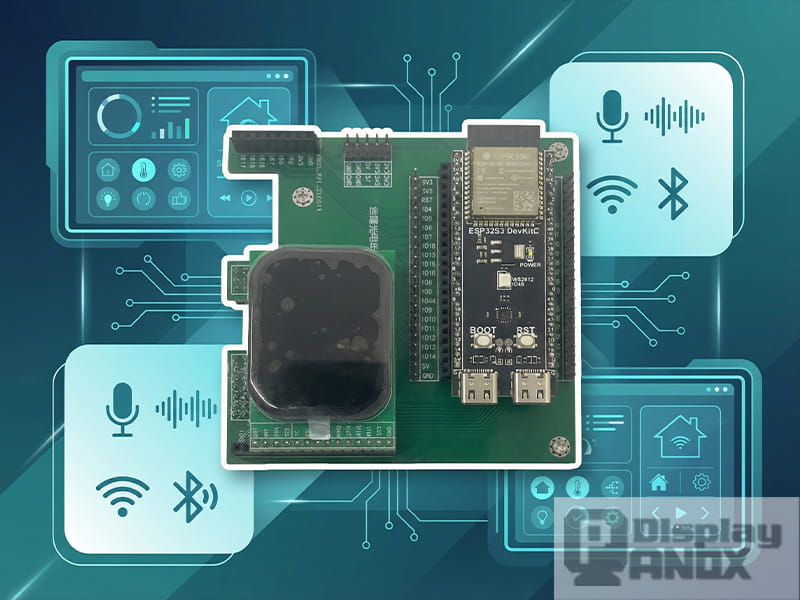
A growing number of ESP32-S3-based products are not just audio devices. They also include small OLED, LCD, or other compact display modules for menus, status feedback, animated expressions, educational visuals, or touch-based interfaces. Your original article notes support for peripherals and small display integration as part of the chip’s flexibility.
Espressif also highlights the broad peripheral set and large number of programmable GPIOs, which makes the platform practical for products combining microphones, touch controls, LEDs, motors, sensors, and display panels in one system.
This is one reason ESP32-S3 has strong relevance far beyond toys. It works well in smart display terminals, compact HMI products, educational devices, portable tools, and small connected consumer electronics where the display is part of the experience.
Lower Power Helps Real Products Succeed
Power efficiency may not be the flashiest feature, but it is often the difference between a good product and a frustrating one.
Your source article points out deep-sleep capability and low-power management as major strengths, especially for battery-powered devices that need decent standby time and practical daily usage.
Espressif’s datasheet also documents dedicated low-power modes and deep-sleep operation for the ESP32-S3 family.
For AI toys, portable learning devices, and compact wireless products with displays, this matters a lot. Better power behavior means fewer charges, better standby life, and more design freedom for slimmer or lighter products.
Cost and Integration Still Matter
Not every winning product uses the most powerful chip. Many winning products use the most balanced one.
ESP32-S3 helps developers combine compute, connectivity, and peripheral control into a single compact platform. Your source article emphasizes BOM reduction, simpler integration, and small package size as important reasons manufacturers choose it.
That is a major commercial advantage. Fewer chips often mean a smaller PCB, lower assembly complexity, fewer compatibility headaches, and a faster path from prototype to production.
In competitive categories like AI toys, educational electronics, and small smart display devices, that kind of efficiency can be more important than chasing the highest performance spec.
A Strong Ecosystem Reduces Development Risk
A chip is only as useful as the ecosystem around it.
ESP32-S3 benefits from Espressif’s mature software environment, developer tools, example code, and broad community support. Your source article highlights official SDK support, FreeRTOS compatibility, and tools that help developers deploy lightweight AI functionality more quickly.
That ecosystem advantage is one reason ESP32-S3 keeps showing up in startups, maker communities, and commercial product development at the same time. Teams can prototype quickly, validate ideas faster, and scale more confidently.
For companies launching new connected products with displays, audio, or sensors, that lower development risk is extremely valuable.
Where ESP32-S3 Still Has Limits
ESP32-S3 is highly capable, but it is not magic.
If a product depends on complex natural language understanding, heavy computer vision, or large local AI models, the chip will usually need cloud assistance or a more advanced hardware architecture. Your source article addresses this directly, recommending a hybrid model where lightweight functions stay local and more demanding processing moves to the cloud.
That is the right way to think about it. ESP32-S3 performs best when it is used for responsive edge intelligence, device control, wireless interaction, and rich peripheral integration rather than oversized AI workloads.
Why ESP32-S3 Keeps Winning
The reason ESP32-S3 has become so common is simple: it solves real product problems.
It gives developers enough performance for responsive interaction, enough wireless capability for connected experiences, enough AI support for useful edge functions, enough interface flexibility for sensors and displays, and enough ecosystem support to move from concept to production efficiently. That core logic is exactly what your original article argues, and it still holds up well.
For brands building smart toys, interactive consumer electronics, or compact display-based devices, ESP32-S3 remains one of the most practical choices on the market.
And for hardware products where display quality shapes the user experience, pairing the right controller platform with the right screen can make the whole product feel more polished, more responsive, and more commercially viable.
As ESP32-S3-based devices become more interactive, a wearable display panel can help deliver clearer and more intuitive feedback.
FAQs
What is ESP32-S3 mainly used for?
ESP32-S3 is widely used in smart consumer electronics, AI toys, voice-interaction devices, IoT products, compact display systems, and embedded projects that need Wi-Fi, Bluetooth LE, and flexible peripheral support.
Is ESP32-S3 good for AI?
Yes, for lightweight edge AI tasks. ESP32-S3 is well suited for wake-word detection, simple classification, sensor-based intelligence, and responsive local interaction. It is not a replacement for high-end AI processors, but it is very practical for embedded AI products.
Can ESP32-S3 drive a display?
Yes. ESP32-S3 supports rich peripherals and GPIO resources, so it is commonly used with small LCD and OLED displays in smart devices, control panels, and interactive embedded products.
Why is ESP32-S3 popular in AI toys?
Because it balances local processing, wireless connectivity, low power consumption, compact integration, and development convenience. That combination makes it a strong fit for voice-enabled and sensor-rich products.
Does ESP32-S3 support Wi-Fi and Bluetooth?
Yes. ESP32-S3 integrates 2.4 GHz Wi-Fi and Bluetooth 5 Low Energy on the same chip, which helps simplify hardware design for connected products.
Is ESP32-S3 suitable for commercial products?
Yes. Its strong ecosystem, mature SDK support, integrated wireless features, and broad peripheral compatibility make it suitable for both prototyping and mass-production scenarios.