



Introduction: When the Display Itself Becomes Part of the Story
For most of the last decade, "digital signage" meant one thing: a flat rectangular screen mounted to a wall. Brands had limited room to differentiate — the content might change, but the format never did. In 2026, that's finally changing.
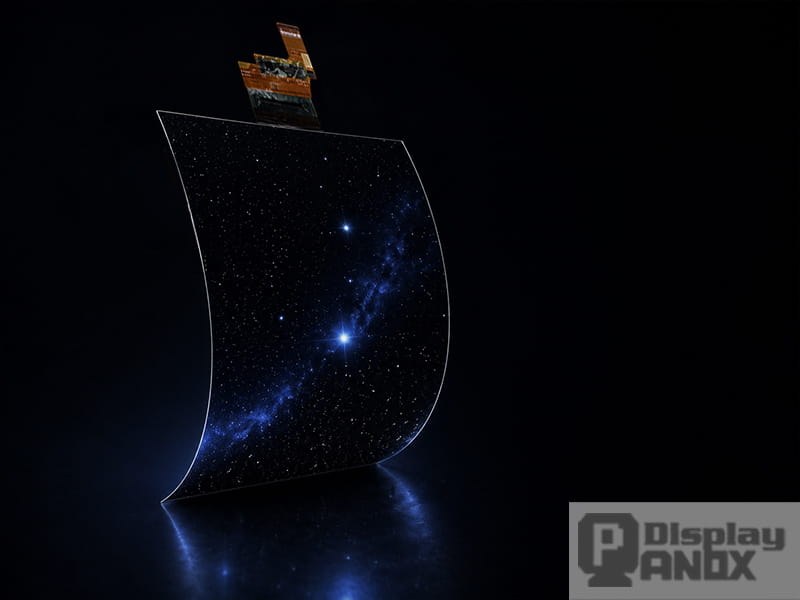
A new generation of small-format flexible OLED displays is arriving in the kinds of spaces where rectangular wall screens have always felt out of place: boutique counters, exhibition booths, museum vitrines, hotel concierge desks, automotive showroom plinths, and high-end concept stores. These displays don't sit on a wall demanding attention. They wrap around products, curve along shelf edges, and integrate into the architecture of the space itself.
The 7.8-inch flexible OLED panel — originally developed for the foldable smartphone category — has emerged as the practical sweet spot for this new category of curved, intimate, premium digital display. This article explores what's driving the shift, where these displays are being deployed across industries, and how product designers, fabricators, and integrators can source them for their next project.
Why Flexible OLED Is Moving Beyond Smartphones in 2026
Flexible OLED isn't a new technology, but its applications are diversifying faster than at any point since the category was invented. Three forces are converging in 2026.
The form-factor barrier has finally broken. For years, flexible OLED was effectively locked into one product category — foldable smartphones — because manufacturing yields were too low and panel costs too high to justify use elsewhere. With Counterpoint forecasting an 89% year-over-year growth in foldable OLED panel shipments in 2026 and Apple entering the foldable market this September, panel-maker capacity is expanding rapidly. That capacity expansion is making smaller, simpler flexible OLED panels — like the 7.8-inch class — more available and more affordable for non-smartphone applications.
Spatial design has caught up. Retail architects, exhibition designers, hotel groups, and brand experience consultants have spent years working around the constraint that "the screen has to be flat and rectangular." With curvable panels now broadly available, designers are finally treating displays as a sculptural element rather than a fixture imposed on the space.
Content expectations have shifted. Customers entering any premium environment in 2026 — whether a fashion boutique, a watch atelier, a luxury hotel lobby, or a high-end car dealership — are carrying foldable phones in their pockets. Static printed materials and flat wall TVs feel dated by comparison. The bar for "premium visual presentation" has risen, and the spaces serving these customers are responding.
Five Application Categories Where 7.8" Flexible OLED Is Gaining Ground
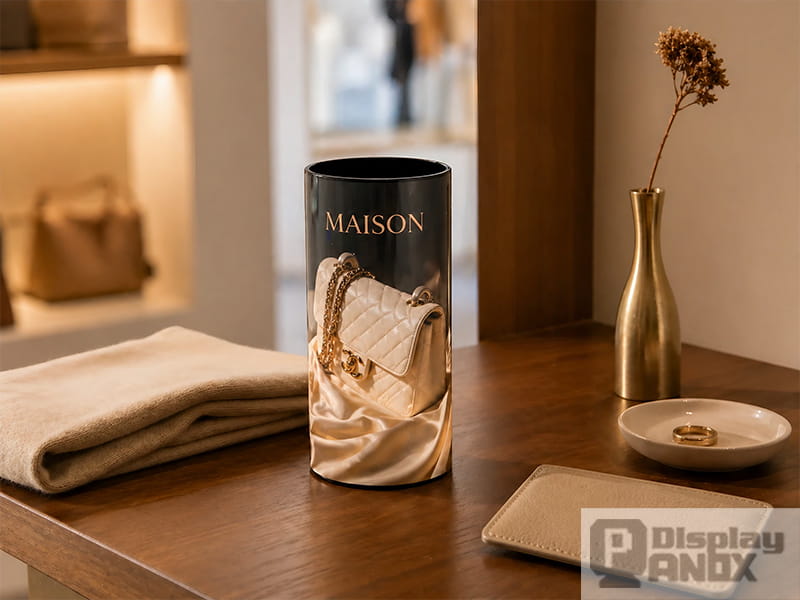
The most interesting deployments of small-format flexible OLED in 2026 are happening across a much wider set of industries than most people realize. Here are five categories actively adopting this form factor.
1. Premium Retail and Boutique Environments
This is the most visible category and the one most associated with curved OLED in popular media. High-end fashion houses, watch boutiques, jewelry showrooms, and fragrance flagships are integrating 7.8-inch curved displays into countertop fixtures, shelf-edge labels, and wraparound product pedestals. The key advantage over traditional digital signage is that the display becomes part of the fixture rather than an addition to it — a curved screen wrapping around a circular plinth, for example, lets a customer walk 270° around a product while synchronized visual content follows the angle.
2. Museums, Galleries, and Cultural Institutions
Museums have specific display constraints that flexible OLED solves elegantly: deep blacks blend into dark gallery environments, the absence of backlight reduces UV exposure to nearby artifacts, and the curvable form factor allows displays to integrate into vitrine architecture without breaking sightlines. A 7.8-inch curved OLED mounted to the inner edge of an artifact case can play interpretive content at the artifact's scale rather than dominating the case with a flat wall screen.
3. Exhibition Booths and Trade Show Activations
Exhibition designers are among the heaviest adopters of small flexible OLED in 2026. The advantages are practical: lightweight panels that ship in standard road cases, fixtures that can be assembled and dismantled in hours, curved form factors that visually differentiate a booth from competitors, and self-emissive image quality that holds up under harsh exhibition hall lighting. Brand activations, product launches, and pop-up installations benefit particularly because the display can be sculpted to match a single-event creative direction rather than fitted to a permanent rectangular fixture.
4. Automotive Showrooms and Premium Mobility Spaces
Car manufacturers — particularly EV brands and premium nameplates — are deploying curved displays in showroom environments to mirror the interior screen aesthetics customers will encounter inside the cars themselves. A 7.8-inch curved OLED on a pedestal next to a vehicle, displaying the same configurator interface used in the dashboard, creates visual continuity between the showroom experience and the in-vehicle experience. This category extends to motorcycle showrooms, premium bicycle retailers, and yacht/aviation sales environments.
5. Hospitality, Spa, and Wellness Spaces
Boutique hotels, luxury spas, premium fitness studios, and high-end medical/aesthetic clinics are using small curved OLED displays in concierge stations, treatment menus, lobby art installations, and guest-facing brand content. The defining requirement in these spaces is that the display feels calm and architectural rather than commercial — a quality that flexible OLED's deep blacks and curvable form factor naturally support.
Why 7.8 Inches Specifically? The Sweet Spot Explained
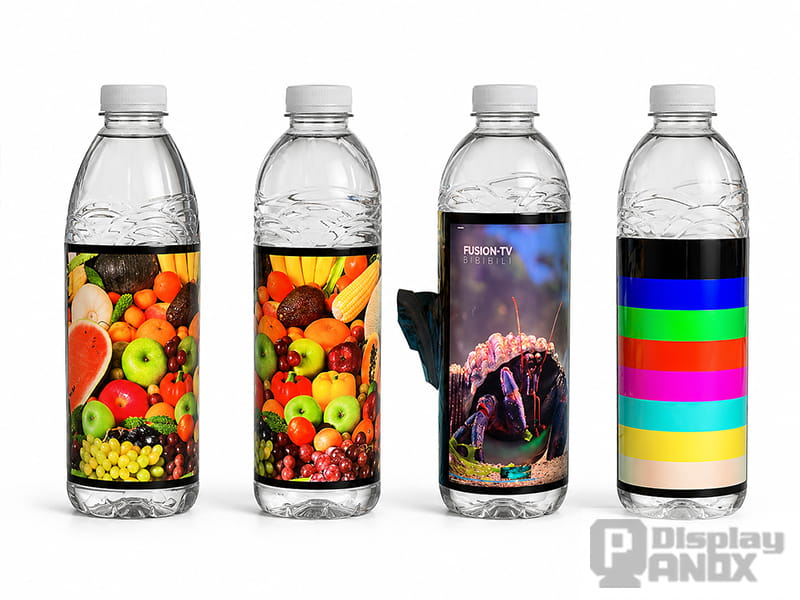
Across all five application categories, the same display size keeps appearing: 7.8 inches diagonal, 1920×1440 resolution, 4:3 aspect ratio. This isn't a coincidence — it's the practical sweet spot for human-scale display experiences.
Hand-scale ergonomics. At 7.8 inches, the display matches the visual weight of premium hand-held objects: a perfume bottle, a watch, a leather wallet, a jewelry box, a smartphone. The display reads as "object-scaled" rather than "screen-scaled," which is exactly what designers want when the display is meant to integrate with displayed merchandise rather than dominate it.
The 4:3 aspect ratio advantage. Most premium product photography is shot in portrait orientation — 4:3 or 3:4 formats hold this content far better than the 16:9 cinema ratio that dominates wall signage. A 4:3 portrait display fits a single product hero image natively, without letterboxing or awkward cropping.
308 PPI density. At close viewing distances (50–80cm, which is typical for counter, plinth, and shelf-edge applications), 308 PPI delivers print-comparable image quality. Text remains crisp, fine product details (stitching, engraving, finish texture) remain visible, and the display reads as a high-quality visual surface rather than a "screen with pixels."
Curvable to roughly 6cm radius. This bend specification enables the most common premium fixture geometries: vertical cylinders (ideal for tabletop product showcases), gentle C-curves (ideal for shelf integration), and 270° wrapped pedestals (ideal for single-hero product presentation).
Self-emissive deep blacks. When content fades to black between campaign loops, an OLED display effectively disappears into a dark architectural element. LCD and LED panels can't do this — their backlight glow remains visible even on "black" content, breaking the visual quiet of premium environments.
Specifications: What to Look for in a 7.8-Inch Flexible OLED
For designers, fabricators, and integrators evaluating panels for premium display projects, the following specifications matter most:
| Specification | Recommended Value | Why It Matters |
|---|---|---|
| Diagonal | 7.8 inches | Optimal hand-scale presence in premium environments |
| Resolution | 1920 × 1440 (308 PPI) | Print-quality image reproduction at close viewing distances |
| Aspect Ratio | 4:3 | Native fit for portrait product photography |
| Active Area | 118.8 × 158.4 mm | Compact integration into custom fixtures |
| Brightness | 300 cd/m² | Sufficient for indoor controlled-light environments |
| Contrast Ratio | 100,000:1 | True blacks blend into dark architecture |
| Viewing Angle | 80° all four directions | Customers approach from many angles |
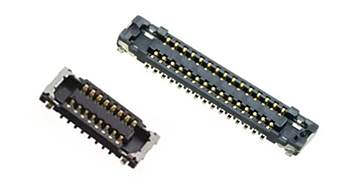
| Interface | MIPI (2-port) | Standard for compact embedded controllers |
| Substrate | Polyimide (flexible) | Enables curving and wrapping installations |
| Driver Compatibility | STM32, ARM, Arduino, Raspberry Pi | Supports custom and standard content systems |
The key takeaway for project planners: a 7.8-inch flexible OLED is a development-grade component that integrates into custom fixtures and content systems, not a closed consumer product locked to a specific platform. This flexibility is what makes it suitable for one-off retail concepts, limited-run exhibitions, and bespoke architectural integrations.
Flexible OLED vs. Other Display Technologies for Premium Spaces
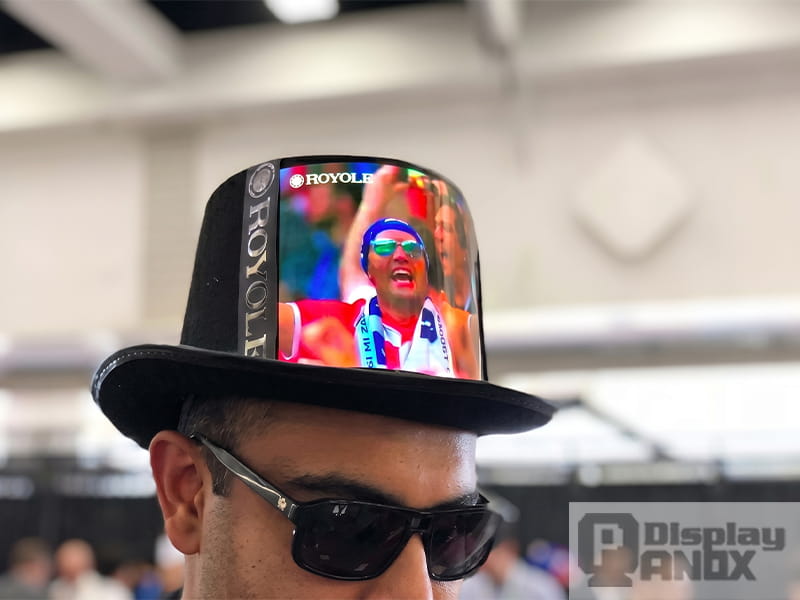
When designers evaluate display options for premium environments, three technologies come up most often: flexible OLED, transparent OLED, and curved LCD. Each serves different use cases.
Flexible OLED is opaque but curvable. Best for sculptural fixtures, wrapped pedestals, counter-top installations, and any application where the display itself is the visual element. Image quality is the highest of the three, with deep blacks and wide viewing angles.
Transparent OLED lets customers see through the display to products or environments behind it. Best for showcase windows where the merchandise needs to remain visible, or for layered content presentations where a digital element overlays a physical scene. Image quality is good but typically lower contrast than opaque OLED.
Curved LCD offers larger sizes at lower cost but cannot match OLED's contrast or thinness, requires backlight (limiting curve geometry), and has higher power consumption. Best for large wall-format curved video walls, not small fixture-integrated displays.
For the small-format, fixture-integrated category that 7.8-inch flexible OLED targets, no other technology offers a comparable combination of image quality, form-factor flexibility, and integration practicality. Many premium environments use multiple technologies in different zones — flexible OLED for sculptural elements, transparent OLED for showcase windows, large LCD or LED for video walls — to address different design intents within a single space.
Panox Display: Sourcing Flexible OLED for Custom Projects
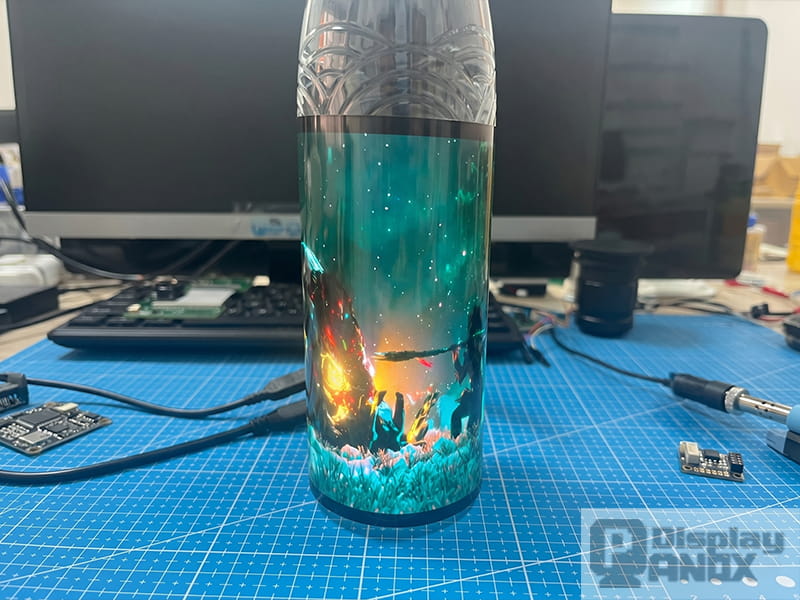
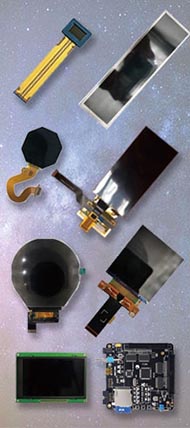
When organizations begin sourcing flexible OLED panels for retail, exhibition, museum, or hospitality projects, the supplier landscape splits into two categories. The largest panel manufacturers — Samsung Display, LG Display, BOE — operate at production scales that make them difficult partners for concept work, single-store pilots, or limited-run installations. The other category consists of specialty suppliers who serve development and small-to-mid-volume projects directly.
Panox Display has spent over seven years in the second category, supplying flexible and rigid OLED panels to more than 1,000 clients across North America, Europe, East Asia, and Australia. Our clients include retail design firms, exhibition fabricators, museum integrators, hospitality concept studios, automotive design consultancies, and product engineering teams across consumer electronics, medical, automotive, and industrial sectors.
For premium display applications specifically, we offer:
- Low MOQ for concept and pilot work — single-panel samples are available for prototype fixtures, design validation, and pilot installations, with bulk pricing for multi-store rollouts and exhibition tours
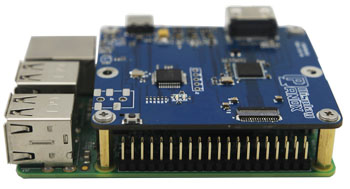
- Custom controller boards — HDMI and Type-C input boards tailored to the integration environment, eliminating bulky off-the-shelf media players
- Cover glass and touch panel customization — for branded fixture integration, including non-rectangular cover shapes and on-cell, in-cell, or external PCAP touch options
- Engineering support throughout integration — datasheets, IC datasheets, mechanical drawings, and circuit schematics provided to qualified development teams
- Worldwide express shipping — UPS, FedEx, DHL, and TNT delivery in 3 to 7 business days, with moisture-controlled and shock-resistant packaging on every order
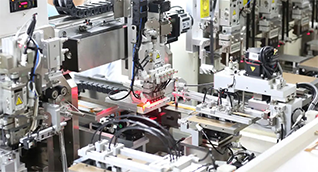
- Production scale when projects move from concept to deployment — automated production line capable of 50,000 displays per day for chain rollouts and large exhibition tours
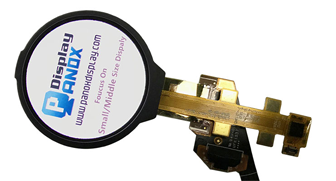
The 7.8-inch RO780FA1920M flexible OLED panel referenced throughout this article is in stock and ready to ship for prototype, concept, and pilot work.
View 7.8-inch Flexible OLED Product Page →
Conclusion: A Quieter Display Revolution
While the headlines focus on foldable smartphones and massive video walls, a quieter and more interesting display story is unfolding across premium spaces in 2026. Small flexible OLED displays — curved, integrated into fixtures, and treated as part of the architecture rather than imposed on it — are becoming the new visual vocabulary of high-touch retail, cultural institutions, exhibition design, automotive showrooms, and hospitality environments.
For designers, integrators, and brand teams planning their next premium space project, the question is no longer whether flexible OLED belongs in their toolkit. The question is how to deploy it well — and where to source it from a partner who understands custom, low-volume, and design-driven projects.
If you're looking for more flexible OLED options in different sizes or specifications, explore our full Flexible OLED product range at panoxdisplay.com
Frequently Asked Questions
Q1: Can the 7.8-inch flexible OLED be permanently curved into a fixed shape, or does it need to stay flat?
The 7.8-inch flexible OLED can be statically curved into a fixed form factor — such as a cylindrical, C-shaped, or arc-shaped fixture — and operated continuously in that shape. It is not designed for repeated dynamic folding cycles like a foldable smartphone. The minimum bend radius and curvature design should be confirmed with our engineering team before fixture fabrication.
Q2: Is the panel safe to leave running 12+ hours per day in a commercial environment?
Yes, with content design considerations. Like all OLED displays, the 7.8-inch flexible panel can experience burn-in if static images (such as a fixed logo in the same screen position) are displayed continuously for many months. For commercial use, we recommend designing your content loop with subtle pixel-shifting, varying composition over time, and including scheduled "off" or fully black periods. With proper content planning, OLED panels routinely operate reliably in long-duty commercial environments.
Q3: What's the typical lead time for a project rollout?
For sample units, typically 3 to 7 business days via express shipping. For batch orders supporting a multi-location rollout or large exhibition tour, lead times depend on volume and any custom requirements such as cover glass, controller board, or touch integration. Standard production cycles range from 2 to 6 weeks. Contact us early in your project planning phase for accurate scheduling.
Q4: Do you offer touch-enabled versions for interactive installations?
Yes. We can integrate custom on-cell, in-cell, or external PCAP touch panels with the 7.8-inch flexible OLED, with cover glass shaped to match your fixture design. This is commonly used for interactive product configurators, swipe-to-explore lookbooks, museum interpretive content, and "tap to learn more" installations.
Q5: How does flexible OLED compare to transparent OLED for window displays?
The two technologies serve different purposes. Transparent OLED — like LG's window-display offerings — lets customers see through the display to products or environments behind it. Ideal for showcase windows where merchandise should remain visible. Flexible OLED is opaque but curvable — ideal for sculptural display fixtures, wrapped pedestals, and counter-top installations where the display itself is the visual element. Many premium spaces use both technologies in different zones of the same project.
Q6: Can content be updated remotely across multiple locations?
The display itself is hardware — content management depends on the controller solution paired with it. Our HDMI and Type-C controller boards integrate easily with standard digital signage media players and content management systems including BrightSign, Raspberry Pi-based custom CMS solutions, and commercial signage software. This enables networked content updates across multi-location deployments.
Q7: What's the smallest order quantity?
We can ship a single sample unit for prototype and concept development work. Sample lead time is typically 3 to 7 business days via express courier. For full project quotes including custom controller boards, touch integration, and cover glass, contact our engineering team with your specifications.
Q8: Does our integration team need specialist embedded display engineering knowledge?
For most retail and exhibition integrators, our HDMI controller board solution removes the need for low-level driver development — the board accepts standard HDMI input from any media player. For custom-shaped fixtures or non-standard integrations, basic embedded display engineering knowledge (or a contracted engineer) is recommended. We provide complete documentation and engineering support throughout the integration process.
Q9: How does the 7.8-inch flexible OLED compare to consumer foldable smartphone displays?
The 7.8-inch flexible OLED in our catalog (RO780FA1920M) is a comparable-size-class panel to displays used in premium foldable smartphones, including Apple's upcoming foldable iPhone (expected September 2026 with a 7.8-inch main display). However, consumer foldable smartphone displays are engineered for 100,000+ dynamic fold cycles using specialized UTG (Ultra-Thin Glass) and CoE (Color filter on Encapsulation) technologies. Our 7.8-inch flexible OLED is designed for static curved installations — a different and more cost-effective use case than dynamic folding.
Q10: What industries and project types do you typically support?
Over the past seven years, Panox Display has served clients across consumer electronics, smart wearables, automotive, medical, industrial equipment, 3D printing, retail design, exhibition fabrication, hospitality concept design, and military-grade applications. Our typical clients include in-house product engineering teams, retail and exhibition design firms, ODMs and OEMs, technology integrators, and creative technologists working on brand activations and one-off installations.