



1. Defining Micro-OLED: High PPI, Lightweight, and Efficient
1.1 Technical Principles of Silicon-Based OLED
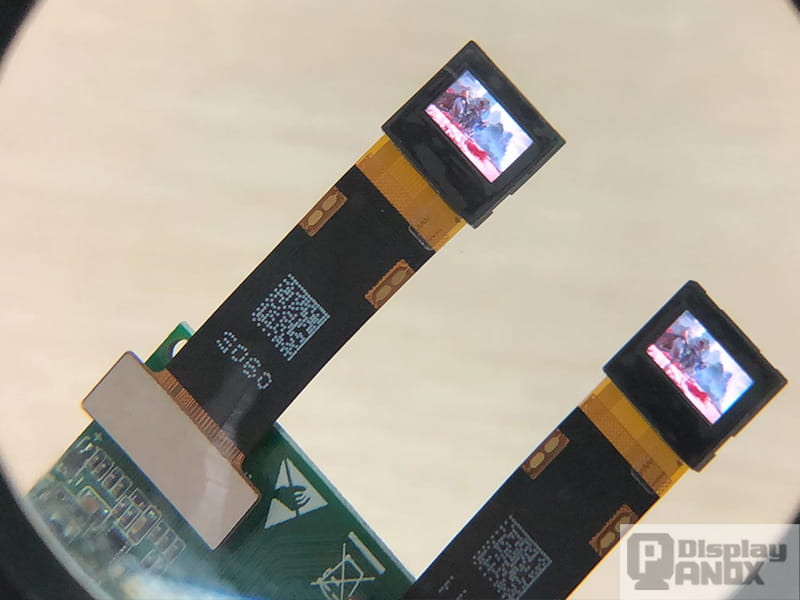
Micro-OLED, also known as Silicon-based OLED, represents a paradigm shift in display technology. Unlike traditional PMOLED and AMOLED which are prepared on glass or plastic substrates, Micro-OLED is manufactured on single-crystal silicon wafers using mature CMOS processes.
By integrating the display driver circuits directly into the silicon backplane, the technology achieves pixel sizes that are roughly 1/10th of traditional displays. This allows for an extraordinary level of precision and pixel density that far exceeds what is possible with glass-based substrates. Typically, these micro-displays are smaller than 2 inches, yet they pack the resolution of a full-sized television into the area of a postage stamp.
Key characteristics that make Micro-OLED the preferred choice for 2026's high-end XR devices include:
-
Ultra-High PPI: Capable of exceeding 3,000 to 4,000 pixels per inch.
-
Form Factor: Thinner, lighter, and smaller than any preceding display tech.
-
Performance: Self-emissive with high luminous efficiency and extremely low power consumption.
-
Response Time: Near-instantaneous response, critical for reducing motion blur in virtual environments.
1.2 The Manufacturing Process: A Fusion of Semiconductors and Optics
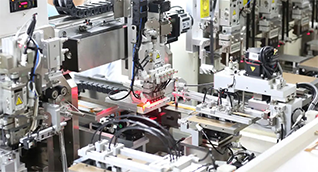
Micro-OLED production is a complex marriage of semiconductor manufacturing and organic chemistry. The process is generally categorized into four distinct stages:
-
Silicon-based IC Design and Manufacturing: The "brain" of the display is the silicon backplane. This involves designing integrated circuits that handle row/column drivers and DC-DC conversion, which are then fabricated in high-end semiconductor foundries.
-
The OLED Deposition Process: In a high-vacuum environment, organic light-emitting materials are evaporated onto the silicon substrate. This stage includes top-emission microcavity technology and the preparation of metal anodes. These anodes connect the driver circuit of the silicon wafer to the organic layers.
-
Advanced Packaging: To protect the sensitive organic materials from moisture and oxygen, thin-film encapsulation (TFE) is performed using PECVD and ALD equipment. Following this, Ink Jet Printing (IJP) or photolithography is used to create the RGB color filter patterns.
-
System Integration: Finally, the driver IC and pixel circuits are integrated. While this high level of integration saves space, it remains a challenge in terms of design difficulty and cross-platform versatility.
1.3 Competitive Advantage Comparison
To understand why Micro-OLED has dominated the high-end market through 2026, we must compare it to its predecessors:
-
Vs. LCD: Micro-OLED is self-emitting and requires no backlight. This makes it significantly thinner, provides "true blacks" with infinite contrast, and consumes far less power.
-
Vs. Traditional AMOLED: While mobile OLEDs are great for phones, they cannot match the pixel density of Micro-OLED. Micro-OLED also features faster response speeds, which are essential for preventing "screen door effect" and motion sickness in VR.
-
The Cost Factor (2026 Perspective): Historically, Micro-OLED’s main disadvantage was cost. While it remains more expensive than LCD, the scaling of 12-inch wafer production lines in 2025 and 2026 has significantly narrowed the gap, allowing it to move from "experimental" to "mainstream premium."
2. The Dominant Display for Virtual and Mixed Reality
2.1 Differing Requirements: VR vs. AR
The display requirements for wearable technology vary significantly based on the intended use case:
-
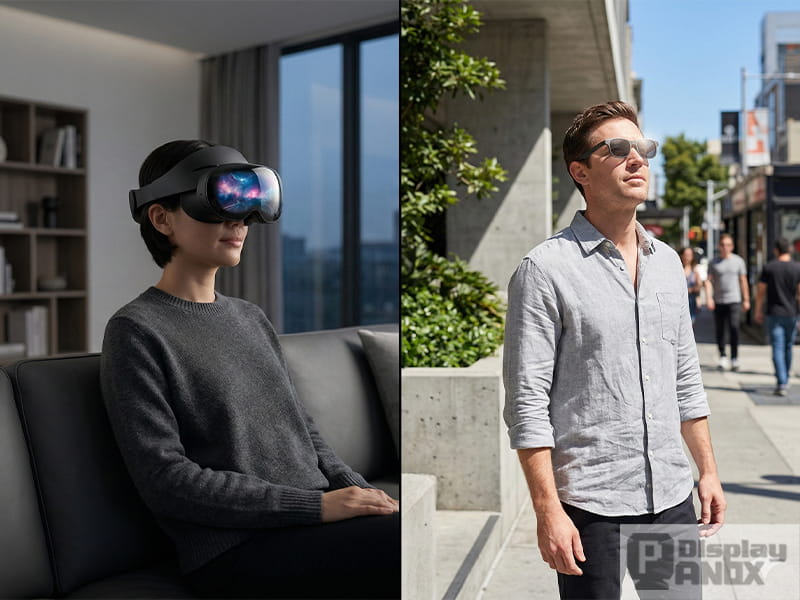
Virtual Reality (VR/MR): The priority is immersion. This requires extreme contrast, wide fields of view (FOV), and high resolution to eliminate pixelation. Since the environment is controlled, brightness requirements are moderate, but latency must be near-zero to ensure user comfort.
-
Augmented Reality (AR): The priority is transparency and portability. AR glasses need to be worn for long periods, requiring them to be feather-light. Because they must compete with ambient sunlight, brightness is the most critical factor, often exceeding 5,000 to 10,000 nits.
2.2 Comparison of XR Display Routes
| Technology | Advantages | Disadvantages | Current Status (2026) |
| Fast-LCD | Mature, extremely low cost. | Low PPI, poor contrast (greyish blacks), high latency. | Used in entry-level, budget VR headsets. |
| Micro-OLED | High PPI, excellent contrast, thin, fast refresh. | Moderate brightness, finite lifespan. | The standard for high-end VR and MR (e.g., Apple Vision Pro). |
| Micro-LED | Highest brightness, longest life, highest efficiency. | Massive manufacturing bottlenecks, high cost. | Limited to high-end AR glasses; mass VR adoption still pending. |
Conclusion: For the current XR landscape, Micro-OLED has proven to be the most balanced solution for VR/MR. While Micro-LED remains the "ultimate goal" for outdoor AR, its mass-production difficulties have allowed Micro-OLED to capture the vast majority of the premium market share.
3. Market Evolution: The "Apple Effect" and Beyond
3.1 The Impact of Apple Vision Pro
The launch of the Apple Vision Pro (originally released in early 2024) served as the catalyst for the entire industry. By utilizing dual 4K Micro-OLED panels with over 3,000 PPI, Apple set a new benchmark for visual fidelity.
Since then, we have seen a "specs race" where competitors have moved away from Fresnel lenses and LCDs toward Pancake optics paired with Micro-OLED. In 2026, the second-generation Vision Pro and its "Air" variants continue to drive the BOM (Bill of Materials) cost of Micro-OLED down as yields improve.
3.2 Key Products and Milestones
The transition began years ago but reached its peak in the mid-2020s:
-
Panasonic MeganeX: An early pioneer of lightweight 5.2K Micro-OLED glasses.
-
Rayneo Air Series: Demonstrated that Micro-OLED could be brought to consumer-grade AR/viewing glasses with 1080p resolution.
-
Huawei Vision Glass: Utilized SeeYa Technology’s panels to achieve high DCI-P3 color gamuts.
-
Meta Quest Pro 2 (2025): The shift of Meta’s high-end line to Micro-OLED marked the end of LCD dominance in the "Pro" segment.
3.3 Market Size and Growth
In 2023, the global Micro-OLED market was valued at roughly $1.3 billion. By the end of 2024, it had already doubled. As of 2026, the market has entered a phase of rapid acceleration. Industry analysts now expect the AR/VR screen market to reach $7.3 billion by 2027, with Micro-OLED accounting for the largest share of that value.
Learn more:OLED vs. Micro LED for the Next 10 Years
4. Supply Chain Dynamics: Global Competition
4.1 Industry Structure
-
Upstream: This is the most technology-intensive segment, involving silicon substrates and organic materials. While China has made strides, much of the core evaporation equipment (like Canon Tokki) and high-end materials still originate from Japan, South Korea, and the US.
-
Midstream: This is where the competition is fiercest. Previously dominated by European and American R&D firms, the manufacturing center of gravity has shifted toward East Asia.
-
Downstream: High-resolution near-eye displays for VR, industrial security (heads-up displays), and medical imaging.
4.2 Leading Global Players
-
Sony (Japan): The undisputed incumbent. Sony’s early lead in 2011 has allowed them to remain the primary supplier for Apple’s high-end displays.
-
Samsung & LG (South Korea): After a late start, both giants moved into mass production in 2024-2025. Samsung's acquisition of eMagin was a pivotal move to secure IP for silicon-based displays.
-
Domestic Chinese Manufacturers: * SeeYa Technology: A leader in 12-inch (300mm) production lines, offering massive capacity for the consumer market.
-
BOE: Leveraging its status as a display giant to run simultaneous 8-inch and 12-inch lines.
-
Qingyue Technology: Focused on high-capacity 8-inch lines and specific industrial applications.
-
5. Strategic Company Analysis
5.1 Quality Control and Testing (Huaxing Yuanchuang)
As Micro-OLED resolutions increase, testing becomes more difficult. Companies like Huaxing Yuanchuang have become essential, providing the testing equipment used by Sony and other tier-one manufacturers to ensure sub-pixel perfection.
5.2 Scaling Production (Qingyue & SeeYa)
The transition from 8-inch to 12-inch wafers is the key to 2026’s lower prices. SeeYa Technology was among the first to successfully yield high-volume 12-inch wafers, which provide more panels per wafer and lower unit costs compared to the older 8-inch standard used by early experimental lines.
5.3 Semiconductor Synergies (Jingce Electronic)
Micro-OLED is as much a semiconductor as it is a display. Companies that traditionally focused on semiconductor testing, like Jingce Electronic, have successfully pivoted into the Micro-OLED module AOI (Automated Optical Inspection) space, proving that the future of display is silicon-based.
If you’d like to explore more Micro-OLED options, check out our Micro-OLED product lineup for the latest models and specs.
| Panel model | Interface | Type | Size (inch) | Resolution | P.S |
| S032WEM01 | MIPI/RGB | Micro OLED | 0.32 | 800x600 | |
| PMOF039XGAM | RGB | Micro OLED | 0.39 | 1024x768 | Full Color/Monochrome |
| BO039M1920M | MIPI | Micro OLED | 0.39 | 1920x1080 | Highest PPI =5644 |
| EP047M800T | TTL | LCOS | 0.47 | 800x600 | |
| BO049FHPMO | SPI,MIPI | Micro OLED | 0.49 | 1920x1080 | |
| S050M1600M | MIPI | Micro OLED | 0.5 | 1600x1200 | |
| ECX331DB-6 | Mini LVDS | Micro OLED | 0.5 | 1024x768 | |
| S060LDM01 | MIPI | Micro OLED | 0.6 | 1920x1080 | |
| ECX335AF | Mini LVDS | Micro OLED | 0.71 | 1920x1080 | 200 nits brightness version |
| ECX335B | Mini LVDS | Micro OLED | 0.71 | 1920x1080 | 500 nits brightness version |
| ECX335SN | Mini LVDS | Micro OLED | 0.71 | 1920x1080 | 3000 nits brightness version |
| BO071M1920M | MIPI | Micro OLED | 0.71 | 1920x1080 | |
| S072WCM04 | MIPI | Micro OLED | 0.72 | 1920x1080 | |
| S103WAM01 | MIPI | Micro OLED | 1.03 | 2560x2560 |