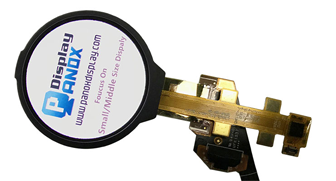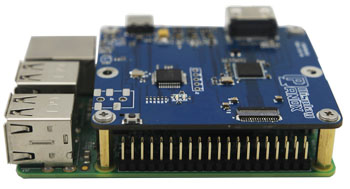




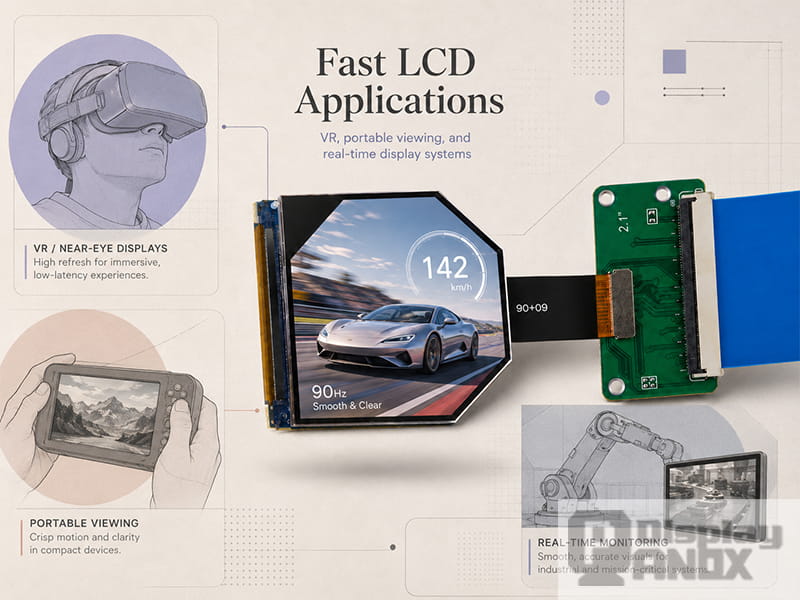
2.1 inch LCD 90 Hz For VR HDMI Board
Fast LCD display panels are chosen for products where motion quality matters as much as static sharpness. A panel can have high resolution and good color, but if moving images smear, lag or feel unstable, the product still feels weak. That is why fast LCD shows up in VR headsets, near-eye optical engines, handheld instruments, compact video viewers, industrial monitors and the development kits used to build all of them.
In these products the screen is rarely showing static text. It shows a head-tracked virtual scene, a moving camera feed, a scrolling interface, a fast-changing waveform or a real-time control view. The job of a fast LCD is to keep that image clear while it moves.
This article walks through the main application areas and what fast LCD actually contributes in each one. For the underlying technology — how response time, refresh rate, MPRT and low-persistence driving work — see our guide on what a fast LCD is and why LCD speed matters.
A Quick Recap of What Makes an LCD "Fast"
Worth keeping in mind across every application below: "fast" is never a single number. It is the combination of pixel response time, refresh rate, pixel density, interface bandwidth and the way the panel is driven. A high refresh figure on its own does not guarantee clean motion; the liquid crystal still has to switch quickly enough, the data has to arrive reliably over the interface, and the backlight has to avoid holding each frame on screen too long.
Two ideas in particular keep coming back when matching a panel to an application. The first is that LCD is a sample-and-hold display, so each frame stays visible for most of the refresh cycle unless the backlight is pulsed, which is why low-persistence driving matters so much for motion. The second is that bandwidth scales with resolution and refresh rate, which is why almost every high-PPI fast LCD uses a MIPI DSI interface. With those two in mind, the differences between applications become easier to read.
VR Headsets and Near-Eye Display Systems
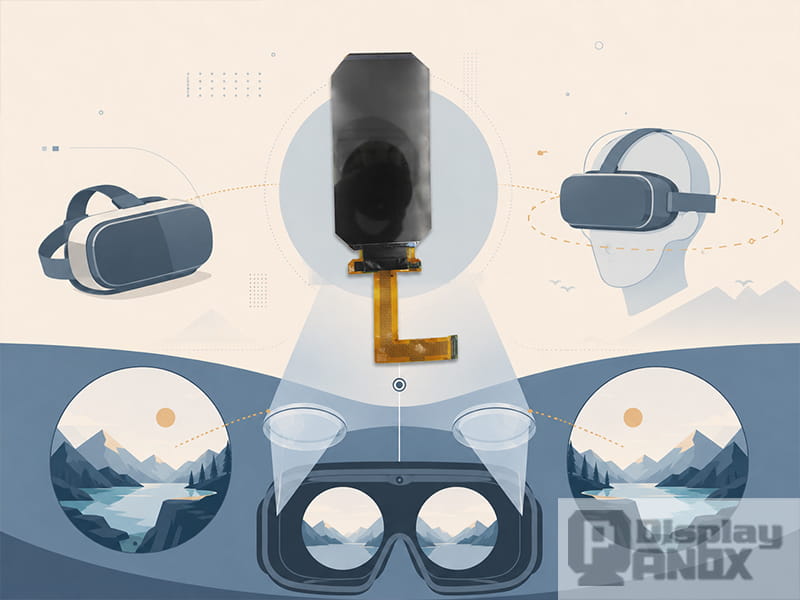
5.5 inch LCD 4K Resolution For Oculus VR
VR is the clearest case for fast LCD. The display sits centimeters from the eye and is magnified by lenses, which makes motion blur, ghosting, persistence and the pixel grid far easier to notice than on a normal handheld screen.
When the user turns their head, the image has to update quickly and stay stable. A slow panel smears moving edges, and a frame that lingers too long produces perceived blur even when the pixel transition itself is fast. This is why VR display systems run at 90 Hz or 120 Hz and why low-persistence backlight driving is almost always discussed alongside fast-switching LCD. High pixel density is the other requirement, because lens magnification exaggerates a low-density grid into a visible screen-door effect. A compact 2.9 inch or 3.5 inch panel at high resolution keeps the image sharp inside a small optical engine.
Within VR development, a fast LCD panel may end up in consumer headsets, professional viewers, training simulators, near-eye optical engines, experimental HMD prototypes or development kits. The Panox Display Fast LCD category covers several panels aimed at this work, including the 2.1 inch 1600 × 1600 module, the 2.9 inch 120 Hz panel, the 2.9 inch 2K 90 Hz panel, the 3.5 inch 90 Hz panel and the 5.46 inch 1920 × 3664 module.
Part of the appeal is practical rather than purely optical. A fast LCD module can be brought up on a MIPI driver, an HDMI-to-MIPI board or a customized controller board before the final electronics exist, which lets a team test lens matching, optical alignment, mechanical fit, brightness and motion clarity at an early stage. Panel size is flexible too: a smaller high-PPI panel suits compact optical engines, while a larger 5.46 inch module suits architectures built around a single wider display.
Near-Eye Viewers and Optical Display Engines
Fast LCD is not limited to finished headsets. It also goes into near-eye viewers and optical display engines where the panel is one component of a larger visual system — binocular viewers, monocular inspection devices, compact optical modules, research headsets and custom display assemblies.
Here the panel has to match the optical path, not just hit a spec. Active area, panel outline, FPC direction, connector position and backlight structure all decide whether the display integrates cleanly. A panel that looks strong on resolution and refresh rate still has to fit the lens, housing and driver layout. Engineers in this space tend to weigh several things at once: high PPI, stable refresh, acceptable brightness after optical loss, low motion blur and a compact mechanical footprint. Small fast LCD panels with MIPI interfaces fit that profile because they push enough data for high-resolution images while keeping the module physically small. The 2.1 inch, 2.54 inch, 2.9 inch and 3.5 inch panels are the usual candidates, with the final choice driven by target field of view, magnification and enclosure space.
Handheld Instruments and Portable Viewers
Fast LCD also improves handheld products that show live or frequently updated information. A standard embedded panel is fine for a static menu but feels sluggish once the content moves quickly.
Handheld instruments display real-time data curves, scanning results, measurement graphics, thermal or camera feeds, navigation overlays and control interfaces. When the operator moves the device or the image changes fast, a fast LCD keeps the detail readable. Typical products include handheld diagnostic viewers, portable inspection devices, test and measurement instruments, compact camera monitors and field display terminals.
The benefit here is not just smoother animation, it is reduced visual hesitation — a clear moving image lets the user read the screen while working quickly, which makes the whole device feel more responsive. Panel selection in this category usually turns on more than refresh rate. Brightness, viewing angle, operating temperature, interface type, touch integration and controller-board support can matter just as much, and a MIPI panel often needs a customized board when the host outputs HDMI, Type-C, LVDS or RGB.
Industrial Monitoring and Machine Vision Interfaces
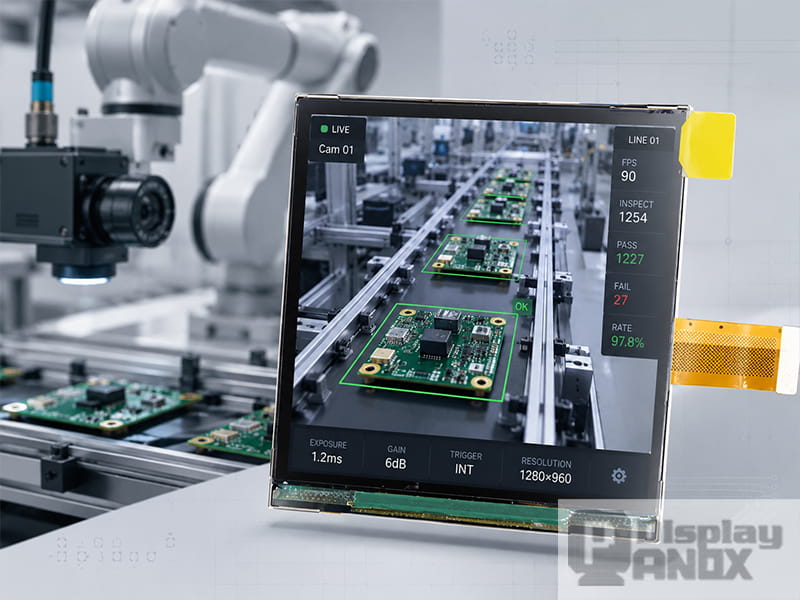
Industrial display systems prize stability, clarity and long-term availability. The screen typically shows equipment status, camera feedback, motion data, real-time process views or machine-control interfaces, and when that information changes quickly a fast LCD makes it easier to follow.
These uses rarely need a VR-grade panel, but motion clarity still counts. A display showing live camera preview, robotic control or moving inspection images benefits from faster response and higher refresh, because the operator often has to catch a small detail while the image is in motion, and slow pixel response softens edges and undermines confidence in what is on screen. Common placements include industrial camera preview screens, machine vision terminals, robotic operation displays, motion-control interfaces and production-line monitoring systems.
For industrial work, the panel has to be evaluated against the environment, not just the spec sheet. Temperature affects liquid crystal response, so the operating range should be checked early, and mechanical strength, connector reliability, cover glass, anti-glare treatment and backlight lifetime all feed into the final design.
FPV, Drone and Real-Time Video Devices
Fast LCD suits FPV goggles, drone viewers and real-time video devices because these products live or die on moving images. When a drone turns sharply or a camera feed swings around, the display has to keep the video readable, and motion smear makes the image feel imprecise during fast panning.
Latency here is a system-level problem. The camera, transmission link, decoder, display interface, panel response and refresh timing all add up to what the user feels, so a fast LCD cannot fix the whole chain by itself — but it removes the display-side share of the delay and sharpens perceived clarity. Because many FPV viewers magnify the screen through optics, much like VR, pixel density and motion performance carry real weight, and a small MIPI fast LCD is a practical starting point for custom viewer development.
Simulation, Training and Motion-Rich Interfaces
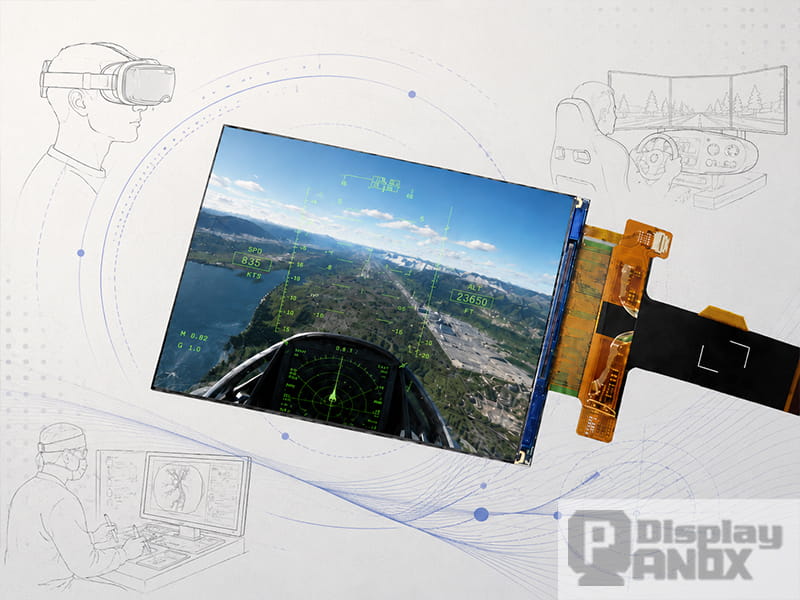
2.9 inch LCD 2K Resolution 90 Hz For VR
Simulation and training systems are another natural fit — driving and flight simulators, equipment trainers, medical training viewers and similar systems where a user interacts continuously with moving visuals.
The requirement in these products is visual consistency rather than gaming-style marketing. When the display updates smoothly, the user tracks movement naturally; when motion looks blurred or unstable, the training loses some of its realism. A high-refresh panel supports more comfortable viewing wherever the user repeatedly tracks moving objects, reads dynamic overlays or reacts to fast-changing scenes, and for trainers built on compact embedded or near-eye modules, fast LCD offers a workable balance of resolution, response and supply flexibility.
Compact Monitors and Development Kits
Fast LCD also serves compact monitors, demo devices and development kits. Many teams want to validate a display concept before committing to final hardware, and a fast LCD module on a controller board shortens that stage considerably.
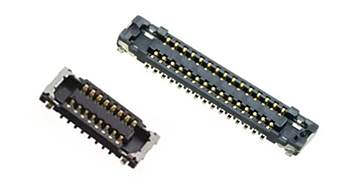
A team might evaluate a 2.9 inch 90 Hz or 120 Hz panel against a PC, Raspberry Pi, embedded processor or Type-C video source. Because the panel uses MIPI DSI, a controller or bridge board is usually needed, and once the concept is proven the design can move toward a custom PCB and a tighter structure. This evaluation stage is where teams check image quality and brightness, refresh and motion behavior, orientation and timing, lens compatibility for near-eye builds, mechanical placement and FPC routing, and touch or cover-glass feasibility. It is also the practical reason a fast LCD supplier should provide more than bare panels — connectors, controller boards, touch panels, cover glass and engineering support all shape how fast a project reaches production.
Matching Fast LCD Panels to Applications
Different applications pull on different fast LCD strengths. A VR headset prioritizes PPI, refresh rate and low persistence; a handheld instrument prioritizes readability, brightness and easy integration; a development kit prioritizes controller-board availability.
| Application | Main display requirement | Suitable fast LCD direction |
|---|---|---|
| VR headsets | High PPI, 90/120 Hz refresh, low motion blur | 2.9", 3.5" or 5.46" high-resolution MIPI LCD |
| Near-eye viewers | Compact size, high pixel density, optical compatibility | 2.1", 2.54", 2.9" MIPI fast LCD |
| FPV and real-time video | Smooth motion, readable moving images, low display-side delay | 90 Hz or 120 Hz fast LCD with a suitable driving board |
| Handheld instruments | Clear dynamic UI, live-feed readability, compact integration | Small-to-medium fast LCD with controller support |
| Industrial monitoring | Stable image, reliable interface, motion-readable data | Fast LCD with suitable brightness, temperature range and mechanical support |
| Training simulators | Smooth motion and natural response | High-refresh LCD matched to the rendering system |
| Development kits | Easy testing, flexible input, fast evaluation | MIPI LCD with HDMI / Type-C / controller-board support |
The right choice always depends on the final product rather than a single number. A very high-PPI panel is excellent for optical systems but overkill for a simple field terminal. A 120 Hz panel helps with motion-heavy content but demands more processing and bandwidth. For many near-eye devices, a 90 Hz high-resolution panel lands in a better balance.
Panox Display Fast LCD Options by Use Case
The Panox Display Fast LCD range supports several development directions. The table below maps the panels to the applications they tend to fit.
| Panox Display fast LCD | Key features | Application fit |
|---|---|---|
| 2.1 inch 90 Hz for VR | 1600 × 1600, 1058 PPI, MIPI, compact | Compact VR, near-eye optical modules, HMD prototypes |
| 2.54 inch round/circular for VR | 1440 × 1600, 90 Hz, MIPI, round form factor | Near-eye viewers, circular optical designs, wearable-style optics |
| 2.9 inch 120 Hz for VR | 1440 × 1440, 120 Hz, MIPI | High-refresh VR, motion-rich viewers, fast display evaluation |
| 2.9 inch 2K 90 Hz for VR | 2160 × 2160, 90 Hz, MIPI | High-resolution near-eye displays, fine-detail VR modules |
| 3.5 inch 90 Hz for VR | 1440 × 1600, 90 Hz, MIPI | VR development, compact head-mounted systems |
| 5.46 inch 4K-class | 1920 × 3664, MIPI | Larger VR display architectures, high-resolution optical evaluation |
These are best evaluated with the full optical, mechanical and electrical picture in view. Before locking a display, a team should confirm active area, outline size, FPC direction, connector, MIPI lane count, brightness target and the controller-board plan.
Design Considerations Across Applications
A fast LCD application is best planned as a complete display system, since the panel is only one part of the final result.
The image source has to support the target refresh rate — a 90 Hz or 120 Hz panel delivers little extra if the processor only outputs 60 Hz, so the rendering pipeline, video decoder or camera input must match the display. The interface has to carry the required bandwidth, which for high-resolution fast LCD usually means MIPI DSI with a carefully checked lane count, bit depth and timing, plus a bridge or controller board when the product needs HDMI or Type-C input. Optical design reshapes everything for near-eye products, because lens magnification changes how the user perceives resolution, blur, brightness and pixel structure, so a panel that looks excellent on a desk can behave differently inside a headset. Brightness and persistence have to be balanced together, since low-persistence driving cuts perceived motion blur but also lowers apparent brightness, which ties back to the backlight, optical efficiency and power budget. And mechanical layout should be settled early, because these panels are thin and delicate, and FPC routing, connector position, bonding method, cover glass and assembly tolerance all affect production reliability.
Conclusion
Fast LCD display panels show up wherever moving images need to stay clear, responsive and comfortable to view. VR headsets and near-eye displays are the strongest examples, but the same strengths carry into handheld instruments, industrial monitoring, real-time video viewers, FPV systems, simulators and development kits.
The common thread is balance. A fast LCD panel should match the system's refresh target, interface bandwidth, optical structure, brightness requirement and mechanical design, and when those line up it delivers high pixel density, smooth motion and real integration flexibility. The Panox Display Fast LCD range focuses on compact high-resolution TFT-LCD modules for VR and high-speed embedded work, with 2.1 inch, 2.54 inch, 2.9 inch, 3.5 inch and 5.46 inch options to evaluate for a near-eye, portable or motion-sensitive product.
FAQ
What is the most common application of fast LCD?
VR and near-eye display systems, because they need high PPI, fast response, a high refresh rate and clean motion all in a compact panel.
Can fast LCD be used outside VR?
Yes. It works well in handheld instruments, industrial viewers, FPV devices, compact monitors, real-time video systems and other motion-rich embedded interfaces.
Is 90 Hz enough for fast LCD applications?
For many VR and embedded uses, yes, especially when the panel response and driving are well tuned. Some motion-heavy applications benefit from 120 Hz, but the host system has to support the higher data and rendering load.
Why do many fast LCD panels use MIPI?
MIPI DSI carries high-speed data through a small FPC interface, which suits compact high-resolution modules where space is tight — exactly the situation in VR and near-eye products.
How should engineers choose a fast LCD panel?
Start from the application: viewing distance, motion speed, resolution target, brightness, interface, mechanical space and optical design. Then compare panel size, PPI, refresh rate, response behavior, FPC layout and controller-board support.