






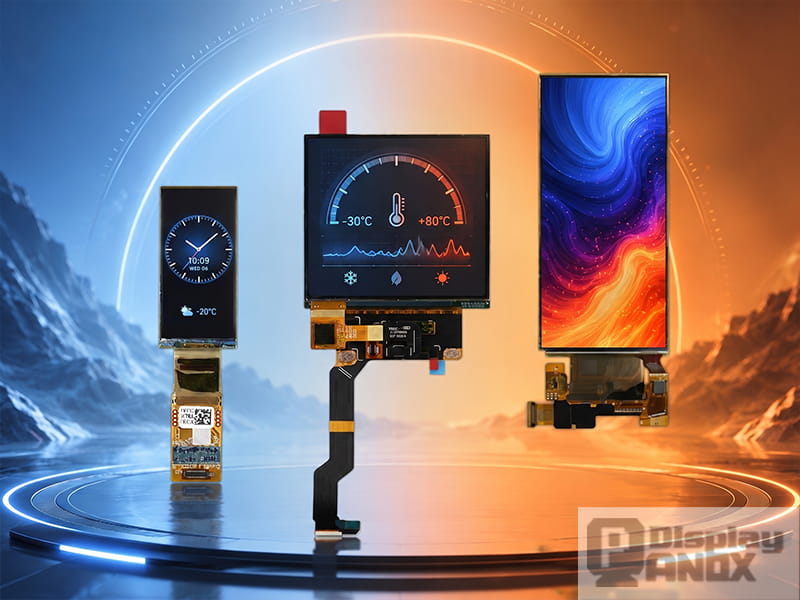
Displays used in offices, shops and indoor consumer devices normally live in a fairly comfortable environment. Industrial equipment, vehicle systems and outdoor terminals have a very different life. A display may need to start in freezing weather, stay readable under direct sunlight, survive heat inside an enclosure, and continue working after vibration, humidity and repeated temperature cycling.
A wide temperature display is designed for these conditions. It is a display panel or display module specified to operate across a wider temperature range than standard consumer-grade displays. Depending on the application, this may mean -20°C to +70°C, -30°C to +80°C, -40°C to +85°C, or a custom range defined by the final product environment.
For engineers and product teams, wide temperature operation is more than a number on a datasheet. It affects response time, brightness, contrast, touch performance, optical bonding, backlight design, mechanical structure and long-term reliability. Choosing the right display means understanding how temperature changes the behavior of LCD, OLED, Micro OLED and other display technologies.
What Does “Wide Temperature Operation” Mean?
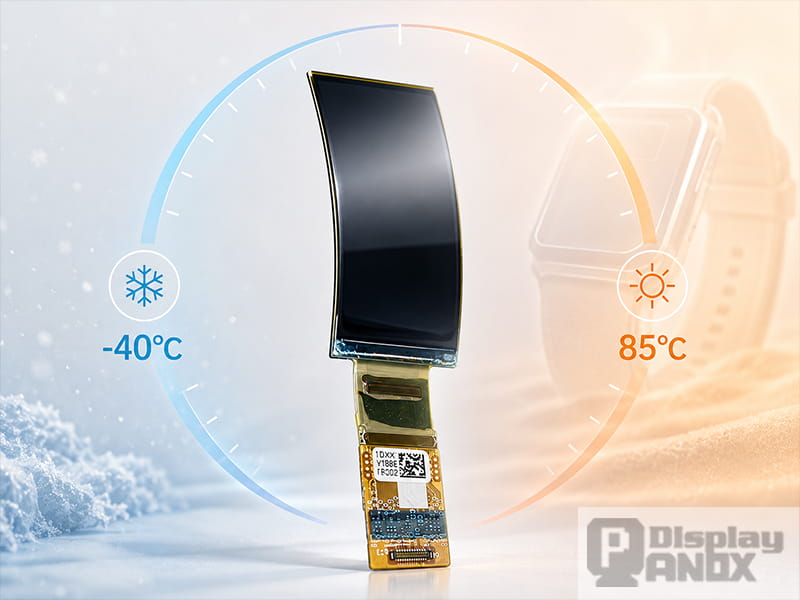
Wide temperature operation describes a display’s ability to function within a specified temperature range while maintaining acceptable image quality, electrical performance and mechanical stability.
There are two temperature ranges that should always be checked separately.
Operating temperature refers to the range in which the display is expected to work while powered on. In this range, the display should show images correctly, respond to signals, maintain reasonable contrast and avoid abnormal behavior such as ghosting, blackening or driver instability.
Storage temperature refers to the range in which the display can be stored or transported while powered off. A storage rating does not guarantee that the display will work normally at that temperature. It only means the display should recover after returning to normal conditions, assuming no permanent damage has occurred.
This difference matters in real projects. A display may survive -40°C storage, while its actual cold-start performance at -30°C still needs validation. For vehicle displays, outdoor control panels, cold-chain equipment and rugged handheld devices, cold-start testing is often more important than the storage number.
Why Temperature Affects LCD Displays
TFT-LCD technology depends on liquid crystal molecules that change orientation when voltage is applied. This movement controls how much light passes through the display. At low temperatures, the liquid crystal material becomes more viscous, and molecular movement slows down. The result can be slower response time, motion blur, delayed screen refresh, residual image or reduced contrast.
At very low temperatures, a standard LCD may look sluggish. Menu transitions can leave shadows. Video may appear smeared. In some cases, the display may need a warm-up period before it reaches stable performance.
High temperature creates another set of challenges. The liquid crystal layer, polarizer, backlight, optical films, adhesive layers and driver electronics all experience thermal stress. Excessive heat can reduce LED backlight lifetime, shift optical performance, accelerate material aging, or cause image abnormalities. In sealed outdoor equipment, internal temperature may be much higher than the outside air temperature, especially when sunlight hits the front glass.
This is why a wide temperature TFT-LCD module needs a full-stack design approach. The liquid crystal material, TFT panel, backlight, driver IC, cover lens, optical bonding material and mechanical frame must all be suitable for the target environment.
How Engineers Improve Wide Temperature LCD Performance
A reliable wide temperature LCD starts with the right liquid crystal material. Low-viscosity liquid crystal mixtures can improve response speed at low temperatures. Materials with a wide nematic temperature range help the LCD maintain stable operation from cold start to high-temperature use. For automotive and industrial displays, panel structures such as IPS or FFS are often selected because they support wide viewing angles and stable image quality.
The backlight system also needs careful design. Outdoor and vehicle displays often require high luminance, yet higher LED power creates more heat. A good design balances brightness, thermal dissipation and lifetime. Metal frames, heat-spreading structures, controlled LED current and suitable thermal paths help prevent local overheating.
For very cold environments, some LCD modules may use a heater, temperature sensor or temperature compensation circuit. A transparent heater can help the display reach a usable temperature faster. Drive settings may also be adjusted according to temperature so that the LCD maintains better contrast and response.
Mechanical structure is equally important. Rugged displays used in vehicles, marine systems, construction machinery or defense-related equipment may require vibration resistance, shock resistance and stable installation. A reinforced frame, gasket design, cable strain relief and suitable mounting structure can make the difference between a panel that passes a lab test and a module that works reliably in the field.
Wide Temperature OLED, AMOLED and Micro OLED Displays
OLED displays behave differently from LCDs because each pixel emits light directly. There is no liquid crystal layer and no LED backlight. This gives OLED several advantages in cold environments, including fast response, high contrast and wide viewing performance. PMOLED and AMOLED displays are often used in compact instruments, wearable devices, handheld terminals and high-contrast control interfaces.
OLED still needs careful evaluation for high-temperature operation, lifetime, image retention, power consumption and long-term brightness stability. For outdoor products, optical stack design and cover glass treatment also matter because high contrast alone does not automatically guarantee good sunlight readability.
Micro OLED displays, especially silicon-based OLED, are widely used in near-eye display systems, AR/VR optics, electronic viewfinders and compact optical engines. Their small size, high pixel density and fast response make them attractive for advanced imaging applications. In wide temperature projects, thermal design should consider the whole optical module, including display panel, driver board, lens structure and enclosure.
Memory LCD and transflective display technologies can also be useful in selected wide temperature applications. They are often chosen for low-power devices, outdoor-readable instruments and simple data displays where long battery life and ambient-light readability are more important than full-motion video.
Which Display Technology Is Best for Wide Temperature Applications?
There is no single best display technology for every wide temperature product. The right choice depends on image content, brightness requirement, power budget, interface, mechanical size, operating environment and expected lifetime.
| Technology | Strengths in Wide Temperature Projects | Typical Use Cases |
|---|---|---|
| TFT-LCD / IPS TFT-LCD | Mature supply chain, high brightness options, good size coverage, suitable for touch and industrial interfaces | Industrial HMI, vehicle display, outdoor equipment, medical instrument, machine control |
| AMOLED / PMOLED | Fast response, high contrast, thin structure, strong performance in compact devices | Wearables, handheld terminals, instruments, compact control panels |
| Micro OLED | High pixel density, fast response, compact optical integration | AR/VR, electronic viewfinder, near-eye display, optical modules |
| Memory LCD / Transflective LCD | Very low power, good ambient-light readability, efficient for static or simple content | Sensor devices, outdoor meters, battery-powered instruments |
For a high-brightness industrial screen, an IPS TFT-LCD with optical bonding and thermal management may be the best option. For a compact status display that needs strong contrast in cold weather, OLED may be more suitable. For a battery-powered outdoor device, Memory LCD can be a smart choice. For an AR/VR optical engine, Micro OLED becomes the natural direction.
Sunlight Readability and Wide Temperature Design
Many wide temperature displays are used outdoors or near windows, so sunlight readability is often part of the same design discussion. Brightness is important, but it is only one part of readability.
A display with high brightness can still be difficult to read if surface reflection is too strong. Optical bonding helps reduce internal reflection by removing the air gap between the panel and cover glass. Anti-glare and anti-reflective treatments can further improve visibility. For rugged modules, bonding can also improve mechanical strength and reduce the risk of condensation in the optical stack.
Outdoor displays must also handle solar heating. A black front surface under direct sunlight can become much hotter than the surrounding air. For this reason, engineers should evaluate not only ambient temperature, but also the actual temperature at the display surface, inside the enclosure and near the driver board.
Common Applications for Wide Temperature Displays
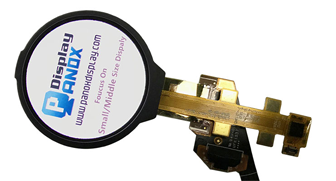
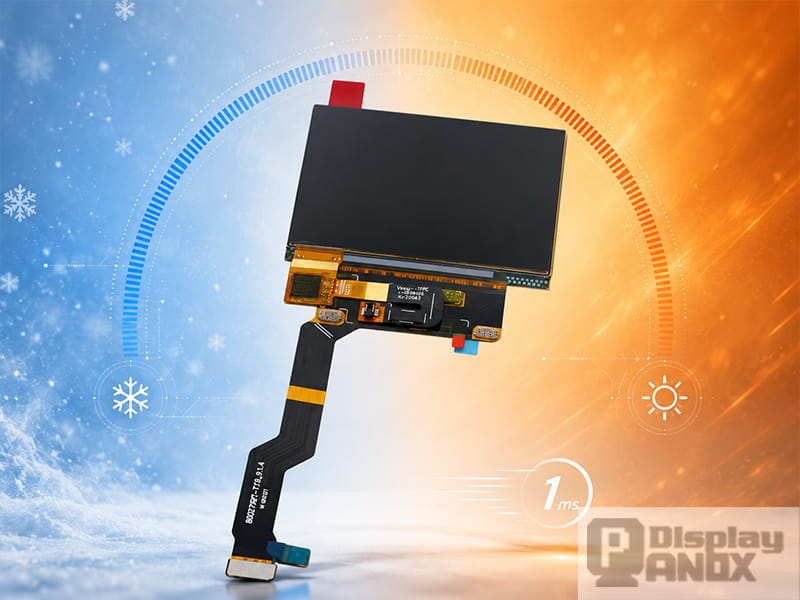 2.7 inch Full Color OLED Display
Wide temperature displays are used wherever the final product faces cold starts, heat, sunlight, vibration or unstable operating conditions.
In automotive and transportation, displays are used in center consoles, digital clusters, rear-seat systems, EV charging stations, fleet terminals and rail equipment. These applications often require fast cold-start performance, stable viewing angles and long-term reliability.
In industrial equipment, wide temperature TFT-LCD modules are used in PLC panels, machine vision systems, factory HMIs, CNC controllers, warehouse terminals and test instruments. Touch operation, interface stability and mechanical protection are usually as important as image quality.
In outdoor and rugged devices, applications include agricultural machinery, marine electronics, mining systems, construction equipment, parking terminals and environmental monitoring equipment. Sunlight readability, sealing, vibration resistance and thermal design are key factors.
In AR/VR and optical systems, Micro OLED and high-performance OLED displays can be used in near-eye systems, viewfinders, head-mounted devices and compact imaging modules. These projects require careful attention to response time, resolution, luminance, interface and heat inside the optical engine.
How to Select a Wide Temperature Display
The best selection process starts with the real operating profile rather than a display size. Before choosing a panel, define the lowest and highest temperature the display will actually experience. Include cold start, direct sunlight, enclosure heating, nearby electronics and storage or shipping conditions.
Next, decide what “usable” means in your product. A display for a freezer sensor may only need to show static numbers clearly. A vehicle camera monitor needs fast response and stable image quality. A sunlight-readable HMI needs enough brightness and contrast for outdoor operation. A near-eye display needs fast response, high pixel density and precise optical integration.
It is also important to review the complete module design. The panel, cover glass, touch sensor, bonding layer, backlight, PCB, cable, connector and housing should all match the same reliability target. A display panel with a wide temperature rating can still fail in the field if the touch panel, adhesive or driver board is not designed for the same environment.
For formal validation, many projects use temperature tests such as cold operation, dry heat, thermal cycling, damp heat, storage recovery and powered-on aging. Automotive and rugged projects may also require vibration, shock, ESD, EMC and sunlight exposure evaluation.
Panox Display Wide Temperature Solutions
Panox Display provides wide temperature display options across multiple technologies, including TFT-LCD, IPS industrial LCD, PMOLED, AMOLED, Micro OLED and Memory LCD. This makes it easier to match the display technology to the real application instead of forcing every project into the same panel type.
For industrial and vehicle products, Panox can support TFT-LCD modules with suitable interfaces, cover glass, touch panels and driver boards. For compact products, OLED and AMOLED displays provide high contrast and fast response in small sizes. For AR/VR and near-eye systems, Micro OLED displays offer high pixel density and compact optical integration. For low-power outdoor devices, Memory LCD can be considered when static image content and battery life are priorities.
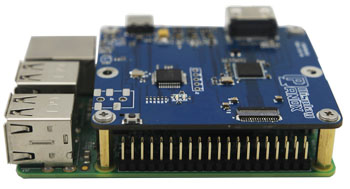
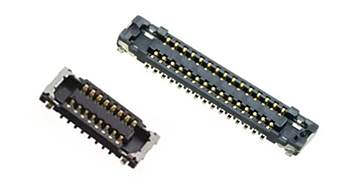
Panox also supports display customization such as connector selection, cover glass, touch panel integration, controller boards, brightness adjustment and interface conversion. Common interfaces may include RGB, LVDS, MIPI, eDP, HDMI, VGA, DVI, DisplayPort and Type-C depending on the display type and project requirement.
This module-level support is especially important for wide temperature projects. The final display solution should be selected as a complete system, including optical performance, electrical compatibility, mechanical installation and environmental reliability.
Final Thoughts
A wide temperature display is built for real-world conditions where a standard consumer display may become slow, unstable or unreadable. Low temperature can affect LCD response time. High temperature can stress the backlight, optical films, electronics and mechanical structure. Outdoor use adds sunlight, reflection and solar heating. Vehicle and industrial environments add vibration, shock and long service-life expectations.
The right solution depends on the application. TFT-LCD remains a strong choice for industrial and outdoor HMI systems. OLED and AMOLED are attractive for compact, high-contrast products. Micro OLED is well suited for AR/VR and near-eye optics. Memory LCD can be ideal for low-power outdoor data displays.
For any wide temperature project, the most reliable path is to evaluate the complete display module, not only the panel. Temperature range, readability, response time, touch performance, mechanical structure and driver electronics should be considered together from the beginning.
Panox Display can help you select and customize a wide temperature display solution for industrial equipment, vehicle systems, outdoor terminals, handheld devices and AR/VR applications.
Suggested FAQ Section
What is a wide temperature display?
A wide temperature display is a display panel or module designed to operate across an extended temperature range, such as cold outdoor environments, hot vehicle interiors or sealed industrial enclosures. It is commonly used in industrial, automotive, outdoor, rugged and optical applications.
Can an LCD work at -40°C?
Some LCDs can be designed for very low-temperature operation, but the liquid crystal material, driving method, heater design and module structure must be carefully selected. Standard LCDs may become slow or show ghosting at low temperatures, so cold-start testing is recommended.
Is OLED better than LCD for low temperature?
OLED pixels emit light directly and do not rely on liquid crystal movement, so OLED can offer fast response in cold environments. However, OLED selection should also consider high-temperature lifetime, brightness stability, image retention, power consumption and outdoor readability.
Is high brightness enough for outdoor wide temperature displays?
High brightness helps, but it is not enough by itself. Outdoor readability also depends on contrast, surface reflection, optical bonding, cover glass treatment, viewing angle and thermal design under direct sunlight.
What should I check before choosing a wide temperature display?
Check the operating temperature, storage temperature, cold-start performance, brightness, contrast, interface, touch panel, cover glass, bonding method, backlight design, mechanical structure and reliability test requirements.