



Sunlight readable display panels are used wherever a screen has to remain clear outside a controlled indoor environment. In the real world, a display may face direct sunlight, window-side glare, reflected light from water or glass, heat from a sealed enclosure, or quick viewing from a moving user. These conditions change the way a display performs.
For product designers, the question is not simply whether a panel is bright enough. The better question is: where will the display be used, how fast does the user need to read it, and what kind of information must stay visible?
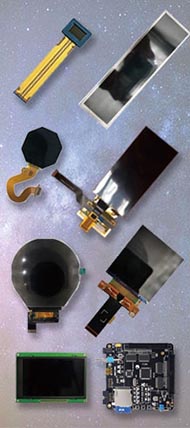
That is why sunlight readable displays appear across many product categories. A public kiosk, a wearable device, an industrial controller, and an AR optical engine may all need sunlight readability, yet each one needs a different display strategy. High brightness TFT LCD, transflective LCD, Memory LCD, AMOLED, flexible OLED, and Micro OLED all have their own place in outdoor or high-ambient-light applications.
1. Outdoor Public Equipment and Self-Service Terminals
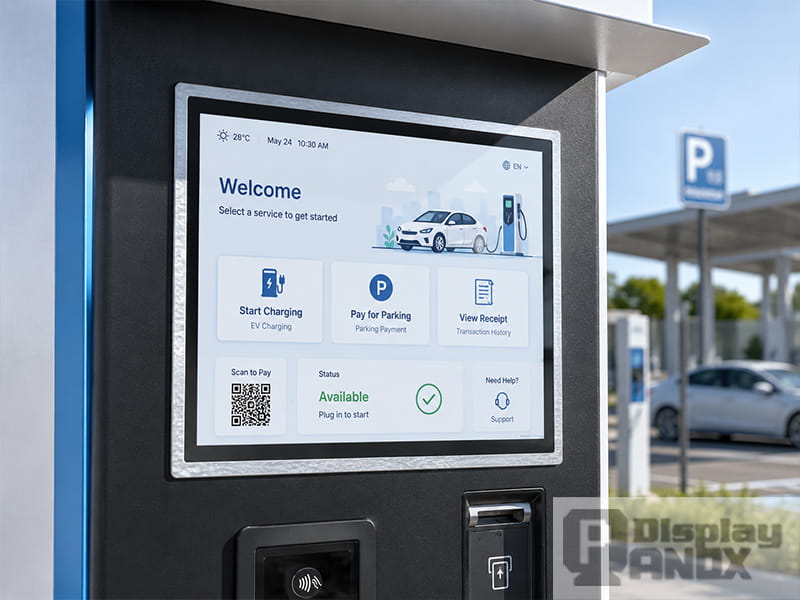
12.1-inch industrial-grade TFT-LCD
Outdoor public equipment is one of the most direct application areas for sunlight readable display panels. These products are usually installed in open or semi-open environments: parking lots, stations, charging areas, building entrances, factory gates, and street-side service points. The display must show information clearly to many different users, often under changing light throughout the day.
In this type of product, visibility affects operation speed. A user standing in front of an EV charging pile, ticket machine, vending terminal, or payment kiosk should be able to read instructions, prices, QR codes, warning messages, and process status without searching for shade. If the display becomes washed out, the whole device feels less reliable.
High brightness TFT LCD and IPS LCD panels are commonly used here because they support full-color interfaces, larger screen sizes, stable long-hour operation, and touch panel integration. Panox Display’s 12.1 inch 1280×800 LVDS high-brightness industrial TFT-LCD display is a good example for this direction. It fits public equipment and control terminals where a medium-sized screen needs to show menus, camera feeds, operating instructions, or status dashboards under bright ambient light.
For smaller public devices or compact control panels, a 6.5 inch industrial LCD 640×480 800 nits can be a practical choice. It does not try to behave like a consumer tablet. Its value is in stable readability, industrial integration, and a size that can fit into machines, vehicle-mounted systems, and compact outdoor equipment.
2. Industrial Automation and Factory Monitoring
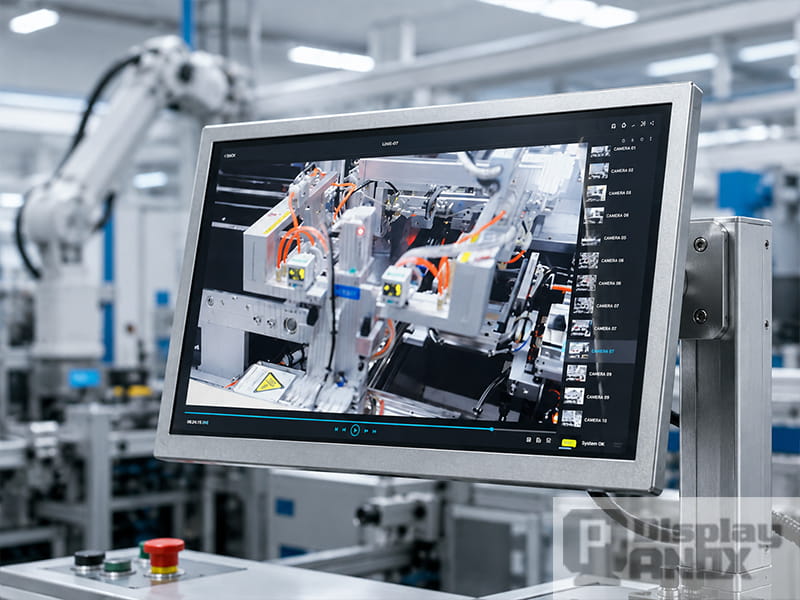
12.1-inch industrial-grade TFT-LCD
Industrial environments are not always outdoors, but they often create similar readability problems. Factory floors may have strong ceiling lights, reflections from metal surfaces, glass partitions, machine covers, or large windows. A display used in automation equipment must remain readable while surrounded by motion, vibration, dust, and operator movement.
For industrial automation, the display is often part of the control process. Operators use it to monitor machine status, camera feeds, alarms, production counters, temperature, pressure, and system modes. This makes readability a practical requirement instead of a visual preference.
A high brightness industrial TFT LCD can support these use cases because it gives the UI enough luminance for bright environments while still supporting color-coded machine data and visual monitoring. The 12.1 inch high brightness TFT-LCD industrial display is suitable for this kind of interface because its size gives enough room for video windows, alarm zones, status bars, and operation panels. In applications where the display is built into a smaller control module, the 6.5 inch industrial LCD 800 nits can provide a more compact solution.
For industrial products, the display panel should also be considered together with the cover glass, touch panel, controller board, connectors, and enclosure structure. A panel that looks strong in an open test setup may behave differently once it is installed behind glass or inside a sealed machine housing. This is where complete display integration support becomes important.
3. Outdoor Handheld Devices and Field Instruments
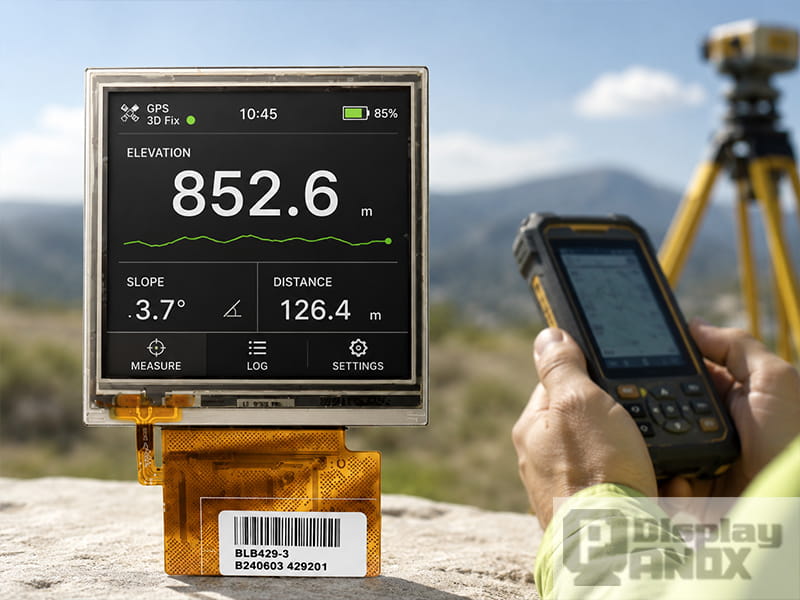
Handheld products are a different challenge. They are often smaller, battery-powered, and used quickly in uncontrolled environments. A field worker may check readings outdoors, a logistics operator may scan goods near a loading dock, or a technician may use an instrument in bright sunlight. The display has to remain visible without draining the battery too quickly.
For these applications, higher brightness is helpful, but power consumption matters just as much. A handheld product cannot always run a bright backlight at maximum output. This is why transflective LCD and Memory LCD can be attractive options.
A 2.2 inch transflective LCD for handheld devices is especially relevant when the screen needs to use ambient light instead of fighting against it. Under strong light, transflective display technology can make outdoor visibility more practical, while still allowing backlight use in darker conditions. This makes it suitable for portable meters, compact terminals, outdoor sensors, and small control devices.
A 3.2 inch Memory LCD colorful/chromatic display for handheld devices fits another kind of outdoor product: devices that show data for long periods with limited animation. Memory LCD is useful when the interface is mostly numbers, icons, charts, or status information. Instead of chasing a rich video-like display effect, it focuses on always-on readability and low power demand. That can be valuable for outdoor measuring tools, health devices, inspection equipment, and battery-powered industrial instruments.
4. Wearable Devices and Outdoor Sports Products
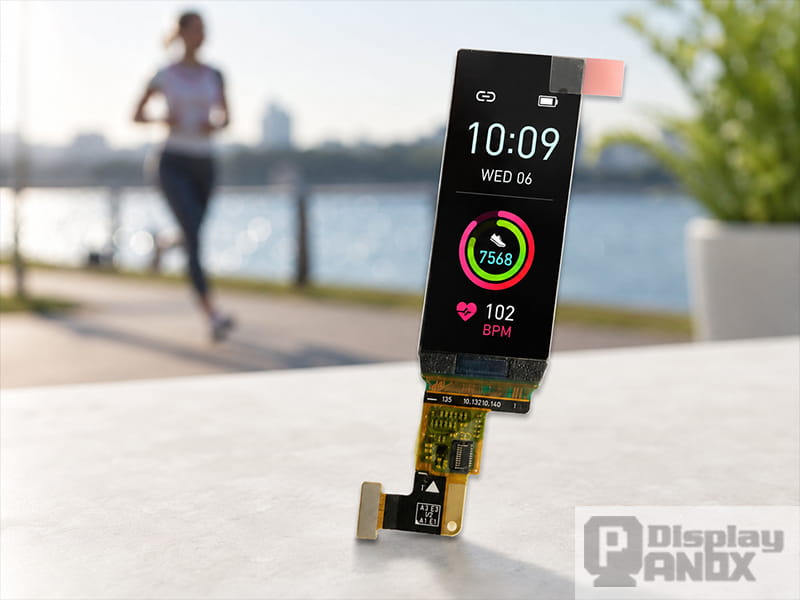
Wearable displays are checked in quick moments. The user may be running, cycling, walking in strong daylight, or checking health data during outdoor work. There is rarely time to stop and adjust the viewing angle. The screen must communicate information immediately.
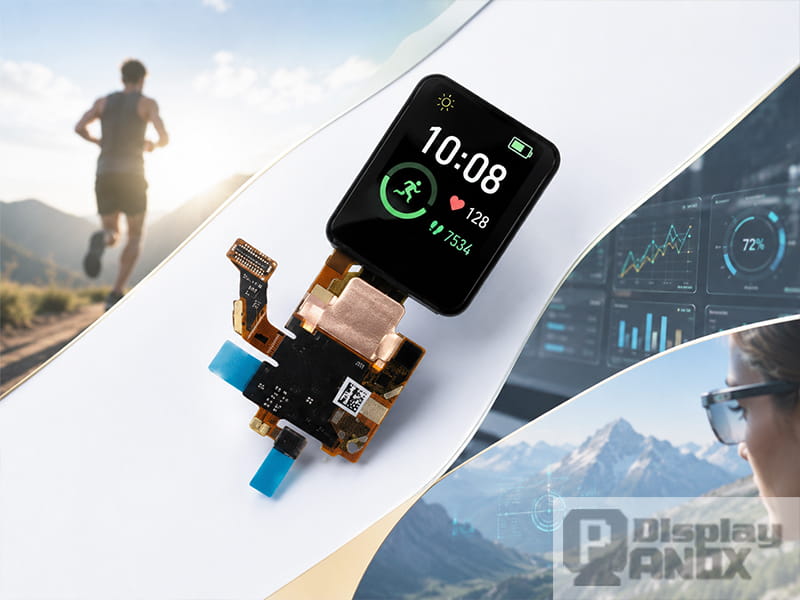
This is why sunlight readability is important for smart watches, sports bracelets, medical wearables, outdoor fitness devices, and compact health monitors. The content may be simple—time, heart rate, battery, steps, distance, notifications—but the viewing situation is demanding. A small display has less physical area to carry the interface, so contrast, font size, icon clarity, and brightness all become more important.
AMOLED and OLED panels are strong candidates for this area because they offer vivid color, thin structure, fast response, and high contrast. Panox Display’s 1.6 inch OLED On-cell PACP TP 500cd brightness for wearable devices is suitable for compact watch-style products that need a full-color interface with touch integration. The 1.91 inch OLED for wearable smartwatch gives a taller screen shape that works well for fitness data, message previews, and vertically arranged wearable UI. For products that need a larger smartwatch-like interface, the 2.04 inch AM-OLED full-color on-cell PCAP touch display can support a more spacious UI layout.
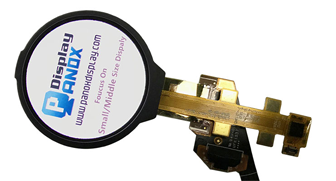
Round wearable designs can also benefit from sunlight readable OLED. The 1.39 inch round OLED 454×454 SPI 800 nits is relevant for smart watches, sports watches, and compact wearable devices where outdoor visibility and circular UI design both matter.
5. AR, FPV, EVF, and Near-Eye Optical Systems
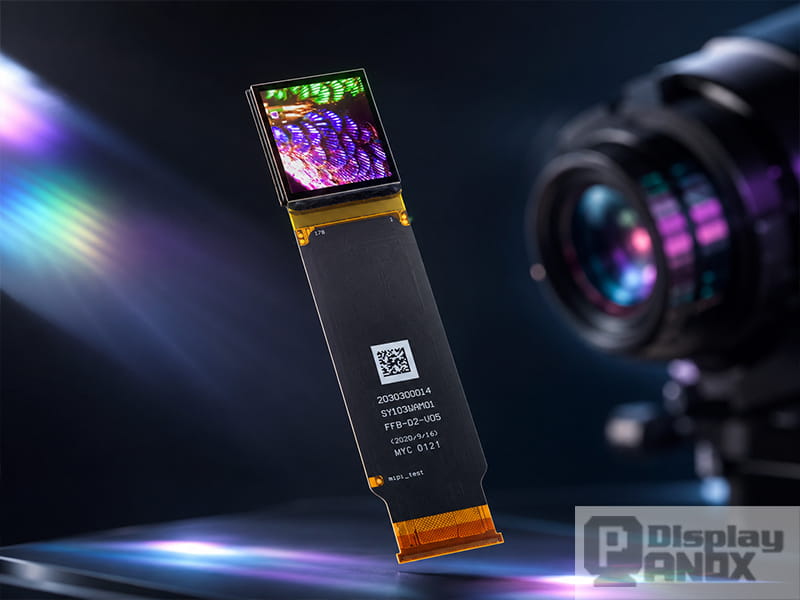
Near-eye displays have a different sunlight readability problem. The user does not view the bare display panel directly. The image passes through lenses, mirrors, prisms, waveguides, or other optical components before it reaches the eye. During that process, brightness is lost and contrast can be weakened.
That is why Micro OLED is important in AR glasses, FPV goggles, camera EVFs, thermal imaging viewers, night vision devices, medical viewers, and compact optical engines. In these products, a tiny display must provide high pixel density, strong contrast, and enough brightness for the final optical image to remain usable.
Panox Display’s 0.71 inch Micro OLED 1920×1080 LVDS 3000 nits is a strong example for compact optical systems. Its high brightness and FHD resolution make it suitable for AR, MR, head-mounted displays, viewfinders, and small monitor-style optical modules. For systems that need a square high-resolution image source, the 1.03 inch Micro OLED 2560×2560 for AR/FPV can support AR, FPV, and professional viewer products that need more image detail in a compact optical structure.
Larger OLED panels can also appear in VR-related systems. The 3.81 inch OLED 90Hz for VR is suitable for headset-type applications where a larger panel area and higher refresh behavior help support immersive viewing. In this category, sunlight readability is not only about outdoor sunlight. It is also about how much brightness and contrast remain after the optical path, lens system, and viewing environment are considered together.
6. Vehicle, Marine, and Smart Mobility Displays
Vehicle and marine displays face some of the most difficult lighting conditions. A car dashboard can receive direct sunlight through the windshield. A marine display may reflect sky and water. A bike, scooter, or outdoor mobility device may be used under fast-changing light and viewing angles.
In these applications, readability is connected to safety and fast decision-making. Users need to read speed, alerts, navigation, camera feeds, battery status, charging information, and system warnings without distraction. A weak display forces the user to look longer, which is exactly what mobility applications should avoid.
High brightness LCD panels are practical for many vehicle and marine systems because they support clear graphics, strong backlight output, and durable industrial integration. For compact vehicle-mounted equipment, the 6.5 inch industrial LCD 800 nits can work in control and monitoring interfaces. For larger smart mobility dashboards or console-style products, a 10.1 inch LCD 1920×1200 for automobile console with HDMI board can support richer information layouts.
Flexible OLED can also be considered for next-generation smart mobility interiors, curved dashboard concepts, and modern control surfaces. The 6.52 inch flexible OLED 2520×840 touch panel offers a wide, stretched visual format that can suit curved UI concepts, smart cockpit elements, and special-form display designs where a rigid rectangular panel feels limiting.
7. Retail, Exhibition, Robotics, and Design-Led Interfaces
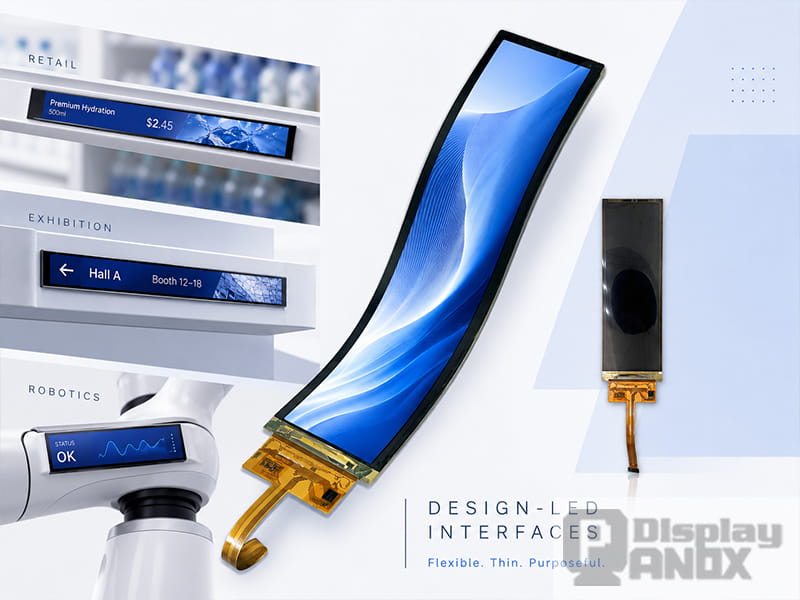
Not every sunlight readable display is used in heavy outdoor equipment. Many products operate in bright indoor spaces that behave like outdoor environments: retail stores with glass walls, exhibition booths with strong lighting, airport halls, smart showrooms, reception areas, and service robots working near windows.
In these cases, the display also needs strong visibility. A robot face, curved signage strip, interactive shelf display, or smart retail label must remain clear under mixed lighting. The purpose may be communication, branding, navigation, or interaction, but the display still needs enough contrast to be seen quickly.
Flexible OLED is especially useful when the product form is part of the experience. A 6.52 inch flexible OLED 2520×840 touch panel can support wide curved visuals, while larger flexible OLED panels such as 7.8 inch flexible full-color OLED and 8 inch flexible/foldable OLED can help developers build interfaces that are less constrained by flat rectangular hardware. These panels are relevant for robot faces, curved handheld devices, compact signage, exhibition concepts, and special industrial design projects.
For these design-led products, sunlight readability helps keep the visual effect stable in real environments. A curved display may look impressive in a dark studio, but it also needs to stay legible when the product is shown under strong ambient light.
8. Medical, Inspection, and Professional Viewer Devices
Professional viewing devices often need compact, high-clarity displays. Medical viewers, inspection tools, thermal imaging systems, optical measurement devices, and professional eyepiece modules may be used in bright rooms, field sites, or mobile work environments.
For direct-view handheld instruments, a Memory LCD, transflective LCD, or compact OLED panel may be enough depending on the UI. For eyepiece-type systems, Micro OLED becomes more important because the display must fit into a small optical path while still producing detailed imagery. The 0.71 inch Micro OLED 3000 nits and 1.03 inch Micro OLED 2K for AR/FPV are especially relevant when the product needs high image detail in a small optical module.
In medical and inspection products, readability also affects fatigue. If a user has to stare longer to confirm detail, the display is creating friction. A good sunlight readable or high-contrast display helps the device feel more precise and easier to trust.
9. How to Match the Display to the Application
A useful way to choose a sunlight readable display panel is to begin with the application instead of the display size. A public kiosk needs a different solution from a smartwatch. A field meter has different priorities from an AR viewer. A curved robot face has different requirements from a factory monitoring panel.
For fixed outdoor equipment, high brightness TFT LCD and IPS LCD panels usually provide the most practical starting point. For low-power handheld devices, transflective LCD and Memory LCD may offer a better balance between visibility and energy use. For wearables, AMOLED and OLED panels can create compact full-color interfaces with strong contrast. For AR, FPV, EVF, and optical systems, Micro OLED is often the more suitable direction because of its small size and high pixel density. For design-led products with curved surfaces, flexible OLED opens more freedom in industrial design.
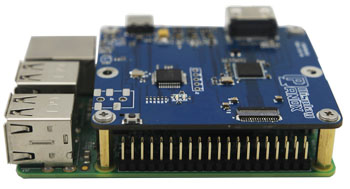
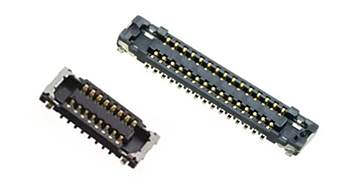
The display panel should also be evaluated with the full product stack. Cover glass, touch panel, optical bonding, controller board, connector design, enclosure temperature, and UI contrast can all change the final user experience. Panox Display supports multiple display types and can also provide customized touch panels, cover glass, connectors, and controller or driver boards for projects that need complete integration support.
Conclusion
Sunlight readable display panels are used across outdoor public equipment, industrial control systems, handheld instruments, wearables, vehicle displays, marine systems, AR/FPV devices, professional viewers, robotics, retail displays, and flexible design-led interfaces. The same keyword covers many different products, so the display solution should always be matched to the real application.
A high brightness industrial TFT LCD may be the right choice for a public terminal. A transflective LCD or Memory LCD may be better for a battery-powered field instrument. A wearable AMOLED can make health and fitness data easier to read outdoors. A Micro OLED panel can become the image source for an AR optical engine or FPV viewer. A flexible OLED can support curved interfaces for smart mobility, robotics, or exhibition products.
For developers and OEM teams, the best sunlight readable display is the one that fits the viewing environment, power budget, optical path, mechanical structure, and user interface. Panox Display can help customers compare TFT LCD, IPS LCD, transflective LCD, Memory LCD, AMOLED, flexible OLED, and Micro OLED options for real-world sunlight readable applications.
FAQs
What are the main applications of sunlight readable display panels?
Sunlight readable display panels are used in outdoor kiosks, EV charging piles, industrial controllers, handheld terminals, smart watches, vehicle displays, marine systems, AR/FPV viewers, medical equipment, retail displays, robotics, and outdoor measurement devices.
Which display is better for outdoor public equipment?
High brightness TFT LCD or IPS LCD is usually practical for outdoor public equipment because it supports larger screen sizes, full-color UI, long operating time, and touch panel integration. Optical bonding and AR/AG cover glass can further improve visibility.
Are AMOLED displays suitable for outdoor wearable devices?
Yes. AMOLED displays are widely used in smart watches and wearable devices because they provide strong contrast, vivid color, fast response, and thin module design. Outdoor readability still depends on brightness, reflection control, UI design, and power management.
When should I choose transflective LCD or Memory LCD?
Transflective LCD and Memory LCD are suitable when the device needs low power consumption and outdoor visibility. They work especially well for handheld instruments, meters, sensors, and wearable products that show static or semi-static data.
Why is Micro OLED used in AR and FPV applications?
Micro OLED is compact, high-resolution, and suitable for near-eye optical systems. In AR, FPV, EVF, and viewer devices, the display image passes through optics before reaching the eye, so high luminance and strong pixel density are important.
Can flexible OLED be used in sunlight readable applications?
Flexible OLED can be used in curved interfaces, smart mobility interiors, robot faces, exhibition displays, and design-led products. The final outdoor readability depends on panel brightness, surface reflection, UI contrast, and product structure.
Can Panox Display help choose a sunlight readable display for a specific application?
Yes. Panox Display provides multiple display technologies, including TFT LCD, IPS LCD, transflective LCD, Memory LCD, AMOLED, flexible OLED, and Micro OLED. Panox Display can also support touch panels, cover glass, connectors, and controller boards for customized integration.