



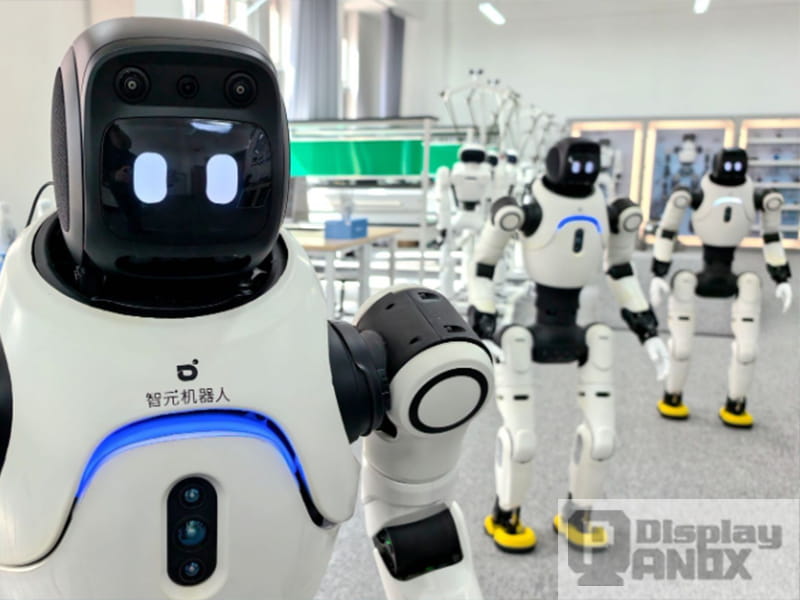
Humanoid robots are moving from controlled laboratory demos into real working environments. They are being tested in factories, showrooms, service counters, hospitals, warehouses, and home-assistance scenarios. As this shift continues, the robot face is no longer just a decorative shell. It is becoming one of the most direct ways for a robot to communicate intent, status, emotion, and interaction feedback.
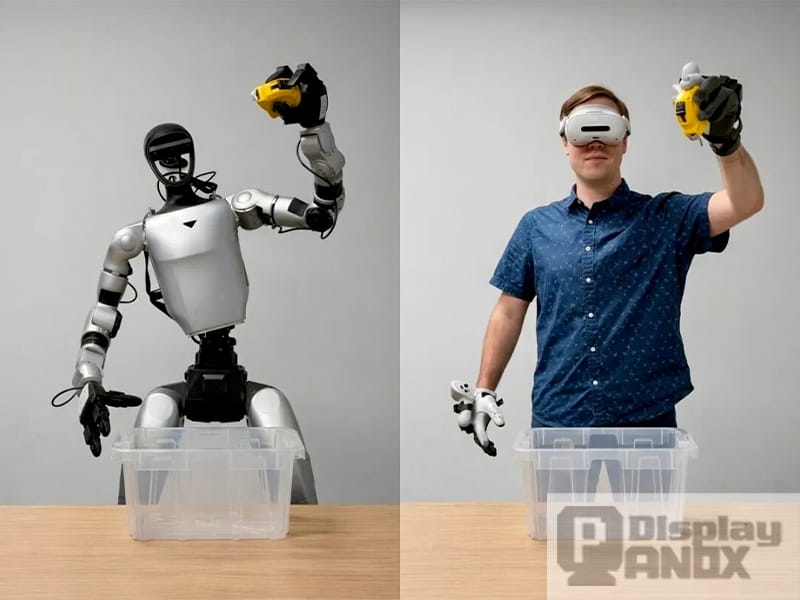
Recent progress in XR-based robot teleoperation has made this change more obvious. At NVIDIA GTC 2026, PICO and NVIDIA introduced Isaac Teleop, an immersive teleoperation framework designed to standardize robot control and data collection. The key message behind this development is not only about XR headsets. It points to a larger trend: Physical AI needs better ways to connect human action, robot movement, visual feedback, and real-world training data.
In that context, the display on a humanoid robot becomes more important. A robot may use cameras, sensors, and AI models to understand the world, but humans still read the robot through visible cues. The eyes, face screen, or front display can show whether the robot is listening, thinking, moving, waiting, charging, warning, or ready to assist. For this role, flexible OLED offers a stronger design path than a conventional flat LCD.
Why Robot Eyes Are Becoming a Real Display Application
The original challenge behind robot learning is simple but difficult: robots need large amounts of high-quality real-world interaction data. Simulation is useful, but it does not fully replace physical operation. Real data is expensive to collect, and traditional teleoperation systems often depend on fragmented hardware such as VR headsets, gloves, motion trackers, custom controllers, and separate robot platforms.
XR teleoperation helps close this gap. A human operator can control a robot through an immersive device while the system records movement, visual feedback, operation paths, and environmental states. This creates valuable data for training robot policies and improving embodied AI systems.
But the human side of the loop is only one half of the story. On the robot side, the machine also needs a clear and readable way to communicate with people nearby. A humanoid robot working around humans cannot rely only on hidden sensors or voice output. Its face display must make the robot feel understandable at a glance.
That is why robot eye displays are becoming a serious application area for OLED and flexible AMOLED panels.
Why Flexible OLED Fits Humanoid Robot Eye Displays
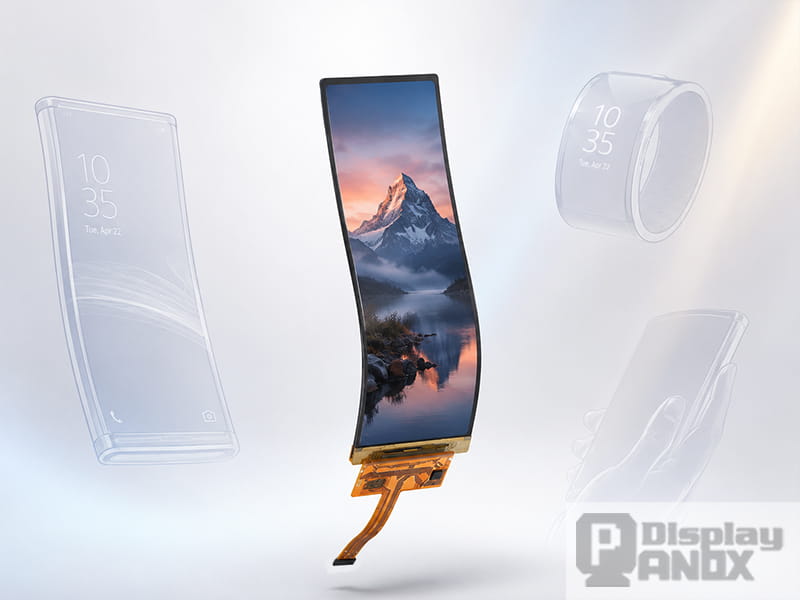
6.52 inch Flexible OLED 2520x840 Touch Panel
A humanoid robot head is rarely a simple flat rectangle. It may have a curved front shell, a visor-like eye area, a compact inner structure, and limited space for electronics. A rigid display can work for early prototypes, but it often makes the robot look like a tablet mounted onto a plastic head.
Flexible OLED solves this problem at the design level. Built on a flexible substrate rather than rigid glass, it can follow curved surfaces and support more natural product forms. This gives industrial designers more freedom to create a continuous robot face, a soft curved eye area, or a slim visor-style display.
OLED also has strong visual advantages for robot eyes. Each pixel emits its own light, so black areas can remain truly black. For eye animation, this matters a lot. Blinks, pupils, gaze movement, glowing lines, emotion icons, and status indicators look cleaner when there is no LCD backlight bleed. The result is a face that feels more intentional and less like a basic screen.
Flexible OLED panels are also thin and lightweight, which is important for humanoid robot head design. The head often contains cameras, microphones, speakers, sensors, cooling structures, and processing hardware. Reducing display thickness and weight helps leave more room for mechanical and electronic integration.
From XR Teleoperation to Expressive Robot Faces
The connection between XR teleoperation and flexible OLED robot eyes may not look obvious at first, but both belong to the same Physical AI development cycle.
XR teleoperation focuses on how humans control robots and generate training data. Flexible OLED robot eyes focus on how robots give feedback to humans during interaction. Together, they support a more complete human-robot loop.
For example, when a robot is controlled remotely or trained through human demonstration, its face display can show current operation mode, attention direction, safety status, connection state, or task progress. In a public service robot, the same display can show friendly eye animations, waiting cues, simple expressions, or warning signals. In an industrial humanoid, the face may use a more technical visor-style display to show status, diagnostics, or motion intention.
As humanoid robots become more common, the visual interface will affect how people trust and understand them. A robot that moves silently with no visible feedback can feel unpredictable. A robot with clear eyes, smooth gaze animation, and readable status cues feels easier to approach.
Panox Display Flexible OLED Options for Robot Eye Screens
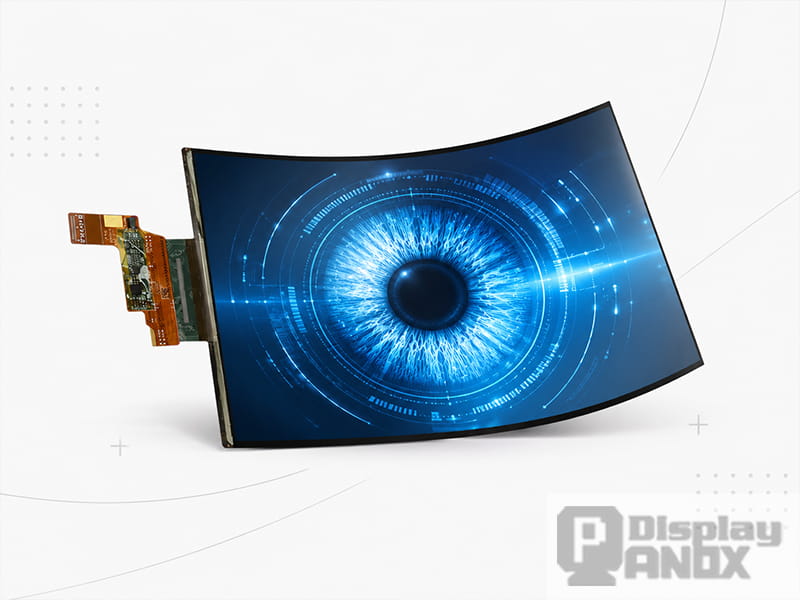
7.8 inch Flexible Full Color OLED 1920x1440 MIPI
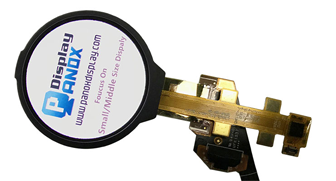
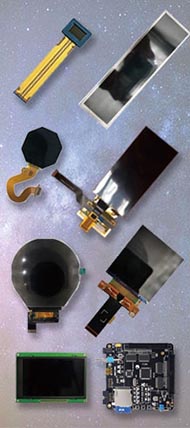
Panox Display provides flexible OLED and flexible AMOLED display modules that can be considered for robot eye displays, robot face screens, wearable electronics, AR/VR-related devices, and other compact embedded applications.
For humanoid robot eyes, two design directions are especially practical.
The first is a long-strip flexible OLED display. A stretched flexible panel can work well for a visor-style robot face. Instead of using two separate small screens for two eyes, one continuous display can show both eyes, gaze direction, animation effects, and status icons across the same surface. This reduces bezel interruption and creates a cleaner front-face design.
The second is a larger flexible AMOLED panel for a full-face display. In this approach, the robot face is treated as one continuous digital canvas. The entire front area can show eyes, expressions, interface prompts, brand visuals, battery state, language cues, or interaction menus. This is useful for humanoid robots designed for retail, hospitality, exhibition, education, and service environments.
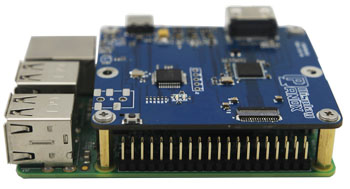
Panox Display’s flexible product category includes multiple sizes and interfaces, including compact wearable OLED modules, long-strip flexible OLED options, and larger flexible AMOLED panels. Depending on the robot’s ID design and control system, MIPI, SPI, eDP, or a matched controller board may be considered for integration.
Key Requirements for a Humanoid Robot Eye Display
A display used for robot eyes is not selected only by size. The right module should match the robot’s mechanical design, software interface, operating environment, and visual style.
A curved front shell requires attention to panel bending direction, active area, FPC position, cover lens shape, and bonding method. A robot that needs expressive eyes should prioritize contrast, refresh rate, pixel density, and smooth animation performance. A service robot used under bright indoor lighting may need higher brightness and an anti-reflective front structure. A robot used in industrial or outdoor-adjacent environments should also consider operating temperature, vibration, and long-term reliability.
Touch can also be valuable. Even if the main interaction method is voice, camera recognition, or remote operation, a touch-enabled face display can support wake-up, confirmation, maintenance mode, testing, or simple user input.
For engineering teams, display integration should be planned early. Leaving the robot face screen until the final enclosure stage often creates problems with cable routing, viewing angle, cover glass thickness, thermal layout, and driver compatibility. Choosing the display at the concept stage makes the robot head easier to design and easier to manufacture.
Typical Applications
Flexible OLED robot eye displays can be used in several types of humanoid and service robot projects.
For humanoid robots, flexible OLED can create expressive eyes, digital faces, or visor-style front interfaces. For service robots, it can display greetings, attention direction, task status, and simple emotional feedback. For exhibition robots, the display can become part of the brand identity, making the robot more memorable to visitors. For research and development platforms, a flexible OLED face screen can help developers test different expression systems without redesigning mechanical eye structures.
In industrial settings, the display does not need to look emotional. It can show operating status, safety warnings, remote-control mode, fault codes, or human-readable movement intention. This helps nearby workers understand what the robot is doing before it moves.
Why This Matters for the Next Stage of Robotics
The development of Physical AI is often discussed through models, sensors, training data, and compute power. These are essential, but the visible interface should not be ignored. A humanoid robot is not only a machine that performs tasks. It is also a product that humans need to read, trust, and interact with.
XR teleoperation is helping robots learn from human operation. Flexible OLED displays can help robots communicate back to humans in a more natural and visually refined way. This makes the robot face a practical interface, not a cosmetic detail.
For companies building humanoid robots, service robots, or embodied AI platforms, flexible OLED offers a strong balance of design freedom, thin structure, high contrast, smooth animation, and integration flexibility. As the robot industry moves from prototypes to real deployment, the quality of the robot eye display will become part of the user experience.
Panox Display supports flexible OLED display selection for robotics and other emerging applications. From compact OLED modules to flexible AMOLED panels and controller board support, Panox Display can help development teams choose a display that fits the robot’s face design, electrical interface, and application environment.