



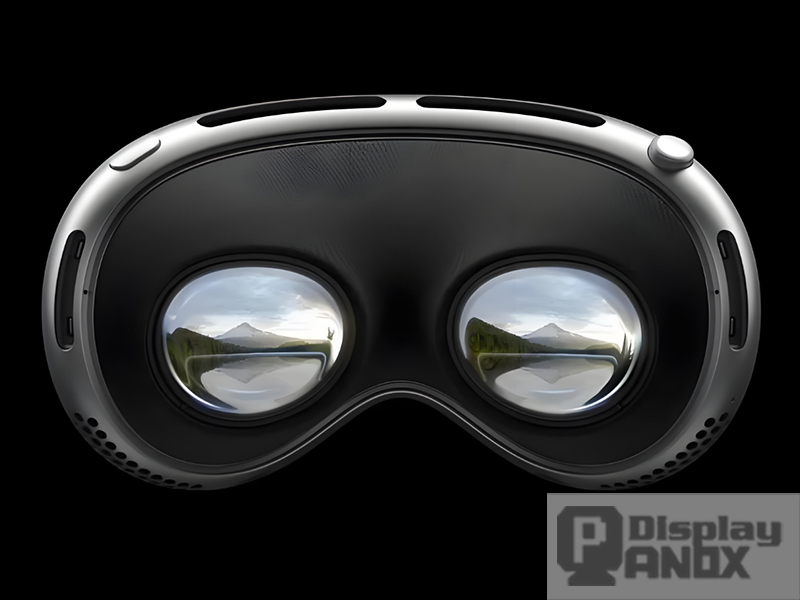
Apple Vision Pro once represented the most ambitious version of consumer spatial computing. With its premium headset design, advanced optical system, custom silicon, and Micro OLED display architecture, it proved that high-resolution near-eye display technology could deliver a deeply immersive experience. Apple’s official specifications list Vision Pro with a Micro-OLED 3D display system, 23 million pixels, 7.5-micron pixel pitch, wide color coverage, and refresh rates up to 120Hz.
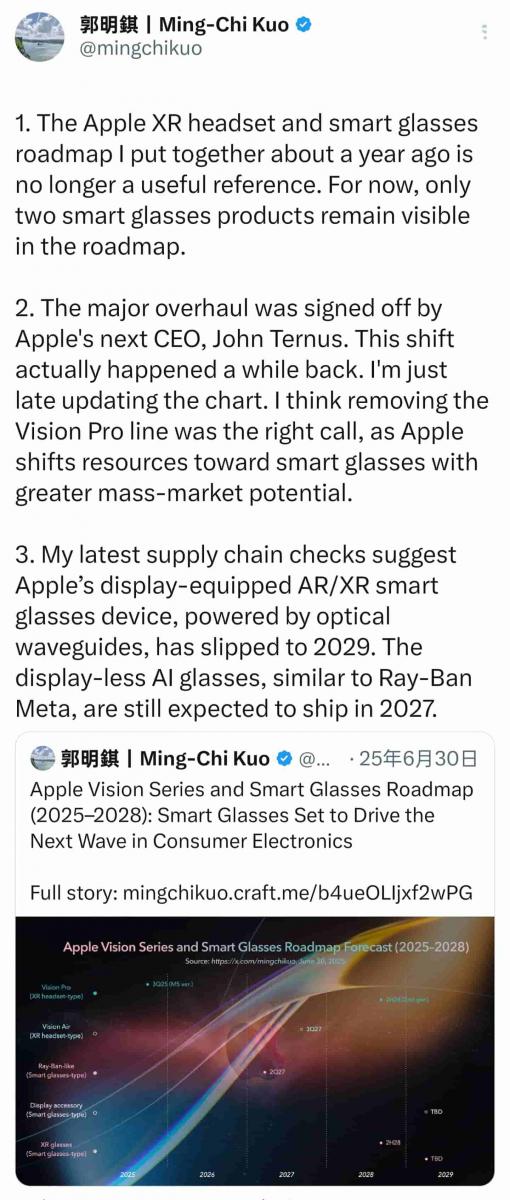
However, the direction of the market is changing. Recent supply chain reports suggest that Apple’s Vision product roadmap has been heavily reduced, with attention shifting away from Vision Pro-style headsets and toward smart glasses. According to analyst Ming-Chi Kuo, only two smart glasses products remain visible in Apple’s roadmap: a display-less AI glasses product and a display-equipped AR/XR smart glasses product using optical waveguides. Bloomberg’s Mark Gurman has also reported that a slimmer Vision Pro successor may not arrive until 2028 or 2029, while Apple’s smart glasses project has become a stronger internal focus.
This does not mean Micro OLED is losing relevance. In many ways, it shows the opposite. Vision Pro demonstrated the visual value of Micro OLED in a high-end headset. The next challenge is bringing near-eye display technology into smaller, lighter, more practical eyewear. For AR glasses, AI glasses with display functions, FPV goggles, compact optical engines, and professional wearable viewers, Micro OLED remains one of the key display technologies that can make this transition possible.
1. From Vision Pro to Smart Glasses: A Change in Product Logic
Vision Pro was built as a premium spatial computer. Its starting price of $3,499 placed it firmly in the high-end category, and the product experience depended on a full headset structure, external battery, complex sensors, advanced optics, and a powerful computing platform. It was technically impressive, but it was never close to the size, weight, or price range of everyday eyewear.
Smart glasses follow a different product logic. Instead of asking users to wear a full headset for immersive computing, smart glasses try to fit digital functions into a familiar glasses form factor. This is why Ray-Ban Meta-style AI glasses gained attention so quickly: they are wearable, socially acceptable, and useful in daily scenes such as photo capture, voice interaction, audio playback, translation, and AI assistance.
The first stage of smart glasses may not require a display at all. A camera, microphone, speaker, battery, wireless module, and AI assistant can already create a useful wearable device. But once smart glasses need to show navigation prompts, subtitles, notifications, translation text, image previews, industrial instructions, or spatial content, the display system becomes unavoidable.
That is where AR glasses begin to separate from ordinary AI glasses. A pair of AI glasses can work without a display. A pair of AR glasses cannot. It needs a compact image source, an optical path, and a way to project visual information into the user’s field of view. For this type of product, the display is no longer a simple component. It becomes one of the foundations of the entire optical engine.
2. Why Vision Pro Still Matters to the Future of AR Glasses
Even if Apple reduces its Vision Pro roadmap, Vision Pro remains important because it proved the value of Micro OLED in near-eye display systems. Its display system was one of the strongest technical highlights of the product. The use of Micro OLED allowed Apple to deliver extremely high pixel density in a compact display structure, which is essential when the image is placed close to the eyes and magnified through lenses.
The lesson from Vision Pro is not that headsets are the only future. The more useful lesson is that display quality matters deeply in near-eye products. Text must be readable. Motion must feel stable. Black levels and contrast must be strong enough to preserve depth and image clarity. Pixel density must be high enough to reduce visible pixel structure. These requirements do not disappear when the product becomes smaller. They become harder.
AR glasses are more difficult than headsets in some ways. A headset has more space for optics, thermal design, battery, sensors, and display modules. Glasses have far less room. The display engine needs to be smaller, lighter, and more power-conscious. It must also work with optical waveguides, birdbath optics, prism optics, or other compact projection structures.
This is why Micro OLED continues to matter after Vision Pro. The market may move away from large premium headsets, but the need for high-quality near-eye displays does not go away. It simply moves into smaller devices.
3. Display-Less AI Glasses and Display-Equipped AR Glasses Are Two Different Markets
The current smart glasses market is often discussed as if all products are moving toward the same destination. In reality, there are two different tracks.
The first track is display-less AI glasses. These products focus on voice, camera, audio, and AI interaction. They are easier to manufacture because they do not require an optical display system. Their hardware structure is closer to traditional consumer electronics and eyewear. The supply chain mainly involves camera modules, audio chips, batteries, wireless modules, microphones, processors, and frame design.
The second track is display-equipped AR glasses. These products are much harder to build because they need a microdisplay, optical engine, lens or waveguide structure, and careful image calibration. They must solve display brightness, optical efficiency, field of view, eye box, weight distribution, heat, power consumption, and visual comfort at the same time.
This difference explains why Apple’s reported roadmap separates display-less AI glasses from optical waveguide AR/XR glasses. The AI glasses product can reach the market earlier because the technology stack is more mature and the user scenario is easier to define. Display-equipped AR glasses need more time because the optical display system is still the most difficult part of the product.
For display suppliers and optical module developers, this distinction is important. The short-term market may grow first through AI glasses without displays, but the long-term AR glasses opportunity still depends on compact near-eye display technology. Micro OLED is one of the display choices that can support this second stage.
4. Why Micro OLED Fits AR Glasses Better Than Conventional Displays
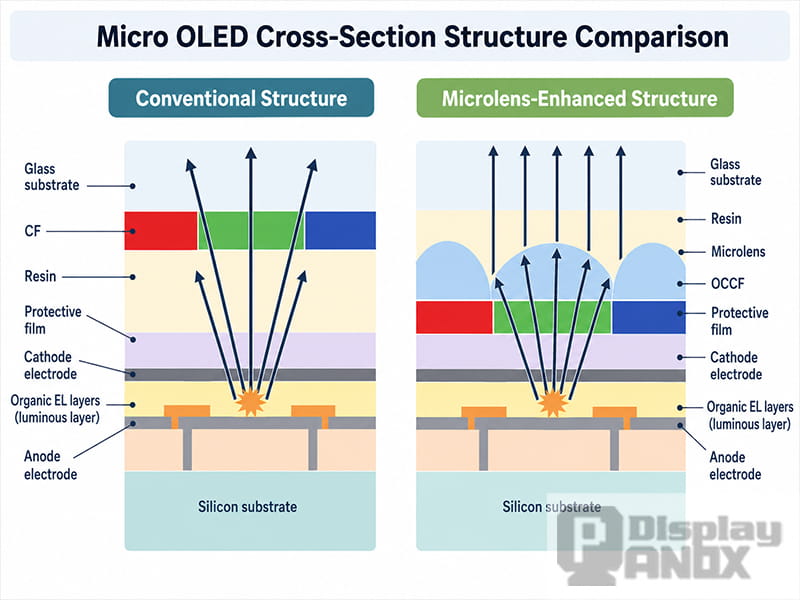
Micro OLED, also called OLED-on-Silicon or OLEDoS, uses a silicon backplane instead of a conventional glass substrate. This structure allows the display to achieve very small pixel sizes, high pixel density, high integration, and compact physical dimensions. PanoxDisplay’s Micro Display category describes Micro OLED as a silicon-based OLED display using a monocrystalline silicon wafer as the active backplane, making it easier to achieve high PPI, small size, integration, and low power consumption.
For AR glasses, these characteristics are not just specification advantages. They are product-level advantages.
A conventional display can be small, but it may not have enough pixel density for near-eye magnification. A display can be bright, but it may not fit inside a compact optical engine. A display can have good color, but it may consume too much power for a wearable device. AR glasses need all of these requirements to be balanced inside a very small space.
Micro OLED is suitable because it starts from the needs of near-eye optics. Its self-emissive OLED structure provides high contrast and deep black levels. Its silicon backplane supports high pixel density. Its compact size helps reduce optical engine volume. Its fast response supports moving images, real-time camera feeds, and interactive interfaces. These qualities make it useful for AR glasses, smart viewers, FPV goggles, EVF systems, medical optical devices, and industrial wearable displays.
Sony Semiconductor also describes OLED microdisplays as combining OLED image quality with high-resolution silicon backplane technology, offering high contrast, wide color gamut, and fast response. This is why OLED microdisplays have expanded from camera electronic viewfinders into AR, VR, HMD, and other compact optical applications.
5. The Supply Chain Shift: From High-End Headsets to Smaller Optical Engines
Vision Pro’s supply chain included high-value components such as Micro OLED displays, precision lenses, sensors, chips, and advanced mechanical parts. If the headset roadmap slows down, suppliers connected only to large premium headsets may face pressure. But the broader near-eye display market is not limited to one product line.
As the industry moves toward glasses, the demand changes. Instead of building a large immersive headset, developers need smaller optical engines. Instead of two large display modules inside a headset, they may need compact monocular or binocular display solutions that fit inside lightweight eyewear. Instead of focusing only on cinema-like immersion, they may focus on readable text, simple UI overlays, industrial instructions, navigation prompts, translation captions, and camera preview.
This shift can open new opportunities for Micro OLED suppliers. The display may be used in different product forms: lightweight AR glasses, AI glasses with a small visual display, FPV goggles, industrial AR viewers, medical optical equipment, thermal imaging viewers, portable instruments, and professional electronic viewfinders.
The key is not to treat Micro OLED as a “Vision Pro-only” component. Vision Pro used Micro OLED at the high end, but the same display technology family can serve many smaller near-eye products when matched with the right resolution, brightness, interface, and optical design.
6. PanoxDisplay Micro OLED Solutions for AR Glasses and Near-Eye Devices
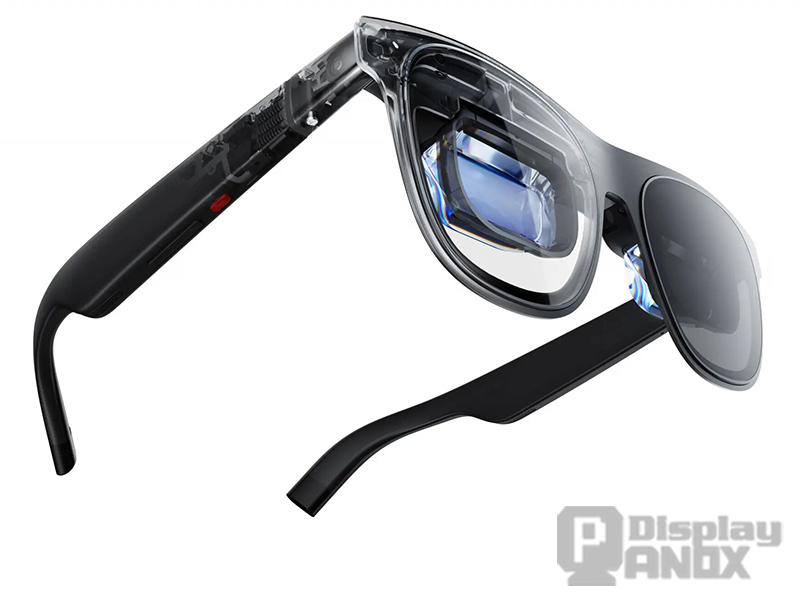
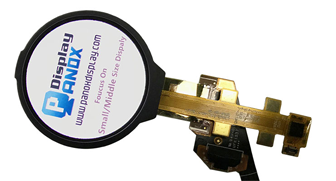
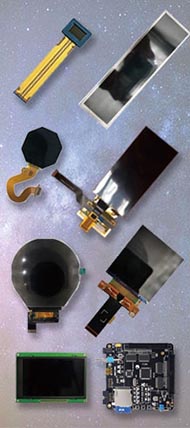
PanoxDisplay provides Micro OLED display products that can be used in AR glasses, VR head-mounted displays, FPV systems, electronic viewfinders, optical instruments, and professional wearable devices. The Micro Display product category includes compact options such as 0.39-inch, 0.49-inch, 0.5-inch, 0.68-inch, 0.71-inch, and 1.03-inch Micro OLED displays, with resolutions ranging from XGA and Full HD to higher-resolution near-eye display formats.
For high-resolution AR and FPV development, PanoxDisplay’s 1.03-inch Micro OLED display is a strong example. The MO103F2560 model features a 2560 × 2560 RGB resolution, 7.2μm pixel size, 18.432 × 18.432 mm usable display area, 1800 cd/m² typical luminance, 500,000:1 contrast ratio, MIPI DSI interface, and 60Hz to 90Hz refresh rate. The module is designed for next-generation near-eye display applications, including AR smart glasses, VR headsets, electronic viewfinders, thermal imaging systems, medical optical equipment, industrial wearable devices, and portable optical instruments.
This type of Micro OLED panel is relevant to AR glasses because it can provide a detailed image source in a compact format. In a headset, the display has more room to work with the optical path. In AR glasses, every millimeter matters. A compact high-resolution Micro OLED can help developers build smaller light engines while keeping image clarity high enough for magnified near-eye viewing.
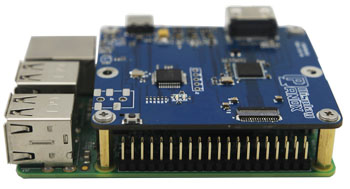
PanoxDisplay also supports controller board development for selected display projects. For the 1.03-inch Micro OLED display, PanoxDisplay states that an HDMI board can be provided, which is helpful for testing, demonstration, prototyping, and early-stage optical engine development. For teams developing AR glasses or near-eye products, this can reduce the difficulty of bringing up the display during the design stage.
7. What AR Glasses Need from a Micro OLED Display
AR glasses do not need the same display strategy as a TV, smartphone, or laptop. A near-eye display is judged by how well it works after being magnified, redirected, and combined with optics.
Resolution matters because the image is close to the eye. If the pixel density is too low, text and UI elements can look rough. Brightness matters because optical systems lose light, especially when waveguides or combiners are used. Contrast matters because AR content often needs to remain readable over real-world backgrounds. Response time matters because motion blur is more noticeable in near-eye viewing. Power consumption matters because smart glasses have limited battery space and must remain comfortable to wear.
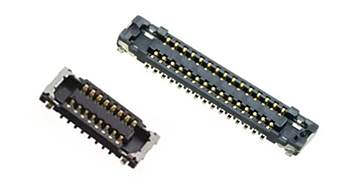
Mechanical and interface design also matter. A display that looks good on paper may still be difficult to integrate if the interface, FPC layout, connector, power design, or driver support does not match the product architecture. This is why AR glasses development usually requires close cooperation between the display supplier, optical module designer, and system developer.
For simple information glasses, a smaller Micro OLED panel may be enough to show text, notifications, and status information. For richer AR interfaces, a higher-resolution panel may be needed to support maps, menus, video preview, or more detailed graphics. For FPV or professional viewers, image clarity, response speed, and immersion become more important. The display choice depends on the final product, not only on the highest specification available.
8. Why Micro OLED May Benefit from the Apple Smart Glasses Direction
Apple’s reported shift from Vision Pro-style headsets toward smart glasses reflects a broader industry direction. The market is moving from “large immersive device” to “wearable everyday device.” This creates pressure on all components to become smaller, lighter, and more efficient.
For Micro OLED, this is both a challenge and an opportunity. The challenge is that AR glasses are harder to design than headsets because the optical engine must become much smaller. The opportunity is that once smart glasses begin to include visual display functions, the need for compact, high-resolution microdisplays becomes much stronger.
Display-less AI glasses can grow the market first by teaching users to accept smart eyewear. After that, display-equipped AR glasses can add a visual layer. This path is more realistic than expecting consumers to move directly from smartphones to bulky headsets. It also gives display technology a clearer role: the display should provide useful information at the right moment, without making the glasses heavy or uncomfortable.
Micro OLED is well positioned for this direction because it already has a record in near-eye products. It can support compact optical engines, high pixel density, strong contrast, and fast response. For AR glasses that need readable visual information instead of full headset immersion, these qualities are especially valuable.
9. Application Outlook: From Apple Vision Pro to Practical AR Eyewear
Vision Pro showed what high-end spatial computing can look like when display quality is pushed to a premium level. Smart glasses show where the market may go next: lighter form factors, daily use, AI assistance, camera interaction, and eventually visual overlays.
Between these two product categories, Micro OLED plays an important role. It is already used in high-end near-eye systems, and it can also support the next generation of compact AR glasses and optical engines. The market may no longer depend only on large headsets. It may grow through many smaller devices with more focused use cases.
For consumer AR glasses, Micro OLED can support subtitles, translation, notifications, and compact visual interfaces. For industrial AR glasses, it can display instructions, checklists, warnings, and remote assistance content. For FPV goggles, it can provide high-resolution camera feeds and telemetry overlays. For medical and professional viewers, it can support detailed optical imaging in a lightweight module.
This is why the reported Apple Vision Pro roadmap shift should not be read only as a setback for headsets. It is also a signal that the industry is searching for a more wearable form of spatial computing. AR glasses need better optical engines, and optical engines need suitable microdisplay technology.
10. Conclusion
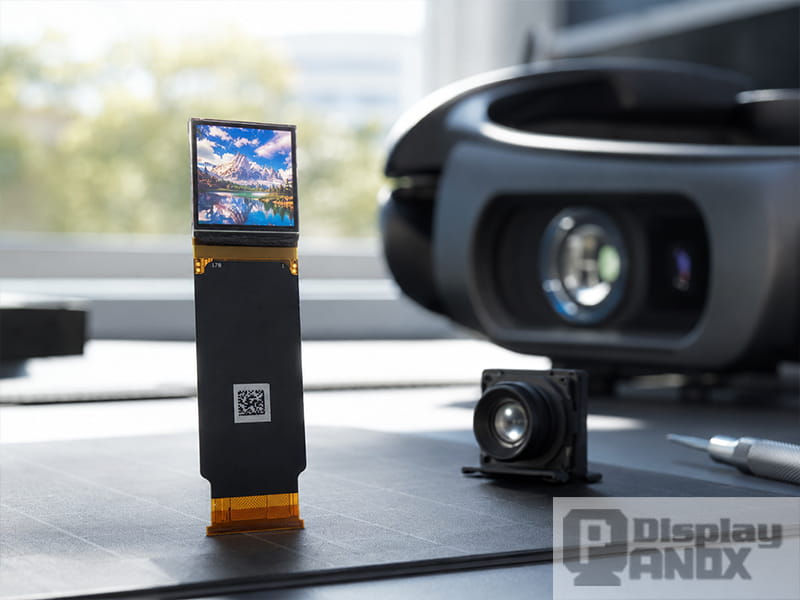
1.03 inch Micro OLED Display 2K for AR/FPV
Apple Vision Pro proved the technical value of Micro OLED in premium near-eye display systems. The reported move toward AI glasses and AR smart glasses shows that the next stage of the market may be lighter, more wearable, and closer to everyday eyewear.
Display-less AI glasses can enter the market faster because they avoid the complexity of optical display systems. Display-equipped AR glasses will take longer, but they also create a stronger need for compact, high-resolution near-eye displays. Micro OLED is one of the most practical technologies for this stage because it combines small size, high pixel density, high contrast, fast response, and strong optical compatibility.
PanoxDisplay provides Micro OLED display solutions for AR glasses, FPV goggles, EVF systems, HMDs, and professional near-eye applications. As the industry moves from Vision Pro-style headsets toward smart glasses and compact optical engines, Micro OLED displays will remain an important foundation for the future of AR eyewear.