



Overview and Technological Characteristics
Micro OLED, frequently referred to as silicon-based OLED, represents a cutting-edge display technology that fabricates active light-emitting OLED devices on single-crystal silicon wafers. It operates by utilizing organic light-emitting materials positioned between two electrodes; as electrical current flows, it emits monochrome light that is subsequently passed through color filters to generate the desired spectrum.
In stark contrast to traditional OLEDs that rely on glass substrates, Micro OLED leverages single-crystal silicon wafers as its foundation. This architecture takes advantage of highly mature integrated circuit CMOS processes. Consequently, manufacturers can seamlessly integrate the pixel array, driver circuits, and signal processing circuits onto a single, unified chip.
The primary advantage of this technology is its ability to deliver high pixel density (PPI) by maintaining similar resolution levels across a significantly reduced display area. Furthermore, Micro OLED monitors boast exceptionally thin profiles, lightweight structures, low power consumption, and high luminous efficiency. Initially utilized strictly in military applications, the technology gradually expanded into the civilian consumer market. The aggressive entry of tech giants, notably Apple, into the AR/VR space via the Micro OLED technological route has drastically accelerated its industrialization. As of early 2026, the industry has successfully moved beyond preliminary mass production capabilities into broader commercial scaling.
Manufacturing Process and Testing Requirements
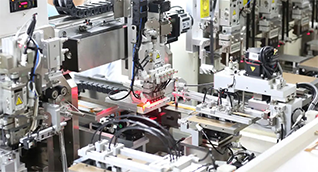
Currently, the standard production workflow involves purchasing semi-finished silicon wafers and processing them through several critical steps. These steps include the preparation of anode pixel points, the deposition of the organic light-emitting layer, the integration of the color filtering layer, and finally, the color separation and chip binding to form the complete module.
Because Micro OLED significantly differs from traditional OLED in both material composition and production methodology, it introduces stringent new testing requirements. Assessing optical, temperature, and display characteristics requires highly specialized detection equipment. This equipment must be capable of handling ultra-high pixel density detection, executing high-speed signal transmissions, and maintaining meticulous temperature control. Crucially, because semiconductor manufacturing processes are inherently part of Micro OLED production, testing equipment must also possess advanced semiconductor defect detection capabilities.
Market Trajectory and Growth Forecasts
The financial growth trajectory of the sector has been exceptionally strong. Historical data shows that global Micro OLED sales exceeded $1.3 billion in 2023 and successfully doubled to surpass $2.6 billion by 2024. Looking ahead, the XR Micro OLED market size is projected to reach an impressive $4.1 billion by 2027. Over the broader evaluation period from 2022 to 2027, the AR/VR screen market is experiencing a massive Compound Annual Growth Rate (CAGR) of 50.7%.
Supply Chain Dynamics
The Micro OLED value chain is highly specialized, divided into upstream raw materials and equipment, midstream panel manufacturing, and downstream terminal applications.
-
Upstream: The sector heavily relies on complex equipment and raw materials for the array and evaporation processes. Historically, this segment has been dominated by foreign manufacturers situated in Japan, South Korea, and the United States. However, a select few Chinese manufacturers have successfully achieved domestic substitution, progressively localizing the supply chain.
-
Midstream: Display manufacturers in Europe and America entered the market early, establishing mature technological foundations. Japanese and Korean corporations hold the largest market share, with Sony standing as the definitive industry leader. Chinese firms are aggressively accelerating their strategic layouts to expand their market footprint. Some of the notable domestic enterprises shaping the landscape include BOE Technology Group, TCL Technology Group, Ledman Optoelectronic, Chenxian Optoelectronics, SeeYa Technology, and Beijing Xianxin Technology.
-
Downstream: The terminal application market is remarkably diverse. It encompasses rapidly growing sectors such as VR and AR devices, precision medical equipment, and advanced industrial monitors.
Major Global Manufacturers
| Company | Country | Market Position & Manufacturing Capability |
| Sony | Japan | Industry leader; captured a 65% global market share and 78% XR field share in 2022. |
| eMagin | USA | Recognized as the first OLED micro-display manufacturer. |
| SeeYa Technology | China | Positioned as the leader in 12-inch production lines. |
| BOE | China | Operates a dual layout utilizing both 8-inch and 12-inch production facilities. |
| Qingyue Technology | China | Boasts the largest 8-inch manufacturing capacity at 5,000 units per month (5K/M). |
Investment Risks and Market Watch
For those monitoring investment potential, enterprises such as Qingyue Technology, Yirui Technology, Yitian Shares, Shenkeda, and Liande Equipment remain prominent entities of interest.
Despite the promising growth trajectory, stakeholders must navigate several inherent industry risks. The rapid pace of technological iteration necessitates continuous R&D investment to avoid obsolescence. Furthermore, the industry is vulnerable to supply chain disruptions concerning critical raw materials and highly specialized manufacturing equipment. As market penetration deepens, the intensification of global competition will likely compress profit margins, while the ultimate success of the sector remains heavily dependent on downstream consumer demand meeting current high expectations.
Learn more: Micro OLED in XR: The Billion-Dollar Blue Ocean Market
Conclusion
The commercial viability of Micro OLED has transitioned from theoretical forecasts to tangible manufacturing outputs, establishing a critical foundation for next-generation visual interfaces. Continued advancements in CMOS integration and localized supply chain resilience are stabilizing production costs, allowing hardware developers to push the boundaries of spatial computing and high-fidelity displays without compromising form factor or energy efficiency. As global manufacturing capacities mature, the technology will intrinsically reshape hardware paradigms across enterprise, medical, and consumer ecosystems.
Are you ready to upgrade your display system? Contact us today to discuss your Micro-OLED integration needs.
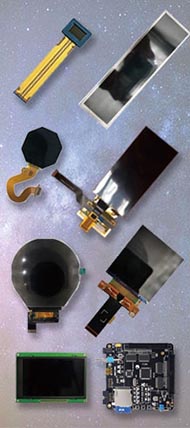
| Panel model | Interface | Type | Size (inch) | Resolution | P.S |
| S032WEM01 | MIPI/RGB | Micro OLED | 0.32 | 800x600 | |
| PMOF039XGAM | RGB | Micro OLED | 0.39 | 1024x768 | Full Color/Monochrome |
| BO039M1920M | MIPI | Micro OLED | 0.39 | 1920x1080 | Highest PPI =5644 |
| EP047M800T | TTL | LCOS | 0.47 | 800x600 | |
| BO049FHPMO | SPI,MIPI | Micro OLED | 0.49 | 1920x1080 | |
| S050M1600M | MIPI | Micro OLED | 0.5 | 1600x1200 | |
| ECX331DB-6 | Mini LVDS | Micro OLED | 0.5 | 1024x768 | |
| S060LDM01 | MIPI | Micro OLED | 0.6 | 1920x1080 | |
| ECX335AF | Mini LVDS | Micro OLED | 0.71 | 1920x1080 | 200 nits brightness version |
| ECX335B | Mini LVDS | Micro OLED | 0.71 | 1920x1080 | 500 nits brightness version |
| ECX335SN | Mini LVDS | Micro OLED | 0.71 | 1920x1080 | 3000 nits brightness version |
| BO071M1920M | MIPI | Micro OLED | 0.71 | 1920x1080 | |
| S072WCM04 | MIPI | Micro OLED | 0.72 | 1920x1080 | |
| S103WAM01 | MIPI | Micro OLED | 1.03 | 2560x2560 |