



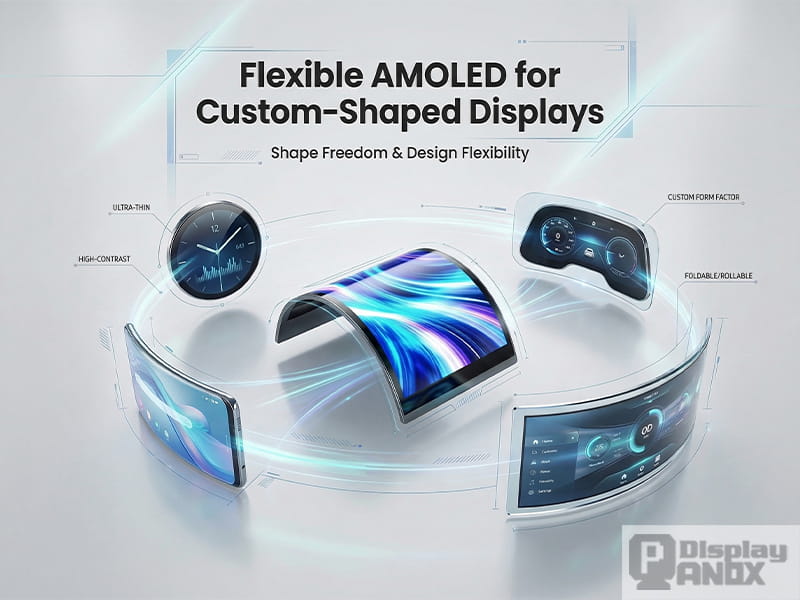
Flexible AMOLED is one of the most practical display technologies for brands that want more than a standard rectangle. As product design moves toward round smartwatches, curved dashboards, edge-wrapped interfaces, and cleaner full-screen surfaces, manufacturers need display solutions that can adapt to the product instead of forcing the product to adapt to the display.
That is exactly where flexible AMOLED stands out.
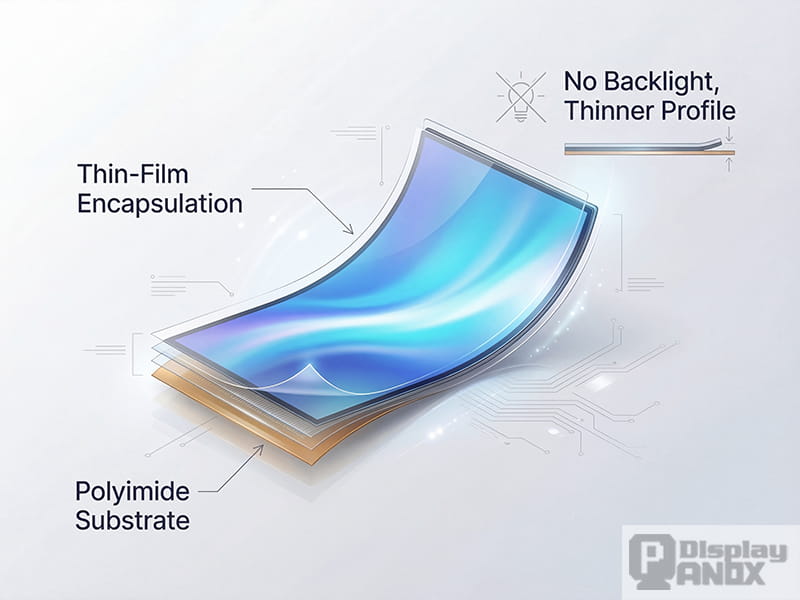
Unlike rigid displays built on glass, flexible AMOLED is typically built on a polyimide substrate and uses thin-film encapsulation, which helps make the panel thinner, lighter, and more adaptable to curved or uniquely shaped product designs. Major display makers also position flexible OLED as a technology that supports curved, circular, and other design-driven form factors across mobile, wearable, and automotive applications.
If you are evaluating options for your next product, you can explore our AMOLED display solutions for more reference.
1. Why flexible AMOLED is a better match for custom-shaped display design
The biggest reason is simple: flexible AMOLED offers more physical design freedom.
A rigid display is limited by its glass-based structure. Flexible AMOLED, by contrast, uses a flexible plastic substrate such as polyimide, allowing the panel to be made thinner and easier to integrate into non-flat or non-standard product layouts. Samsung Display notes that polyimide can be made much thinner than glass, reducing overall weight, while LG Display highlights that plastic-substrate OLED enables curved and uniquely shaped designs.
For product teams, that matters because a custom-shaped display is rarely just about appearance. It also affects internal space planning, industrial design, touch integration, cover lens structure, and how the display fits around cameras, buttons, sensors, or curved housing lines.
2. Flexible AMOLED supports more than just curved screens
When people hear “flexible AMOLED,” they often think only of foldable phones. But the real value for product development is much broader.
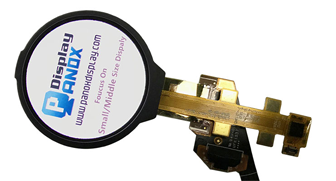
Flexible OLED technology has already been used in round wearable displays, curved-edge smartphones, notch designs, under-panel camera designs, rollable concepts, and automotive curved displays. Samsung Display’s product history includes mass production of round OLEDs for smartwatches, notch OLEDs, and multiple generations of flexible OLED products. Samsung also states that OLED can be designed in curved, spherical, or circular forms, giving brands more freedom to reflect product intent and user preference.
That means flexible AMOLED is not only suitable for a display that bends. It is also suitable for a display that needs to be:
2.1 Round or near-round
Ideal for smartwatches, healthcare wearables, and compact smart devices.
2.2 Curved along the housing
Useful for automotive interiors, premium control panels, and products with wraparound industrial design.
2.3 Designed with cleaner front surfaces
Under-panel camera approaches and reduced visual interruption help support more seamless screen layouts.
2.4 Optimized for space efficiency
A thinner and lighter panel can help product teams use internal space more efficiently.
3. Why flexible AMOLED works well for round, curved, and special-shaped displays
There are several technical reasons behind its design advantage.
3.1 Polyimide substrate enables a thinner and lighter structure
Flexible AMOLED is commonly built on a polyimide substrate rather than glass. This makes the panel better suited to designs that need bending, curving, or tighter packaging. Samsung says flexible OLED uses a flexible PI substrate, while industry sources describe plastic-based OLED as thinner, lighter, and more durable than glass-based alternatives.
3.2 Thin-film encapsulation helps replace rigid glass cover sealing
Rigid OLED often relies on glass-based encapsulation, but flexible OLED must use a different barrier method because the panel needs to bend. Samsung explains that flexible OLED requires encapsulation compatible with a flexible polyimide substrate, and thin-film encapsulation is widely used for flexible OLED structures.
3.3 OLED does not require a separate backlight
Because OLED is self-emissive, it does not need a backlight unit like LCD. That simplifies stack thickness and helps product designers pursue slimmer form factors. LG Display states that OLED panels can be lighter and thinner than TFT-LCD because they do not require a separate backlight.
3.4 Better alignment with premium industrial design trends
Display makers increasingly connect flexible OLED with advanced automotive, wearable, and design-driven applications. LG Display specifically says plastic-substrate OLED enables curved in-vehicle displays and uniquely shaped designs, while Samsung highlights cleaner full-screen and design-focused form factors through flexible OLED and related technologies.
4. Which products benefit most from custom flexible AMOLED displays?
Custom-shaped displays are not equally important in every category. Flexible AMOLED is especially valuable where visual differentiation, compact packaging, or premium user experience matter most.
4.1 Wearable devices
Round AMOLED and custom AMOLED display modules are especially relevant for smartwatches, fitness devices, and compact healthcare products. Samsung’s history page notes mass production of round OLEDs for smartwatches and flexible OLED for wearable devices, which shows how closely this technology is tied to wearable form factors.
4.2 Automotive displays
Automotive is another strong use case. LG Display says plastic-substrate OLED becomes thinner, lighter, and more flexible, enabling curved in-vehicle displays and uniquely shaped designs. It also emphasizes durability and stable performance for automotive use.
4.3 Premium consumer electronics
For premium handheld devices, smart home interfaces, gaming hardware, and other design-sensitive electronics, flexible AMOLED helps brands move beyond flat rectangular layouts and create cleaner, more immersive front surfaces. Samsung directly ties flexible OLED and under-panel camera technologies to more unobstructed and immersive device design.
5. Can flexible AMOLED be made into any shape?
Not completely.
Flexible AMOLED offers much more freedom than rigid display technology, but “custom-shaped” does not mean unlimited design with zero engineering constraints. In real projects, the final shape still depends on factors such as active area, border design, driver placement, FPC layout, touch structure, cover lens design, mechanical strength, and reliability targets.
So the real advantage of flexible AMOLED is not that it can become literally any shape. The advantage is that it gives engineers and product designers a much larger workable design window than rigid glass-based displays. That is why it is often the better choice when a product requires a round AMOLED display, curved OLED display, or a custom AMOLED display module that must fit a specific industrial design direction.
6. Why flexible AMOLED is often preferred over rigid AMOLED for custom projects
Rigid AMOLED can still be a strong option for standard flat products. But when the project starts involving curved cover glass, space-constrained layouts, edge styling, round display windows, or stronger industrial design differentiation, flexible AMOLED usually becomes the more suitable path.
In short, rigid AMOLED is often better for conventional flat integration, while flexible AMOLED is better when the product concept depends on shape freedom, lightweight structure, thinner packaging, or cleaner visual integration. The difference comes directly from the use of flexible substrates and encapsulation methods rather than only from display image quality.
7. The business value: custom-shaped displays help products stand out
There is also a commercial reason this topic matters.
As devices become more saturated in appearance, display shape itself becomes part of product differentiation. A custom-shaped AMOLED display can help a device look more premium, feel more integrated, and better match the brand’s intended user experience. On the supply side, major display makers continue to invest in flexible OLED, foldable OLED, rollable concepts, automotive OLED, and other next-generation form factors, showing that flexibility is not a niche direction but a long-term development path.
For brands developing wearables, automotive interfaces, smart devices, or premium electronics, flexible AMOLED is not just a display choice. It is often a product architecture choice.
Conclusion
Flexible AMOLED is more suitable for custom-shaped displays because its structure is fundamentally more compatible with modern product design requirements. With a flexible polyimide substrate, thin-film encapsulation, self-emissive construction, and proven use across wearables, automotive, and premium consumer electronics, it gives product teams more freedom to create round, curved, cleaner, and more design-led interfaces.
If your product concept depends on display shape, housing integration, or premium front-surface design, flexible AMOLED is often the smarter starting point for customization.
For brands exploring custom AMOLED display solutions, the key is to evaluate the display together with touch, cover lens, interface, structure, and reliability requirements from the beginning. That approach usually leads to a more practical and more manufacturable custom display result.
For more real-world product examples, browse our AMOLED display modules here.
FAQs
1. What is a flexible AMOLED display?
A flexible AMOLED display is an AMOLED panel built on a flexible substrate, commonly polyimide, rather than rigid glass. It is usually combined with thin-film encapsulation so the panel can better support curved, lightweight, or design-driven applications.
Learn more: Why Premium Products Prefer Flexible AMOLED Even Without a Curved Screen
2. Why is flexible AMOLED better for custom-shaped displays?
Because it offers more design freedom in structure and integration. Compared with rigid glass-based displays, flexible AMOLED is better suited to round, curved, and uniquely shaped layouts, especially in wearable and automotive applications.
3. Can flexible AMOLED be used for round smartwatch displays?
Yes. Round OLED displays have already been mass-produced for smartwatch applications, and flexible OLED has a strong track record in wearable devices.
4. Is flexible AMOLED only for foldable phones?
No. Flexible AMOLED is also used for curved-edge designs, round wearable displays, cleaner full-screen products, rollable concepts, and automotive curved displays.
5. Does flexible AMOLED help reduce product thickness?
In many cases, yes. Flexible OLED is commonly described as thinner and lighter because of its plastic substrate and because OLED does not need a separate backlight like LCD.
6. Is flexible AMOLED always the best option for customization?
Not always. If the project is a standard flat display with limited design complexity, rigid AMOLED may still be more practical. Flexible AMOLED becomes more attractive when the product requires shape freedom, curved integration, premium styling, or tighter internal packaging.
7. What should be confirmed before starting a custom AMOLED display project?
The most important items usually include display size, active area, shape, resolution, interface, brightness target, touch integration, cover lens, FPC direction, mechanical constraints, and reliability requirements. These factors determine whether a flexible AMOLED solution is feasible and cost-effective.