



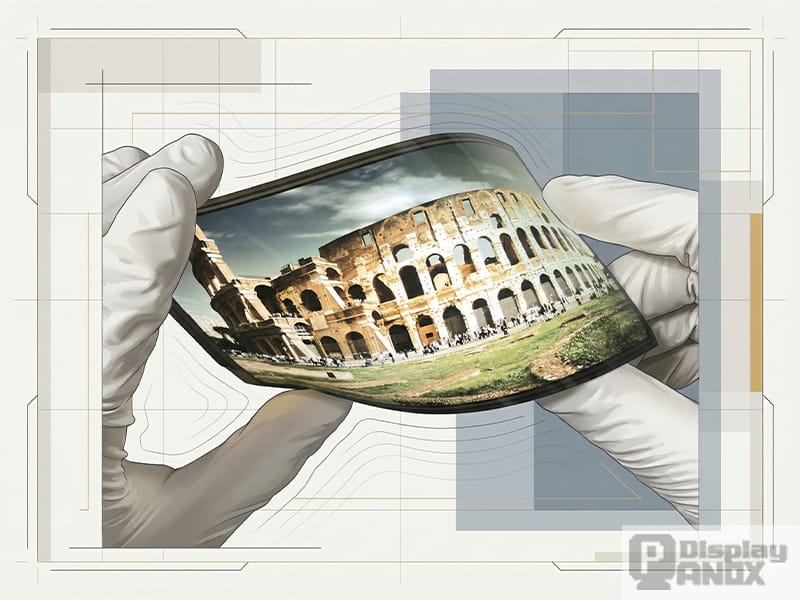
When people hear “flexible AMOLED,” they often think of curved-edge phones, foldables, or futuristic concept devices. But in the premium market, that is only part of the story.
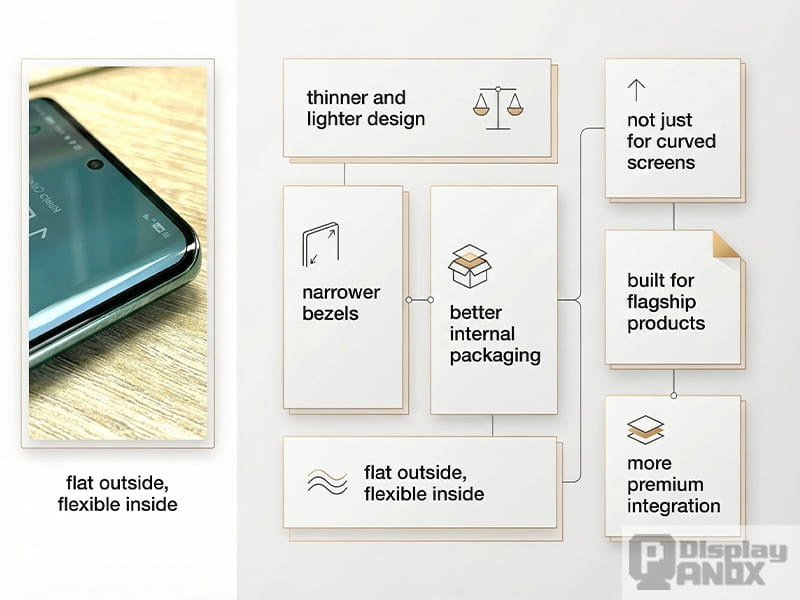
A growing number of flagship and high-end products use flexible AMOLED even when the final screen looks completely flat. That choice is not just about style. It is about engineering freedom, thinner hardware, better internal packaging, narrower bezels, stronger integration potential, and a more premium overall product architecture. Higher-end smartphones increasingly use flexible OLED panels, and industry trackers expect flexible OLED gains to remain concentrated in the premium segment.
In other words, premium products do not choose flexible AMOLED only because they want a curved screen. They choose it because flexible AMOLED is often the better platform for building a thinner, lighter, more refined product.
What Is Flexible AMOLED?
Flexible AMOLED is an AMOLED display built on a flexible substrate, typically polyimide, rather than a rigid glass substrate. It also relies on thin-film encapsulation instead of the simpler glass-based sealing commonly associated with rigid OLED structures. Samsung Display describes flexible OLED as a panel completed by incorporating a flexible PI substrate and thin-film encapsulation technology, while OLED industry references similarly define flexible OLED as OLED built on a flexible substrate, usually polyimide.
That does not mean the end product itself must bend in the user’s hand. In many cases, the display is manufactured on a flexible platform, then integrated into a flat product. The visible result is flat. The engineering advantages remain.
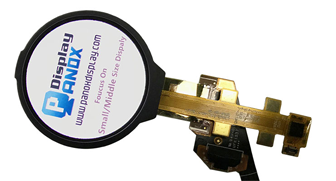
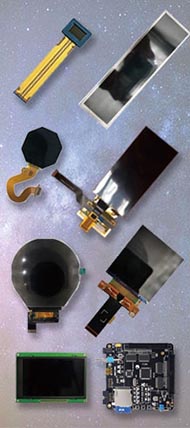
If you want to explore real AMOLED display modules for product development, you can browse our product page for more options.
Why Do Premium Devices Use Flexible AMOLED for Flat Screens?
The short answer is simple: flexible AMOLED helps product teams build better premium hardware.
A rigid OLED can still deliver strong image quality. But flexible AMOLED gives designers and engineers more room to optimize the entire device around the display rather than simply placing a screen into a fixed structure. That distinction matters in flagship phones, premium wearables, automotive HMI, and other products where thickness, weight, bezel control, battery space, thermal layout, and visual refinement all affect the final user experience. Samsung Display says flexible OLED leads display form-factor innovation because it is thinner and lighter than rigid OLED, and Apple notes that OLED’s self-emissive structure removes the need for a backlight, helping enable thinner displays.
Flexible AMOLED vs Rigid AMOLED: The Real Premium Difference
The most important difference is not simply “curved vs flat.” It is the display platform beneath the glass cover and how that platform affects the entire product design.
With rigid AMOLED, the panel structure is constrained by a glass substrate. With flexible AMOLED, the display stack is built on a flexible base, which opens more possibilities for module design, edge treatment, panel routing, and packaging efficiency. OLED industry sources summarize the result clearly: flexible OLED panels are typically lighter, thinner, and more durable than glass-based alternatives.
For premium devices, that translates into real advantages:
-
slimmer industrial design
-
narrower bezels
-
more efficient internal space usage
-
easier support for advanced panel integration
-
stronger differentiation in flagship products
This is why flexible AMOLED appears in many premium phones even when the front surface is visually flat.
Learn more: Flexible AMOLED vs Rigid AMOLED: the real engineering difference
1. Thinner and Lighter Product Design
One of the biggest reasons premium brands prefer flexible AMOLED is thickness reduction.
Because OLED is self-emissive, it does not require a backlight. Flexible OLED goes further by using a non-rigid substrate and thin-film encapsulation, which can reduce stack complexity and support thinner module construction. Samsung Display says flexible OLED is thinner and lighter than rigid OLED, and its newer OCF OLED approach can make panels up to 20% thinner while also supporting future design flexibility.
That matters in premium hardware because every fraction of a millimeter matters. A thinner display module can create room for:
-
a larger battery
-
improved camera packaging
-
better thermal design
-
slimmer product profiles
-
reduced total device weight
In premium product design, thinness is rarely just cosmetic. It is usually the result of many small engineering wins. Flexible AMOLED helps create those wins.
2. Narrower Bezels and Better Front Design
Premium products are judged quickly by what users see first: the front face.
Flexible AMOLED helps brands create cleaner front aesthetics with narrower bezels and a more immersive all-screen appearance. Because the platform enables more advanced panel routing and integration strategies, brands can pursue higher screen-to-body ratios without relying on visibly curved edges.
This is one reason flat flagship phones can still look more premium than lower-tier devices. The display may appear flat, but the underlying flexible structure gives engineers more freedom to control borders, packaging, and edge treatment. OLED industry tracking also notes that many premium smartphones use flexible OLED even when the user is not literally bending the display.
3. Better Internal Packaging for Flagship Devices
This is one of the most overlooked reasons flexible AMOLED is so popular in premium products.
In high-end hardware, internal space is always under pressure. Cameras get bigger. Batteries get denser. Thermal systems get more complex. Antenna layout matters more. AI workloads demand more power and heat management. A display that supports more efficient packaging becomes strategically valuable.
Flexible AMOLED gives product teams more freedom in how the display module fits into the device architecture. That can help reduce design compromises elsewhere in the product. Industry and supplier references consistently describe flexible OLED as better suited for slimmer industrial design, compact wearables, and aggressive internal packaging strategies.
That is why flexible AMOLED is not just a display choice. In many premium products, it is a system-level design choice.
4. More Headroom for Premium Features
Flexible AMOLED is closely associated with the premium tier not only because of form factor, but also because flagship products increasingly combine it with advanced display features such as LTPO backplanes, higher brightness, better outdoor visibility, improved efficiency, always-on experiences, and more refined visual tuning.
LTPO OLED is widely associated with high-end devices, and OLED industry sources note that LTPO is likely to be used primarily in high-end OLED displays. Apple’s Pro-class iPhone specifications highlight adaptive refresh rate support up to 120Hz on OLED panels, reflecting how advanced OLED capabilities are positioned in premium products.
At the same time, Samsung Display says its OCF OLED technology can deliver up to 1.5 times the brightness at the same power use, while also making the panel thinner and expanding from foldable products to bar-type smartphones. That is a strong example of how the flexible AMOLED ecosystem continues to support premium display performance even in conventional flat devices.
5. Flat Screen, Premium Architecture
A flat screen does not mean a basic display architecture.
This is where many buyers and even some marketers get confused. They assume that if a display is flat, a rigid AMOLED should be enough. But premium product design is not only about what the user can see from the front. It is about how the display contributes to the overall hardware package.
A flat premium phone may still use flexible AMOLED because the brand wants:
-
thinner module construction
-
tighter bezels
-
lower structural burden in the display stack
-
improved space allocation inside the device
-
compatibility with higher-end display technology roadmaps
So the question is not “Does the screen curve?” The better question is “What kind of display platform helps build the best premium product?”
That is often where flexible AMOLED wins.
6. Why Premium Smartphones Especially Favor Flexible OLED
The smartphone market makes this trend easiest to see.
Counterpoint Research reported in 2025 that higher-end smartphones use flexible OLED panels and that panel gains would come from flexible OLEDs while the premium smartphone segment remained strong. That is important because it shows flexible OLED is not a niche feature reserved only for foldables. It is increasingly tied to the economics and design logic of flagship devices.
Apple’s iPhone specifications and OLED support materials also reinforce the premium case for OLED through thinness, high contrast, high brightness, and wide color performance. Meanwhile, Samsung Display continues to position flexible OLED and related low-power, high-brightness OLED technologies as core solutions for next-generation premium devices.
For smartphone brands, flexible AMOLED helps justify premium positioning even when the industrial design language shifts back toward flatter front surfaces.
7. Flexible AMOLED Is Not Only for Foldables
Foldables helped make flexible AMOLED famous, but they did not define its full value.
In reality, flexible AMOLED has become a broader premium display platform. It supports foldables, curved products, flat flagship phones, shaped wearables, and increasingly automotive applications. Samsung Display and BOE both highlight flexible OLED use cases across smartphones, wearables, and automotive display solutions.
That broad adoption matters for procurement and product planning. A technology that has already scaled across multiple premium categories becomes more attractive for long-term roadmap decisions.
8. Is Flexible AMOLED Worth the Extra Cost?
In many premium products, yes.
Flexible AMOLED usually involves more demanding engineering and production processes than rigid AMOLED. Samsung Display’s manufacturing explanations point to flexible OLED’s reliance on PI substrate handling, thin-film encapsulation, and glass detachment steps during cell processing. Those added process demands help explain why flexible AMOLED is typically more expensive.
But premium brands often accept that higher cost because the return is not only visual quality. The return includes:
-
better industrial design
-
stronger flagship differentiation
-
more efficient product architecture
-
improved premium perception
-
more room for advanced features and future product evolution
That is why the choice often makes sense even without visible screen curvature.
9. What This Means for OEMs and Product Teams
For OEMs, choosing between rigid AMOLED and flexible AMOLED is not just a display sourcing question. It is a product strategy decision.
If the goal is to build a cost-sensitive device where BOM pressure is the priority, rigid AMOLED may still be appropriate. But if the goal is to create a thinner, lighter, more refined premium product with tighter packaging and stronger differentiation, flexible AMOLED often becomes the more capable foundation.
That is especially true in categories where design quality, bezel control, weight reduction, power efficiency, and advanced display integration directly affect how premium the product feels.
Conclusion
Premium products prefer flexible AMOLED even without a curved screen because premium design is not only about visible shape. It is about the engineering platform behind the display.
Flexible AMOLED gives brands more freedom to build thinner devices, cleaner front designs, tighter bezels, better-packed internals, and more advanced premium experiences. That is why so many flagship products use flexible OLED even when the final screen looks flat.
Curvature may be optional. Premium engineering is not.
FAQs
1. Why do flagship phones use flexible AMOLED if the screen is flat?
Because flexible AMOLED offers engineering advantages beyond curvature, including thinner construction, lighter weight, narrower bezels, and more efficient internal packaging. Higher-end smartphones increasingly use flexible OLED for exactly these reasons.
2. Is flexible AMOLED better than rigid AMOLED?
For premium product design, it often is. Flexible AMOLED is generally better suited to thin, light, and highly integrated devices, while rigid AMOLED is more cost-oriented and structurally simpler. Flexible OLED is commonly described as thinner, lighter, and more durable than glass-based alternatives.
3. Does flexible AMOLED mean the product can fold?
Not necessarily. A device can use a flexible AMOLED panel and still have a completely flat, non-folding final design. Flexible OLED refers to the underlying display platform and substrate, not only the visible product shape.
4. Why is flexible AMOLED more expensive?
It typically requires more complex processing, including flexible substrate formation, thin-film encapsulation, and additional detachment or handling steps during manufacturing. Those process demands increase engineering burden and cost.
5. Is flexible AMOLED only used in smartphones?
No. Flexible AMOLED is also used in wearables, foldables, and automotive display applications, and major display makers actively position it across those premium product categories.
6. Does flexible AMOLED help with battery life?
It can, especially when paired with advanced OLED technologies such as LTPO or polarizer-free/OCF approaches designed to improve brightness efficiency and reduce power consumption. Samsung Display says its OCF OLED can deliver about 1.5 times the brightness at the same power use, while Eco² OLED was introduced as a lower-power OLED approach.
7. Why do premium brands prefer flexible AMOLED over rigid OLED?
Because premium brands are optimizing the whole product, not just the display surface. Flexible AMOLED better supports thinness, bezel reduction, premium integration, advanced feature roadmaps, and overall flagship differentiation.
View our AMOLED display solutions for more product options.