






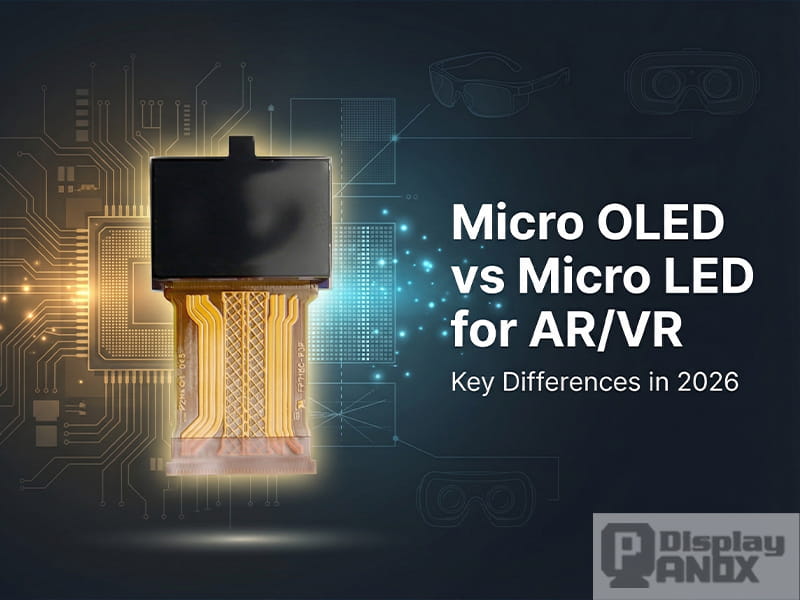
If you are comparing near-eye display technologies in 2026, the real answer is not just which one is more advanced on paper, but which one is actually winning in products, optics integration, image quality, power balance, and supply readiness.
For AR/VR brands, these two technologies are often framed as rivals. In reality, they are not winning the same battle at the same speed.
Micro OLED is currently the stronger choice for premium VR and mixed reality where image quality, fine pixel density, compact optics, and commercial maturity matter most. Micro LED remains extremely promising, especially for ultra-bright AR use cases, but in 2026 it is still more of a strategic technology than a broad commercial winner.
This guide explains the practical differences between Micro OLED and Micro LED for AR/VR, where each technology fits, and why Micro OLED remains the more realistic choice for many brands building products today.
1. What are Micro OLED and Micro LED?
1.1 What is Micro OLED?
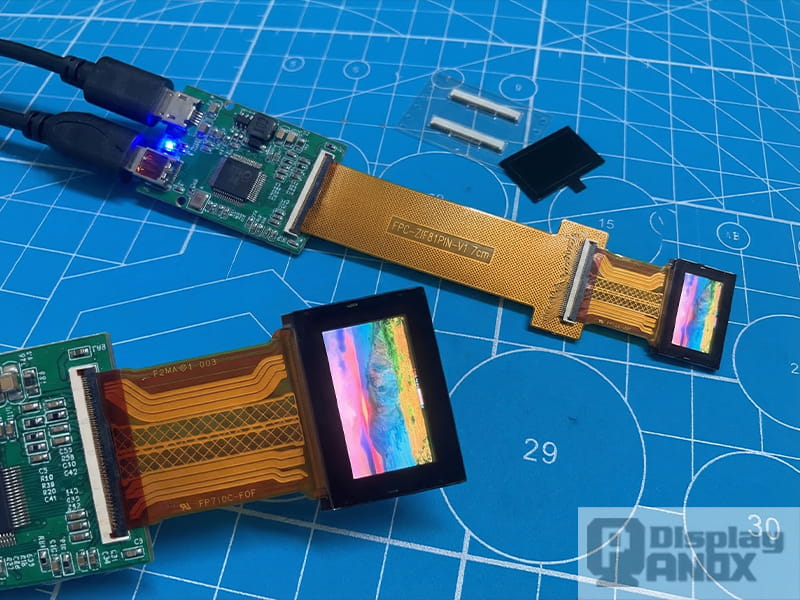
Micro OLED, also called OLED-on-silicon or OLEDoS, is a self-emissive display technology built on a silicon backplane. It is known for extremely high pixel density, deep contrast, fast response, and very compact panel size.
For AR/VR, this matters because near-eye displays need very small screens with very high resolution. A display can be physically tiny while still delivering sharp text, detailed graphics, and a more premium visual experience.
That is why Micro OLED has become closely associated with high-end XR and immersive viewing systems in 2026.
1.2 What is Micro LED?
Micro LED is also self-emissive, but it uses microscopic inorganic LEDs as individual pixels. In theory, it offers outstanding brightness, strong efficiency potential, long lifetime, and excellent outdoor visibility.
That makes it especially attractive for transparent or waveguide-based AR systems, where high luminance is critical because a large portion of light is lost through the optical path.
The catch is that full-color Micro LED for near-eye displays remains much harder to scale, manufacture, and optimize at cost than many headlines suggest.
2. Why this comparison matters so much in 2026
In 2026, buyers are no longer asking only which display looks best in a lab. They want to know:
-
Which technology is already proving itself in premium devices?
-
Which one supports better AR/VR optics today?
-
Which one is easier to source for real product development?
-
Which one offers the better path to launch, not just the better future roadmap?
That is why Micro OLED vs Micro LED has become such a high-intent search topic for XR product teams, engineers, and sourcing managers.
The short answer is this: Micro OLED is winning where product readiness and image fidelity matter now, while Micro LED is still chasing its biggest commercial breakout in full-color near-eye AR.
3. Micro OLED vs Micro LED: the key differences that matter for AR/VR
3.1 Brightness
Brightness is where Micro LED has the strongest long-term story.
AR glasses often need extremely high brightness because waveguides and other combiner optics can waste a substantial amount of light before it reaches the eye. In that environment, Micro LED is a very compelling direction, especially for daytime outdoor AR.
Micro OLED has historically been seen as weaker in brightness, but that gap is not as simplistic as it once was. OLED microdisplay makers have continued pushing luminance higher, and high-brightness Micro OLED remains highly effective for VR, passthrough MR, and many enclosed optical systems where the display does not fight open daylight in the same way.
For optical systems that demand better visibility, [High Luminance] remains a key requirement in near-eye display selection.
3.2 Resolution and pixel density
For near-eye immersion, pixel density is everything.
The closer a display sits to the eye, the more important ultra-high PPI becomes. Micro OLED has a major advantage here because the silicon backplane architecture supports extremely dense pixels in very small sizes. This is one reason why premium headsets have leaned toward Micro OLED for high-end visual quality.
Micro LED can also reach very high pixel density, but doing so while maintaining full color, yield, uniformity, and manufacturability remains much more difficult. In practice, this is one of the biggest reasons why Micro OLED still leads many premium XR implementations in 2026.
3.3 Contrast and image quality
Micro OLED delivers one of the most visually attractive experiences in near-eye displays today. It is strong in contrast, black level, color richness, and cinematic image quality.
For VR, MR entertainment, simulation, design visualization, and premium user interfaces, this matters a lot. Users immediately notice deep blacks, rich shadow detail, and the overall “premium screen” effect.
Micro LED can also look excellent, but in 2026 the commercial conversation is still more centered on brightness leadership than on a broad installed base of premium full-color XR image quality wins. If your product priority is a refined immersive image rather than extreme outdoor luminance, Micro OLED is usually the safer bet.
If your product goal is more vivid and refined visuals, our solutions for [High Contrast] displays are worth exploring.
3.4 Power and thermal trade-offs
There is no honest one-line winner here.
Micro LED has a strong reputation for efficiency potential, especially in bright AR use cases. But actual system-level efficiency depends on color architecture, drive conditions, optics losses, and brightness targets.
Micro OLED can still be very competitive in enclosed XR systems because it pairs well with compact optics and very high pixel density. In many real devices, the question is not which display has the best theoretical efficiency, but which display helps the total headset achieve acceptable thermals, visual quality, and size.
That is why product teams should compare display-plus-optics-plus-power as one integrated system, not as isolated panel specs.
For wearable and battery-sensitive products, [Low consumption] is an important factor when evaluating display technologies.
3.5 Manufacturing maturity
This is one of the biggest decision points in 2026.
Micro OLED is simply further along for premium near-eye commercialization. It has stronger market proof in shipping high-end XR systems and a clearer path for teams that need a display they can actually integrate now.
Micro LED still faces major complexity in areas such as mass transfer, repair, yield, and full-color integration. The technology is progressing fast, but progress is not the same as broad deployment readiness. For many AR/VR developers, that distinction matters more than roadmap hype.
4. Which is better for VR headsets in 2026?
For VR and premium mixed reality, Micro OLED is the clearer winner in 2026.
Why?
Because VR headsets usually prioritize:
-
ultra-high pixel density
-
immersive contrast
-
strong visual uniformity
-
compact near-eye optics
-
commercial readiness at premium quality
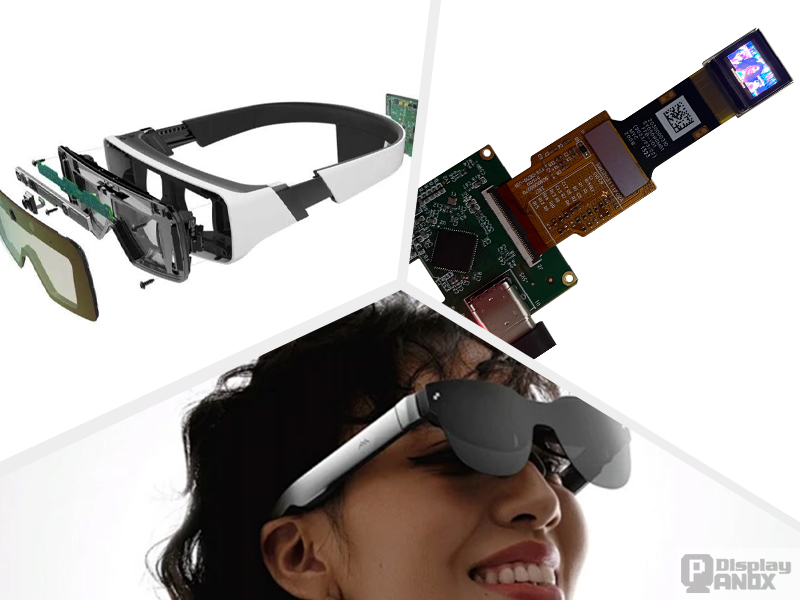
This is exactly where Micro OLED is strongest today. The most visible premium example is Apple Vision Pro, which uses a micro-OLED display system with 23 million pixels across two displays. That does not mean every VR headset will use the same architecture, but it clearly shows where the premium market placed its bet for top-tier visual fidelity.
5. Which is better for AR glasses in 2026?
For AR glasses, the answer is more nuanced.
If the priority is ultra-high brightness for daytime visibility, especially through waveguides, Micro LED has the stronger long-term technical appeal. That is why it keeps attracting attention in military, industrial, and advanced AR development.
But if the question is which technology is easier to commercialize today for high-quality immersive viewing or premium XR modules, Micro OLED is still in a stronger near-term position.
So the practical answer is this:
-
For high-brightness outdoor AR ambition, Micro LED has the more exciting ceiling.
-
For product realism, sourcing confidence, and premium display quality now, Micro OLED often remains the smarter 2026 choice.
6. Why many AR/VR buyers still choose Micro OLED
Even with all the industry excitement around Micro LED, many buyers still move forward with Micro OLED because it solves more immediate product problems.
6.1 It is easier to align with current premium XR product goals
Micro OLED fits well when a brand wants sharp visuals, strong contrast, and compact architecture without betting the whole project on a less mature supply path.
6.2 It supports premium perceived quality
For demos, investor presentations, headset reviews, and customer first impressions, visual richness matters. Micro OLED performs well where users notice image sharpness and contrast immediately.
6.3 It reduces roadmap risk
Many teams do not need the most futuristic display. They need the display that gets the product launched with fewer unknowns.
That is one of the biggest reasons Micro OLED remains commercially attractive in 2026.
7. Micro OLED vs Micro LED: side-by-side decision table
| Category | Micro OLED | Micro LED |
|---|---|---|
| Core structure | OLED-on-silicon | Inorganic emissive micro LEDs |
| Brightness potential | Strong and improving | Excellent, especially for AR brightness targets |
| Pixel density for near-eye | Excellent | Promising, but harder in full-color production |
| Contrast and black level | Excellent | Strong, but commercialization focus is often brightness first |
| VR suitability in 2026 | Excellent | Limited compared with Micro OLED |
| AR suitability in 2026 | Good for many premium XR systems | Very promising, especially for outdoor-bright AR |
| Manufacturing maturity | More commercially proven for premium near-eye | Still more difficult at full-color near-eye scale |
| Sourcing risk | Lower for current premium XR programs | Higher for many commercial projects |
| Best fit today | VR, MR, premium immersive viewing | Future-forward AR, ultra-bright specialty use cases |
8. Which technology wins in 2026?
If we are talking about headline potential, Micro LED is the future-facing challenger.
If we are talking about actual 2026 product logic, Micro OLED wins.
That is the most useful conclusion for brands making sourcing, development, and launch decisions this year.
Micro LED absolutely matters. It may become the defining display for certain AR categories over time, especially as full-color efficiency, manufacturing, and cost continue to improve. But in 2026, Micro OLED remains the more practical winner for many real AR/VR projects because it delivers a better balance of visual quality, integration feasibility, and commercial maturity.
So the best answer is:
-
Micro OLED wins now.
-
Micro LED may win later in specific AR segments.
-
For brands building products in 2026 instead of just discussing roadmaps, Micro OLED is often the more dependable choice.
9. How to choose the right display technology for your AR/VR project
When selecting a display, do not ask only which technology is “best.” Ask which technology is best for your device category.
Choose Micro OLED when you need:
-
premium near-eye image quality
-
very high pixel density
-
compact optical integration
-
better commercial readiness
-
a more realistic path to launch in 2026
Consider Micro LED when you need:
-
extreme luminance targets
-
stronger outdoor AR visibility potential
-
long-term differentiation in transparent or waveguide AR
-
a roadmap-led strategy rather than the safest current supply choice
For many brands, this is the real takeaway: the best display is not the one with the boldest future claim, but the one that helps your AR/VR product succeed now.
10. Final thoughts
Micro OLED vs Micro LED is one of the most important AR/VR display comparisons in 2026, but it should not be treated like a simple winner-takes-all fight.
These technologies are developing at different speeds for different product goals.
Micro LED is one of the most exciting display directions in the industry, especially for high-brightness AR. But for 2026 commercial decision-making, Micro OLED remains the more grounded winner for many near-eye projects thanks to its pixel density, image quality, optics compatibility, and stronger deployment reality.
If your goal is to build a premium AR/VR product with fewer unknowns and stronger current feasibility, Micro OLED deserves to be at the center of the conversation.
To explore display options for advanced wearable projects, take a closer look at our [Micro OLED] solutions.
FAQs
1. Is Micro OLED better than Micro LED for VR in 2026?
For most premium VR and mixed reality products, yes. Micro OLED is better positioned in 2026 because it offers very high pixel density, strong contrast, and better commercial maturity for near-eye immersion.
2. Is Micro LED brighter than Micro OLED?
In general, Micro LED has the stronger brightness story, especially for AR applications that need high luminance through waveguides or other light-loss-heavy optics.
3. Why is Micro OLED used in premium XR headsets?
Because it combines very high resolution, compact size, deep contrast, and strong visual quality in a format that works well for near-eye optics.
4. Is Micro LED ready for mass-market AR glasses?
Not broadly in the way many people imagine. It is highly promising, but full-color near-eye Micro LED still faces manufacturing, yield, and commercialization challenges in 2026.
5. Which display technology is better for outdoor AR?
Micro LED has the stronger long-term advantage for outdoor-bright AR because extreme luminance is one of its biggest strengths.
6. Which technology should buyers focus on right now?
If the project needs a realistic 2026 product path, many buyers should focus first on Micro OLED. If the project is exploring future ultra-bright AR differentiation, Micro LED is worth tracking closely.
| Panel model | Interface | Type | Size (inch) | Resolution | P.S |
| S032WEM01 | MIPI/RGB | Micro OLED | 0.32 | 800x600 | |
| PMOF039XGAM | RGB | Micro OLED | 0.39 | 1024x768 | Full Color/Monochrome |
| BO039M1920M | MIPI | Micro OLED | 0.39 | 1920x1080 | Highest PPI =5644 |
| EP047M800T | TTL | LCOS | 0.47 | 800x600 | |
| BO049FHPMO | SPI,MIPI | Micro OLED | 0.49 | 1920x1080 | |
| S050M1600M | MIPI | Micro OLED | 0.5 | 1600x1200 | |
| ECX331DB-6 | Mini LVDS | Micro OLED | 0.5 | 1024x768 | |
| S060LDM01 | MIPI | Micro OLED | 0.6 | 1920x1080 | |
| ECX335AF | Mini LVDS | Micro OLED | 0.71 | 1920x1080 | 200 nits brightness version |
| ECX335B | Mini LVDS | Micro OLED | 0.71 | 1920x1080 | 500 nits brightness version |
| ECX335SN | Mini LVDS | Micro OLED | 0.71 | 1920x1080 | 3000 nits brightness version |
| BO071M1920M | MIPI | Micro OLED | 0.71 | 1920x1080 | |
| S072WCM04 | MIPI | Micro OLED | 0.72 | 1920x1080 | |
| S103WAM01 | MIPI | Micro OLED | 1.03 | 2560x2560 |