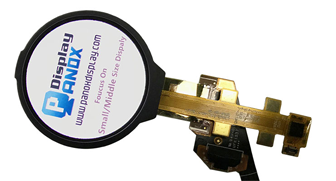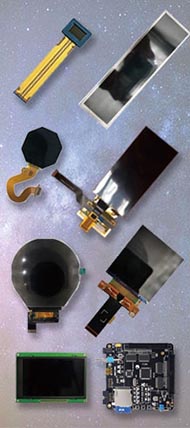





Flexible AMOLED is easy to admire in a sample. It is much harder to evaluate correctly in a real product program.
For buyers, OEM teams, and product managers, the biggest mistake is treating a flexible AMOLED module like a standard catalog component. In reality, a successful project depends on how well the display matches the product’s mechanical stack, electrical architecture, optical targets, touch structure, reliability expectations, and supply plan. Flexible OLED panels are typically built on polyimide rather than rigid glass, rely on thin-film encapsulation, and are often chosen because they enable thinner, lighter, curved, foldable, or custom-shaped designs. That freedom is real, but it also introduces more engineering constraints than many first-time buyers expect.
This guide explains what buyers should actually evaluate before approving a flexible AMOLED display project, especially for wearables, premium handheld devices, automotive interfaces, medical devices, and other custom electronics.
If you are sourcing for a new project, you can browse our custom AMOLED display options here.
Why do so many flexible AMOLED projects go off track?
Most delays do not happen because the panel looks bad. They happen because the project was defined too loosely at the beginning.
A buyer may request a “custom flexible AMOLED display” when the real requirement is a very specific combination of active area, outer shape, cover lens geometry, touch behavior, brightness, interface bandwidth, and bend condition. If those variables are not locked early, the team often runs into rework around FPC routing, driver compatibility, touch tuning, housing tolerance, or optical lamination. Flexible AMOLED projects should be evaluated as system-integration projects, not just panel purchases.
What should buyers define before asking for a quote?
Before comparing suppliers, buyers should define the project at five levels: product use case, display spec, mechanical constraints, interface requirements, and commercial constraints.
At the product level, the team should be clear about the end device category, viewing distance, UI style, usage duration, power budget, and environment. A smartwatch display, a curved automotive control screen, and a compact medical interface may all use flexible AMOLED technology, but they do not need the same brightness, duty cycle, lifetime target, or touch architecture.
At the display-spec level, buyers should define size, resolution, active area, outline size, aspect ratio, pixel density, refresh target, brightness target, color needs, and touch requirement. At the mechanical level, they should define whether the panel is only curved during assembly or must survive repeated bending in use. At the electrical level, the host platform, display IC compatibility, lane requirement, and connector constraints must be clear. At the commercial level, buyers should already know the expected annual volume, sample timing, target cost, and whether a public mold or fully custom structure is acceptable.
Is the panel really flexible enough for your product design?
This is one of the most important questions in any bendable OLED display project.
“Flexible” does not automatically mean the panel can tolerate any curvature or fold condition your industrial design team wants. Buyers need to evaluate the real mechanical condition: static curve, one-time forming, repeated bending, inward fold, outward fold, or free-form integration. They should also verify the required bend radius, bending zone, neutral-plane design, stack thickness, and whether the stress is concentrated at a crease or distributed through a larger water-drop type geometry. Research on flexible OLED mechanics shows that bend geometry strongly affects local stress and failure risk, and Samsung also highlights specific curvature values for advanced flexible OLED structures.
A good sourcing question is not “Is this panel flexible?” but “What bend condition has been validated, for how many cycles, in what stack-up, and with what failure criteria?”
Which optical specs matter most in a flexible AMOLED project?
Many buyers focus first on resolution. That is understandable, but it is rarely the only optical decision that matters.
Brightness should be evaluated against the real environment, not just the data sheet headline. Indoor consumer products, automotive interiors, outdoor handheld devices, and medical devices all have different luminance requirements. Buyers should also review contrast behavior under ambient light, color consistency, viewing angle performance, low-brightness behavior, and whether the UI relies on dark themes or static bright elements.
Because AMOLED is self-emissive, it can achieve deep blacks and very thin structures, and that is one reason it is widely used in premium devices. But panel behavior over time also matters. OLED materials are sensitive to operating conditions, and persistent static elements can contribute to image retention or burn-in risk, which is why manufacturers provide panel-care features and mitigation methods on finished products. For a buyer, this means usage pattern is not a minor detail. It is part of display selection.
How important are substrate and encapsulation in supplier evaluation?
They are foundational.
Flexible OLED structures commonly use a polyimide substrate and thin-film encapsulation rather than a more traditional rigid glass-based build. Corning describes carrier glass as an important part of manufacturing these panels, while OLED industry sources consistently note that OLED devices are highly sensitive to oxygen and moisture, making encapsulation critical for long-term performance. In other words, if buyers only compare front-end specs like size and resolution, they may miss one of the biggest reliability variables in the entire project.
When evaluating a supplier, ask how the panel is protected, what reliability data supports the stack, and what environmental limitations still apply at the module level. This is especially important for wearables, compact outdoor devices, and any design with tighter edge exposure or unusual cover integration.
Should buyers choose on-cell touch or a separate touch layer?
That depends on the product priorities.
Touch integration affects thickness, weight, stack complexity, optical clarity, and sometimes the mechanical behavior of the final module. Samsung Display states that OCTA, its touch-integrated OLED structure, embeds touch sensing inside the panel and reduces thickness and weight by removing the need for an extra touch film. For buyers, that can be attractive in premium products where slimness, lighter structure, or tighter packaging matter.
However, integrated touch is not always the automatic winner. A separate touch structure may still make sense depending on cover-lens thickness, glove use, environmental constraints, tuning preference, or sourcing flexibility. Buyers should compare not only touch sensitivity, but also stack-up thickness, module yield risk, rework difficulty, and total integration complexity.
What interface and electronics questions should buyers ask early?
A surprising number of display programs stall here.
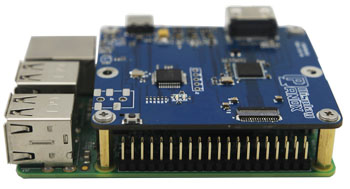
Flexible AMOLED modules may look mechanically ideal but still fail at the system level if the host processor, driver IC, timing, or power design is not aligned. MIPI DSI is one of the most common high-speed interfaces between host processors and display modules, specifically because it supports high performance while reducing pin count and EMI. That makes it highly relevant to AMOLED integration in compact electronics.
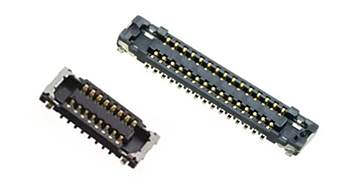
Buyers should confirm the required interface, lane count, refresh target, initialization sequence support, power rails, touch communication path, and whether the supplier can support bring-up with the chosen mainboard or SoC. It is also smart to ask whether demo code, register settings, or integration support are included. A beautiful display without driver support is just an expensive mechanical sample.
How should buyers evaluate reliability, not just appearance?

This is where professional sourcing decisions separate themselves from casual component shopping.
A display sample may look excellent on day one and still be the wrong choice for a production project. Buyers should review reliability at the module and system level, including temperature tolerance, humidity resistance, mechanical shock, drop risk, bend-cycle validation if applicable, adhesive stability, FPC durability, and long-term display uniformity.
For foldable or curved structures, mechanical stress behavior matters. For all OLED structures, environmental barrier performance matters because oxygen and moisture can degrade the active layers. Scientific reviews on thin-film encapsulation and flexible OLED stability repeatedly underline that barrier performance is central to durability.
A strong buyer will ask for test standards, sample test conditions, pass/fail definitions, and known failure modes instead of accepting broad phrases like “high reliability” or “industrial grade.”
What commercial factors should buyers review besides unit price?
Unit price is only one piece of the total decision.
In a custom AMOLED display project, total commercial evaluation should include NRE, tooling, MOQ, sample cost, engineering revision cost, lead time, ramp-up timing, yield risk, and replacement strategy. Market sourcing guides for custom OLED projects commonly note that custom designs usually come with higher MOQ, NRE fees, and longer lead times than standard public-mold solutions. Even when the quoted panel price looks attractive, hidden delays or limited engineering support can make the total program cost much higher.
Buyers should also ask a more strategic question: is the supplier offering a standard module adapted to your product, or a genuinely supportable long-term solution with engineering continuity, revision control, and future supply visibility?
Is a standard module enough, or do you need a custom flexible AMOLED display?
Not every project needs full customization.
If your product can accept a standard size, standard outline, and standard interface, a public-mold module can reduce risk, speed up sampling, and lower NRE. But if the product depends on a curved housing, ultra-narrow packaging, non-rectangular shape, integrated cover-lens styling, or unusual touch stack, then forcing a standard module into the design often creates bigger costs later.
The right decision depends on whether display differentiation is central to the product. In premium wearables, automotive HMIs, and custom handheld devices, the display is often part of the industrial design strategy, not just a viewing part. In those cases, custom flexible AMOLED development can create real product value when the engineering path is realistic.
What should buyers ask a flexible AMOLED supplier before moving forward?
A strong buyer conversation should cover these points in practical terms:
What has already been validated in mass production, and what is still developmental?
What bend radius, stack thickness, and module structure have been proven?
What interface and driver support are available for the target platform?
Is touch integrated or separate, and what are the tradeoffs?
What reliability tests have been completed?
What are the NRE, MOQ, sample lead time, and mass-production lead time?
What changes after design freeze will trigger cost or schedule impact?
Can the supplier support customization in shape, FPC, cover lens, brightness tuning, or touch structure?
These questions sound simple, but they can save weeks of confusion.
Final takeaway: what buyers should really evaluate in a flexible AMOLED project
The best flexible AMOLED project is not the one with the most impressive marketing language. It is the one with the clearest engineering fit.
Buyers should evaluate flexible AMOLED modules across the full decision chain: application need, mechanical feasibility, optical performance, touch structure, interface compatibility, reliability evidence, and commercial practicality. Flexible OLED technology can unlock thinner, lighter, curved, and custom-shaped products, but that advantage only becomes real when the display is evaluated as part of the product architecture from the start.
If the sourcing team asks the right questions early, a flexible AMOLED display can become a product advantage instead of a late-stage integration problem.
You can also explore our AMOLED display solutions for additional product reference.
FAQs
1. What is the most important thing to evaluate in a flexible AMOLED project?
The most important factor is overall fit, not a single spec. Buyers should evaluate whether the panel matches the product’s mechanical design, electrical platform, optical target, touch structure, and reliability requirement as one system.
2. Is flexible AMOLED always better than rigid AMOLED?
No. Flexible AMOLED is better when the product benefits from thinner structure, lighter weight, curved integration, foldability, or custom shape freedom. If the design does not need those advantages, rigid solutions may be simpler and more cost-efficient.
3. What interface is commonly used in AMOLED modules?
MIPI DSI is one of the most common host-to-display interfaces for high-performance compact devices because it supports high bandwidth, lower pin count, and reduced EMI.
4. Why does encapsulation matter so much in flexible OLED?
OLED materials are sensitive to oxygen and moisture, so encapsulation is critical for long-term stability and reliability. This is especially important in flexible structures built around thin barrier layers.
5. Should buyers worry about burn-in in AMOLED applications?
They should evaluate it based on the use case. Static UI elements, high brightness, and long operating hours can increase image-retention risk, so usage pattern should be reviewed early during display selection.
6. Does integrated touch make a flexible AMOLED module better?
Not automatically. Integrated touch can reduce thickness and weight, but buyers still need to evaluate touch performance, stack design, tuning complexity, and serviceability for the specific product.
7. Why are custom flexible AMOLED projects usually more expensive?
Because they often involve NRE, tooling, customization, tighter validation, and longer lead times than standard modules. Cost should be evaluated across the whole project, not only by piece price.
8. When should a buyer choose a custom flexible AMOLED display instead of a standard module?
A custom solution makes sense when the display is central to the product design, such as custom shapes, curved surfaces, premium thinness targets, special FPC routing, or unique touch and cover integration.
Learn more: What Makes Flexible AMOLED More Suitable for Custom-Shaped Displays