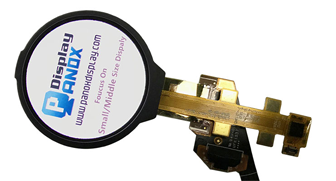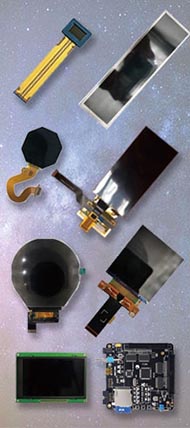




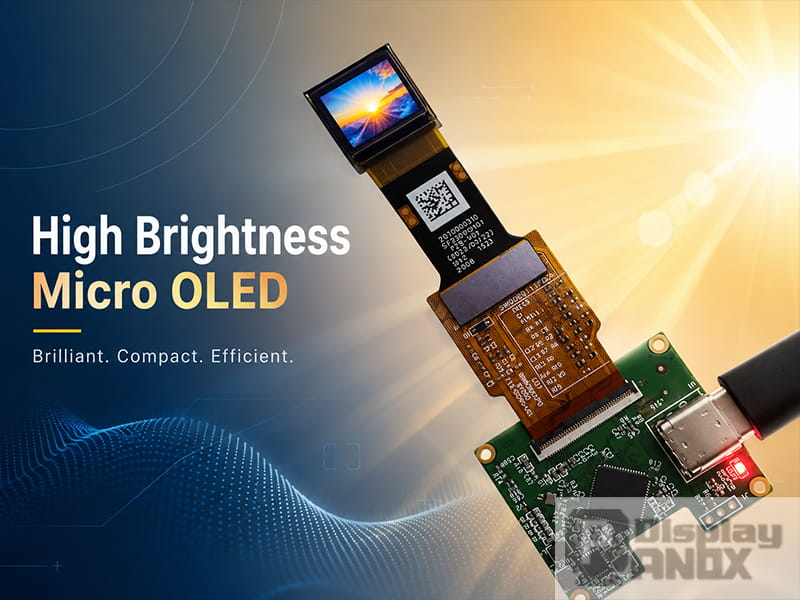
0.5 inch 1600x1200 Micro OLED 1000 cd luminance 120 Hz
A high brightness display is designed for one simple purpose: keeping visual information readable when ordinary screens begin to look washed out. This happens in vehicles, outdoor equipment, industrial control panels, handheld instruments, smart wearables, public machines and near-eye optical systems where ambient light is stronger than a typical office environment.
In display specifications, brightness is usually described as luminance and measured in cd/m², often called nits in the display industry. A standard indoor screen may work well in a controlled room, yet the same panel can lose clarity beside a window, under shop lighting, in a vehicle cabin or under daylight. High brightness panels solve this problem by increasing the amount of light emitted from the display surface, while better optical design helps preserve contrast against reflections.
The important point is that high brightness should be treated as part of a display system. A panel with a higher nit rating can still perform poorly if the cover glass reflects too much light, if the backlight overheats, or if the interface and driving board cannot support stable operation. A good high luminance display panel balances brightness, contrast, reflection control, power consumption, thermal design and mechanical integration.
What Is a High Brightness Display?
A high brightness display is a display panel with higher luminance output than a normal indoor screen. For small and medium-size LCD and OLED modules, many projects begin to treat 700 cd/m² and above as high brightness. For outdoor-facing equipment, vehicle displays, kiosks and public machines, 1000 cd/m² or higher is often preferred, especially when the display may be exposed to strong ambient light.
The exact brightness requirement depends on the application. A 700-nit panel may be enough for a handheld device used under shade. An 800-nit industrial LCD can be suitable for many vehicle or control applications. A 1000-nit display gives more visibility margin for public equipment, transportation systems and bright cabins. Near-eye displays follow another logic: the panel brightness must pass through lenses, prisms or optical engines before reaching the eye, so the original display panel may need much higher luminance than the final perceived image.
Brightness should also be understood together with screen size and technology. A compact Micro OLED can deliver very high pixel density and strong contrast for optical devices. A TFT-LCD can provide stable high full-screen brightness for industrial use. An AMOLED panel can offer deep blacks, vivid color and thin mechanical structure, which is valuable for round displays, wearable products and premium user interfaces.
Why High Brightness Matters in Real Environments
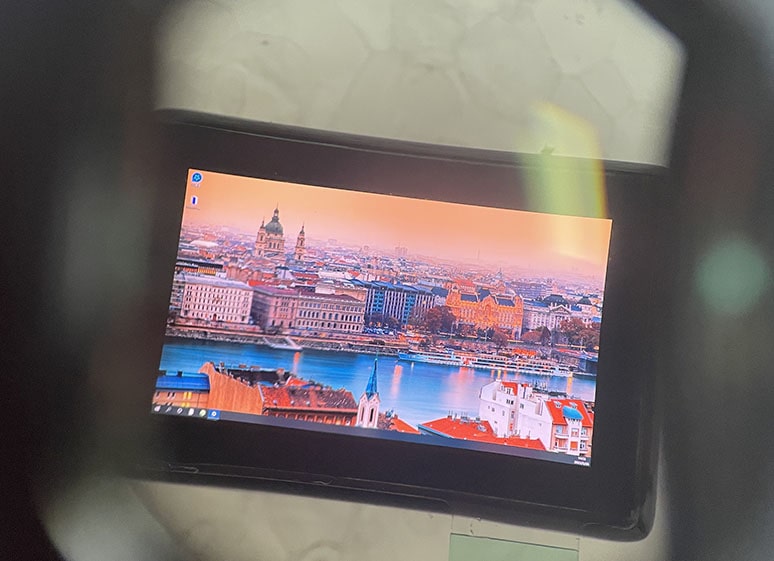
0.49 inch Micro OLED Display 1920X1080 MIPI Interface
The reason a screen becomes hard to read under daylight is not only that the environment is bright. Reflected ambient light raises the apparent black level of the display. When the black areas of the image look gray, the text, icons and image details lose separation from the background.
This is why high brightness display design often talks about ambient contrast ratio. In a darker environment, static contrast ratio has a strong influence on perceived image quality. Under stronger ambient light, luminance and surface reflection become much more important. A display must produce enough light to compete with the environment, while the surface stack must reduce glare and internal reflection.
In practical terms, a high brightness display should answer three questions at the same time:
| Question | Why It Matters |
|---|---|
| How bright is the panel under real operating conditions? | Peak brightness and sustained brightness can be different, especially under heat or full-screen white content. |
| How much ambient light is reflected by the cover lens and panel stack? | Reflection can reduce readability even when the panel has a high nit rating. |
| Can the display maintain brightness safely over time? | Higher brightness usually means more power, more heat and stricter lifetime requirements. |
A reliable display selection process starts from the environment instead of the brightness number alone.
High Brightness Display vs. Sunlight Readable Display
“High brightness display” and “sunlight readable display” are closely related, but they do not describe exactly the same thing.
A high brightness display focuses on luminance output. It tells you how much light the panel can emit from the display surface. A sunlight readable display refers to the final viewing result under sunlight or strong ambient light. To achieve that result, the display may need high brightness, high contrast, low surface reflectance, optical bonding, anti-glare or anti-reflective treatment, suitable cover glass and stable thermal design.
For example, two displays may both be rated at 1000 cd/m². The one with lower reflection and better bonding will usually look clearer outdoors. Another display with higher brightness but a reflective cover lens may look less readable because the viewer sees glare before seeing the image.
For product design, this difference matters. A high brightness TFT-LCD may be a good starting point for an outdoor HMI, but the final assembly should still consider touch panel structure, cover glass thickness, surface coating, viewing angle, enclosure shading and heat dissipation. The panel is the core component; the whole optical stack decides the user experience.
How LCD, OLED and Micro OLED Achieve High Luminance
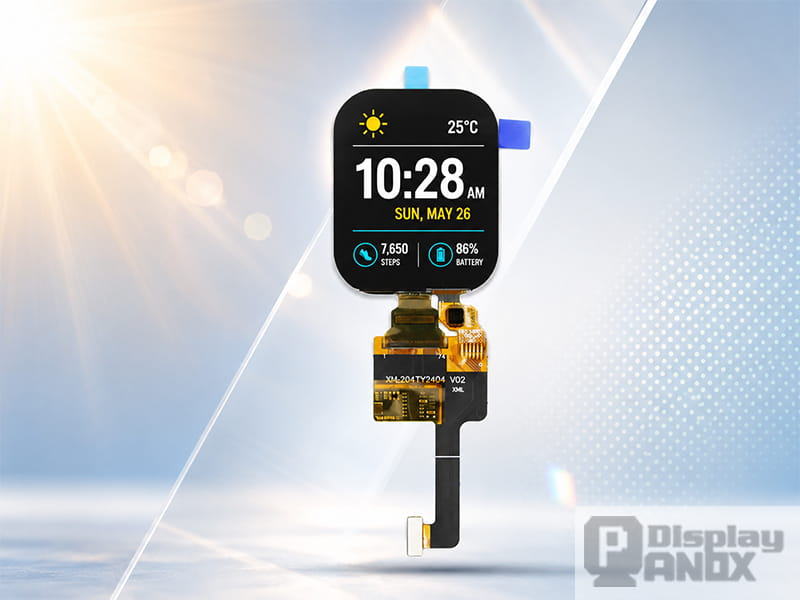
2.04 inch AM-OLED Full Color On-cell PCAP Touch
Different display technologies reach high brightness in different ways. There is no single “best” technology for every product. The right choice depends on the viewing environment, image content, power budget, mechanical structure and expected lifetime.
High Brightness TFT-LCD
A TFT-LCD panel does not emit light by itself. It uses a backlight system, usually based on LEDs, to send light through the LCD cell, color filter and polarizer stack. To increase brightness, manufacturers may use stronger LED backlights, optimized light guide plates, high-transmittance films and more efficient optical structures.
The advantage of high brightness LCD is stable full-screen luminance. This is useful for industrial HMIs, automotive displays, public equipment, outdoor instruments, vending machines and transportation systems where the screen may show static information for long periods. LCD is also mature, widely available and suitable for many interface types such as RGB, LVDS, MIPI, eDP and HDMI through controller boards.
The trade-off is power and heat. A brighter backlight consumes more energy and may require better thermal paths. For sealed equipment, outdoor enclosures or vehicle dashboards, heat is a real engineering issue. The brightness target should be selected together with operating temperature, backlight lifetime and enclosure design.
High Luminance OLED and AMOLED
OLED and AMOLED displays are self-emissive. Each pixel emits its own light, so OLED panels can achieve deep blacks, high contrast, fast response and vivid color. They are also thin and can be built in round, flexible and compact formats, making them attractive for smart watches, round control panels, portable electronics and premium user interfaces.
High luminance OLED is especially useful when the interface needs strong visual impact in a compact space. A round AMOLED display, for example, can make a wearable or smart control device look sharper and more modern than a conventional low-brightness screen.
The main design consideration is lifetime under high driving stress. OLED materials can be affected by high luminance operation, static UI elements, heat and UV exposure. For outdoor-facing OLED projects, the design should include appropriate cover glass, optical protection, brightness control strategy, UI dark mode planning and realistic lifetime evaluation.
Micro OLED for Near-Eye Optical Systems
Micro OLED panels are built on a silicon backplane and can deliver extremely high pixel density in a very small active area. They are widely used in near-eye displays, electronic viewfinders, thermal imaging devices, optical instruments and AR/VR-related systems.
For near-eye applications, high brightness has a special role. The panel image usually passes through optical lenses or waveguides before it reaches the viewer. Every optical element can reduce light transmission. A Micro OLED panel with high luminance gives the optical system more usable brightness headroom, especially for see-through or bright-environment applications.
A strong Micro OLED specification should be judged by more than brightness. Pixel density, resolution, contrast ratio, refresh rate, interface, power consumption, active area and optical compatibility all affect the final product.
High Brightness Display Options from Panox Display
Panox Display supplies high luminance display panels across TFT-LCD, AMOLED and Micro OLED categories. The best option depends on whether the project needs outdoor readability, compact size, high pixel density, round shape, touch integration or controller board support.
For compact HMI and handheld products, a 4.3-inch 800×480 TFT-LCD with 700 cd/m² luminance and MIPI interface can be used in small control panels, instruments and embedded devices where a normal indoor panel may look too dim.
For industrial or vehicle equipment, a 6.5-inch industrial LCD with 800 cd/m² brightness and LVDS interface provides a practical balance between readability, industrial structure and proven LCD performance. This type of panel is suitable for machines, vehicle systems and control equipment that require stable information display.
For automotive consoles and public equipment, a 10.1-inch 1920×1200 TFT-LCD with 1000 cd/m² brightness, PCAP touch and wide operating temperature support is a stronger choice. It fits applications such as vehicle screens, ATMs, transportation equipment, vending machines and public terminals where brightness, reliability and long working time are important.
For wearable and round interface products, a 1.39-inch round AMOLED display with 454×454 resolution and 800-nit brightness offers a high-quality visual experience in a small circular format. It can be used in smart watches, steering wheel displays, smart home controls, meters and industrial devices that require a colorful and compact UI.
For near-eye and optical products, Panox Display also provides Micro OLED options. A 0.49-inch FHD Micro OLED with high pixel density is suitable for AR glasses, telescope systems, thermal imagers and compact optical devices. A 1.03-inch 2560×2560 Micro OLED with 1800 cd/m² typical luminance and ultra-high contrast is suitable for AR/VR, electronic viewfinders, medical optical equipment and professional imaging systems.
These examples show why “high brightness display” is a broad category. A vehicle LCD, a round AMOLED and a Micro OLED may all belong to the high luminance family, yet they solve very different design problems.
Key Specifications to Check Before Choosing a High Brightness Display
The brightness value is important, but it should never be the only specification used for selection. A high brightness display panel should be checked as a complete module.
| Specification | What to Check | Why It Matters |
|---|---|---|
| Luminance | Typical brightness, minimum brightness and testing condition | Some panels quote typical values, while real brightness can vary with temperature, input power and image content. |
| Sustained brightness | Full-screen brightness over time | A panel may reach high peak brightness briefly but reduce output under thermal load. |
| Contrast ratio | Static contrast and perceived contrast in ambient light | Contrast determines how clearly text and graphics stand out. |
| Surface treatment | AG, AR, cover glass, optical bonding | Reflection control can improve readability without simply increasing power. |
| Viewing angle | Brightness and color shift from different angles | Vehicle, industrial and public equipment may be viewed from the side. |
| Interface | MIPI, LVDS, RGB, eDP, HDMI board support | The selected panel must match the mainboard, controller and development schedule. |
| Power consumption | Current at target brightness | Higher brightness increases power demand and affects battery or thermal design. |
| Operating temperature | Low and high temperature range | Outdoor, vehicle and industrial products often face wide temperature changes. |
| Lifetime | Backlight lifetime or OLED luminance decay behavior | Long-term products need stable brightness, especially with static UI content. |
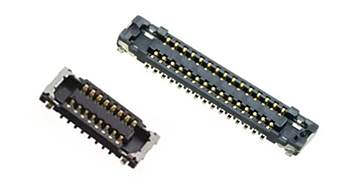
| Mechanical structure | Active area, outline, FPC direction and connector | Small details decide whether the display can actually fit the product design. |
For procurement and engineering teams, the best practice is to request the datasheet, drawing, interface details and brightness test conditions before locking the display selection.
Application Guide for High Brightness Display Panels
Outdoor and Semi-Outdoor Equipment
Outdoor equipment includes kiosks, portable instruments, access control systems, field devices, charging equipment and service terminals. These products may face direct sunlight, reflected sky light or strong diffuse daylight. A high brightness LCD with low-reflection cover glass is usually a reliable starting point.
For direct sunlight, the system should consider optical bonding and AR treatment. For shade or semi-outdoor use, 700 to 1000 cd/m² may be enough depending on the UI design and viewing distance. Larger text, high-contrast UI colors and reduced glossy surfaces also improve readability.
Vehicle and Transportation Displays
Vehicle displays face changing light throughout the day. A car display may need to handle morning sunlight, tunnel transitions, night driving and dashboard heat. Public transportation displays have similar challenges, especially when passengers read information from different viewing angles.
A high brightness TFT-LCD with wide operating temperature, stable backlight and robust mechanical structure is often preferred. Touch integration, anti-vibration design and controller board compatibility should be reviewed early.
Industrial HMI and Control Panels
Industrial screens often display fixed icons, data tables, warning messages and machine status information. Readability is more important than decorative image quality. A high brightness LCD can help operators read information quickly under factory lighting, sunlight from windows or harsh equipment environments.
For industrial projects, stable supply, connector availability, interface support and long-term reliability are usually more important than chasing the highest brightness number.
Smart Wearables and Round Controls
Small OLED and AMOLED displays are useful for smart watches, compact instruments, steering wheel interfaces and round smart home controls. High luminance makes colorful icons and UI elements easier to recognize in daily lighting conditions. The thin structure and high contrast of OLED also make these products feel more premium.
For OLED wearable projects, brightness control should be designed carefully. Auto-brightness, dark UI themes and screen timeout strategies can help balance visibility and lifetime.
AR, VR and Optical Instruments
Micro OLED panels are widely used in compact optical systems. In these applications, the display is only one part of the optical path. Lenses, prisms, magnifiers and waveguides can reduce the amount of light reaching the eye. A higher luminance Micro OLED gives engineers more margin when designing the optical engine.
Resolution, pixel density, contrast, refresh rate and active area should be reviewed together. A panel with excellent brightness but the wrong active area or interface may still be unsuitable for the final product.
Common Mistakes When Selecting a High Brightness Display
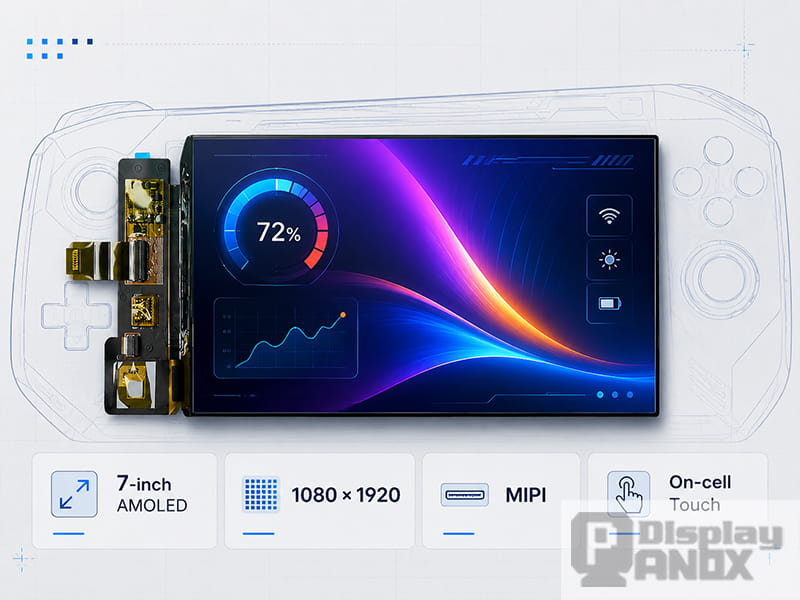
7 inch AMOLED OLED 1920X1080 Mipi
One common mistake is comparing brightness numbers without checking test conditions. A typical value measured at room temperature may not represent the display’s performance inside a sealed outdoor enclosure at high temperature.
Another mistake is ignoring surface reflection. A display with a glossy cover lens may look bright indoors, then become difficult to read outdoors. AG coating, AR coating and optical bonding can make a major difference in real readability.
Some projects also compare LCD and OLED with the same expectations. LCD is strong for stable full-screen brightness and long static use. OLED offers excellent contrast, thin structure and visual quality, while its lifetime strategy should be planned carefully for high luminance or static UI applications.
A final mistake is testing only in an office. A panel selected for outdoor, vehicle or industrial use should be tested under lighting conditions close to the real application. Even a quick test near a window, under a strong lamp or in a vehicle cabin can reveal problems that are invisible on a desk.
How Panox Display Supports High Brightness Display Projects
Choosing a high brightness panel is only the beginning. Many projects also need cover glass, touch panel, connectors, adapter boards, demo kits or customized controller boards. Panox Display provides support for small and medium-size OLED/LCD panels, including TFT-LCD, AMOLED, Micro OLED, round display, long strip display, flexible display and industrial LCD solutions.
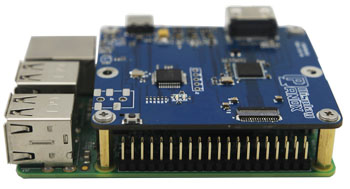
For development and batch projects, Panox Display can help customers review the application environment, interface requirement, brightness target, mechanical space and testing method. Available support may include datasheets, drawings, FPC connector information, HDMI or Type-C controller board options, customized touch panel and cover glass solutions.
This is especially useful for teams developing outdoor equipment, vehicle displays, wearable products, AR/VR optical systems, Raspberry Pi display projects, industrial devices and public machines.
Conclusion
A high brightness display is best understood as a visibility solution, not just a brighter screen. The right panel should match the real environment, optical stack, power budget, thermal design, interface and product lifetime target.
For compact HMIs, industrial equipment, vehicle screens, wearable devices and near-eye optical systems, Panox Display provides high luminance LCD, OLED and Micro OLED options with different sizes, resolutions, interfaces and brightness levels. By choosing the display around real viewing conditions, product teams can build screens that remain clear, stable and readable where ordinary displays fall short.
FAQ
How many nits are needed for an outdoor display?
There is no universal number. For semi-outdoor or shaded use, 700 to 1000 cd/m² may be enough. For stronger daylight or outdoor-facing equipment, 1000 cd/m² or higher is often preferred. Surface reflection, optical bonding, UI contrast and viewing angle can change the result dramatically.
Does higher brightness always mean better readability?
Higher brightness helps, especially under strong ambient light, but readability also depends on contrast ratio, surface reflection, cover glass, optical bonding and UI design. A lower-reflection display can look clearer than a brighter panel with a reflective surface.
Is OLED suitable for high brightness applications?
OLED can be suitable for high brightness applications such as wearables, round displays, premium interfaces and near-eye systems. The design should consider image content, brightness duty cycle, operating temperature, UV protection and lifetime. For long-term static industrial or outdoor applications, LCD may be more practical.
What is the difference between high brightness and high contrast?
Brightness describes how much light the display emits. Contrast describes the separation between bright and dark image areas. Under strong ambient light, reflected light can reduce perceived contrast. A strong display design needs both enough luminance and good reflection control.
Why do Micro OLED displays need high luminance?
Micro OLED displays are often used behind optical lenses or waveguides. These optical components reduce light transmission before the image reaches the eye. Higher panel luminance gives the optical system more brightness margin and helps maintain image visibility in bright environments.