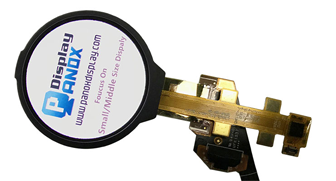




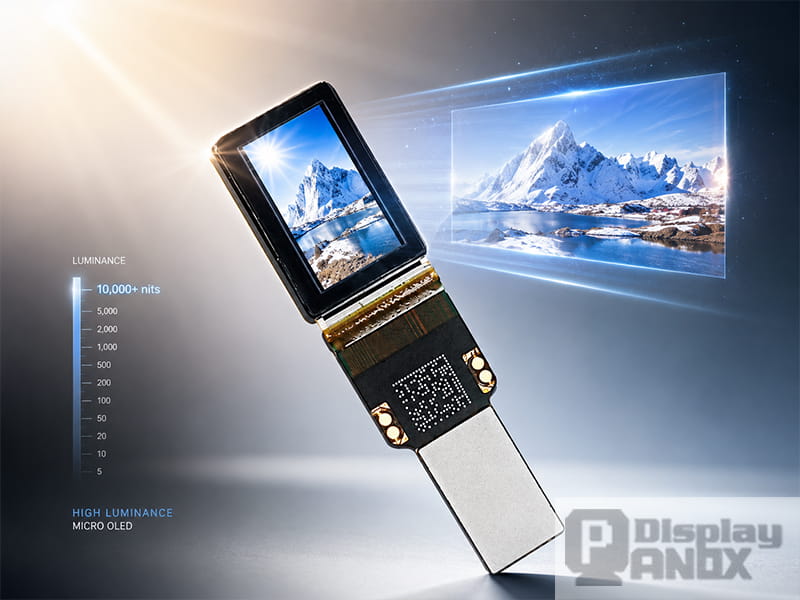
0.49 inch Micro OLED Display 1920X1080 MIPI Interface
High luminance is often described as a simple brightness specification, usually measured in cd/m² or nits. In real product design, it has a much larger role. It decides whether a display can still be read under strong ambient light, whether a vehicle screen remains visible during the day, whether an AR/FPV image survives optical loss, and whether a compact device feels clear rather than dim or washed out.
A normal indoor display can look acceptable on a desk. The same display may become difficult to read near a window, inside a bright vehicle cabin, under factory lighting, or inside an optical system. This is where high luminance becomes important. It gives the display enough visual output to compete with the environment and preserve usable image contrast.
For display engineers, purchasing teams and product designers, high luminance should be treated as a practical performance requirement. It is not simply about making a screen look brighter. It is about keeping information visible when the product leaves controlled indoor lighting and enters real use.
High Luminance Protects Readability in Real Environments
A display is useful only when users can read it quickly and accurately. In many applications, the user does not have time to adjust the screen angle, cover the display with a hand, or move to a darker place. A handheld terminal, vehicle screen, outdoor controller or industrial HMI must work where it is installed.
Strong ambient light affects a display in two ways. First, it competes with the emitted light from the panel. Second, it reflects from the cover glass, touch panel, air gap or polarizer surface. These reflections raise the apparent black level and reduce the separation between bright and dark content. When this happens, text loses sharpness, icons look weaker and image details become harder to recognize.
High luminance gives the display more visual strength. The screen can maintain better foreground-background separation even when the surrounding light is high. This is why high brightness displays are widely used in outdoor equipment, vehicle systems, public terminals, industrial machines, smart devices and near-eye optical products.
A brighter display does not automatically solve every readability problem. Surface reflection, optical bonding, anti-glare treatment, anti-reflective coating and UI design still matter. However, without enough luminance, the display has very little margin to fight ambient light.
Why High Brightness Is Different from Normal Indoor Brightness
Many indoor displays are designed for controlled lighting. A lower brightness level may be comfortable in an office, bedroom or laboratory. For outdoor-facing and semi-outdoor products, that brightness range can be too limited.
High brightness displays are designed with a different goal. They need to maintain useful image quality when the display is exposed to strong light, reflected glare or optical attenuation. Depending on the application, a high luminance display may start around 700–800 cd/m², while outdoor-readable or sunlight-readable systems often require 1000 cd/m² or higher.
The required brightness depends on the product, not only the environment. A small wearable display may need a short burst of high luminance for outdoor use. A vehicle screen may need stable brightness across a wide temperature range. A Micro OLED used in AR or FPV may need high panel luminance because the image will pass through lenses, prisms or other optical components before it reaches the eye.
This is why a high brightness display should be selected by use case. A 4.3 inch high brightness TFT-LCD, a 6.5 inch industrial LCD, a round AMOLED and a Micro OLED for AR may all belong to the high luminance category, yet each one solves a different visibility problem.
High Luminance Helps Preserve Ambient Contrast
In a dark room, a display’s contrast ratio is mainly controlled by its black level and white level. In real environments, reflected light changes the result. Even if the panel itself has good contrast, the final visible contrast can drop when ambient light reflects from the display surface.
This is especially important for outdoor, automotive and handheld products. The user sees the combined result of emitted display light and reflected environmental light. A higher luminance panel increases the useful signal from the display, helping the content remain visible over the reflected background.
The practical result is simple: high luminance makes the display harder to wash out.
This benefit is most obvious in interface-heavy products. White text on a dark background, warning icons, battery symbols, camera previews, maps, menu panels and status indicators all need clear separation. When brightness is too low, the interface may still technically appear on the screen, yet the user has to work harder to understand it. High luminance reduces that effort.
Why High Luminance Matters for TFT-LCD Panels
TFT-LCD panels usually achieve high brightness through the backlight system. Stronger LED backlights, optimized light guide plates, improved optical films and higher transmittance structures can increase the amount of light reaching the viewer.
This makes high brightness LCD panels valuable for stable, long-duration display applications. Industrial control panels, vehicle screens, public machines, outdoor equipment, vending machines and embedded terminals often show static or semi-static information for long periods. LCD technology is mature, available in many sizes and compatible with common interfaces such as RGB, LVDS, MIPI, eDP and HDMI through controller boards.
For example, a 4.3 inch 800×480 TFT-LCD display with MIPI interface and high brightness can be suitable for embedded equipment and compact control screens. A 6.5 inch industrial LCD with 800 nits brightness can support machine displays, vehicle systems and commercial equipment where reliable daylight readability is important. A 10.1 inch automotive LCD can serve larger interfaces such as vehicle consoles, transportation terminals and public machines.
The engineering challenge is heat. A brighter backlight usually consumes more power and generates more thermal load. If the product is sealed, installed outdoors or used inside a vehicle, heat dissipation must be reviewed early. Backlight lifetime, LED current, enclosure material and operating temperature should be checked together instead of treating brightness as an isolated specification.
Why High Luminance Matters for OLED and AMOLED Displays
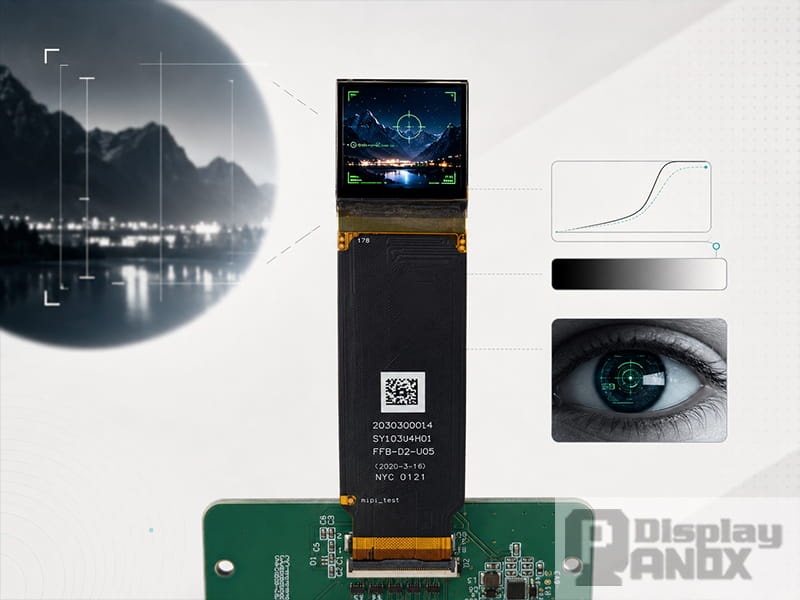
1.03 inch Micro OLED Display 2K for AR/FPV
OLED and AMOLED displays are self-emissive. Each pixel emits light directly, which gives OLED panels strong contrast, deep blacks, fast response and vivid color. For compact products, this creates a sharp and premium visual impression.
High luminance gives OLED and AMOLED displays more flexibility in daily use. A smartwatch, round control screen or handheld device may look excellent indoors, then need higher luminance outdoors or under strong retail lighting. A brighter OLED panel can keep icons, numbers, images and UI cards readable across more environments.
Panox Display’s High Luminance category includes AMOLED and OLED options such as the 1.39 inch round OLED 454×454 display with 800 nits brightness, the 1.43 inch AM-OLED full color on-cell PCAP touch panel, the 2.4 inch color OLED display, the 3.92 inch AMOLED PCAP panel, the 6.52 inch flexible OLED touch panel and the 7 inch AMOLED OLED 1920×1080 MIPI display. These products cover wearable, handheld, flexible, mobile-style and embedded display needs.
OLED brightness should be planned carefully. Higher luminance can increase power demand and thermal stress. Static bright UI elements may also affect long-term aging behavior. For OLED projects, the right design usually combines suitable brightness settings, dark UI planning, automatic dimming, screen timeout strategy, thermal review and realistic lifetime expectations.
Why High Luminance Is Critical for Micro OLED and AR/FPV
Micro OLED displays are different from ordinary direct-view screens. They are often used in AR glasses, FPV viewers, electronic viewfinders, thermal imaging devices, optical instruments and compact near-eye systems. In these applications, the user rarely sees the bare panel directly. The image passes through an optical path before reaching the eye.
Every optical system has loss. Lenses, prisms, magnifiers, waveguides and combiners reduce the amount of light that finally reaches the viewer. Some systems also mix display light with real-world background light. This makes high panel luminance very important. The display must provide enough brightness at the source so the final image remains visible after optical loss.
High luminance also improves design margin. If the optical engine has lower transmission efficiency, if the target environment is brighter, or if the UI contains small symbols and fine details, the display needs more luminance headroom. Without that margin, the image may appear dim, weak or difficult to distinguish.
Panox Display’s High Luminance category includes Micro OLED options such as the 0.49 inch Micro OLED display with 1920×1080 resolution and MIPI interface, the 0.5 inch 1600×1200 Micro OLED with 1000 cd/m² luminance and 120 Hz refresh rate, and the 1.03 inch Micro OLED display with 2560×2560 resolution for AR/FPV applications. These panels are suitable for compact optical systems where high pixel density and brightness need to work together.
For AR and FPV projects, brightness should be considered with resolution, PPI, refresh rate, active area, interface, power consumption and optical efficiency. A high luminance Micro OLED gives the optical system more room to create a clear final image.
High Luminance Improves Safety and Response in Equipment Interfaces
In many products, display visibility is related to safety and response speed. A vehicle display may show speed, navigation, warnings or camera views. An industrial HMI may show machine status, alarms or sensor data. A public terminal may need to remain readable for users who are standing, moving or viewing the screen from different angles.
If the display is too dim, users may take longer to read the information. In some cases, they may misread it. High luminance reduces this risk by making key information stand out under less predictable lighting.
This is one reason high brightness LCDs are common in industrial and commercial equipment. The display does not need to look dramatic; it needs to stay legible. Clear text, visible warnings, readable buttons and stable image quality can make the whole product feel more reliable.
For equipment interfaces, high luminance should be paired with practical UI design. Thin gray text on a light background may still be hard to read outdoors. A brighter panel works best with clean typography, strong contrast, simple icons and enough spacing.
High Luminance Supports Better Color and Image Perception
Brightness also affects perceived image quality. When luminance is too low for the environment, colors can look dull and images lose impact. Bright highlights become weak, shadows appear muddy and fine details disappear into reflections.
A high luminance display gives image content more presence. Photos, maps, camera feeds, diagnostic images, UI cards and animated interfaces can remain vivid under stronger light. This does not mean every display should run at maximum brightness all the time. It means the panel should have enough headroom to adapt when the environment demands it.
For AMOLED and Micro OLED panels, high luminance is especially useful when combined with strong contrast. Bright highlights on deep black backgrounds can produce a clear and premium image. For LCD panels, strong backlight output and good optical design help maintain color visibility and screen readability in more difficult conditions.
The Trade-Offs Behind High Luminance

4.0 inch Square LCD Display 480x480 for Smart Home
High luminance is valuable, but it comes with engineering trade-offs. A brighter display may require more power, more careful thermal design and a stronger driver or backlight system. In battery-powered products, high brightness can shorten runtime. In sealed devices, it can raise internal temperature. In OLED products, long operation at high luminance can affect lifetime planning.
These trade-offs do not make high luminance a problem. They make it a specification that needs to be managed.
A good high brightness display design usually includes several control strategies. The product may use automatic brightness adjustment, different day and night modes, local UI brightness limits, dark interface themes, backlight current control, heat spreading structures and suitable cover glass treatment. The goal is to provide visibility when needed, while avoiding unnecessary power and heat when the environment is darker.
For LCD modules, the backlight design and thermal path are especially important. For OLED and AMOLED modules, luminance decay, static UI content and operating temperature should be reviewed. For Micro OLED systems, panel brightness and optical efficiency must be evaluated together.
Why Cover Glass and Optical Bonding Matter
A high luminance panel can lose performance if the front stack is poorly designed. Cover glass, touch panel layers, air gaps, surface coating and adhesives all affect the final viewing result.
When light reflects inside the display stack, the screen looks less clear. Black areas become gray, bright areas lose impact, and the user sees glare instead of information. Increasing brightness can help, but reducing reflection can be just as important.
Optical bonding can reduce internal reflection by removing the air gap between layers. Anti-reflective coating can reduce mirror-like reflections. Anti-glare treatment can soften harsh reflections from lamps or sunlight. A high-transmittance cover lens helps more emitted light reach the viewer.
This is why high luminance should be considered at the module level. The bare panel brightness is only the beginning. The final product must preserve that luminance through the touch panel, cover glass and enclosure design.
How High Luminance Applies to Different Display Products
High luminance appears in many display categories, but its value changes by application.
| Application Area | Why High Luminance Matters | Suitable Display Direction |
|---|---|---|
| Outdoor and semi-outdoor equipment | Maintains readability under daylight, window light and reflected glare | High brightness TFT-LCD, optically bonded touch display |
| Industrial HMI | Keeps alarms, values and status information visible in factory lighting | Industrial LCD with stable backlight and wide temperature support |
| Vehicle displays | Supports visibility in changing daylight, cabin reflections and dashboard heat | Automotive LCD, high brightness touch display |
| Smart home and embedded control | Makes compact UI panels easier to read in bright rooms | Square LCD, small TFT-LCD, AMOLED touch display |
| Wearables and round controls | Helps small icons and numbers remain clear outdoors | Round AMOLED, compact OLED |
| AR and FPV | Compensates for optical loss and bright viewing conditions | High luminance Micro OLED with high PPI |
| Public equipment | Reduces washout in commercial spaces, terminals and kiosks | Large high brightness LCD or OLED module |
The common thread is visibility. High luminance helps the display keep its message clear when the environment becomes less friendly.
Selected Panox Display Options for High Luminance Projects
Panox Display supplies high luminance display panels across LCD, OLED, AMOLED and Micro OLED categories. The following examples show how different products can support different brightness-related requirements.
For compact embedded products, the 4.0 inch square LCD display with 480×480 resolution and RGB interface is suitable for smart home controls, compact dashboards and square UI layouts. Its square shape works well for control panels where information needs to be arranged in balanced modules.
For small equipment and handheld devices, the 4.3 inch 800×480 TFT-LCD display with MIPI interface and high brightness can support readable UI design in portable instruments, controller devices and embedded systems.
For industrial and vehicle-related equipment, the 6.5 inch industrial LCD with 800 nits brightness, 640×480 resolution and LVDS interface provides a practical option where stable readability and industrial integration matter.
For wearable and compact interface products, the 1.39 inch round OLED display with 454×454 resolution and 800 nits brightness can support circular UI designs, smart watch interfaces, small controllers and premium compact displays.
For AR, FPV and optical products, the 0.49 inch Micro OLED 1920×1080 MIPI display, the 0.5 inch 1600×1200 Micro OLED with 1000 cd/m² luminance and 120 Hz refresh rate, and the 1.03 inch 2560×2560 Micro OLED display provide high-density image sources for near-eye systems.
For larger embedded visual interfaces, the 7 inch AMOLED OLED 1920×1080 MIPI display offers a high-resolution full-color option for products that need vivid image quality, strong contrast and a larger active area.
These examples show that high luminance is not limited to one display type. It can be achieved through LCD backlight design, OLED emission performance, Micro OLED optical density or complete module integration.
How to Choose the Right High Luminance Display Panel
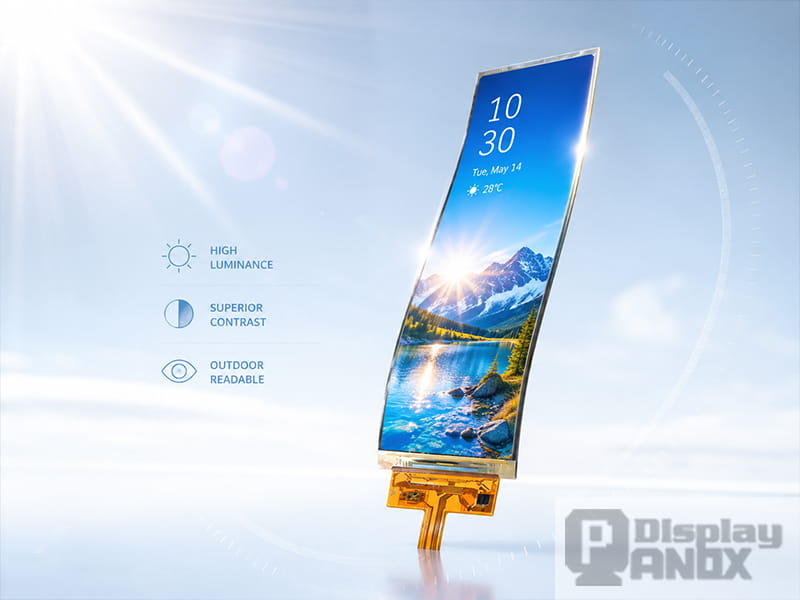
6.52 inch Flexible OLED 2520x840 Touch Panel
The best high luminance display is the one that fits the actual product environment. Before selecting a panel, it is useful to answer several practical questions.
Where will the product be used? Indoor lighting, vehicle daylight, factory lighting, outdoor shade and direct sunlight all create different brightness requirements.
How will the user view the display? Direct-view screens, touch displays, lens-based systems and AR optics require different luminance margins.
How long will the display stay bright? A display used for short outdoor glances can use brightness differently from a screen that stays on all day.
What is the power and thermal limit? A battery-powered wearable, sealed industrial controller and vehicle console have very different thermal conditions.
What front stack will be used? Cover glass, touch panel, optical bonding and surface coating can change the final visibility more than expected.
What content will be shown? Text-heavy UI, camera images, maps, warning icons and AR overlays need different brightness and contrast behavior.
A panel should be tested in conditions close to the final application. A display that looks bright on a desk may behave differently under sunlight, behind cover glass or inside an optical engine. Real-environment testing often reveals issues that datasheets cannot fully show.
Common Mistakes When Selecting High Brightness Displays
One common mistake is choosing the highest brightness number without checking power and heat. A 1000-nit or higher display may be attractive, but the product must still support the required current, temperature rise and long-term operation.
Another mistake is ignoring reflection. A high luminance display with a reflective cover lens can still look poor outdoors. Reflection control and brightness need to work together.
Some projects also overlook brightness adjustment. A screen designed for daylight may be too bright at night or in a dark room. Automatic brightness control, dimming range and UI modes can improve both comfort and power efficiency.
For OLED projects, lifetime planning is often underestimated. High luminance can be useful, yet long static bright content should be handled carefully. UI design, screen timeout and thermal control are part of the display strategy.
For AR and FPV projects, a frequent mistake is evaluating the Micro OLED panel outside the optics only. The final brightness should be judged after the optical path, because lens loss and ambient light can change the viewing result significantly.
Why Panox Display Supports High Luminance Display Integration
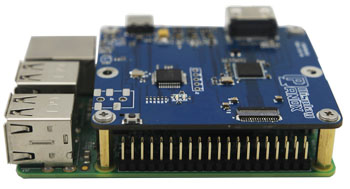
High luminance performance depends on more than the panel. Many projects need a matching touch panel, cover glass, connector, driver board, controller board, FPC design or optical stack. Panox Display supports LCD, OLED, AMOLED, Micro OLED, round display, flexible display, industrial LCD and controller board solutions, making it easier to match brightness requirements with real product integration.
This support is valuable for customers developing outdoor devices, vehicle displays, industrial equipment, AR/FPV systems, smart home controls, wearable products, handheld terminals and public machines. The display selection can be reviewed together with interface type, size, active area, touch structure, brightness target, thermal design and final application environment.
A high brightness panel is the starting point. A reliable high luminance display solution comes from matching the panel with the full system.
Conclusion
High luminance matters because display products are rarely used in perfect lighting. Real screens face daylight, reflections, optical loss, temperature changes, touch panels, cover glass and user movement. A high brightness display gives the product more visibility margin in those conditions.
For LCD panels, high luminance supports stable readability in industrial, vehicle and public equipment. For OLED and AMOLED panels, it helps compact and premium interfaces remain vivid across more environments. For Micro OLED panels, it provides the brightness headroom needed for AR, FPV and near-eye optical systems.
The best result comes from treating luminance as part of the whole display system. Panel brightness, reflection control, power consumption, heat dissipation, lifetime, UI design and optical integration should be reviewed together. When these factors are balanced well, a high luminance display panel can make the final product clearer, more reliable and easier to use.
Learn more: High Brightness Display: What It Means and How to Choose the Right High Luminance Panel
FAQ
Why is high luminance important in display panels?
High luminance helps a display remain readable under strong ambient light, reflection or optical loss. It improves visibility in outdoor equipment, vehicle displays, industrial HMIs, wearable devices and AR/FPV systems.
Is high luminance the same as sunlight readable?
High luminance is a major requirement for sunlight readability, but sunlight readability also depends on reflection control, cover glass, optical bonding, anti-glare treatment, contrast, viewing angle and UI design.
How many nits are needed for a high brightness display?
The requirement depends on the application. Semi-outdoor products may use 700–1000 cd/m². Outdoor-facing or sunlight-readable equipment often benefits from 1000 cd/m² or higher. Near-eye displays may require high source luminance because the optical system reduces brightness before the image reaches the eye.
Does higher brightness increase power consumption?
Usually yes. Higher brightness often requires more backlight power in LCDs or higher emission output in OLEDs. This can increase heat and reduce battery life, so brightness control and thermal design are important.
Is OLED suitable for high luminance applications?
OLED and AMOLED can be suitable for high luminance applications, especially wearables, round displays, compact interfaces and Micro OLED near-eye systems. The design should consider lifetime, temperature, static UI content and brightness control.
Why do AR and FPV displays need high luminance?
AR and FPV displays often pass through lenses, prisms or other optical components. These components reduce light transmission. High luminance at the panel source helps the final image remain visible and clear to the user.