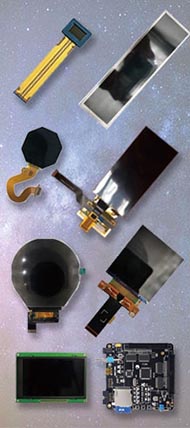




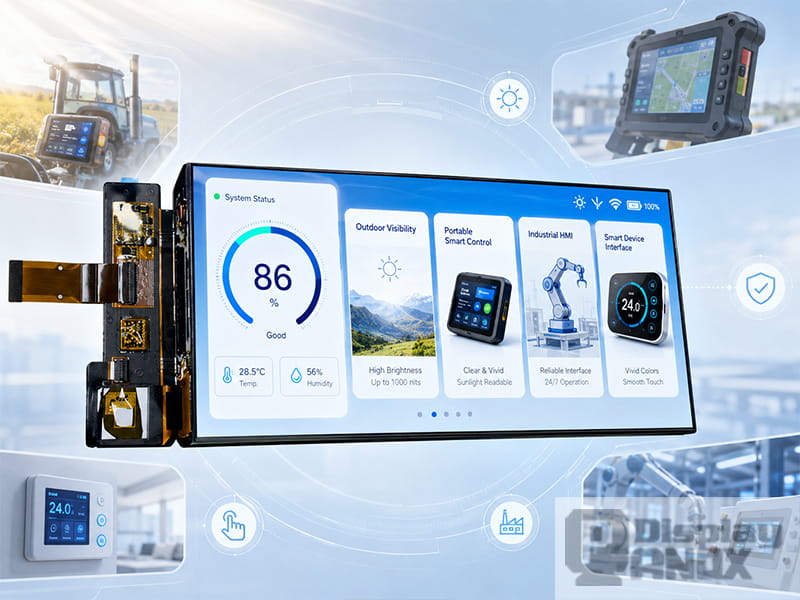
7 inch AMOLED OLED 1920X1080 Mipi
High brightness display panels are used wherever an ordinary screen may become too dim, reflective or difficult to read. In many products, the display is no longer placed in a controlled indoor environment. It may be used under sunlight, inside a vehicle cabin, behind a thick cover lens, inside an optical engine, or in a compact wearable device that needs to remain visible at a glance.
This is why high luminance has become an important specification across LCD, OLED, AMOLED and Micro OLED products. A high brightness display helps information stay readable when ambient light is strong, when the screen is viewed from different angles, or when the image must pass through lenses and optical components before reaching the eye.
The following application guide explains where high luminance display panels are commonly used, what each application requires, and how different Panox Display product categories can support real product development.
1. Outdoor and Semi-Outdoor Equipment
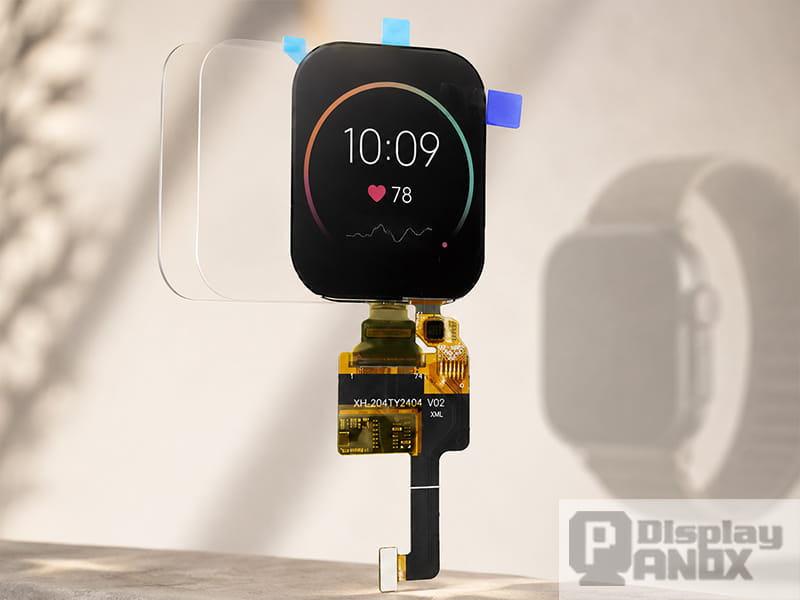
2.04 inch AM-OLED Full Color On-cell PCAP Touch
Outdoor equipment is one of the most direct applications for high brightness displays. In these products, the screen may face daylight, reflected sky light, window glare or occasional direct sunlight. A normal indoor display can look acceptable during lab testing, then become weak once installed in the field.
Typical outdoor and semi-outdoor devices include access control terminals, EV charging interfaces, handheld measuring instruments, outdoor control boxes, ticketing machines, agricultural equipment, field service devices and public information terminals.
For these products, high luminance helps the display maintain visible text, icons and status information. A screen used outdoors does not always need to show rich video content. It often needs to show simple but important information: instructions, warnings, menu options, payment status, operating values or system alarms. If the display is too dim, the user has to move closer, shade the screen or guess what is being shown.
A high brightness TFT-LCD is often a practical choice for outdoor-facing equipment because LCD backlight brightness can be increased and controlled according to the environment. For projects that require touch operation, cover glass, optical bonding and anti-glare or anti-reflective treatment should be considered together with the panel brightness. A bright panel alone may still look washed out if the front surface reflects too much light.
In this application, the best display selection should balance luminance, surface reflection, operating temperature, power consumption and the mechanical structure of the enclosure.
2. Industrial HMI and Control Panels
Industrial HMI screens are used in factories, machines, test equipment, automation systems and commercial control devices. These displays are usually expected to work for long hours and show stable information clearly. The design priority is not decorative image quality. The priority is reliable readability.
In an industrial environment, the screen may be exposed to strong overhead lighting, sunlight from windows, dust, vibration, gloves, protective cover glass or wide temperature changes. Operators may read the screen quickly while standing, moving or working at an angle. High luminance helps the interface remain visible under these practical conditions.
For industrial HMI products, a high brightness LCD with mature interface support is often preferred. Panox Display’s 4.3 inch 800×480 TFT-LCD display with MIPI interface and 700 nits luminance is an example of a compact high brightness LCD option for embedded equipment and control systems. It combines a small display size, capacitive touch structure and a brightness level suitable for many bright indoor or semi-outdoor environments.
Larger industrial equipment may require a bigger LCD, such as a 6.5 inch industrial LCD with 800 nits brightness and LVDS interface. This type of display can be used in commercial equipment, machine dashboards, vehicle-related systems and control devices that need stable visibility rather than a purely consumer-style screen.
For industrial applications, it is important to check more than brightness. Engineers should also review interface type, connector direction, backlight lifetime, wide temperature support, touch integration and controller board compatibility. A display that is bright enough but difficult to drive can slow down the development process.
3. Vehicle and Transportation Displays
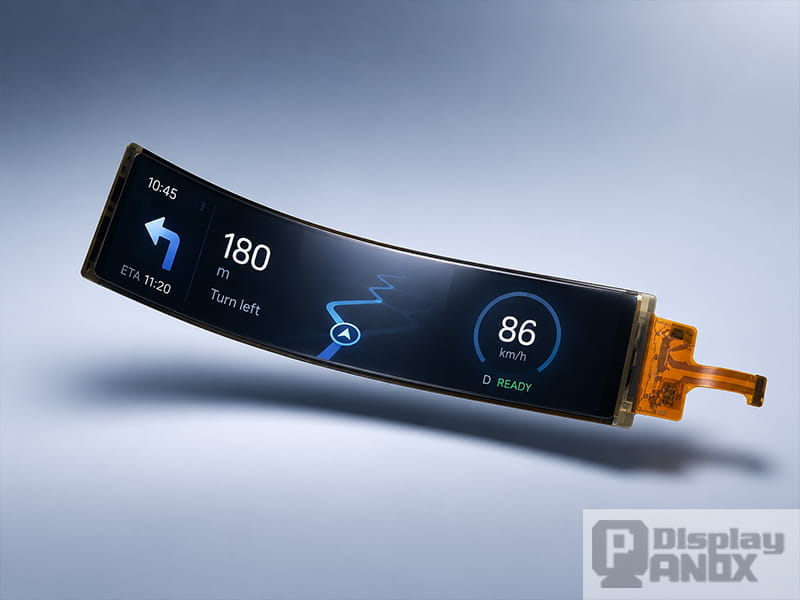
6.52 inch Flexible OLED 2520x840 Touch Panel
Vehicle displays face difficult lighting conditions. The same screen may be used in morning sunlight, cloudy weather, tunnels, night driving and high dashboard temperatures. Public transportation displays also need to remain visible for passengers viewing from different distances and angles.
High brightness display panels are used in vehicle dashboards, center consoles, camera monitoring systems, navigation displays, public transport information screens, aviation panels, marine equipment and commercial vehicle control interfaces.
For vehicle-related products, high luminance improves visibility during daylight and helps important information remain recognizable. The display may show navigation data, camera feeds, speed information, warning icons, climate controls or passenger information. These elements must be readable without forcing the user to stare for too long.
A high brightness LCD is often used in this field because it can provide stable full-screen brightness and mature integration options. Depending on the design, the panel may require wide operating temperature, strong backlight performance, anti-glare cover glass, optical bonding and a reliable driving board.
A display for vehicle use should also support night readability. A screen that is strong in daylight may feel too bright in a dark cabin. Therefore, brightness adjustment, dimming range and day/night UI modes should be included in the product design.
4. Smart Home Controls and Embedded Interfaces
Smart home products often use compact displays in wall panels, appliance controls, thermostats, security systems, lighting controls and room management devices. These displays are usually viewed in changing indoor lighting: daylight through windows, ceiling lights, dim evening rooms or direct reflections from glossy surfaces.
A high luminance display helps smart home interfaces remain clear and premium-looking. Users may only glance at the screen for a second, so temperature, lighting status, security state and system icons must be easy to recognize.
A square LCD can be a good format for smart home controls because it provides a balanced layout for modular UI cards. Panox Display’s 4.0 inch square LCD display with 480×480 resolution can support smart home dashboards, compact control screens and square-format embedded interfaces. A square display allows designers to arrange controls symmetrically, which works well for panels that show multiple functions at the same time.
For smart home use, brightness should be combined with UI hierarchy. Large numbers, simple icons, strong contrast and enough spacing make the screen easier to read. A high luminance panel gives the interface more visibility margin, while thoughtful design makes that brightness useful.
5. Wearable Devices and Round Control Screens
Wearable displays and round control screens have limited screen space. They need to show time, notifications, sensor data, icons, rings, status marks and quick controls in a compact area. High luminance is important because these devices are often used in daily life, including outdoor walking, sports, commuting and bright indoor spaces.
AMOLED and OLED displays are widely used in wearable products because they can provide vivid color, deep blacks, fast response and thin mechanical structure. A high luminance AMOLED screen can make small UI elements easier to read outdoors and make the device feel more premium.
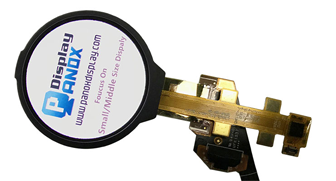
Panox Display’s 1.39 inch round OLED display with 454×454 resolution and 800 nits brightness is suitable for smartwatch-style interfaces, compact round controls and small instrument displays. Round AMOLED panels can also be used in smart home controllers, steering wheel displays, meters and specialty devices where a circular UI creates a more distinctive product identity.
For wearable products, high brightness should be managed carefully. Always-on display modes, static icons, battery life and OLED aging behavior all need attention. A good wearable display strategy usually includes automatic brightness adjustment, dark UI themes, screen timeout and careful use of bright static elements.
6. AR Glasses, FPV Viewers and Near-Eye Optical Systems
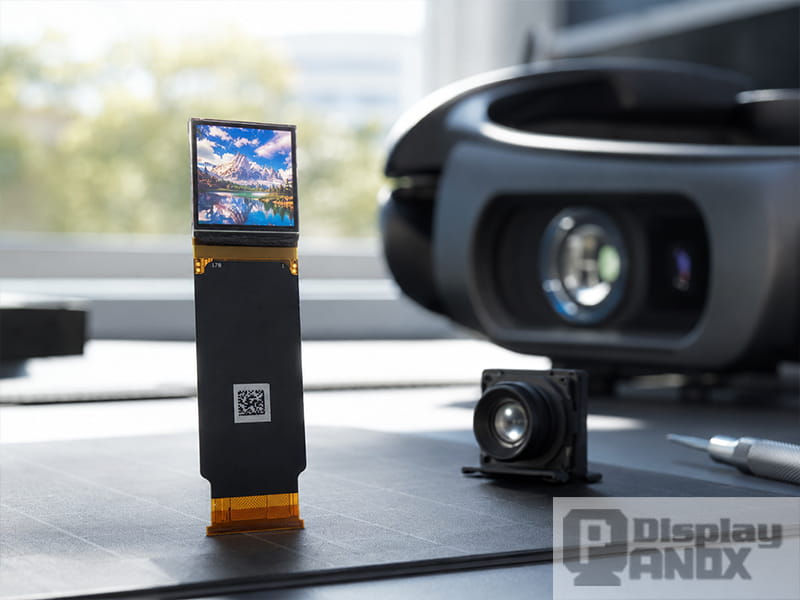
1.03 inch Micro OLED Display 2K for AR/FPV
Micro OLED displays are widely used in near-eye systems because they can provide very high pixel density in a very small active area. These panels are used in AR glasses, FPV viewers, electronic viewfinders, thermal imaging devices, medical optical instruments and compact optical modules.
High luminance is especially important in these applications because the user does not simply look at the bare display. The image passes through lenses, prisms, magnifiers, waveguides or combiners before reaching the eye. Each optical component can reduce light transmission. If the original display is not bright enough, the final image may look dim or weak.
For AR products, the challenge becomes even harder because digital content may be viewed against the real world. When the surrounding scene is bright, the display image needs enough luminance to remain visible through the optical system. For FPV and EVF products, brightness helps camera previews, flight data, targeting marks and menu overlays remain clear.
Panox Display’s 0.49 inch Micro OLED display with 1920×1080 resolution and MIPI interface can be used in compact optical systems requiring high pixel density and small size. The 1.03 inch Micro OLED display with 2560×2560 resolution is suitable for AR/FPV applications that need a larger high-resolution image source.
For Micro OLED selection, luminance should be evaluated with resolution, PPI, refresh rate, interface, active area, power consumption and the optical path. A panel that looks bright on a test board may look different after lenses and waveguides are added. Real optical testing is necessary for AR and FPV projects.
7. Handheld Devices and Portable Instruments
Handheld devices are often used in unpredictable lighting. A portable medical device, industrial inspection tool, field tester, barcode scanner, handheld controller or outdoor measuring instrument may be used indoors, in a vehicle, near a window or directly outside.
High brightness improves the usability of portable screens because the user may not be able to control the environment. In field work, a dim display can slow down operation. A high luminance panel helps data, menus, graphs and warning messages remain readable.
For handheld products, display size and power consumption matter. A larger high brightness screen may improve readability but increase power demand. A smaller screen may save space but require stronger UI contrast and better brightness. The best choice depends on viewing distance, battery size, enclosure design and the type of information shown.
LCD, AMOLED and OLED panels can all be used in handheld devices. LCD may be selected for stable brightness and mature cost structure. AMOLED may be selected for thinner structure, richer color and premium visual quality. The final choice should match the product’s usage time, interface style and environmental requirements.
8. Flexible OLED and Curved Display Products
Flexible OLED panels open design possibilities that rigid screens cannot support. They can be used in curved devices, wraparound interfaces, concept electronics, wearable surfaces, portable products and specialty display designs.
In flexible OLED applications, high luminance matters because the display may be viewed from changing angles or integrated into a non-flat product shape. Curved surfaces can catch ambient light differently from flat screens. A brighter panel helps the image remain visible across the curved viewing area.
Panox Display’s 6.52 inch flexible OLED touch panel supports 2520×840 resolution, a 3:1 aspect ratio and MIPI interface. This type of long flexible display can be useful for curved interface concepts, slim smart devices, wraparound visual panels and experimental product designs where the display shape is part of the product experience.
Flexible OLED integration requires careful mechanical planning. The screen should be treated as a thin sheet, not as a thick rigid module. Bending radius, FPC direction, touch performance, lamination and cover material all affect the final product. High luminance adds value only when the flexible structure is designed correctly.
9. Public Terminals, Kiosks and Commercial Equipment
Public terminals and commercial equipment need displays that are readable by many users under different lighting conditions. These products include kiosks, vending machines, payment terminals, ticket machines, queue systems, self-service devices, information panels and commercial control screens.
High brightness helps the display remain visible in shopping malls, stations, outdoor service areas, hospitals, airports and other busy spaces. These environments often have strong lighting, reflective floors, glass walls or mixed indoor and outdoor light.
For public terminals, the display should support clear instructions and quick interaction. Users may not be familiar with the device, so the interface must be easy to understand. Brightness, contrast, touch reliability and viewing angle all affect the user experience.
LCD panels are commonly used in these products because they offer stable performance, multiple sizes and practical controller board options. Depending on the application, designers may also choose AMOLED or OLED panels when visual quality, thin structure or premium appearance is more important.
10. Medical and Optical Instruments
High luminance display panels can also support medical and optical devices, especially when images or status information must be read accurately. Portable medical tools, inspection devices, viewfinders, imaging systems and optical instruments may need compact displays with strong clarity.
In optical instruments, Micro OLED panels are often used because they can deliver high resolution in a tiny active area. High luminance helps the displayed image remain visible through optical paths. In portable medical or diagnostic devices, a brighter screen can improve readability under clinical lighting or field conditions.
For these applications, display quality should be reviewed carefully. Brightness, contrast, color behavior, viewing angle, interface stability and reliability all matter. Some medical products may also require specific certifications or validation beyond the display panel itself.
Panox Display can support early-stage display selection by matching size, resolution, interface and optical requirements before the project moves into deeper hardware development.
11. Development Boards, Test Kits and Engineering Prototypes
Many high brightness display projects begin with evaluation boards and prototypes. Engineers may need to test image quality, interface compatibility, controller board behavior, brightness, temperature and touch performance before committing to a final design.
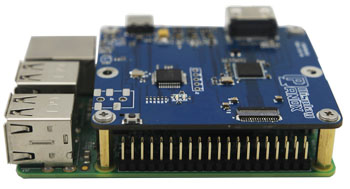
This is why controller board support can be important. A panel with a suitable HDMI, Type-C, MIPI or custom driver solution can reduce the time needed for testing. For embedded systems, developers may also need connectors, adapter boards, initial code or guidance on driving the display.
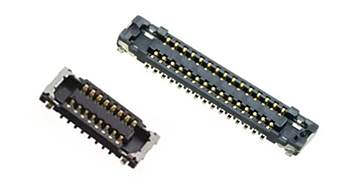
Panox Display supports development and batch projects with display panels, connectors, adapter boards, customized cover glass, touch panels and controller board solutions. This is useful for customers who need to test a high luminance panel before building a complete product.
For prototype work, the most useful test is not simply turning on the display. The display should be tested under the expected ambient light, behind the planned cover glass and with the intended UI style. A real test setup often reveals whether the brightness target is enough.
12. How to Match Applications with Display Technology
Different applications require different display technologies. High luminance can be achieved by LCD backlight design, OLED emission performance, AMOLED structure, Micro OLED optical density or a complete module solution.
| Application | Recommended Display Direction | Key Selection Factors |
|---|---|---|
| Outdoor control terminals | High brightness TFT-LCD | 700–1000+ nits, optical bonding, touch panel, wide temperature |
| Industrial HMI | Industrial LCD | Stable backlight, LVDS/RGB/MIPI interface, long-term availability |
| Vehicle displays | Automotive or industrial LCD | Daylight readability, dimming, temperature range, vibration and cover glass |
| Smart home controls | Square LCD or compact AMOLED | Clean UI, touch support, indoor brightness, balanced layout |
| Wearables | Round OLED or AMOLED | Compact size, high contrast, brightness control, power strategy |
| AR and FPV | Micro OLED | High PPI, high luminance, MIPI interface, optical compatibility |
| Flexible products | Flexible OLED | Bending form, touch structure, FPC direction, thin integration |
| Public terminals | High brightness LCD or AMOLED | Readability, touch reliability, enclosure design, glare control |
| Handheld devices | TFT-LCD, OLED or AMOLED | Battery life, outdoor visibility, compact size, interface support |
| Optical instruments | Micro OLED | Resolution, active area, luminance, optical path efficiency |
This table should be treated as a starting point. The final decision depends on product structure, budget, supply requirements and real-world testing.
13. Product Selection Examples from Panox Display
Panox Display’s High Luminance category includes multiple display types for different application needs.
For embedded equipment and compact control panels, the 4.3 inch 800×480 TFT-LCD display with MIPI interface and 700 nits luminance can be used where a small high brightness LCD is needed.
For smart home controls and square UI products, the 4.0 inch 480×480 square LCD display offers a balanced format for modular dashboards, appliance controls and embedded touch interfaces.
For industrial or commercial equipment, a 6.5 inch industrial LCD with 800 nits brightness can support machine interfaces, vehicle-related devices and control systems that require stronger visibility.
For wearable and round interface products, the 1.39 inch round OLED display with 454×454 resolution and 800 nits brightness can support compact circular UI applications.
For flexible product concepts, the 6.52 inch flexible OLED touch panel with 2520×840 resolution can support curved or long-format display integration.
For AR, FPV and optical systems, the 0.49 inch Micro OLED display with 1920×1080 resolution and MIPI interface and the 1.03 inch Micro OLED display with 2560×2560 resolution can serve as compact high-density image sources.
For larger embedded visual interfaces, the 7 inch AMOLED OLED 1920×1080 MIPI display can be used in products that need a larger active area with vivid color and strong visual presentation.
These examples show how one keyword, high brightness display, can apply to very different product categories. The right display depends on how the user sees it, where the product is used and what the screen must show.
14. Design Tips for High Brightness Display Applications
A high luminance panel performs best when the rest of the design supports visibility. Product teams should consider the following points during development.
First, match brightness to the environment. A screen used indoors does not need the same brightness as a screen facing daylight. A screen behind optics needs different luminance margin from a direct-view screen.
Second, reduce reflection where possible. Cover glass, touch layers and air gaps can lower real-world readability. Optical bonding and surface treatment can improve the final result.
Third, design the UI for quick reading. High brightness helps, but poor UI design can waste it. Use clear hierarchy, readable fonts, strong contrast, simple icons and enough spacing.
Fourth, manage power and heat. Higher brightness can increase energy use and thermal load. The product should include brightness control, dimming modes and thermal planning.
Fifth, test in the real environment. A display that looks strong in an office may behave differently outdoors, inside a vehicle, behind glass or through an optical module.
Conclusion
High brightness displays are used wherever visibility cannot be left to chance. Outdoor devices need screens that resist washout. Industrial HMIs need readable information under strong lighting. Vehicle displays need to work through changing daylight. Smart home panels need clear interfaces in bright rooms. Wearables need compact screens that remain readable outdoors. AR and FPV systems need Micro OLED panels with enough luminance to survive optical loss.
The application determines the right display technology. TFT-LCD panels are practical for stable high brightness and industrial integration. OLED and AMOLED panels are valuable for compact, vivid and premium interfaces. Flexible OLED panels support curved product concepts. Micro OLED panels provide high pixel density and luminance for near-eye optical systems.
For product teams, the best result comes from selecting the display around the real use environment. Brightness, reflection control, interface, power, heat, lifetime, touch integration and mechanical design should be reviewed together. When these factors are balanced well, a high luminance display panel can make the final product clearer, more useful and easier to trust.
Learn more: Why High Luminance Matters in Display Panels
FAQ
What are the main applications of high brightness displays?
High brightness displays are used in outdoor equipment, industrial HMI, vehicle displays, public terminals, smart home controls, wearables, handheld instruments, AR/FPV systems, optical instruments and flexible display products.
Are high brightness LCDs suitable for outdoor use?
Yes, high brightness LCDs are commonly used for outdoor and semi-outdoor equipment. For the best result, the LCD should be combined with good reflection control, suitable cover glass, optical bonding and an enclosure design that manages heat.
Why do AR and FPV products need high luminance Micro OLED panels?
AR and FPV products use lenses or optical systems that reduce light transmission. A high luminance Micro OLED gives the optical design more brightness margin, helping the final image remain visible and clear to the user.
Can OLED displays be used in high brightness applications?
OLED and AMOLED displays can be used in many high brightness applications, especially wearables, round controls, handheld products, flexible displays and Micro OLED near-eye systems. The design should consider brightness control, power consumption, heat and lifetime behavior.
Is 1000 nits always required?
No. Some indoor and semi-outdoor products can work well below 1000 nits. Outdoor-facing equipment, bright vehicle environments and sunlight-readable systems often need higher brightness. The required value depends on ambient light, reflection, viewing distance, UI design and product structure.
What should be tested before choosing a high luminance display?
The display should be tested for brightness, readability, reflection, viewing angle, temperature behavior, power consumption, interface compatibility and performance behind the planned cover glass or optical system.