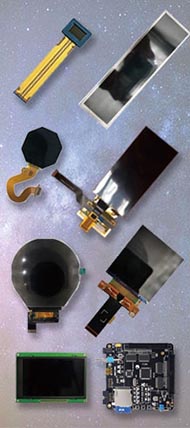







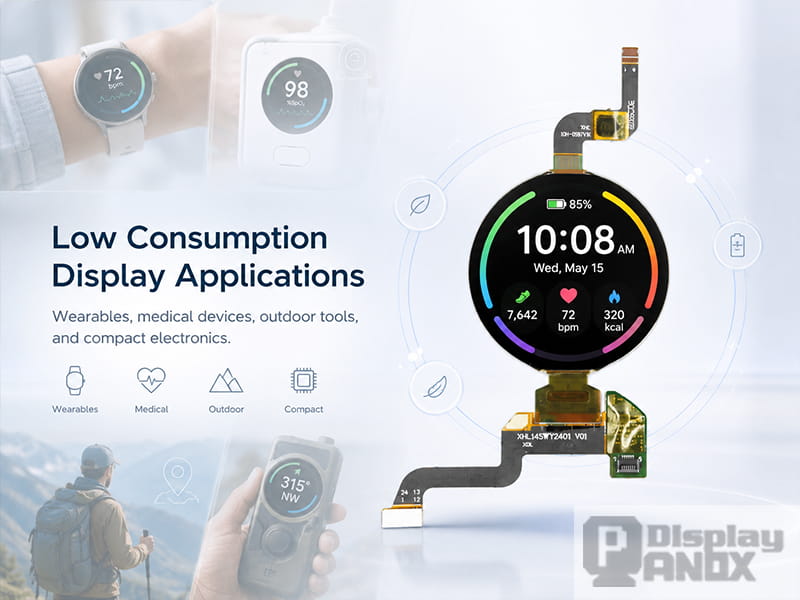
Low consumption display design is not limited to one display technology. In real products, power efficiency depends on the application, the user interface, the working environment, and how often the screen needs to update.
A smartwatch, an AR viewer, a handheld meter, an e-cigarette display, a diving computer, and a portable inspection device may all need low power consumption, but they do not need the same type of screen. Some products need vivid color and touch interaction. Some need a simple status display that stays visible all day. Some need high pixel density for near-eye optics. Others need sunlight readability in outdoor environments.
This is why low consumption display selection should start with the application, not only with the display category. The best display is the one that fits the product’s real working pattern.
1. Why Low Consumption Display Applications Are Different
A low consumption display is not simply the display with the lowest number on a datasheet. A small monochrome screen may be extremely efficient, but it cannot replace a full-color wearable interface. A vivid OLED panel can support a premium user experience, but its power behavior depends on brightness, UI color, and screen content. A transflective LCD may be valuable outdoors because it can use ambient light, while a Micro OLED may be the better fit for compact AR optics.
In product development, the more useful question is: what does the screen need to do most of the time?
If the product mainly shows icons, numbers, or simple status information, a PMOLED or Memory LCD may be enough. If it needs a premium full-color interface, an AMOLED or flexible OLED panel may be more suitable. If it is used in near-eye optical systems, Micro OLED becomes more relevant. If it must remain readable outdoors with limited battery capacity, transflective or reflective display options deserve attention.
For engineers and product designers, this application-first thinking prevents over-specification. A low-power display strategy should reduce unnecessary energy use without weakening the product experience.
2. Wearable Devices: Small Screens, Long Runtime, and Better Daily Use
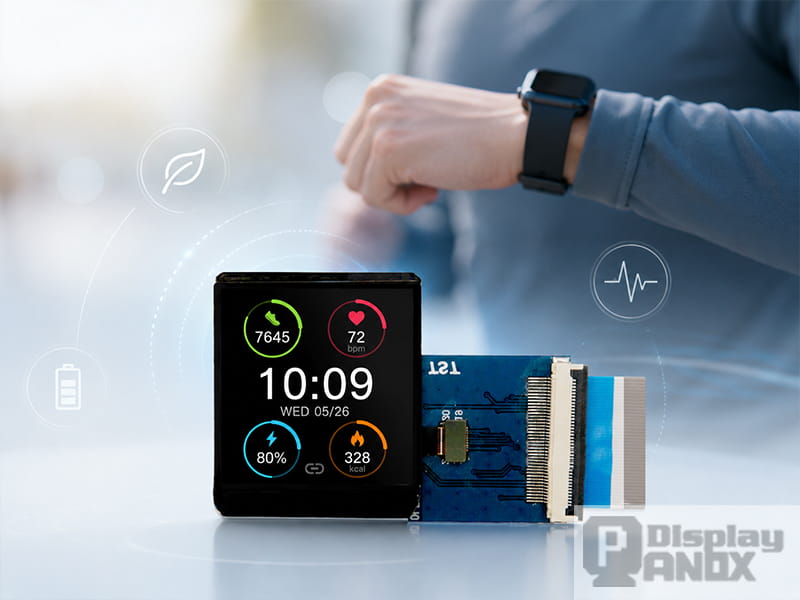
Wearables are one of the strongest application areas for low consumption displays. Smartwatches, fitness bands, medical bracelets, and compact wearable terminals all need a screen that is light, readable, and efficient enough for daily use.
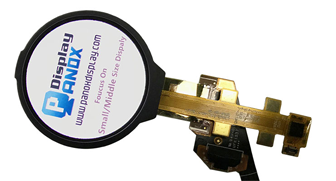
For premium smartwatches and fitness devices, full-color OLED displays are often used because they can show vivid UI elements, deep black backgrounds, and smooth visual feedback. A round or square OLED module can support activity rings, heart-rate pages, notification screens, and modern watch faces. In this type of product, the display is not only a functional part. It shapes the whole feeling of the device.
Panox Display’s low consumption selection includes compact wearable display options such as round OLED modules, square OLED panels, and on-cell touch AMOLED displays. Products like the 1.43 inch AM-OLED Full Color On-cell PCAP Touch or the 1.63 inch OLED For Wearable Smartwatch fit this kind of application when the project needs a small full-color display with a premium UI direction.
For a lower-refresh or always-visible wearable interface, Memory LCD can also be useful, especially when the screen mostly shows time, steps, battery level, or outdoor data. The point is not to force one technology into every wearable product. A fashion smartwatch, an outdoor watch, and a medical wrist device can all need different display behavior.
3. Medical and Health Devices: Reliable Information with Fewer Charging Interruptions
In medical and health-related products, display power matters because the device may need to work continuously. A Holter monitor, portable recorder, health tracker, or wearable medical terminal often shows simple information such as recording status, battery level, time, alerts, heart rate, or measurement results.
For these products, the screen does not always need complex animation. Stability, clarity, and runtime are usually more important. PMOLED can be a practical option for compact medical status displays because it can show simple graphics, white-on-black information, and clear icons in a small module. Memory LCD can also work well when the product needs static information to remain visible with very low update demand.
When color alerts, touch interaction, or a more modern menu interface are required, compact OLED panels become more attractive. A small full-color OLED display can show warning colors, trend icons, and device states more clearly than a simple monochrome interface.
A good medical display choice should match the workflow. If users only need to check basic status, a simple low-power display can reduce complexity. If the product needs guided interaction or multi-screen menus, a richer display interface may be worth the additional power budget.
4. Outdoor Instruments: Readability Matters as Much as Power
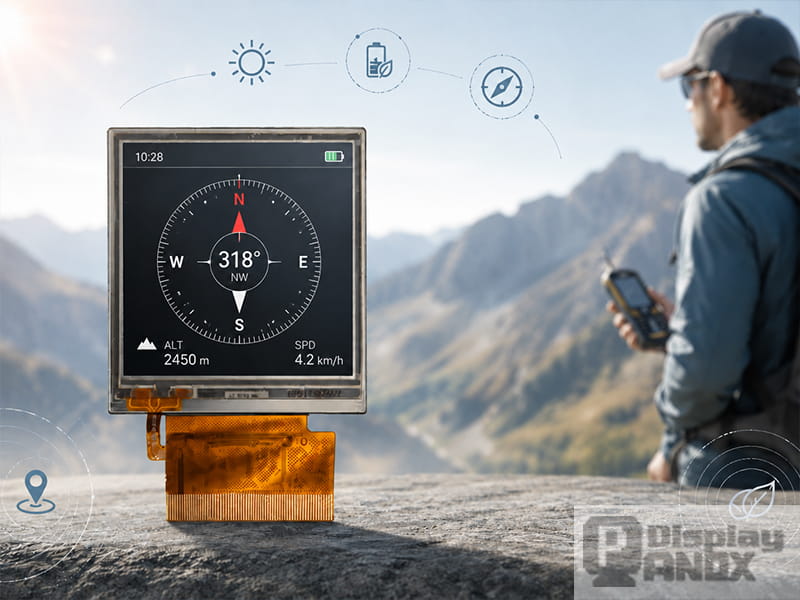
Outdoor electronics create a different challenge. The screen must remain readable in sunlight, but the product may still rely on a small battery. Hiking devices, diving computers, field meters, handheld GPS tools, inspection devices, and outdoor watches all need a practical balance between visibility and power consumption.
Transflective TFT-LCD and Memory LCD are especially relevant here because they can use ambient light more effectively than a purely transmissive display. This helps reduce dependence on backlight brightness in strong outdoor conditions. For field devices, that can be a real advantage.
Panox Display’s low consumption product range includes options such as a 2.2 inch LCD Transflective For Handheld and a 3.2 inch Memory LCD Colorful/Chromatic For Handheld. These products are more connected to outdoor meters and portable terminals than to fashion-focused wearables.
For outdoor products, the screen should not be selected only by brightness. The designer should also consider ambient-light readability, backlight strategy, UI contrast, operating temperature, and update frequency. A display that looks impressive indoors may not be the best choice for a device used under bright sun.
5. Handheld Terminals and Inspection Equipment: The Display Must Support the Workflow
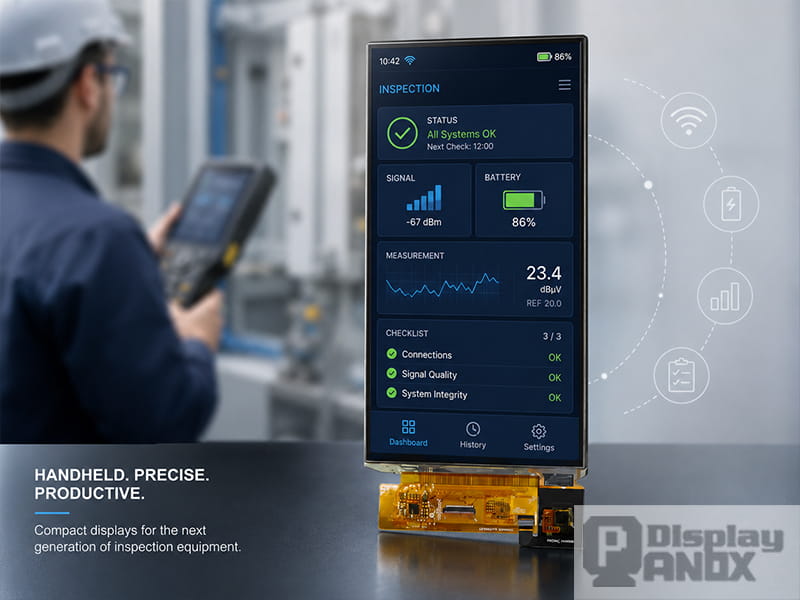
Handheld terminals and inspection equipment often need more screen area than a smartwatch, but they still need to manage power carefully. These products may be used in warehouses, maintenance work, industrial inspection, field testing, or portable control systems.
Some handheld devices only show menus and numeric data. Others need images, waveforms, status dashboards, or camera-related inspection content. This is where display selection becomes more nuanced.
A PMOLED can work for simple instrument panels. A transflective TFT-LCD can be suitable when outdoor readability is more important than rich visual effects. A compact full-color OLED panel can support a more modern UI for portable equipment. For higher-resolution image display or more advanced product interfaces, a larger OLED panel such as a 7 inch AMOLED OLED 1920X1080 MIPI may be useful in handheld inspection or embedded visualization projects.
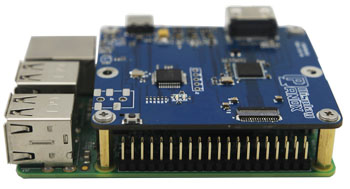
Low consumption in this category depends on the whole system. The screen size, refresh rate, brightness, touch panel, driver board, and sleep strategy all matter. A well-planned product may use a rich interface during active operation and then switch to a simplified low-power screen when idle.
6. E-Cigarettes, Instruments, and Simple Status Displays: PMOLED Still Has a Clear Role
Not every low-power product needs a full-color touch display. For compact electronics that show short text, icons, battery level, temperature, mode, voltage, or simple graphics, PMOLED remains a very practical option.
PMOLED modules are commonly used in small devices because they can provide clear contrast in a compact form. They are useful for e-cigarettes, small instruments, control panels, miniature indicators, and embedded modules where the display area is limited and the UI is simple.
Panox Display’s Low consumption tag includes small PMOLED products such as 0.66 inch, 0.69 inch, 0.96 inch, 1.3 inch, 1.54 inch, 2.23 inch, 2.4 inch, and 2.7 inch OLED display options. These are not the same kind of product as smartwatch AMOLED panels. They serve a different role: simple, compact, readable information display.
This is exactly why a low consumption application article should not only talk about AMOLED. In many embedded products, a small PMOLED can be more appropriate than a larger, more complex display.
7. AR, FPV, and Near-Eye Systems: Micro OLED Is About Compact Imaging Efficiency
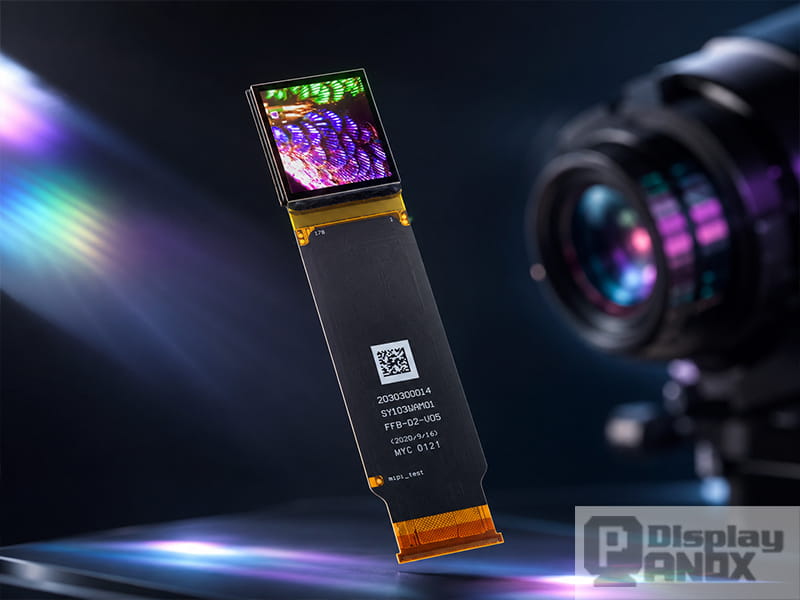
For AR glasses, FPV viewers, compact optical engines, and near-eye display systems, low consumption is connected to size, heat, and optical efficiency. The display needs to be small enough for the optical path, sharp enough for close viewing, and efficient enough for a wearable or portable device.
Micro OLED is important in this area because it can offer high pixel density and strong image quality in a very small panel. Panox Display’s low consumption product range includes Micro OLED options such as 0.39 inch, 0.49 inch, 0.5 inch, 0.71 inch, and 1.03 inch Micro OLED displays for AR, FPV, and compact imaging applications.
In these products, the display is often only one part of the full optical engine. The real power and thermal performance also depend on the optics, driver circuit, brightness requirement, and image content. Still, choosing an efficient microdisplay is a key step because heat and battery limitations are much more sensitive in wearable near-eye devices than in larger products.
8. Flexible OLED and Large OLED: Low Consumption Can Also Support New Form Factors
.jpg)
Low consumption is not only a smartwatch topic. Flexible OLED and larger OLED panels can also be relevant when the product needs thin structure, vivid image quality, and reduced display power compared with traditional display approaches in certain UI conditions.
Flexible OLED panels can support curved, wearable, foldable, or design-led product forms. For some applications, a flexible display is not chosen only because it looks futuristic. It can help reduce mechanical thickness, support lightweight industrial design, and create screen shapes that are difficult for rigid displays.
Larger OLED panels, including 7 inch, 7.8 inch, 10.5 inch, 13.3 inch, and 15.6 inch options, are more relevant to portable monitors, embedded visualization, professional devices, laptop-related applications, and compact display systems where image quality and thin structure matter. In these cases, low consumption should be evaluated together with brightness, interface, content type, and working mode.
For example, a portable device with a dark UI and controlled brightness may benefit from OLED’s self-emissive behavior, while a full-white high-brightness interface will need a different power strategy. The application decides whether OLED’s strengths can be used efficiently.
9. How to Match Display Type to Application
For a practical low consumption display project, the application should guide the display choice. A small product with static data may not need a high-resolution full-color panel. A premium wearable may need color and touch more than extreme static-image efficiency. An AR viewer needs compact high-density imaging. A field instrument needs sunlight readability and long battery life.
| Application | Suitable Display Direction | Main Reason |
|---|---|---|
| E-cigarette, mini indicator, simple instrument | PMOLED | Compact size, clear contrast, simple UI |
| Fitness band or premium smartwatch | OLED / AMOLED | Full-color UI, deep black, modern wearable interface |
| Outdoor watch or diving computer | Memory LCD / transflective display | Always-visible data and sunlight readability |
| Handheld meter or PDA | Transflective TFT-LCD, Memory LCD, or OLED | Depends on outdoor use, UI richness, and update behavior |
| Medical wearable or portable recorder | PMOLED, Memory LCD, or compact OLED | Stable status display with controlled power use |
| AR, FPV, compact optical engine | Micro OLED | High pixel density and compact near-eye imaging |
| Portable inspection device | OLED or TFT-LCD | Larger information area and richer visualization |
| Flexible or design-led wearable product | Flexible OLED | Thin form factor and new mechanical design possibilities |
This table is not a fixed rule. It is a starting point. The final choice should be based on brightness, interface, operating temperature, expected battery life, refresh behavior, touch requirements, and mechanical design.
10. Practical Design Tips for Low Consumption Display Applications
The display panel is only part of the answer. A product can use a low-power display and still waste energy if the UI, firmware, and driving method are poorly designed.
For wearable and handheld products, a dark UI can reduce unnecessary light output on OLED screens. For simple status products, partial updates and low refresh behavior can reduce system activity. For outdoor equipment, reflective or transflective display structures can help reduce backlight demand. For AR and FPV products, brightness and thermal control should be considered early because the display sits close to optics and the user’s face.
The best results usually come from designing the screen, driver board, touch panel, firmware, and user interface together. Low consumption is not one isolated feature. It is a full product strategy.
11. Panox Display Low Consumption Display Solutions
Panox Display supplies Low consumption display products across multiple categories, including PMOLED, AMOLED, Micro OLED, Memory LCD, transflective TFT-LCD, flexible OLED, and larger OLED panels. This makes the Low consumption tag useful for customers who are not sure which technology fits their product.
For a compact indicator or instrument, PMOLED may be enough. For a smartwatch or fitness wearable, a small full-color OLED or touch AMOLED panel may be more suitable. For outdoor and always-visible applications, Memory LCD or transflective LCD can be considered. For AR, FPV, and near-eye optical systems, Micro OLED is often the more relevant direction. For portable visualization or design-led electronics, larger OLED and flexible OLED options can also be evaluated.
If the application is still uncertain, the best starting point is to define the real screen behavior: how often the image changes, how bright the environment is, whether the user needs touch, how long the device must run, and what information must remain visible. Once those answers are clear, display selection becomes much more practical.
Conclusion
Low consumption display applications are much broader than one display technology. Wearables, medical devices, outdoor instruments, handheld terminals, AR viewers, e-cigarettes, IoT products, and portable inspection systems all need power-efficient display solutions, but they do not all need the same panel.
A good low consumption display choice should match the product’s usage pattern. PMOLED works well for compact status interfaces. OLED and AMOLED support vivid wearable and portable UIs. Micro OLED serves near-eye imaging. Memory LCD and transflective TFT-LCD help with always-on and outdoor-readable products. Flexible OLED and larger OLED panels can support thin, modern product designs where visual quality and form factor matter.
For battery-powered electronics, the right display is not only about saving power. It helps the product feel more reliable, more comfortable, and more useful in real life.
FAQs
What are the main applications of low consumption displays?
Low consumption displays are used in smartwatches, fitness bands, medical monitors, e-cigarettes, handheld meters, diving computers, AR/FPV viewers, IoT devices, inspection equipment, and portable electronics.
Is OLED suitable for low consumption applications?
Yes, especially when the product uses dark UI design, controlled brightness, and compact screen content. OLED is useful when the product needs vivid color, deep black, and a modern interface.
When should PMOLED be used?
PMOLED is suitable for small products that show simple information such as icons, short text, status data, battery level, or mode indicators. It is common in compact instruments and e-cigarette displays.
Why use Micro OLED in AR or FPV applications?
Micro OLED is suitable for near-eye systems because it can provide high pixel density and strong image quality in a very small display size, which is important for compact optical engines.
When is transflective LCD useful?
Transflective LCD is useful when a device needs outdoor readability and lower backlight dependence. It can use ambient light in bright environments while still supporting backlight use in darker conditions.
How should I choose a low consumption display?
Start with the application. Consider what the screen shows, how often it updates, whether it needs touch, whether it is used outdoors, how long the battery must last, and whether the product needs color, animation, or only simple status information.