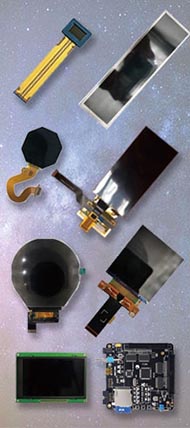







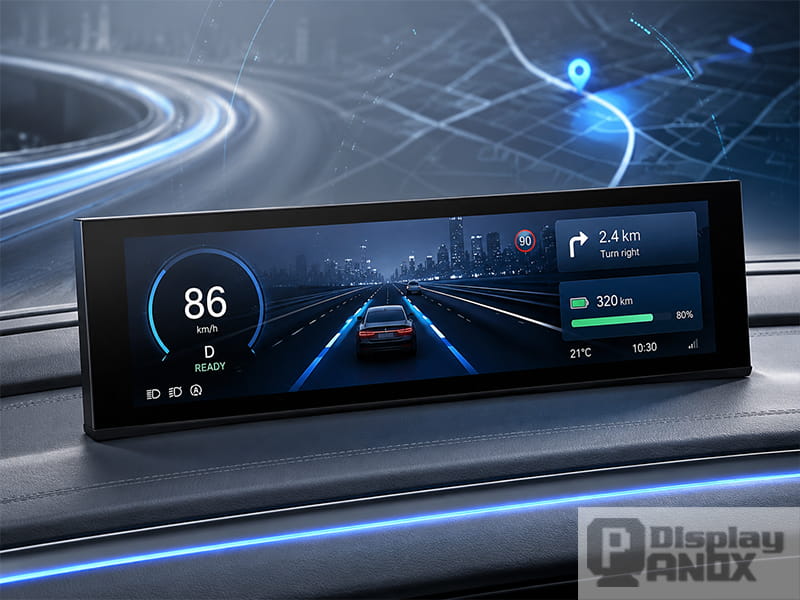
6.8 inch long strip LCD IPS TFT
The automotive display has become one of the most important visible parts of a modern vehicle interior. In the past, a car screen was usually a small information display for radio, air conditioning, or basic navigation. Today, it may serve as a digital instrument cluster, center information display, passenger screen, rearview mirror screen, side camera monitor, rear-seat entertainment display, or a narrow information bar integrated into the cockpit design.
This change is closely linked to the rise of connected, electric, and software-defined vehicles. As cockpit functions move from mechanical buttons to digital interfaces, the display panel becomes a key bridge between the vehicle system and the driver or passenger. Industry research also shows that demand for larger, brighter, curved, higher-resolution, and higher-contrast in-vehicle displays continues to grow, while TFT-LCD remains widely used and OLED is gaining attention in higher-end cockpit designs.
1. What Is an Automotive Display Panel?
An automotive display panel is a screen module designed for use inside or around a vehicle. It presents driving information, navigation, camera images, entertainment content, system status, climate controls, warning messages, and other HMI content.
A typical automotive display panel may include the LCD or OLED panel itself, backlight system, driver IC, FPC, touch panel, cover glass, optical bonding layer, controller board, and interface connection. The exact structure depends on the application. A digital instrument cluster needs stable readability and fast information recognition. A center console display needs touch interaction, high resolution, and a comfortable viewing angle. A rearview mirror screen or camera monitor display needs strong brightness, image clarity, and reliable performance under changing ambient light.
In short, an automotive display panel is selected for both image quality and vehicle environment. A screen that looks good on a desk may still fail in a car if it cannot handle sunlight, vibration, temperature changes, electrical noise, or long operating hours.
2. Why Automotive Displays Are Different from Consumer Displays
Vehicle displays work in a much harsher environment than tablets, laptops, or home monitors. The screen may face direct sunlight in the daytime, low-temperature startup in winter, high cabin temperature after parking, road vibration, touch operation with gloves or fingerprints, and long-term use over many years.
For this reason, automotive display design must consider visibility, reliability, safety, and integration at the same time. ISO/TS 8231:2025, a technical specification for automotive interior display visibility, states that in-vehicle display systems should be evaluated as complete systems, including cover lenses, coatings, and device properties, rather than only the display device itself.
This is also why engineers often pay attention to specifications such as luminance, contrast ratio, viewing angle, operating temperature, interface type, touch structure, cover glass treatment, backlight lifetime, and mechanical mounting. In an automotive project, the “best” screen is usually the one that remains readable, stable, and easy to integrate in the actual vehicle environment.
3. Main Types of Automotive Display Applications
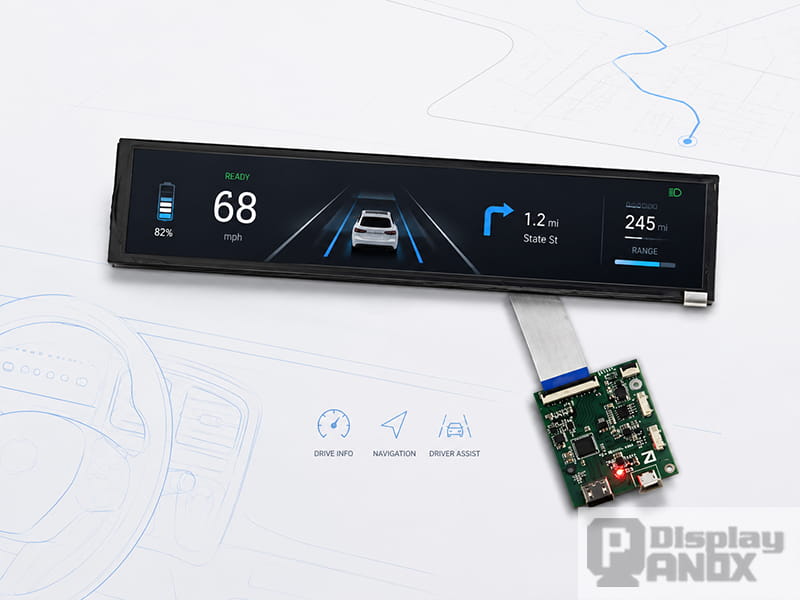
3.1 Digital Instrument Cluster
A digital instrument cluster replaces or complements traditional mechanical gauges. It displays speed, warning indicators, battery or fuel status, ADAS information, driving mode, and vehicle alerts. Since it provides primary driving information, the design must support quick recognition and avoid unnecessary visual complexity.
3.2 Center Information Display
The center information display, often called CID, is one of the most common automotive display applications. It handles navigation, multimedia, vehicle settings, camera view, climate interface, smartphone connection, and other cockpit functions. Research from Analog Devices notes that modern vehicles may include instrument clusters, CIDs, HUDs, passenger displays, smart e-mirror displays, side mirror displays, and rear entertainment displays as part of the digital cabin.
For this type of display, size, resolution, touch performance, brightness, anti-glare treatment, interface compatibility, and controller board support are especially important.
3.3 Rearview Mirror and Camera Monitor Displays
Rearview mirror screens and camera monitor systems display image feeds from cameras around the vehicle. They are used for reversing, parking assistance, blind-spot visibility, side camera mirror replacement, and commercial vehicle monitoring. These displays need stable image clarity because delayed, blurred, or low-contrast visuals may affect driver confidence.
3.4 Passenger and Rear-Seat Entertainment Displays
As smart cockpit design expands, passenger-side and rear-seat screens are becoming more common. TrendForce forecasts that automotive display panel shipments will reach 243 million units in 2025, with passenger-side displays, rear-seat entertainment screens, and rear armrest screens becoming an important growth category.
These screens focus more on entertainment, comfort, and interior experience, but they still need to meet vehicle requirements for heat resistance, durability, interface stability, and safe HMI behavior.
3.5 Long Strip and Stretched Vehicle Displays
Long strip LCDs are often used where a narrow layout is more suitable than a standard rectangular screen. They can appear in dashboard extensions, vehicle information bars, rearview mirror displays, taxi/subway information screens, and custom cockpit modules. Panox Display lists several long-strip and vehicle-related LCD options under its Vehicle category, including 6.8-inch, 8.8-inch, 10.1-inch, and 14-inch display products.
This type of display is useful when the design needs a wide information area without taking too much vertical space. It can show status data, camera content, media information, navigation hints, or system monitoring content in a compact form.
4. Common Automotive Display Technologies
4.1 TFT-LCD
TFT-LCD is still the most widely used automotive display technology because it is mature, cost-effective, stable, and available in many sizes, interfaces, and brightness levels. Analog Devices notes that TFT-LCD currently dominates flat-panel display technology in automotive applications, while OLED and micro-LED are gaining attention for higher-end designs.
For mainstream vehicle projects, TFT-LCD is often a practical choice for center consoles, instrument clusters, rearview mirror displays, industrial vehicle terminals, public transport screens, and embedded control systems. IPS TFT-LCD is also widely used when wide viewing angle and stable color are needed.
4.2 LTPS TFT-LCD
LTPS TFT-LCD is becoming more important in automotive displays because it can support higher resolution, higher brightness, lower power consumption, and better touch integration compared with traditional a-Si TFT-LCD. Omdia reports that LTPS TFT-LCD and OLED are taking a larger share of automotive display revenue as the market shifts toward higher-value display technologies.
4.3 OLED and Flexible OLED
OLED offers high contrast, fast response, thin structure, and flexible design potential. It is attractive for premium cockpit designs, curved displays, and integrated interior surfaces. However, OLED selection still needs careful attention to lifetime, image retention, brightness strategy, heat, and static UI content. Analog Devices also points out that OLED has advantages in display effect, flexibility, and thinness, while LCD keeps advantages in maturity, cost, and lifetime.
4.4 Mini-LED Backlit LCD
Mini-LED backlighting can improve LCD contrast and local dimming performance. It is often discussed as a bridge between conventional LCD and self-emissive technologies. For automotive projects that need high brightness and better HDR-like contrast while keeping LCD reliability advantages, Mini-LED backlit LCD can be a valuable direction.
5. Key Specifications Buyers Should Check
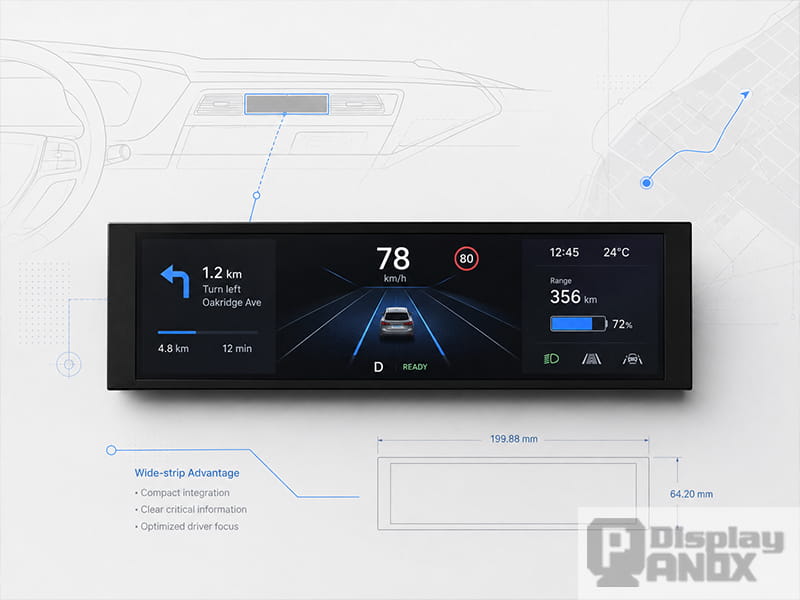
7.84 inch Long Strip LCD
5.1 Brightness and Sunlight Readability
Brightness is one of the first specifications to check for vehicle use. A display used in a bright cabin, near a windshield, or in outdoor vehicle equipment usually needs higher luminance than a normal indoor screen. SAE J1757/1 focuses on methods for determining vehicular display optical performance under typical automotive ambient light conditions, with special attention to high ambient contrast ratio because it is critical for sunlight legibility.
For example, Panox Display’s 10.1-inch LCD for automobile console applications offers 1000 cd/m² typical luminance and a -30°C to 85°C operating temperature range, making it suitable for high-brightness vehicle and industrial use cases.
5.2 Wide Operating Temperature
Vehicle cabins may become very hot under direct sun and very cold in winter conditions. A panel with a narrow temperature range may show slow response, color shift, backlight instability, or startup problems. For automotive and industrial vehicle projects, wide temperature operation is usually a serious requirement rather than a nice extra.
Panox Display’s 6.5-inch industrial LCD, for example, lists an operating temperature range of -30°C to 80°C and 800 cd/m² typical luminance. This makes it a practical option for vehicle-mounted and outdoor monitor applications where visibility and temperature tolerance matter.
5.3 Vibration and Mechanical Stability
Modern cockpits often use larger displays and more creative mounting positions. This creates new mechanical challenges. A Visteon study on HMI display readability during sinusoidal vibration notes that display images may become partially or fully blurred during vibration events, which can affect HMI experience and create potential safety issues.
This means the display panel, bracket, cover glass, bonding structure, FPC routing, and housing design should be considered together. A high-resolution screen still needs stable mounting to remain readable on rough roads.
5.4 Contrast, Viewing Angle, and Night Comfort
A vehicle display must work both in strong daylight and at night. High brightness alone is not enough. The display also needs suitable contrast, coating, dimming control, and UI color strategy. JAMA’s in-vehicle display guidelines state that luminous intensity, contrast, colors, and other display conditions should avoid dazzling the driver at night, and visual information should be small enough in volume for the driver to comprehend quickly.
This is where panel selection and HMI design meet. A bright panel with poor dimming or a crowded interface can still create a poor driving experience.
5.5 Interface and Controller Board Support
Automotive and embedded projects often use interfaces such as LVDS, MIPI, RGB, eDP, HDMI, or customized controller boards. The correct interface depends on the host platform, cable length, EMI environment, resolution, refresh rate, and available development resources.
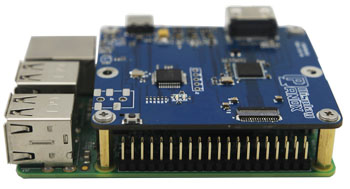
Panox Display provides vehicle-related LCD/OLED panels and can support customized controller or driver boards with HDMI, Type-C, MIPI, RGB, LVDS, and eDP input options. This can reduce development difficulty when customers need quick testing, small-batch prototyping, or integration with PCs, Raspberry Pi, embedded boards, or custom vehicle systems.
6. Panox Display Automotive Display Options
Panox Display’s Vehicle category includes LCD/OLED display solutions for vehicle-mounted applications, including rearview mirror screens and console displays. The current product range covers multiple sizes, aspect ratios, interfaces, and brightness levels for different vehicle and embedded display scenarios.
For center console and high-brightness vehicle applications, the 10.1-inch 1920×1200 TFT-LCD with PCAP touch panel, LVDS interface, 1000 cd/m² typical luminance, and -30°C to 85°C operating temperature range is a strong choice. It is suitable for automobile console display, industrial control, and turnkey projects.
For compact vehicle-mounted screens and outdoor monitoring, the 6.5-inch 640×480 industrial LCD offers 800 cd/m² typical luminance, LVDS interface, 60Hz refresh rate, anti-reflection treatment, and a -30°C to 80°C operating range.
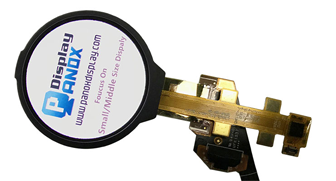
For long, narrow cockpit or rearview mirror applications, the 6.8-inch IPS TFT-LCD with 480×1280 resolution and MIPI interface can be used in rearview mirrors, smart home devices, industrial devices, security systems, and dynamic information displays.
For stretched sub-screen and custom vehicle display layouts, the 8.8-inch long strip TFT-LCD offers 1920×480 resolution, 600 cd/m² typical luminance, MIPI interface, and HDMI/Type-C controller board support. Panox Display also notes its use for vehicle and car sub-screen applications.
7. How to Choose the Right Automotive Display Panel
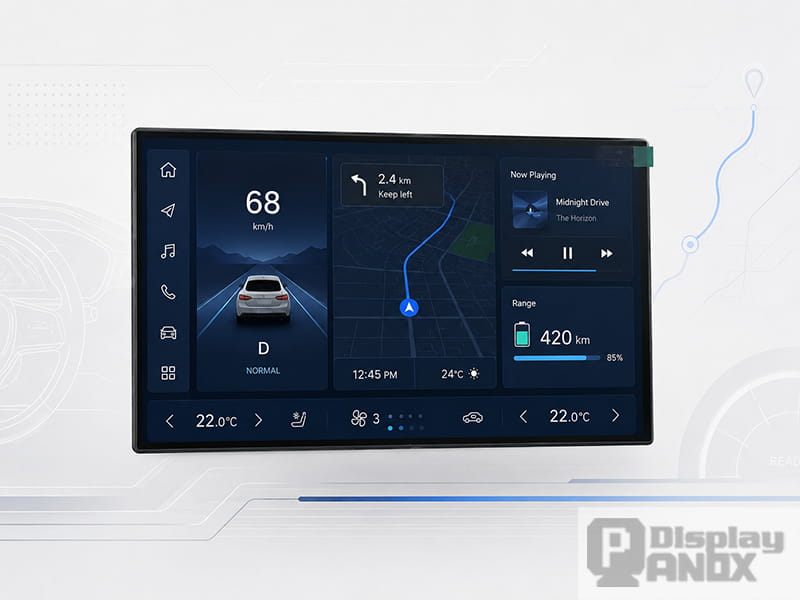
Start with the vehicle application, not the screen size. A center console, rearview mirror screen, instrument module, passenger display, and vehicle information bar may all need different panel structures.
For a dashboard or console display, resolution, brightness, touch panel, viewing angle, interface, and cover glass design are usually the main concerns. For a rearview mirror or camera monitor display, image clarity, brightness, latency, and mounting stability become more important. For a long strip display, the buyer should check active area, aspect ratio, interface direction, FPC position, housing space, and whether the UI can be redesigned for a narrow layout.
A practical selection process usually includes these steps:
-
Define the screen position and viewing distance inside the vehicle.
-
Confirm the required size, aspect ratio, active area, and resolution.
-
Check brightness, contrast, viewing angle, and coating for real lighting conditions.
-
Confirm operating temperature, storage temperature, vibration requirements, and backlight lifetime.
-
Choose the correct interface and controller board solution.
-
Decide whether PCAP touch, cover glass, optical bonding, anti-glare, anti-reflection, or custom FPC is needed.
-
Test the display with actual UI content before moving to batch production.
This process sounds slower than simply picking a panel from a catalog, but it helps avoid the classic “nice sample, difficult integration” problem. In vehicle projects, early technical matching usually saves more time than late-stage redesign.
8. Automotive Display Design Is Also HMI Design
A good automotive display is not only a hardware component. It is part of the vehicle HMI. The screen must help people understand the vehicle quickly, operate functions safely, and receive the right information at the right moment.
NHTSA’s visual-manual driver distraction guidelines emphasize that in-vehicle electronic devices should be designed to reduce visual and manual demand during secondary tasks. The guidelines also use eye-glance behavior to evaluate whether a task may interfere too much with driver attention.
This is why display panel selection and interface design should be planned together. A larger screen can provide more space, but it also needs disciplined information hierarchy. A higher-resolution panel can show more detail, but the UI still needs readable typography, clear contrast, logical grouping, and quick task completion. A passenger display can improve the cabin experience, but driver distraction and privacy mode should still be considered.
9. Conclusion
An automotive display panel is more than a screen installed in a vehicle. It is a core HMI component that must combine image quality, reliability, safety, mechanical stability, and system integration. As smart cockpits continue to develop, automotive displays will become larger, brighter, more diverse in shape, and more closely connected with vehicle software.
For many projects, TFT-LCD remains the practical mainstream choice because of its maturity, cost advantage, long lifetime, and wide product availability. OLED and Flexible OLED are increasingly attractive for premium cockpit designs that require high contrast, thin structure, and curved integration. Long strip LCDs also provide more layout freedom for rearview mirror screens, information bars, secondary vehicle displays, and custom cockpit modules.
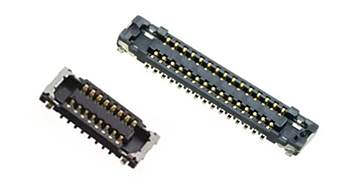
Panox Display provides small and medium-size LCD/OLED display panels, vehicle display options, customized touch panels, connectors, and controller board support. Whether the project needs a high-brightness console display, a compact vehicle-mounted LCD, or a stretched screen for a special cockpit layout, the right panel should always be selected around the real application environment.
FAQs:
1. What is an automotive display panel?
An automotive display panel is a screen module used in vehicles to show driving data, navigation, camera images, entertainment content, vehicle settings, alerts, and other HMI information.
2. What display technology is commonly used in automotive displays?
TFT-LCD is still widely used because it is mature, stable, and cost-effective. OLED is growing in premium cockpit designs because it offers high contrast, fast response, thin structure, and flexible design possibilities.
3. How bright should an automotive display be?
The required brightness depends on screen position and lighting conditions. Displays near sunlight, windshields, outdoor equipment, or camera-monitor systems usually need higher luminance and good anti-glare or anti-reflection treatment.
4. Why is wide temperature operation important for vehicle displays?
Vehicle screens may face cold starts, direct sunlight, high cabin temperatures, and long operating hours. Wide temperature operation helps the display remain stable in these changing conditions.
5. Can Panox Display provide controller boards for automotive display panels?
Yes. Panox Display can provide customized controller and driver board solutions with interfaces such as HDMI, Type-C, MIPI, RGB, LVDS, and eDP, depending on the display panel and project requirements.