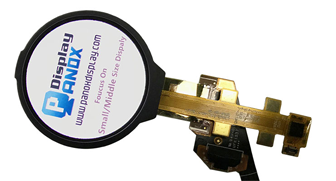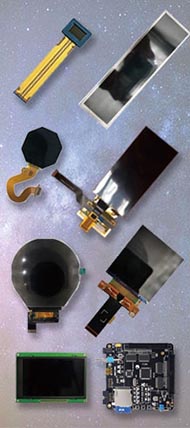







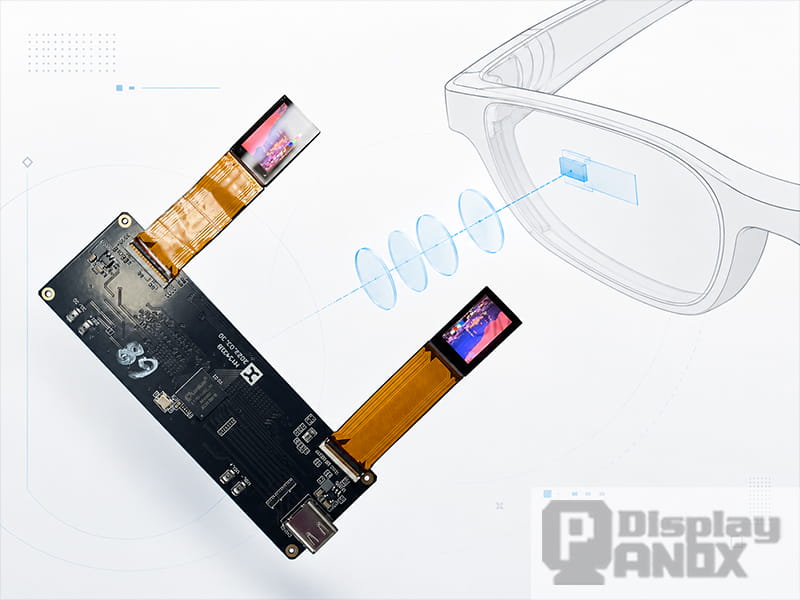
0.68 inch Micro OLED 5000 Brightness Fast Response
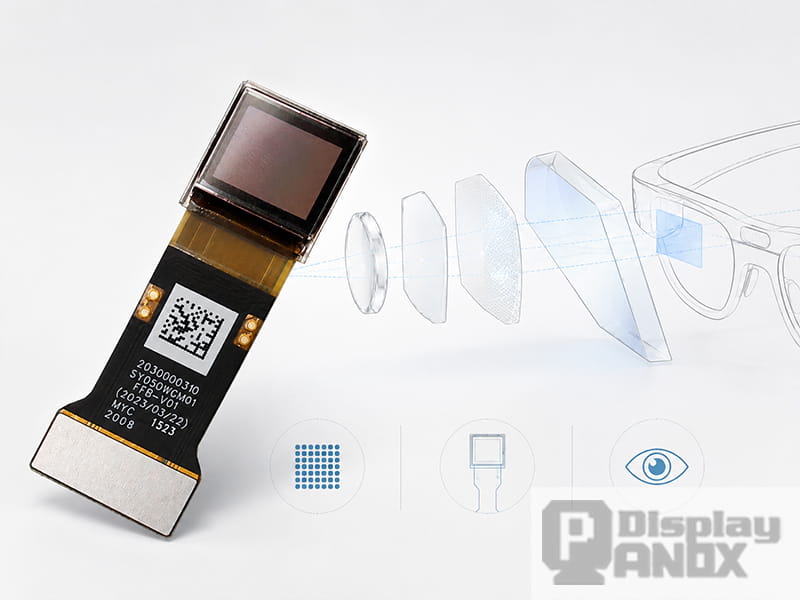
Augmented reality looks simple when it reaches the user: a notification floating in the corner of vision, a navigation cue, a translated sentence, a private virtual screen, or a real-time image inside FPV goggles. Behind that simple experience, the display system has to solve a difficult optical problem. It must create a clear image from a very small panel, pass that image through lenses or waveguides, and place it in front of the eye while keeping the device light enough to wear.
This is why Micro OLED display technology has become so important for AR display panels. In a near-eye system, the display is magnified much more aggressively than a normal phone or tablet screen. Any weakness in pixel density, contrast, response time, brightness, or module size becomes easier to notice. A high-quality AR display panel must therefore provide much more than a nice image on a small screen. It must support the entire optical engine.
Research on optical see-through AR near-eye displays describes the display unit, relay or magnifying optics, and optical combiner as the basic building blocks of an AR near-eye display system. The same review also points out that AR design involves many tradeoffs, including resolution, eyebox, form factor, field of view, eye relief, brightness, and full color.
1. Why Is the Display Panel So Critical in AR Devices?
In most AR products, the display panel is the starting point of the image path. The panel creates the image, the optical system enlarges and redirects it, and the eye receives the final virtual image. If the panel is too large, the optical engine becomes harder to fit into glasses. If the pixel density is too low, text may look rough after magnification. If brightness is insufficient, the virtual image can become weak after passing through optics. If contrast is poor, digital content may look flat or washed out against the real world.
This makes AR display selection more demanding than ordinary display selection. A display panel used in a handheld device can be judged directly by the human eye. A display panel used in AR glasses must be judged together with the optical system. The final performance depends on panel resolution, pixel pitch, brightness, contrast, optical efficiency, field of view, eyebox, driver board design, power consumption, and thermal behavior.
For waveguide-based AR displays, the light engine and waveguide combiner work as one system. A Springer Nature review explains that overall efficiency depends on both the light engine and the waveguide combiner, and that form factor and weight are strongly affected by the light engine size and position. This is one of the main reasons Micro OLED is so valuable: it can deliver high resolution and strong image quality from a very compact panel.
2. Why Is Micro OLED Suitable for Near-Eye Display Systems?
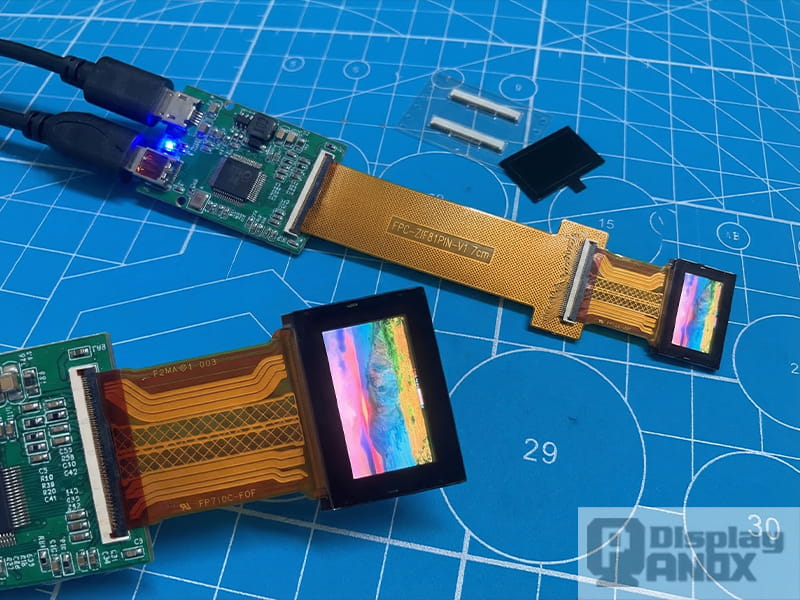
0.71 inch Micro OLED 1920x1080 LVDS 3000 nits
Micro OLED, also known as OLED-on-silicon or OLEDoS in many technical contexts, is built on a silicon backplane instead of a conventional glass substrate. This architecture allows very small pixels, high pixel density, compact driving circuits, and excellent image quality in a miniature display format.
Sony Semiconductor describes OLED microdisplays as combining OLED technology with silicon backplane technology to achieve high resolution, high contrast, wide color gamut, and fast response. Sony also notes that OLED microdisplays can reach around 4,000 ppi thanks to monocrystalline silicon backplanes. A 2025 review of OLEDoS microdisplays similarly highlights high contrast, deep blacks, fast response, self-emissive operation, thin structure, power efficiency, and suitability for near-to-eye platforms.
For AR product design, these characteristics are not abstract advantages. They solve practical problems:
| AR display requirement | Why Micro OLED helps |
|---|---|
| Compact optical engine | Small panel size helps reduce lens and housing volume |
| Fine text and UI | High pixel density improves readability after magnification |
| Strong image separation | High contrast helps virtual content stand out |
| Fast motion response | OLED response helps reduce motion blur in near-eye use |
| Wearable design | No backlight helps reduce thickness and system complexity |
| Premium image quality | Rich color and deep black levels improve perceived clarity |
3. Why Does High Pixel Density Matter So Much in AR?
Pixel density is one of the most important reasons Micro OLED is used in AR display panels. A near-eye display places the image very close to the eye, then uses optics to create a larger virtual image. During that process, the user can become sensitive to pixel structure, jagged text edges, aliasing, and screen-door effects.
In AR glasses, the display is often used for small interface elements: subtitles, icons, numbers, maps, camera data, industrial instructions, or floating menus. These elements need clean edges and stable readability. A panel with ordinary direct-view display density may look acceptable on a desk, but it can become visibly coarse when magnified through near-eye optics.
Micro OLED panels can support very high PPI in small sizes. For example, PanoxDisplay’s AR product category includes a 0.49-inch Si-OLED display with 1920 × 1080 resolution and 4391 PPI, as well as 0.68-inch, 0.71-inch, and 1.03-inch Micro OLED options for AR and near-eye applications. These sizes are practical for compact optical engines because they allow high resolution without requiring a large physical display.
4. Why Does Contrast Affect the AR Experience?
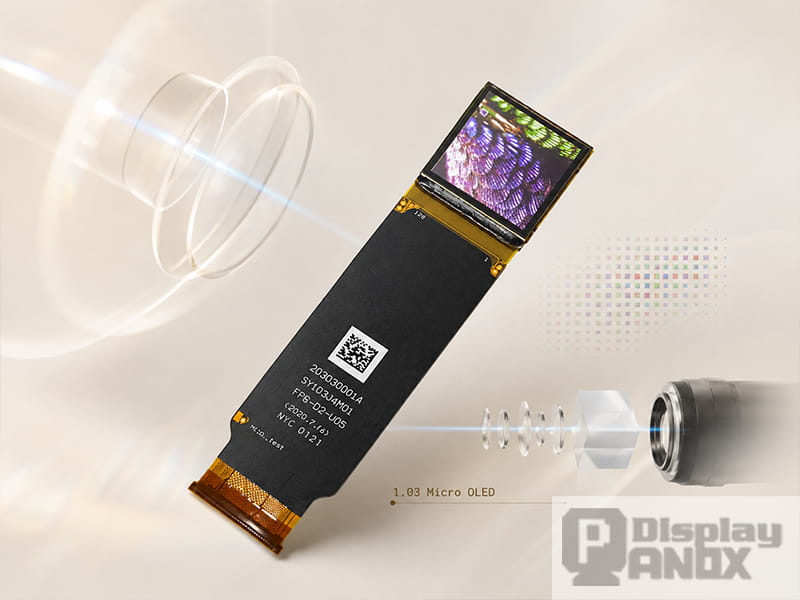
1.03 inch Micro OLED Display 2K for AR/FPV
Contrast determines how clearly digital content separates from the surrounding image. In Micro OLED displays, each pixel emits its own light. When a pixel needs to show black, it can be turned off or driven very low. This gives OLED microdisplays a natural advantage in dark UI, floating text, media playback, and high-contrast symbols.
In AR, contrast is not only about visual beauty. It affects usability. A navigation arrow, warning symbol, medical cue, drone video feed, or machine status overlay must be easy to read quickly. Low contrast can make the image look gray and weak, especially when it is combined with real-world light through a combiner or waveguide.
Sony lists native OLED microdisplay characteristics including ultra-high contrast of 100,000:1 and ultra-fast response of 0.01 ms or less. For AR and FPV products, that combination supports cleaner image transitions, sharper visual feedback, and a more premium near-eye viewing experience.
5. Why Is Brightness Still a Challenge for AR Displays?
Brightness is one of the hardest challenges in AR display design. A Micro OLED panel may look bright when viewed directly, but the user does not see the panel directly in an AR system. The image has to travel through optics. Lenses, prisms, birdbath structures, combiners, and waveguides can all reduce the brightness that finally reaches the eye.
This is especially important for optical see-through AR, where digital content has to compete with ambient light. The brighter the real-world environment, the harder it is for the virtual image to remain visible. A waveguide-based AR display also needs to balance brightness, field of view, eyebox, transparency, uniformity, eye glow, and efficiency.
Research on full-color OLED microdisplays for head-mounted wearables notes that AR applications require high brightness, often above 2,000 cd/m², because the image is projected against the real-world environment and must remain viewable in ambient lighting. Sony’s 2024 ECX350F announcement also shows the direction of the industry: smaller pixels, Full HD resolution in a compact 0.44-inch panel, and peak brightness up to 10,000 cd/m² for thinner and lighter AR glasses.
This does not mean every AR device needs the highest possible luminance. Indoor smart glasses, FPV goggles, assisted-reality devices, and private wearable screens may have different brightness targets. The important point is that brightness must be evaluated after optical losses, not only from the panel datasheet.
6. Why Does Micro OLED Help AR Glasses Become Lighter?
AR glasses are limited by space. The display panel, optical engine, battery, processor, sensors, cables, speakers, and mechanical structure all compete for room. A larger display panel usually means a larger lens system and a heavier product. A smaller high-resolution display gives designers more freedom.
Micro OLED is useful because it can provide high resolution in a compact active area. In waveguide-based AR systems, smaller light engines help reduce optical volume. The Springer Nature review notes that a smaller panel can reduce the light engine volume, although the system still needs careful optical design to maintain field of view and resolution.
For commercial AR products, this matters as much as image quality. Users may tolerate a bulky headset for short professional sessions, but everyday smart glasses need a different balance. The display panel has to support a lighter product shape, lower heat, better comfort, and longer practical wear time.
7. Why Is Micro OLED Important for Different AR Applications?
0.5 inch 1600x1200 Micro OLED 1000 cd luminance 120 Hz
Micro OLED is not limited to one type of AR device. It fits several near-eye display applications where compact size and high image quality are both required.
In lightweight AR glasses, Micro OLED can display notifications, translation, navigation, AI assistant content, subtitles, or a private screen. In FPV and drone goggles, it supports fast response, high contrast, and high-resolution real-time viewing. In industrial and medical near-eye systems, it can show inspection data, maintenance instructions, imaging overlays, or monitoring information. In electronic viewfinders and compact optical instruments, it provides a small, high-quality image source with strong contrast.
PanoxDisplay’s AR display category reflects this range. Available options include compact 0.39-inch Micro OLED panels, 0.49-inch Full HD Si-OLED, 0.5-inch Micro OLED panels, 0.68-inch WUXGA Micro OLED, 0.71-inch Full HD Micro OLED, and a 1.03-inch 2560 × 2560 Micro OLED display for AR/FPV applications.
For early-stage AR product development, smaller panels can be used for compact smart glasses and basic information display. Higher-resolution and higher-brightness options are more suitable for FPV goggles, advanced optical engines, professional viewfinders, and wearable visual systems that require stronger image detail.
8. Why Should AR Display Selection Consider the Whole System?
A good AR display panel cannot be selected by resolution alone. The display must match the optical architecture, mechanical structure, interface, power budget, and target use environment.
A compact notification display may prioritize size, low power, and simple driving. A media-oriented wearable screen may prioritize contrast, color, and resolution. An FPV system may need fast response, high refresh rate, low latency, and stable video input. An outdoor optical see-through device may require higher brightness and better optical efficiency. An industrial or medical device may require supply stability, interface support, and strict image consistency.
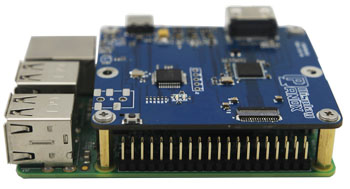
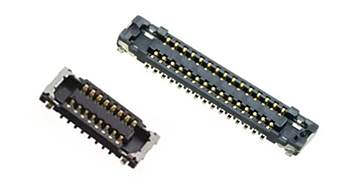
PanoxDisplay’s AR page also notes that display panel selection is only the beginning. Customers may also need connectors, cover glass or touch panel support, and customized controller or driver boards. PanoxDisplay provides support for connectors and customized controller/driver boards with interfaces such as VGA, HDMI, DVI, DP, Type-C video input, MIPI, RGB, LVDS, and eDP.
This integration support is important because many AR projects fail between display selection and product implementation. The panel may have good specifications, yet the final product still needs the right cable, power sequence, board design, brightness control, firmware, thermal layout, and optical alignment.
9. Why Is Micro OLED Still Relevant as Micro LED Develops?
Micro LED is often discussed as a promising technology for future AR displays, especially where very high brightness is required. It has strong potential in outdoor optical see-through AR and advanced waveguide systems. However, full-color Micro LED microdisplays still face manufacturing and integration challenges, including RGB integration, color conversion, uniformity, yield, cost, and small-pixel full-color performance.
Micro OLED remains highly relevant because it is already available in practical sizes, resolutions, and interfaces. It offers a strong balance of compactness, image quality, contrast, response speed, and commercial maturity. For many AR glasses, FPV systems, electronic viewfinders, and wearable display products, Micro OLED is still one of the most realistic display choices for near-term development.
The most practical view is to match the display technology to the product goal. Micro LED may become more important in high-brightness outdoor AR. Micro OLED remains a strong choice where compact design, high pixel density, high contrast, and mature integration are the main priorities.
10. How to Choose a Micro OLED Display for an AR Project
Before choosing a Micro OLED display, define the product environment and optical architecture first. The most useful questions are:
| Design question | Why it matters |
|---|---|
| Is the device indoor, outdoor, or mixed-use? | Determines brightness and ambient contrast requirements |
| Is the optical system birdbath, prism, or waveguide-based? | Affects panel size, brightness, and optical efficiency |
| What virtual image size is needed? | Influences resolution and field of view |
| How much space is available for the optical engine? | Determines suitable panel size and board design |
| What interface does the system use? | MIPI, LVDS, RGB, SPI, and I2C support must match the processor or driver board |
| Is this prototype or mass production? | Prototypes may need evaluation boards; production may need custom driver boards |
| What matters most: brightness, resolution, size, power, or cost? | Helps narrow the panel choice realistically |
For compact AR glasses, a 0.39-inch or 0.49-inch Micro OLED may be suitable when the optical engine must stay small. For higher-resolution wearable viewing, FPV, or professional near-eye systems, 0.68-inch, 0.71-inch, or 1.03-inch Micro OLED options may provide more image detail and stronger visual performance. The best choice depends on the optical design, not the panel size alone.
11. Conclusion
Micro OLED display technology is important for AR display panels because it directly supports the core needs of near-eye optical systems: compact size, high pixel density, strong contrast, fast response, and practical integration. In AR glasses and wearable displays, the panel is magnified through optics, so small weaknesses become highly visible. Micro OLED helps reduce those weaknesses by delivering high-resolution image quality from a very small display module.
For AR glasses, FPV goggles, wearable screens, professional viewfinders, and compact optical engines, Micro OLED offers a mature and practical display path. It gives product teams a way to build smaller, clearer, and more visually comfortable AR systems while leaving room for customized boards, connectors, and optical integration.
PanoxDisplay provides Micro OLED display panels for AR and near-eye applications, including compact Full HD and high-resolution options suitable for different optical designs. For AR product developers, the right display is the one that fits the full system: optics, brightness, resolution, interface, power, heat, mechanical space, and production plan.
Learn more: What Is an AR Display? Why Micro OLED Is the Core Display Technology for AR Glasses