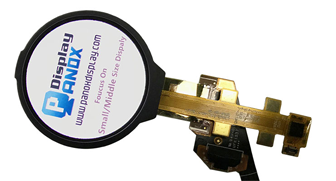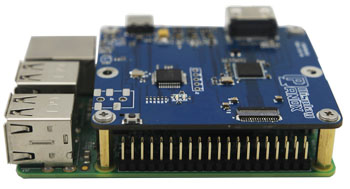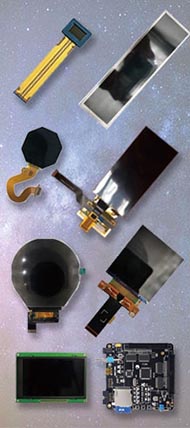




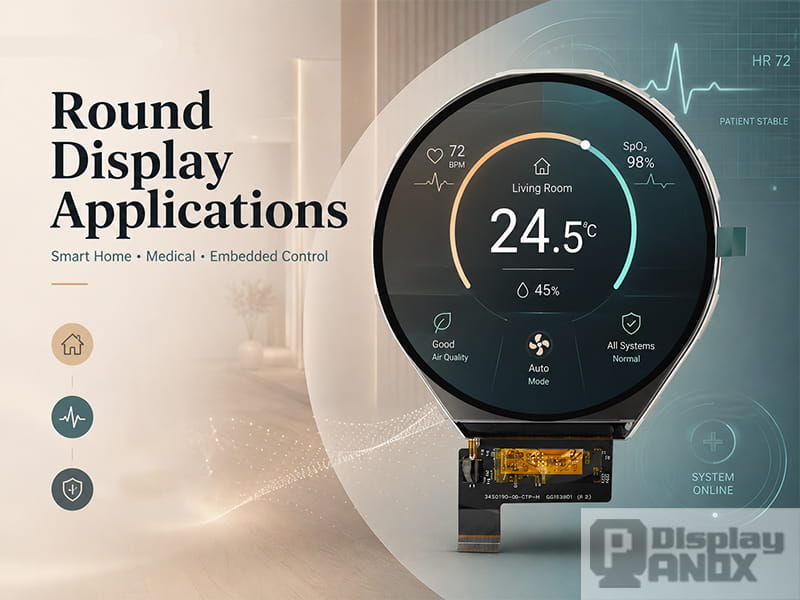
Round displays are no longer limited to smartwatch faces. Their circular, compact and design-friendly form makes them suitable for wearable devices, smart home controllers, medical instruments, industrial meters, automotive interfaces, VR systems, handheld equipment and compact embedded products. Panox Display’s Round Display category includes Memory LCD, AMOLED, OLED and TFT-LCD modules from around 1.2 inches to 5.0 inches, covering low-power wearables, high-resolution touch interfaces, MIPI-driven LCD modules and controller-board-ready round screens.
A round display should be selected according to the final product environment, not only according to size. A smartwatch needs high pixel density, low power and a slim module. A smart home dial needs a clear touch interface and attractive cover glass. A medical instrument needs stable readability and dependable integration. A VR or optical application may need high resolution, high refresh rate and MIPI signal support. The same circular visual language can serve very different engineering goals.
1. Why round displays work well in modern product design
Circular screens match the shape of many real products. Watches, meters, knobs, thermostats, gauges and dials are naturally round. When the display follows that physical form, the product often feels more integrated and intentional.
This does not mean every module under a Round Display category has a perfect circular active area. Some round LCD and OLED modules need bonding space, driver IC placement, FPC routing or special cutting structures. Panox Display notes that round LCD and OLED panels are usually laser-cut, and that the bottom area may not be fully circular when display chips or connections need space. COF structures can help improve this by moving the chip onto the FPC.
For product engineers, this detail matters. The datasheet drawing, active area, cover glass shape, FPC direction and driver board plan should be checked before mechanical tooling begins. A product can be visually circular while the actual display module has hidden flat areas, cut-corner edges or a non-round bonding zone.
2. Smartwatches and wearable devices
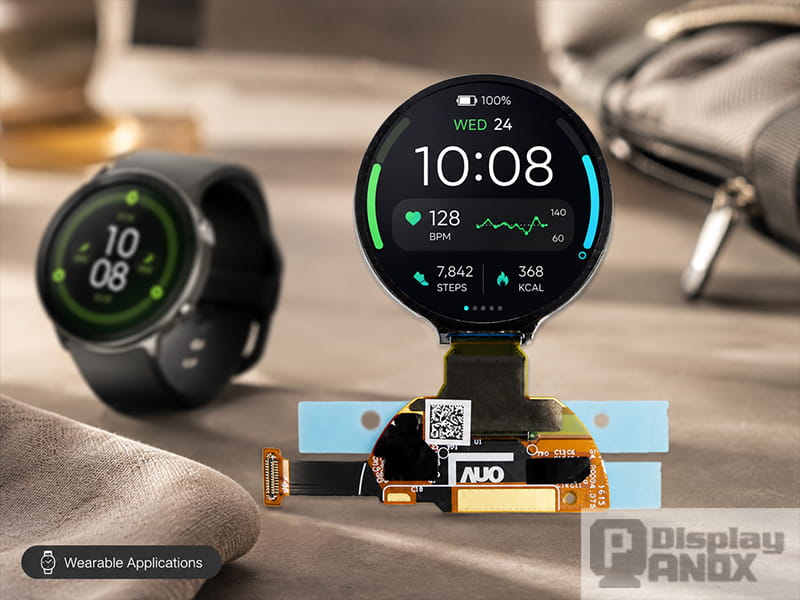
Smartwatches are the most familiar application for round AMOLED and round OLED displays. A circular watch face feels close to traditional analog watches, while the display can show time, notifications, activity rings, heart rate, battery status, weather, music controls and app icons.
Research on smartwatch faces describes them as small data dashboards that present information in a compact form. The same research also points out that the usage context and form factor of smartwatch faces create unique visualization challenges, especially when multiple data types need to fit into a small screen.
For this application, round AMOLED is often preferred when the product needs rich color, high contrast, smooth watch faces and a premium visual experience. Panox Display’s 1.2-inch round AMOLED uses 390 × 390 resolution and supports MIPI/SPI communication. The product page lists smartwatch, vehicle, smart home, instrument, industrial device, security and dynamic information display applications.
The 1.39-inch round OLED/AMOLED range is also a common smartwatch direction, with resolutions such as 400 × 400 or 454 × 454 depending on the model. For more detailed wristwear interfaces, the 1.43-inch AM-OLED module with 466 × 466 resolution and QSPI interface gives designers more pixels for fine typography, smooth icons and high-luminance UI design.
Suitable Panox Display modules
| Application need | Recommended module direction |
|---|---|
| Premium smartwatch face | 1.2-inch / 1.39-inch / 1.43-inch round AMOLED |
| High-contrast wearable UI | Round OLED or AMOLED |
| Long-standby wearable data | 1.2-inch Memory LCD |
| Compact touch wearable | Small round OLED with PCAP or custom touch |
For smartwatch UI design, the center area should carry the most important information. Secondary data can follow circular arcs or ring-based layouts. Touch controls should stay large enough for finger interaction, because small round screens leave less room for dense rectangular menus. A study on smartwatch authentication found that circular UIs are often tailored to fewer UI elements, and that UI shape affects accuracy, speed and security in touch-based interactions.
3. Fitness trackers, outdoor wearables and low-power IoT devices
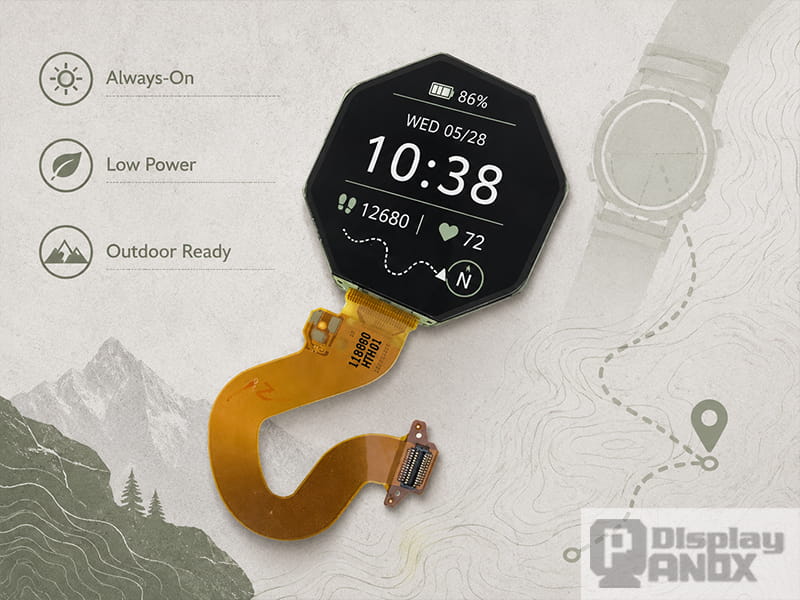
Not every wearable needs a colorful AMOLED interface. Some devices need long standby time, simple status display and outdoor readability. Sports trackers, outdoor meters, compact IoT devices, sensor nodes and battery-powered handheld tools often show stable information such as time, steps, direction, battery status, temperature, pressure or signal strength.
This is where Memory LCD becomes valuable. Sharp describes Memory LCD as a technology that embeds a one-bit memory circuit into every pixel, allowing written information to be retained with ultra-low power consumption. Sharp also notes that Memory LCDs can reduce power consumption significantly compared with traditional display options and can provide good indoor/outdoor readability.
Panox Display’s Round Display category includes a 1.2-inch Memory LCD with 218 × 218 resolution and RGB interface, positioned for smartwatch use. This kind of display is especially useful for products where the screen remains visible for long periods while content changes slowly.
Memory LCD is usually not the best choice for animation-heavy interfaces. Its strength is a different kind of product experience: long battery life, always-on readability and stable data display. For fitness and outdoor devices, that can be more important than saturated color or complex motion graphics.
4. Smart home controls and circular touch panels
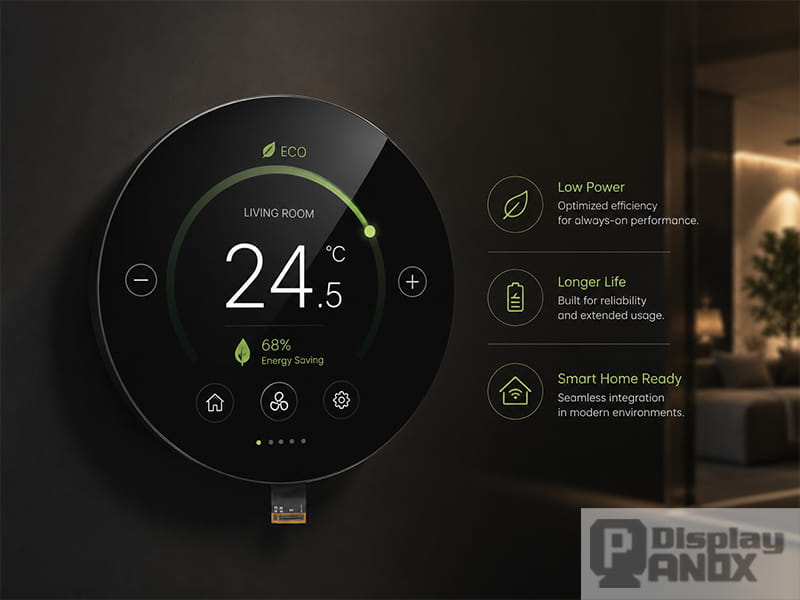
Smart home devices are another strong application area for round displays. Thermostats, HVAC controllers, lighting panels, audio knobs, access panels and desktop control hubs often benefit from circular screens because the display can work together with a physical rotary form.
A round display inside a smart home controller can show temperature, humidity, lighting mode, fan speed, room status, energy saving mode and wireless connection. The circular interface also makes temperature arcs, brightness rings and mode selectors feel natural.
For compact smart home controls, Panox Display’s 2.1-inch round TFT-LCD touch panel offers 480 × 480 resolution, 262K colors, ST7701S driver IC, 3SPI + 18RGB interface and integrated touch functionality. The product page lists wearables, IoT devices, smart home systems, medical equipment, handheld devices and dynamic information displays as suitable applications.
For larger smart home control panels, the 5.0-inch round TFT-LCD provides 1080 × 1080 resolution, MIPI interface, optional cover glass and HDMI-to-MIPI controller board support. Panox Display notes that this model is suitable for smart home and medical equipment, and that the HDMI driver board allows connection to a PC for monitor-style testing.
Suitable Panox Display modules
| Application need | Recommended module direction |
|---|---|
| Smart thermostat / wall control | 5.0-inch round TFT-LCD 1080 × 1080 |
| Compact smart knob | 2.1-inch round TFT-LCD touch panel |
| Premium smart home interface | Round AMOLED or high-resolution round LCD |
| Prototype with PC input | Round LCD with HDMI-to-MIPI controller board |
Smart home projects often need more than a panel. Cover glass, touch panel, anti-fingerprint coating, optical bonding, housing design and controller board support all affect the final product. A clean round UI can look excellent in a rendering, but the real product succeeds only when touch accuracy, cover glass alignment and display driving are solved together.
5. Medical devices and health monitoring interfaces
Round displays can work well in medical and health-related products because many devices need compact, glanceable interfaces. Examples include wearable health monitors, portable diagnostic tools, therapy devices, compact vital-sign interfaces, bedside accessories and handheld instruments.
Wearable health monitoring is an active research area. The OpenHealth platform paper describes wearable health monitoring as an emerging way to augment clinical care for movement disorders, while also noting practical adaptation and technical challenges.
For display selection, medical and health devices usually care about clear data hierarchy, stable readability, power efficiency and dependable integration. A small round AMOLED can serve a wearable health device where the user needs a premium color interface. A Memory LCD can support low-power continuous status display. A larger TFT-LCD can show more structured medical data, menus and warnings.
Panox Display’s 3.4-inch round LCD is positioned for medical and smart home control board applications. The product page describes it as a 3.4-inch a-Si TFT-LCD with WLED backlight, PCAP touchscreen, -20°C to 70°C operating temperature range, ILI9881C driver IC and HDMI-to-MIPI DSI controller board support.
For medical interfaces, the display should avoid decorative complexity. Large numbers, clear status colors, strong contrast and readable icons matter more than visual effects. A circular screen can help create a focused interface, but the UI should be designed around priority data rather than a generic watch-face layout.
6. Industrial meters, instruments and embedded control panels
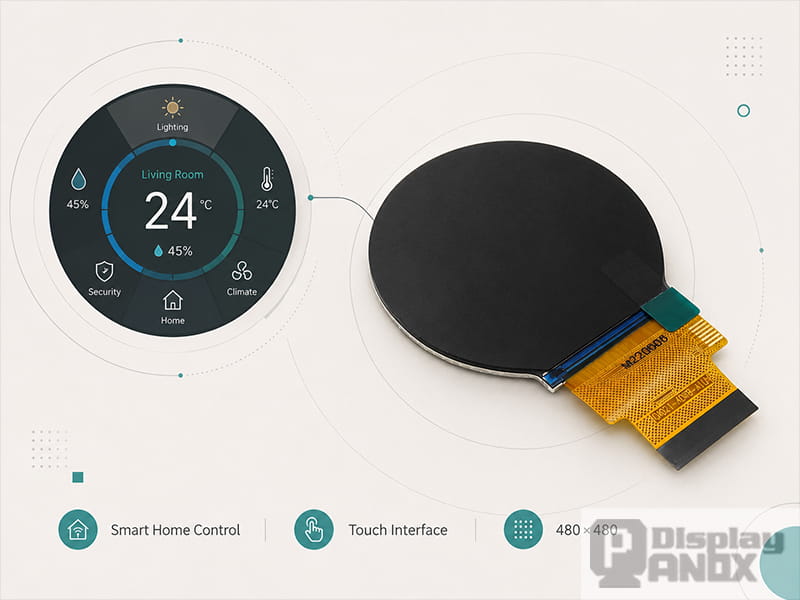
Industrial products often need a display that is compact, readable and easy to integrate into machinery or measurement equipment. A round display can replace traditional mechanical gauges or add digital information to an instrument-style enclosure.
Typical industrial round display applications include pressure meters, laboratory devices, control knobs, motor controllers, battery monitors, signal meters, measurement tools and small embedded HMIs. In these products, round screens often show one primary value at the center and supporting data around the edge.
For MCU-based projects, the 1.28-inch round TFT-LCD is a practical starting point. Panox Display’s 1.28-inch module uses 240 × 240 resolution, SPI interface, GC9A01 driver IC, 300 cd/m² brightness, 1100:1 transmissive contrast ratio, 265 PPI and integrated PCAP touch pins.
For more interactive industrial HMIs, the 2.1-inch round TFT-LCD touch panel offers more room for menu layers, soft buttons and data visualization. Its compatibility with STM32, Raspberry Pi, Arduino and other MCU platforms makes it useful for development systems and custom embedded designs.
Suitable Panox Display modules
| Application need | Recommended module direction |
|---|---|
| Small digital gauge | 1.28-inch round TFT-LCD SPI |
| Compact HMI with touch | 2.1-inch round TFT-LCD touch panel |
| Industrial control panel | 3.4-inch round LCD with controller board |
| High-resolution embedded UI | 5.0-inch round TFT-LCD MIPI |
Industrial displays need careful attention to operating temperature, vibration, connector reliability, touch method and optical readability. A round screen may look simple from the front, but the integration plan should include FPC direction, PCB connector location, mounting structure and serviceability.
7. VR, near-eye and handheld optical systems
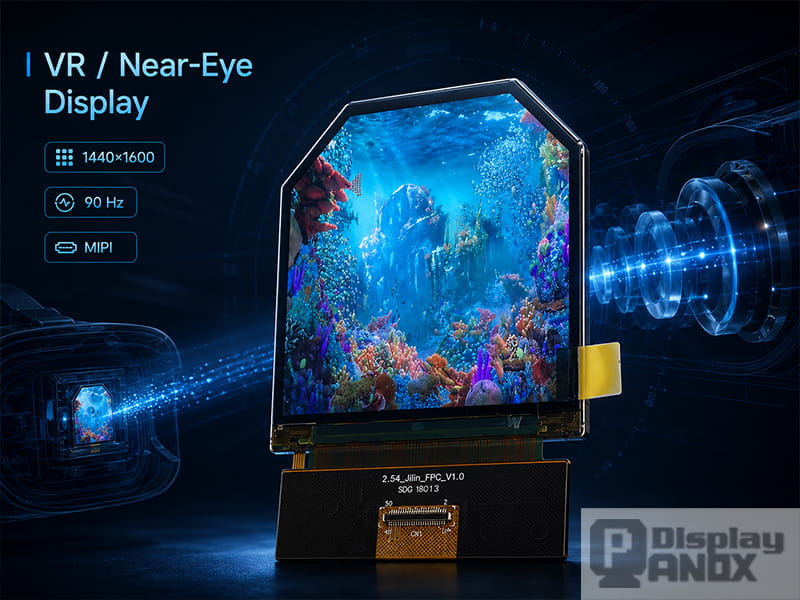
2.54 inch round/circular TFT-LCD
Some displays in the Round Display category are not used like ordinary circular touch panels. They may be selected for optical systems, VR modules, handheld viewers, development devices or compact high-resolution imaging equipment.
Panox Display’s 2.54-inch TFT-LCD module is listed for VR and uses a 1440 × 1600 resolution, MIPI interface and 90 Hz refresh rate. The page describes it as an LTPS TFT-LCD module with 16.7M colors, low reflection and higher color characteristics, with applications including wearable devices, VR, handheld sets, industrial instruments and medical devices.
For these systems, high resolution and refresh rate are more important than a simple circular product appearance. MIPI DSI is also relevant because it supports high-speed serial display communication. The MIPI Alliance describes MIPI DSI as a display interface designed for high performance, low power and low EMI, with use cases including embedded displays, smart meters, smart watches, VR/AR head-mounted devices and in-sight glass devices.
This application area also shows why “round display” should be understood as an application category rather than a single geometry. Some optical modules use special active-area shapes, cut-corner layouts or mechanical outlines that fit lenses, housings or optical paths. The mechanical drawing should always be the reference for enclosure design.
8. Automotive and vehicle accessory displays
Round displays are visually close to traditional automotive gauges. This makes them useful for vehicle accessories, dashboard add-ons, motorcycle instruments, marine devices, e-bike displays and customized control panels.
A vehicle display may need to show speed, battery status, range, mode, navigation icons, tire pressure, warning messages or climate data. The round format works well because many users already understand dial-based visual language.
For compact vehicle or instrument applications, Panox Display’s 1.2-inch round AMOLED can provide vivid color, high contrast and low-consumption display performance, while the 2.1-inch or 3.4-inch round TFT-LCD options offer more space for touch-based controls and larger data layouts.
Automotive and vehicle accessory projects should pay close attention to sunlight readability, operating temperature, vibration, cover glass, viewing angle and interface stability. A beautiful UI is only useful when it remains readable in bright ambient light and reliable under changing environmental conditions.
9. Retail, conference devices and dynamic information displays
Round displays can also be used in products where visual differentiation matters. Retail displays, exhibition props, conference devices, desktop widgets, product demo units and dynamic information panels can use circular screens to stand out from rectangular display-heavy environments.
Panox Display’s 1.2-inch AMOLED page lists dynamic information displays among its suitable use cases, while the 2.1-inch round TFT-LCD page also mentions dynamic information displays and even describes a video board solution for advertising equipment.
This type of application does not always require the most rugged specification. Instead, it often values color impact, smooth UI motion, quick setup, controller board availability and cover glass appearance. A circular display can make a small product demo feel more premium, especially when the UI uses radial motion, ring-based progress indicators or clock-like visual structures.
10. Application-based round display selection guide
Different round display applications need different priorities. A single product family cannot solve every project equally well.
| Application | Best display direction | Key selection priorities |
|---|---|---|
| Smartwatch | Round AMOLED / OLED / Memory LCD | PPI, power, touch, contrast, thinness |
| Fitness tracker | Memory LCD or low-power AMOLED | Always-on readability, standby time, outdoor use |
| Smart home controller | 2.1-inch / 3.4-inch / 5.0-inch round TFT-LCD | Touch, cover glass, MIPI/HDMI board, UI space |
| Medical device | TFT-LCD, Memory LCD or AMOLED | Readability, stable operation, temperature range, reliability |
| Industrial meter | 1.28-inch / 2.1-inch round TFT-LCD | SPI/RGB support, MCU compatibility, mounting design |
| VR / optical device | 2.54-inch high-resolution TFT-LCD | Resolution, refresh rate, MIPI, optical fit |
| Vehicle accessory | AMOLED or TFT-LCD | Brightness, contrast, temperature range, vibration resistance |
| Retail / conference device | AMOLED or controller-board LCD | Visual impact, color, playback, easy integration |
A good selection process starts with the final product, then moves backward to the display. The enclosure shape, viewing distance, power budget, UI density, touch method, interface, available processor, cover glass and production quantity should all be defined before the module is locked.
11. Customization matters in round display projects
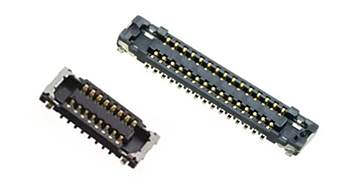
Round display projects often need custom support because the screen shape must fit the product ID design. Panox Display’s Round Display category explains that display panels are only the beginning; clients may also need cover glass, touch panels, driving boards and connectors. The page lists customized cover glass/touch panel service, connectors and controller or driver boards with interfaces such as VGA, HDMI, DVI, DP, Type-C video input, MIPI, RGB, LVDS and eDP.
For smart home products, cover glass can define the final visual quality. For wearable devices, touch integration and FPC routing affect thickness. For industrial equipment, connector reliability and driver board support can reduce development risk. For medical devices, display readability and mechanical stability should be verified in the full assembly rather than judged from the panel alone.
This is why application-based selection is more useful than size-based selection. Two screens with the same diameter may perform very differently once they are placed into a real product.
12. Conclusion
Round displays are useful because they connect product shape, interface design and display technology. In wearables, they support compact dashboards and watch-like interaction. In smart home products, they create natural rotary and touch control experiences. In medical and industrial devices, they help turn compact instruments into clear digital interfaces. In VR and optical systems, high-resolution circular-category modules can serve near-eye and handheld imaging needs. In retail and conference equipment, the circular format adds visual distinction.
Panox Display’s Round Display range covers multiple application directions, including 1.2-inch Memory LCD, 1.2-inch and 1.39-inch AMOLED, 1.28-inch and 2.1-inch round TFT-LCD touch displays, 2.54-inch high-resolution TFT-LCD for VR, 3.4-inch round LCD for medical and smart home control, and 5.0-inch round TFT-LCD with optional cover glass and controller board support. The right choice depends on the application: wearable, smart home, medical, industrial, vehicle, VR or embedded development.
For a successful round display project, the display should be selected together with the product structure, UI layout, touch method, interface plan, cover glass design and controller board strategy. When these elements work together, a circular screen becomes more than a visual feature. It becomes a practical interface built around the shape of the product.
Learn more: Why Low Power Matters for Round Displays in Wearables and IoT Devices
FAQs:
What are round displays used for?
Round displays are used in smartwatches, fitness trackers, smart home controllers, medical devices, industrial meters, vehicle accessories, VR systems, handheld equipment and dynamic information displays.
Which round display is best for smartwatches?
Round AMOLED and OLED displays are commonly used for premium smartwatches because they provide vivid color, high contrast, slim structure and sharp watch-face graphics. Memory LCD is also useful for long-standby or always-on wearable devices.
Can round TFT-LCD modules be used in smart home products?
Yes. Round TFT-LCD modules are suitable for thermostats, wall controllers, lighting panels, smart knobs and compact control systems. Larger models such as 3.4-inch and 5.0-inch round LCDs can provide more UI space for smart home interfaces.
Are round displays suitable for medical devices?
Yes. Round displays can be used in wearable health devices, portable instruments and compact medical interfaces. Selection should focus on readability, operating temperature, stability, power consumption and system integration.
Can a round display connect to Raspberry Pi or a PC?
Some modules can be tested with controller boards or compatible embedded platforms. Panox Display provides customized controller and driver board support for interfaces such as HDMI, Type-C video input, MIPI, RGB, LVDS and eDP.
Is every round display perfectly circular?
No. Some modules have a circular visible area, while others include a flat bonding area, special FPC position or cut-corner active display shape. Mechanical drawings and active-area specifications should be checked before enclosure design.