



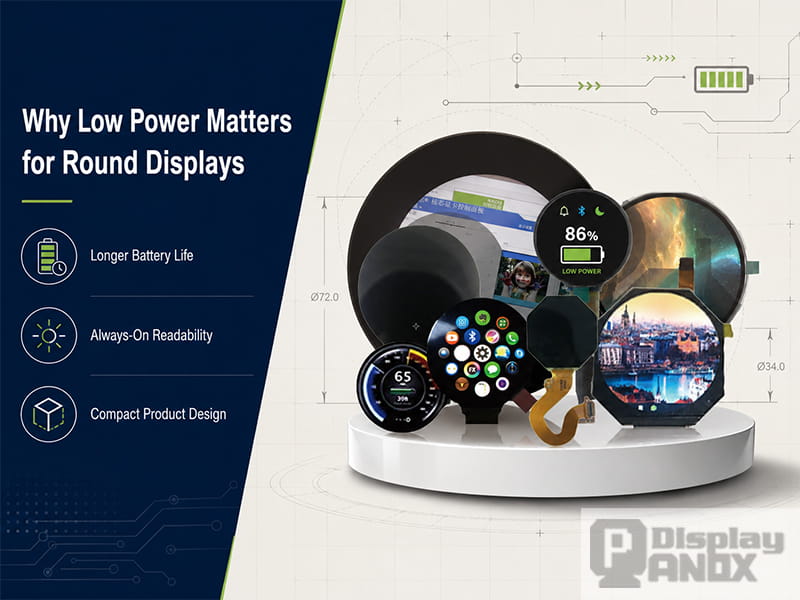
Round displays are often chosen for products that need to feel compact, glanceable and natural in the hand. Smartwatches, fitness trackers, health monitors, smart home dials, industrial meters and portable IoT devices all use circular interfaces because they fit the shape of the product better than a rectangular screen. Yet once a round display is placed inside a battery-powered device, visual design becomes only one part of the decision. Power consumption quickly becomes one of the most important engineering factors.
A circular display may look small, but it still needs a driver IC, touch panel, interface, backlight or emissive pixels, FPC routing and sometimes a cover glass. In Panox Display’s Round Display product range, the choices include 1.2-inch Memory LCD, 1.2-inch round AMOLED, 1.28-inch round TFT-LCD, 1.39-inch round OLED/AMOLED, 1.43-inch AMOLED and larger circular TFT-LCD modules for smart home and embedded devices. These products serve different power budgets and product goals, which is why the display technology should be selected early in the design process.
1. Low power is directly linked to product size
In a wearable or compact IoT product, the display competes with the battery, sensors, wireless module, processor, vibration motor, speaker, enclosure and antenna. A screen that consumes more energy may require a larger battery. A larger battery may increase thickness or weight. For a smartwatch, wrist sensor or compact medical device, even a small increase in size can affect comfort and the final industrial design.
This is why low power is more than a battery-life specification. It affects the physical structure of the product. A power-efficient round display gives engineers more room to keep the device thin, light and comfortable while still supporting a readable interface.
For round displays used in watches and wrist devices, the screen is also one of the most visible parts of the product. Users judge the device by how bright, smooth and responsive the display feels. At the same time, they dislike frequent charging. Good display selection is a balance between visual quality and energy demand.
2. Always-on information changes the power equation
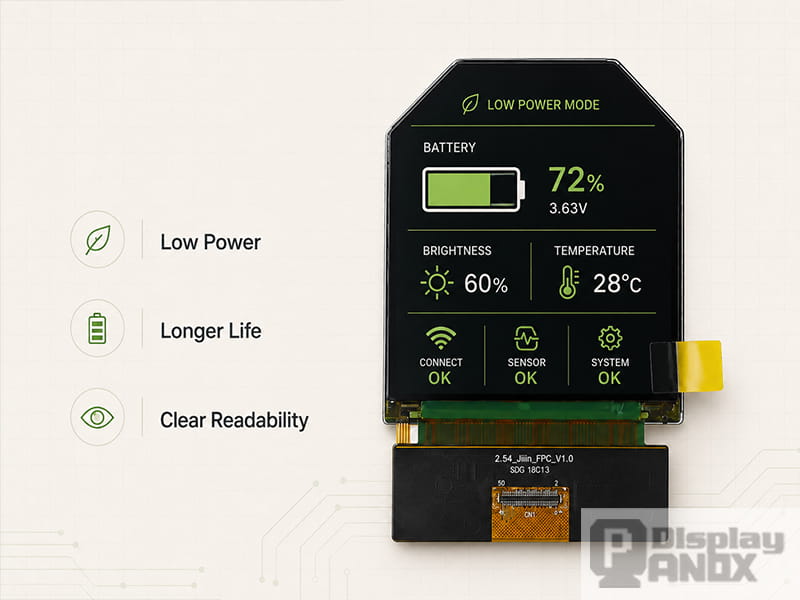
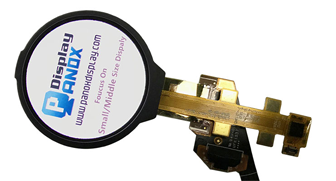
2.54 inch round/circular TFT-LCD
Many round-display products are designed for quick information access. A watch needs to show time. A fitness band may show steps, heart rate or battery status. A smart home dial may show temperature. A medical or industrial meter may show a value that should remain visible even when the device is idle.
This creates a difficult design problem. If the screen stays active all the time, the product becomes easier to read but may drain the battery quickly. If the screen sleeps too often, the device saves power but becomes less useful. Low-power display technology helps solve this conflict by allowing information to remain visible for longer periods with less energy demand.
Memory LCD is especially strong in this area. Sharp describes Memory LCD as a display technology that combines matrix technology with a one-bit memory circuit embedded into every pixel. Once information is written, the display can retain it with ultra-low power consumption, making it suitable for long battery life products.
For a round display used in an outdoor wearable, the benefit is clear. The product can show simple status information continuously without behaving like a power-hungry mini smartphone screen.
3. Why Memory LCD is important for long-standby circular devices
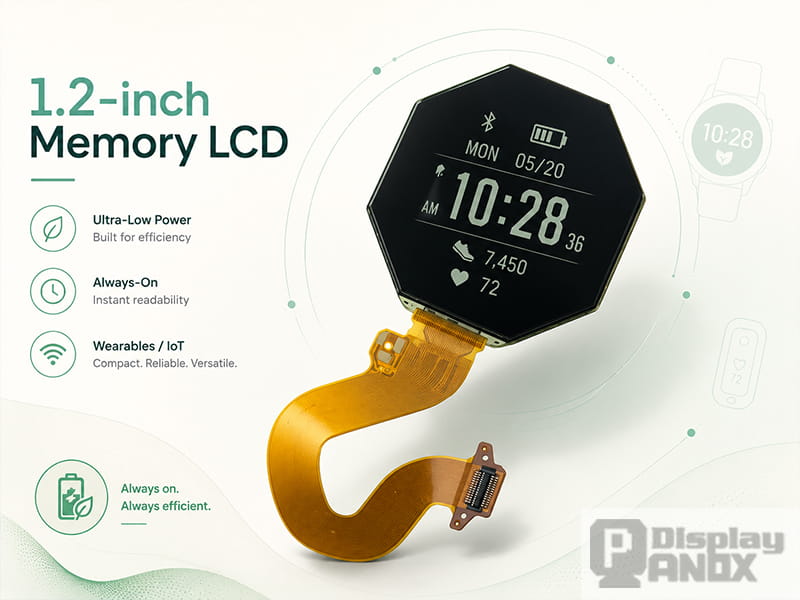
Memory LCD is a strong match for wearable and IoT products that need simple, stable and readable information. It is useful when the display content changes slowly, such as time, step count, battery status, sensor readings, basic icons or outdoor activity data.
Panox Display’s round display range includes a 1.2-inch Memory LCD with 218 × 218 resolution and RGB interface. This type of module is better suited to low-power wearable and IoT designs than to animation-heavy interfaces.
The main advantage is that the display does not need to redraw the whole screen constantly for static information. In many wearable products, most of the screen content is stable for several seconds or even several minutes. A Memory LCD can use this pattern efficiently.
This makes Memory LCD a practical choice for:
smartwatches with long standby time, outdoor fitness trackers, compact health monitors, small IoT meters, industrial sensor nodes, portable instruments and battery-powered status displays.
The trade-off is that Memory LCD usually cannot provide the same rich color, deep black and premium animation experience as AMOLED. For products where visual impact is the priority, AMOLED may be more attractive. For products where battery life and outdoor readability matter more, Memory LCD deserves serious consideration.
4. Why AMOLED power depends on display content
Round AMOLED displays are common in premium smartwatches because they offer vivid color, deep black, high contrast and wide viewing angles. Panox Display’s 1.2-inch round OLED, for example, uses a 390 × 390 AMOLED display with MIPI/SPI interface and is positioned for smartwatch, vehicle, smart home, instrument and industrial applications that need colorful images and low consumption.
AMOLED power behavior is different from TFT-LCD. In an OLED system, each pixel emits its own light. A black pixel can consume nearly zero energy, while a bright image with a white background can require much more power. A ScienceDirect paper on OLED-based mobile devices notes that OLED power consumption is highly dependent on displayed content, and that OLED may consume very little energy on black screens while bright white content can consume significantly more power.
This is why many round AMOLED smartwatch interfaces use dark backgrounds, thin colored arcs, minimal text and high-contrast icons. That visual style is not only fashionable. It also matches the power behavior of the display.
For round AMOLED modules, interface design should consider:
dark UI backgrounds, limited full-white screens, controlled brightness, efficient watch-face layouts, reduced unnecessary animation and appropriate refresh behavior.
Recent research on ultra-low-power AMOLED displays for smart wearable applications also identifies AMOLED as one of the major power-consuming components in wearable products and discusses optimization across the power chip, driver chip, array substrate, light-emitting structure and light-transmitting structure.
In practical terms, choosing AMOLED is not the end of the power discussion. The display module, driver settings, brightness target, refresh rate and UI content all affect the final battery life.
5. Why TFT-LCD still matters in round display projects
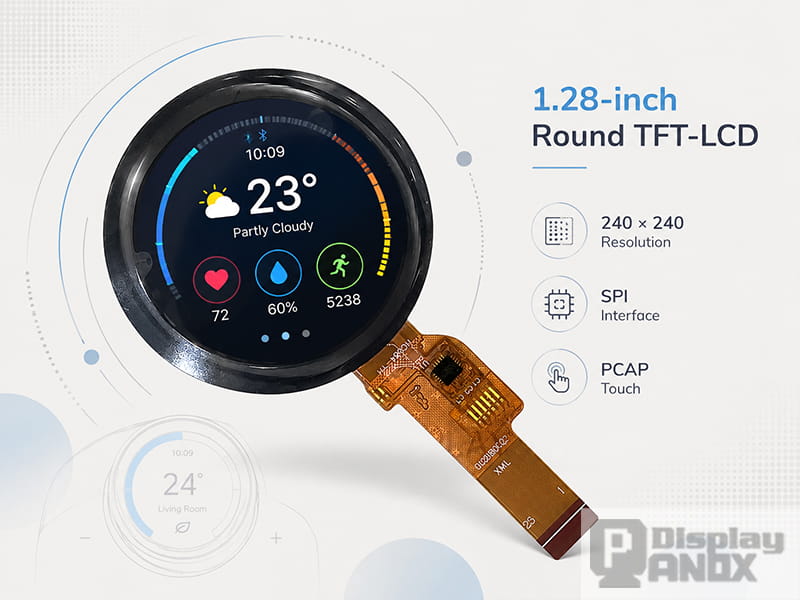
TFT-LCD remains important for circular displays because it offers mature supply, stable performance, good cost control and broad compatibility with embedded systems. A round TFT-LCD can be a strong choice for smart home panels, rotary controllers, industrial meters and development systems where the product has a larger battery, external power or controlled usage time.
Panox Display’s 1.28-inch round TFT-LCD module uses 240 × 240 resolution, SPI interface and PCAP touch, making it suitable for compact control interfaces and MCU-based projects. The product range also includes 2.1-inch round TFT-LCD modules with 480 × 480 resolution and SPI/RGB interface for larger circular HMI designs.
TFT-LCD power consumption is often tied to the backlight. If the backlight stays bright, energy use rises. If the product can dim the backlight, turn it off when idle or wake the display only when touched, a round TFT-LCD can still work well in power-sensitive designs.
This makes TFT-LCD practical for products such as smart thermostats, control knobs, desktop controllers, instrument panels, industrial HMIs and compact dashboards. These products may value stable brightness, touch support and cost efficiency more than always-on battery life.
A review of display technologies focusing on power consumption highlights that low and ultra-low-power display technologies are important for modern product needs, including portable and energy-conscious devices.
6. Interface choice also affects power and integration
The display panel is only one part of the system. The interface between the display and the host processor also matters. Small round TFT-LCD modules often use SPI because it is simple and friendly to MCU platforms. Higher-resolution AMOLED and TFT-LCD modules often use MIPI DSI because it can transmit more display data with fewer pins.
MIPI DSI is defined as a high-speed serial interface between a host processor and a display module. The MIPI Alliance states that the interface helps manufacturers achieve high performance, low power, low EMI and reduced pin count.
For a compact round display product, fewer pins can simplify routing and reduce mechanical complexity. Lower EMI can also matter in wearable, medical and IoT systems where antennas, sensors and compact PCB layouts are close to the display.
When choosing between SPI, RGB and MIPI, engineers should consider the required resolution, frame rate, MCU or processor platform, cable length, EMI sensitivity, power modes and available driver support.
7. Low power improves user experience, not just battery life
Battery life is the most obvious benefit of a low-power round display, but the user experience benefits go further.
A low-power display can make the product feel more reliable. Users do not need to check battery status as often. The product can show important information for longer. The enclosure can remain slimmer because the battery does not need to compensate for an inefficient screen. The device can also run cooler, which matters for wrist-worn and handheld products.
For round displays, this is especially important because many circular devices are designed to be close to the body or used at a glance. A smartwatch, a medical wearable or a handheld meter should feel ready whenever the user looks at it.
If the display is too power-hungry, the product designer may be forced into uncomfortable compromises: lower brightness, shorter active time, thicker battery, slower refresh or aggressive sleep behavior. A better display choice reduces the need for these compromises.
8. How to choose the right low-power round display
The best low-power round display depends on what the product needs to show and how often the screen updates.
| Product type | Recommended display direction | Why it fits |
|---|---|---|
| Long-standby smartwatch | Memory LCD or optimized AMOLED | Memory LCD supports always-on information; AMOLED supports premium color UI when power is managed carefully |
| Premium wearable device | Round AMOLED | High contrast, vivid color, dark UI efficiency and slim module structure |
| Outdoor tracker or IoT meter | Memory LCD | Good for static data, long battery life and simple always-on visibility |
| Smart home dial | Round TFT-LCD or AMOLED | TFT-LCD works well for cost-sensitive control panels; AMOLED is better for premium visual design |
| Industrial circular HMI | Round TFT-LCD | Mature interface options, touch support and stable integration |
| Medical portable device | Memory LCD, TFT-LCD or AMOLED depending on content | Choose based on standby time, brightness, color requirements and data refresh frequency |
For a simple status display, Memory LCD may be the most efficient option. For a colorful smartwatch-style interface, AMOLED is often the better experience. For an embedded control panel where power is available or the display only wakes during operation, TFT-LCD can be more practical.
9. Power-aware UI design for round displays
A low-power display module works best when the user interface follows the same goal. The UI should be designed around both the shape and the power behavior of the screen.
For round AMOLED displays, dark backgrounds, compact icons, colored rings and limited white areas can reduce power demand while keeping the interface attractive. For Memory LCD, the UI should use clear monochrome or low-color graphics, simple data zones and slow-changing content. For TFT-LCD, brightness control, timeout behavior and wake-on-touch logic are especially important.
Round displays also need careful layout because the corners of a rectangular interface do not exist. Important information should stay near the center, while secondary indicators can follow a circular or radial structure. Research on round smartwatch interaction notes that the lack of corners and the circular edge can make certain bezel-initiated interactions more challenging, especially in eyes-free situations.
This means low-power design should not be treated separately from interface design. Screen shape, interaction method and power strategy need to work together.
10. How Panox Display supports low-power round display projects
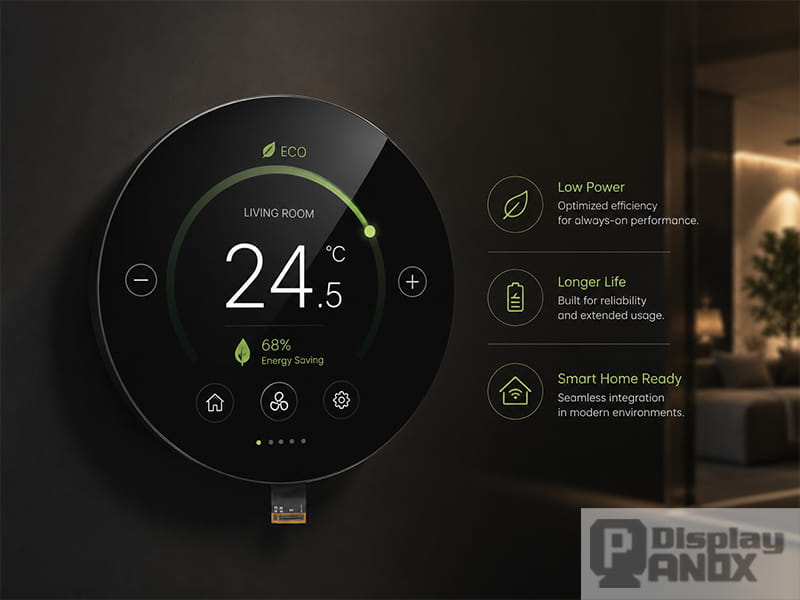
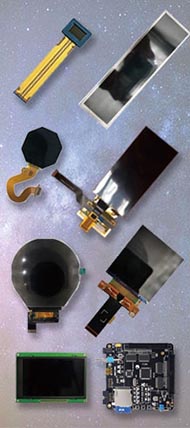
Panox Display supplies round OLED, AMOLED, Memory LCD and TFT-LCD modules for wearable, smart home, industrial, vehicle, handheld and embedded applications. Its circular display product page includes small wearable displays such as 1.2-inch Memory LCD, 1.2-inch AMOLED, 1.28-inch round TFT-LCD, 1.39-inch round OLED/AMOLED and larger round TFT-LCD options.
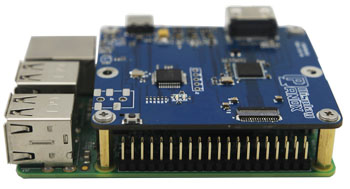
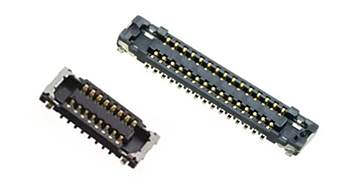
For engineers, choosing the panel is only the first step. Real products may also need touch panels, cover glass, connectors, FPC adjustments and driver boards. Panox Display provides customized cover glass and touch panel services, connectors, and controller or driver boards with interfaces such as VGA, HDMI, DVI, DP, Type-C video input, MIPI, RGB, LVDS and eDP.
This is useful for companies developing smartwatches, smart home knobs, medical devices, industrial meters or IoT products. A display supplier that can help with panel selection, interface matching and mechanical integration can reduce development risk before mass production.
Conclusion
Low power consumption is one of the key reasons a round display succeeds in a wearable or compact IoT product. It affects battery life, product size, thermal comfort, always-on readability, user experience and enclosure design.
Memory LCD is a strong choice for long-standby, always-on and outdoor-readable applications. AMOLED is ideal for premium wearable interfaces when the UI, brightness and refresh behavior are designed carefully. TFT-LCD remains practical for smart home, industrial and embedded circular interfaces where cost, integration and stable brightness are important.
A round display should be selected according to the full product scenario: battery size, active time, standby behavior, brightness, interface, touch, cover glass, UI style and application environment. When these factors are considered together, the display becomes a real product advantage rather than a power burden.
Panox Display can support round display projects with circular OLED, AMOLED, Memory LCD and TFT-LCD modules, as well as customized touch panels, cover glass and controller board solutions for product development and mass production.
Learn more: What Is a Round Display? A Practical Guide to Circular LCD, OLED and AMOLED Modules
FAQs:
Why is low power important for round displays?
Low power is important because round displays are often used in small battery-powered products such as smartwatches, IoT meters and wearable devices. A lower-power screen can extend battery life, reduce product thickness and support always-on information.
Is AMOLED good for low-power round displays?
AMOLED can be power-efficient when the interface uses dark backgrounds and controlled brightness. Since OLED pixels emit their own light, power consumption depends heavily on the displayed content. Bright white screens consume more power than dark watch-style interfaces.
When should I choose Memory LCD for a round display?
Memory LCD is a good choice when the product needs long standby time, simple data display, outdoor readability and always-on information. It is suitable for fitness trackers, compact IoT devices, meters and low-power wearable products.
Is round TFT-LCD suitable for battery-powered products?
Round TFT-LCD can be suitable if the display is used intermittently or the backlight is managed carefully. It is often a practical choice for smart home dials, industrial meters and embedded control panels.
Does the display interface affect power consumption?
Yes. The interface affects integration, pin count, EMI and system behavior. MIPI DSI is often used for higher-resolution displays because it supports high-speed communication with low power and reduced pin count.
Can Panox Display provide custom round display solutions?
Yes. Panox Display provides round OLED, AMOLED, Memory LCD and TFT-LCD modules, along with customized touch panels, cover glass, connectors and controller board solutions for different product applications.