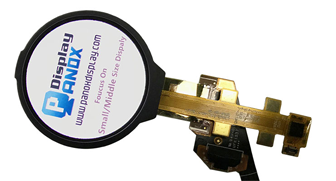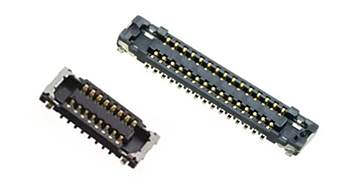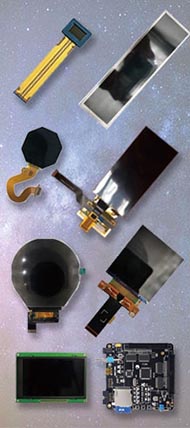




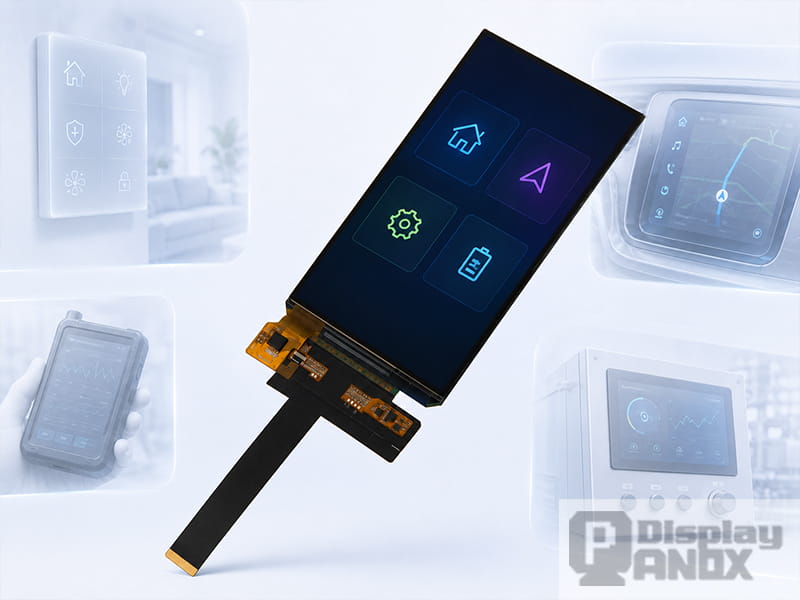
On-Cell displays are widely used in products where the screen is expected to be thin, bright, responsive, and easy to integrate into a finished device. Instead of adding a separate external touch panel above the display, On-Cell technology places the touch sensor on the display cell, helping product teams build a cleaner front stack while keeping projected capacitive touch available for everyday interaction. Panox Display describes On-Cell touch as a structure that embeds the touch layer between the color filter substrate and the polarizer, with the touch sensor placed on the display panel. The same On-cell category page also notes that this structure is easier to produce than In-Cell touch and has little impact on effective display pixels or image quality.
From an application point of view, On-Cell is especially useful in small and medium-size OLED products. Synaptics describes On-Cell as a simple and dependable way to add touch to a display, and notes that it is often a good choice for AMOLED displays, larger display sizes, curved displays, and flexible displays. This makes it a practical touch solution for smartwatches, bracelets, mobile phones, handheld terminals, medical devices, portable game consoles, navigation equipment, smart home controls, and flexible OLED concepts.
Why Application Comes Before Screen Size
When choosing an On-Cell display, screen size is only the starting point. A wearable device, a mobile terminal, and a foldable OLED product may all use integrated touch, but they place very different demands on the display module.
A smartwatch needs a compact display with low power consumption, a clean cover glass design, and reliable touch response in a very limited interaction area. A handheld terminal may need higher brightness, a larger active area, MIPI interface support, and enough durability for outdoor or industrial use. A flexible OLED device has to consider bending radius, cover material, FPC position, and touch performance under mechanical stress.
Projected capacitive touch is often used in these products because it can detect changes in capacitance across a row-and-column electrode structure. Renesas explains that projected capacitive touch screens measure mutual capacitance at individual intersections, allowing the system to detect multiple touches during one scan. For On-Cell OLED modules, this means the display can support direct finger interaction while keeping the overall product structure thinner than many external touch-panel designs.
1. Wearable Devices and Smartwatches
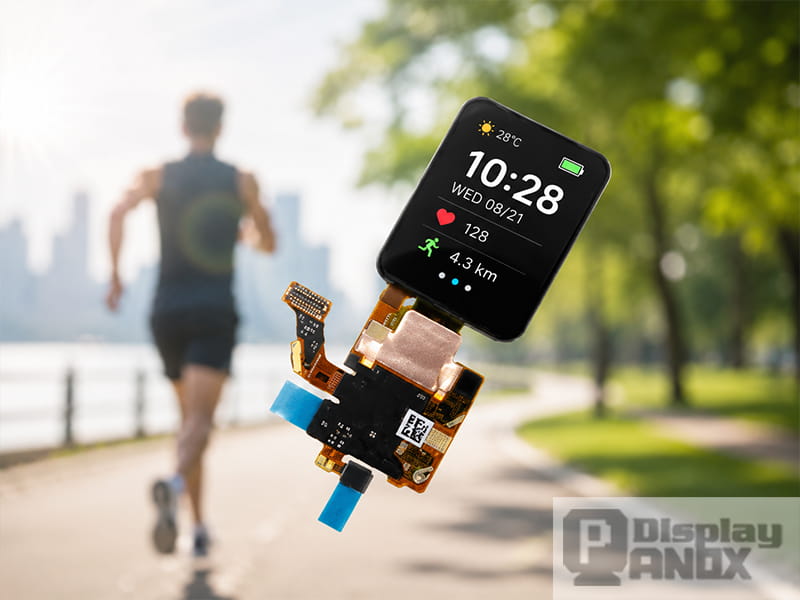
Wearable devices are one of the most natural application areas for On-Cell OLED displays. The screen is small, the battery is limited, and the product usually needs a smooth front surface with few mechanical buttons. Research on smartwatch interaction points out that touchscreen control has become a fundamental input method for smartphones and smartwatches, while the small form factor of a smartwatch limits the available interactive surface area.
This is where On-Cell AMOLED modules become useful. They combine vivid OLED image quality with integrated PCAP touch, helping developers create compact watch faces, bracelet screens, health-monitoring interfaces, and sports-tracking displays. Panox Display’s On-cell category includes multiple wearable-oriented AMOLED modules, such as 0.95-inch, 1.2-inch round, 1.41-inch, 1.43-inch, 1.47-inch, 1.6-inch, 1.78-inch, and 2.04-inch options.
For bracelet-style devices, the 0.95-inch AMOLED On-Cell module is designed for wearable bracelets and smartwatches, with 120 × 240 resolution, integrated On-Cell capacitive touch, I2C touch interface, and support for multiple touch points according to the product page. A compact screen like this fits fitness bands, simple health trackers, notification bracelets, and small wearable controllers where the UI is mostly icons, numbers, and short text.
For round smartwatch designs, the 1.2-inch round OLED module offers 390 × 390 resolution, PCAP On-Cell touch, and MIPI/SPI/Q-SPI interface options. Panox lists wearable devices, vehicle, smart home, handheld equipment, and other applications that need vivid color and wide viewing angles. Round modules are especially suitable for traditional watch-style ID designs, where the display has to support circular dials, sports rings, heart-rate UI, and compact menu navigation.
The 1.41-inch OLED On-Cell module is aimed directly at smartwatch use. Panox describes it as more than 50% thinner and lighter than LCD, with high contrast, wide color gamut, wide operating temperature, and a design direction for smart watches. It fits square or rounded-square wearable products that need a richer UI than a narrow bracelet but still require a compact module.
For products that need a larger smartwatch interface, the 1.78-inch OLED On-Cell module offers 368 × 448 resolution, MIPI/SPI interface, an integrated CTP with TMA525C touch IC, and application directions including wearable and medical equipment. The larger active area gives UI designers more space for health cards, fitness data, quick settings, call alerts, and multi-screen menus.
The 2.04-inch AMOLED On-Cell module moves closer to a compact PDA or advanced wearable screen. Panox lists 368 × 448 resolution, 700 cd/m² luminance, Q-SPI interface, high contrast, wide operating temperature, On-Cell touch, and use cases including smart watches, PDA, wearable devices, medical devices, portable information devices, and electronic locks. This makes it suitable for larger wrist devices, compact health monitors, access-control terminals, and small control panels where the UI needs more breathing room.
2. Mobile Phones and Compact Handheld Devices
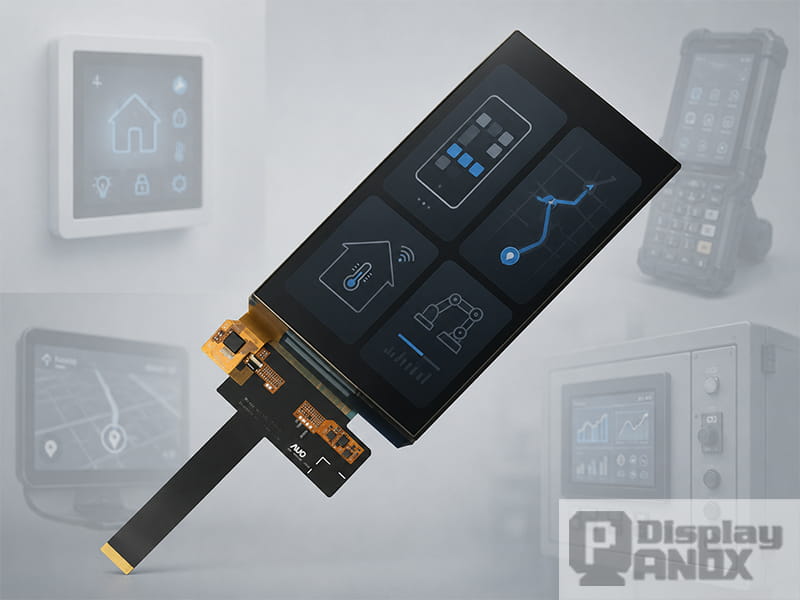
On-Cell displays are also useful in mobile and handheld devices because the front stack has to stay slim while the user expects fast touch response and high image quality. In this category, the display is often larger than a smartwatch screen, so the product team also needs to consider interface bandwidth, brightness, cover glass strength, and controller-board options.
Panox’s 5.0-inch OLED On-Cell module uses a 720 × 1280 AMOLED panel with MIPI interface and On-Cell PCAP touch. The product page lists applications including mobile phone, handheld equipment, vehicle, smart home, GPS, industrial device, and military equipment that require colorful images, low power consumption, and sunlight readability. This size can work well for handheld terminals, compact Android/Linux devices, GPS units, inspection tools, smart home panels, and embedded product prototypes.
For phone-like products or curved front designs, the 5.1-inch flexible OLED On-Cell module is a more specialized option. Panox describes it as a BOE flexible OLED for cellphones and other applications such as robots and VR, with wide color gamut, DCI-P3/sRGB, touch-on-film, a Goodix touch chip for On-Cell OLEDs, and a COF structure that supports vertical bending. This type of module is relevant when the product is not a standard flat display, such as a curved handheld device, robot control interface, experimental VR accessory, or mobile prototype with a 2.5D cover glass concept.
The 5.5-inch FHD On-Cell OLED module moves into a more professional handheld direction. Panox lists 1080 × 1920 resolution, On-Cell CTP, wide operating temperature, and application areas such as industrial control, medical equipment, telecommunication, numerical control, monitors, instruments, and military products. This makes it a good candidate for compact equipment that needs a sharper interface than a simple display, such as portable test instruments, diagnostic devices, and handheld control systems.
3. Medical Devices and Portable Instruments
Medical and portable instrument displays need more than attractive color. The screen has to show information clearly, respond reliably, and fit into a housing that may need cleaning, sealing, or repeated handling. On-Cell OLED modules can help because they combine display and touch in a compact structure while still allowing the final product to use a customized cover glass.
For small medical wearables, the 1.78-inch OLED On-Cell module is a practical example because Panox directly lists wearable and medical equipment as applications. It also provides MIPI/SPI interface support, integrated touch, 2 g typical mass, sunlight readability, and a wide operating temperature range in the product specification area. A module like this can fit wrist-type medical monitors, patient alert devices, compact health dashboards, and portable measurement tools.
For larger portable medical products, 2.04-inch and 5.5-inch On-Cell modules give designers more display space. The 2.04-inch AMOLED module is listed for medical devices and portable information devices, while the 5.5-inch FHD OLED module is listed for medical equipment and instruments. In both cases, the value of On-Cell touch is that the interface can remain direct and intuitive without adding a separate external touch panel layer during early product development.
Cover glass planning is still important. Panox’s product FAQ notes that when a display already has On-Cell or In-Cell touch, the product usually only needs cover glass; if the display has no integrated touch, an external touch panel is required. For medical and instrument applications, that cover glass decision should include surface treatment, cleaning resistance, optical bonding, ESD protection, edge printing, and housing pressure.
4. Industrial Control, GPS, Vehicle and Smart Home Interfaces
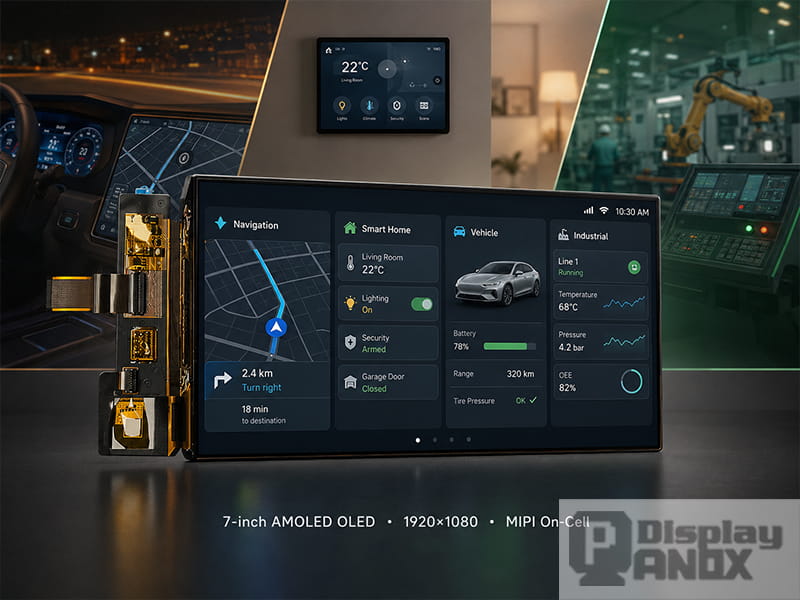
A growing number of industrial and smart-home products use small-to-medium displays as the main control surface. These products often need higher contrast, clear icons, simple menus, and reliable touch in a compact enclosure. On-Cell OLED modules can be useful when the product needs a premium visual interface without making the front stack too complex.
The 5.0-inch OLED On-Cell module is one of the most flexible examples in the Panox On-cell category. Its application list includes handheld equipment, vehicle, smart home, GPS, industrial device, and military equipment. The product page also lists MIPI interface, sunlight readability, wide operating temperature, high contrast, and On-Cell CTP. This makes it suitable for vehicle auxiliary screens, portable navigation devices, home control panels, smart locks, small industrial HMIs, and field-service terminals.
The 7-inch AMOLED On-Cell module is better suited for handheld devices that need a larger interface. Panox lists 1080 × 1920 FHD resolution, 315 PPI, 800 cd/m² luminance, 165 Hz refresh rate, MIPI 4-lane interface, 100000:1 contrast ratio, On-Cell touch, and applications including mobile phone, portable GPS, and handheld game console. A 7-inch On-Cell AMOLED can fit portable navigation equipment, gaming-style control panels, smart inspection devices, and industrial products where a high-brightness touch interface is needed.
For larger embedded systems, the 10.5-inch OLED 2K On-Cell module gives developers a tablet-like display area. Panox describes it as a 10.5-inch full-color AMOLED with 2560 × 1600 resolution, MIPI interface, integrated On-Cell PCAP touch, DCI-P3/sRGB, matte surface, wide color gamut, and uses including tablets, industrial machines, turnkey solutions, navigation, and acoustic applications. This class of module is useful for professional panels where the screen needs to display maps, dashboards, diagnostic software, machine status, or multi-window content.
5. Flexible OLED Products, Foldable Concepts and Design Prototypes
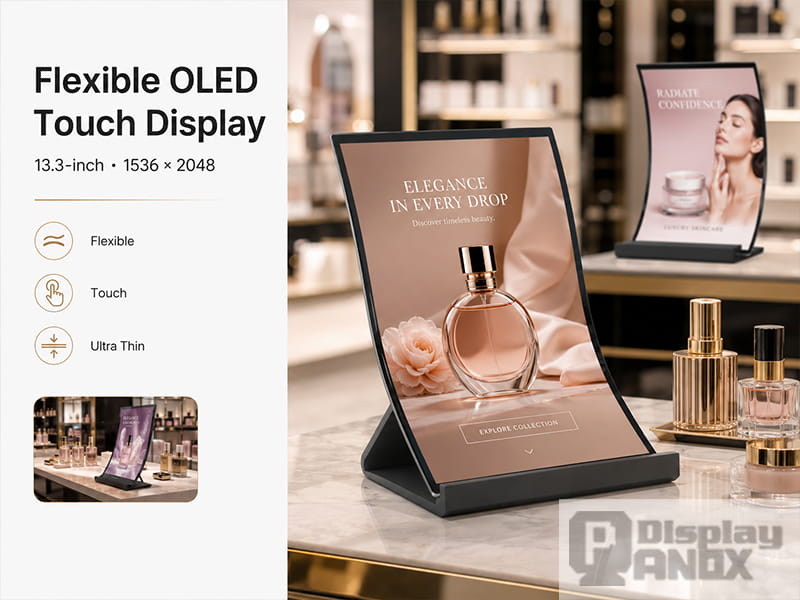
13.3 inch 1536 x 2048 Flexible OLED Touch Screen
Flexible OLED products require a different design mindset. The display may bend, roll, or fit into a curved product surface, so the touch system has to be considered together with the mechanical stack. Synaptics’ S3930 touch controller product brief describes the demand for high-performance, low-latency touch in foldable OLED and ultra-thin mobile displays, especially where display noise, thin stack-ups, and dynamic bending are common.
Panox’s 5.1-inch flexible OLED On-Cell module is a good example for smaller flexible projects. It is described as a BOE flexible OLED for cellphones, robots, and VR-related applications, with On-Cell touch, a Goodix touch chip, COF structure, and a thinner/lighter form factor suitable for 2.5D cover glass smartphone designs. This type of product is useful for mobile prototypes, curved handheld products, robot interfaces, and experimental wearable or VR control screens.
At the larger end, Panox’s 13.3-inch flexible OLED touch screen is designed for more ambitious product concepts. The product page lists 1536 × 2048 resolution, 50,000+ folds, Wacom touch, 111% NTSC color, 0.53 mm ultra-thin design, eDP 1.3 interface, 3R curvature radius, and applications such as foldable laptops, tablets, rollable signage, wrap-around interfaces, field medical devices, outdoor kiosks, and aviation displays. For applications like digital sketching, foldable tablets, portable monitors, and curved professional displays, integrated touch helps the screen feel like a complete interaction surface rather than a separate display plus touch assembly.
6. Development Boards, Cover Glass and Integration Support
For many engineers, choosing the display is only half of the project. The other half is getting it to light up, display the right image, respond to touch, fit the housing, and survive the product’s operating environment. This is why application matching should include the interface, controller board, cover glass, connector, and touch tuning.
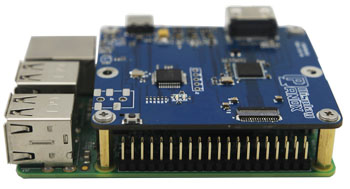
Panox’s On-cell category page states that the company provides customized cover glass/touch panel service and can supply driver ICs from Goodix and Focaltech. It also mentions controller/driver boards with VGA, HDMI, DVI, DP, Type-C video input, MIPI, RGB, LVDS, and eDP, with functions such as brightness adjustment, touch interface, extra data transmission, and gyroscope support. For developers using Raspberry Pi, PC platforms, embedded Linux boards, or MCU-based systems, this type of support can shorten the prototype stage.
This matters most in application projects where the display interface is not directly supported by the host system. A small wearable module may use SPI, Q-SPI, MIPI, or I2C for touch. A 7-inch or 10.5-inch OLED may need MIPI conversion or an HDMI controller board. A flexible OLED may need careful FPC routing and cover design. Matching the display to the application also means checking whether the engineering team can drive it reliably during sample testing.
Panox On-Cell Display Application Matrix
| Application direction | Recommended On-Cell display type | Panox product examples | Why it fits |
|---|---|---|---|
| Fitness bracelet and simple wearable | 0.95-inch to 1.2-inch AMOLED On-Cell | 0.95-inch AMOLED 120 × 240; 1.2-inch round OLED 390 × 390 | Compact size, low power direction, integrated touch, suitable for small icons and health data. |
| Smartwatch and health wearable | 1.41-inch to 2.04-inch AMOLED On-Cell | 1.41-inch, 1.47-inch, 1.78-inch, 2.04-inch On-Cell AMOLED | Suitable for watch UI, sport mode, notification, heart-rate display, and compact medical wearable interfaces. |
| Mobile and handheld equipment | 5.0-inch to 5.5-inch AMOLED On-Cell | 5.0-inch 720 × 1280; 5.5-inch FHD On-Cell OLED | Good for handheld terminals, GPS, industrial tools, smart home panels, and phone-like devices. |
| Portable gaming and navigation | 7-inch high-brightness AMOLED On-Cell | 7-inch 1080 × 1920 AMOLED, 800 cd/m², 165 Hz | Larger screen area, high luminance, high refresh rate, On-Cell touch, suitable for portable GPS and handheld game consoles. |
| Tablet, industrial machine and professional control | 10.5-inch 2K AMOLED On-Cell | 10.5-inch 2560 × 1600 OLED MIPI On-Cell touch | High-resolution touch interface for tablets, navigation, industrial machines, and turnkey systems. |
| Flexible and foldable product concepts | Flexible OLED On-Cell touch | 5.1-inch flexible OLED; 13.3-inch flexible OLED touch screen | Fits curved mobile devices, robots, VR-related interfaces, foldable tablets, rollable signage, and creative professional displays. |
How to Match an On-Cell Display to Your Application
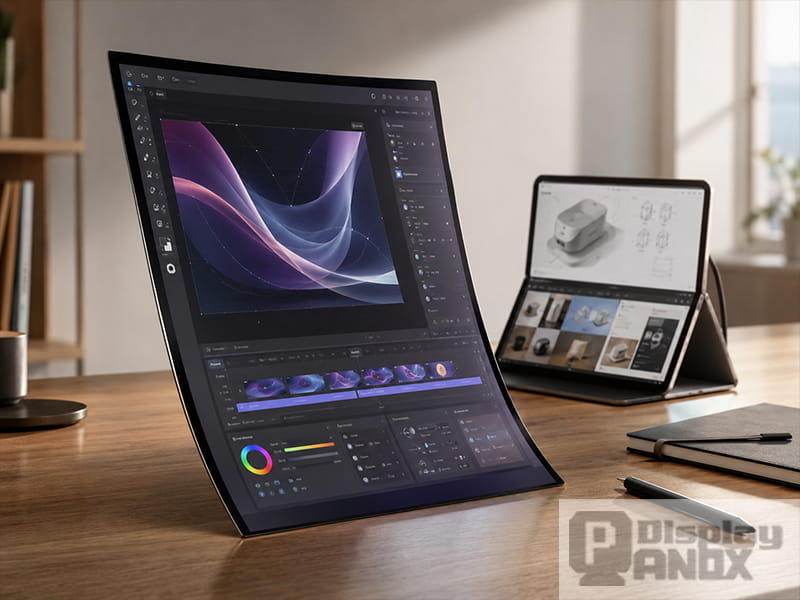
13.3 inch 1536 x 2048 Flexible OLED Touch Screen
A wearable product should start with size, UI density, power budget, cover glass shape, and whether the product needs a round, square, or long-strip display. A 0.95-inch display may be enough for steps, heart rate, and simple alerts, while a 1.78-inch or 2.04-inch display gives the interface more space for menus, cards, and medical-style information.
A handheld or industrial product should begin with brightness, interface, mechanical strength, and operating temperature. If the product will be used outdoors, the display should be tested with the final cover glass, coating, and bonding method. A module marked as sunlight readable still needs real-world validation once the enclosure, glass, and UI colors are finalized.
A flexible OLED product should start with the mechanical stack. The key questions are bending radius, bend direction, whether the display bends during use, how the FPC exits the housing, and whether the cover layer is rigid, flexible, or replaceable. The touch system, display, cover material, and adhesive should be evaluated as one structure.
For all applications, the final selection should confirm screen size, resolution, interface, brightness, touch interface, cover glass requirements, FPC location, operating temperature, controller-board availability, and sample support. These details often decide whether a promising display module becomes a stable product design.
Conclusion
On-Cell display applications are broad because the technology solves a common product-design problem: how to combine high-quality image display and responsive touch input without making the front stack unnecessarily complex. For wearables, it helps create compact and clean touch interfaces. For mobile and handheld devices, it supports vivid OLED image quality and direct interaction. For medical, industrial, and smart home products, it makes the display easier to integrate into a finished device. For flexible OLED projects, it supports thinner and more adaptable product concepts.
Panox Display’s On-cell product range covers small wearable AMOLED modules, round smartwatch displays, mobile-size OLED touch screens, high-brightness 7-inch AMOLED modules, 10.5-inch 2K OLED touch screens, and flexible OLED products. The best choice depends on the application first, then the screen size, resolution, brightness, interface, cover glass, touch requirements, and controller support.
Learn more: Why Is On-Cell Touch Important for Wearable OLED Displays?
FAQs:
What applications are best suited for On-Cell displays?
On-Cell displays are well suited for wearables, smartwatches, bracelets, handheld terminals, mobile devices, smart home controls, medical equipment, navigation systems, portable game consoles, industrial interfaces, and flexible OLED products. The main advantage is that display and touch are integrated into a thinner and cleaner module structure.
Are On-Cell OLED displays suitable for smartwatches?
Yes. Smartwatches benefit from On-Cell OLED because the display can remain thin while supporting direct PCAP touch. Panox’s On-cell category includes multiple wearable AMOLED modules from 0.95 inch to 2.04 inch, including round, square, and rectangular options.
Can On-Cell displays be used in medical equipment?
Yes, especially in compact medical wearables, portable information devices, and handheld instruments. Panox lists medical equipment or medical devices as application areas for several OLED On-Cell modules, including the 1.78-inch, 2.04-inch, and 5.5-inch product directions.
Is On-Cell touch suitable for outdoor handheld devices?
It can be suitable when brightness, contrast, cover glass, bonding, coating, and UI design are handled properly. Panox’s 5.0-inch, 7-inch, and 10.5-inch OLED On-Cell modules are listed with sunlight-readable or outdoor-readable directions, but final readability should always be tested under the actual lighting conditions of the product.
Does an On-Cell display still need cover glass?
Yes. On-Cell touch means the touch sensor is integrated on the display panel, but the final device still needs cover glass or a cover lens for protection, appearance, sealing, and surface treatment. Panox’s FAQ explains that displays with On-Cell or In-Cell touch usually need only cover glass, while displays without integrated touch need an external touch panel.