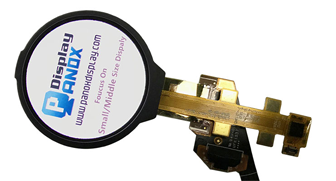




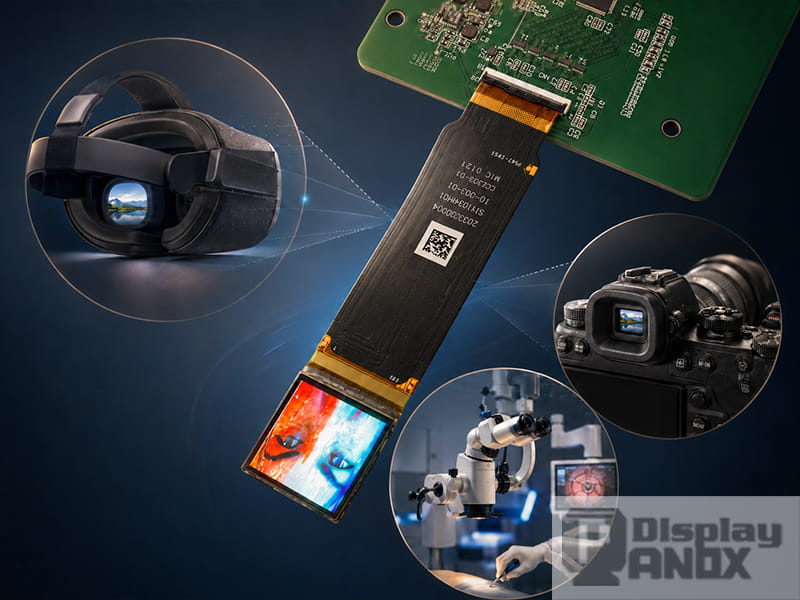
1.03 inch Micro OLED Display 2K for AR/FPV
Augmented reality is moving from experimental headsets into more focused products: lightweight smart glasses, FPV goggles, industrial guidance tools, medical viewers, professional electronic viewfinders, and compact optical engines. These devices may look very different from the outside, but they share the same display challenge. A very small panel must generate a sharp image, pass it through a compact optical path, and deliver readable visual information close to the eye.
This is where Micro OLED display technology becomes especially useful. In AR and near-eye display systems, the panel is magnified through lenses, prisms, birdbath optics, or waveguides. A display that looks acceptable when viewed directly may look soft, dim, or pixelated after optical magnification. Research on optical see-through AR near-eye displays describes the basic system as an image source, magnifying or relay optics, and an optical medium that projects virtual images into the user’s eye while allowing real-world light to pass through. The same review also highlights key tradeoffs such as resolution, eyebox, form factor, field of view, eye relief, brightness, and full color.
Micro OLED displays are well suited to many of these applications because they combine compact size, high pixel density, high contrast, fast response, and self-emissive image quality. Sony Semiconductor describes OLED microdisplays as offering high resolution, high contrast, wide color gamut, and fast response, with applications covering electronic viewfinders, AR/VR, scopes, and other compact optical products. A 2025 review of OLED-on-silicon microdisplays also notes that OLED microdisplays are important for near-to-eye platforms because of their deep blacks, fast response, thin structure, power efficiency, and lack of backlight.
1. Micro OLED Displays for AR Glasses
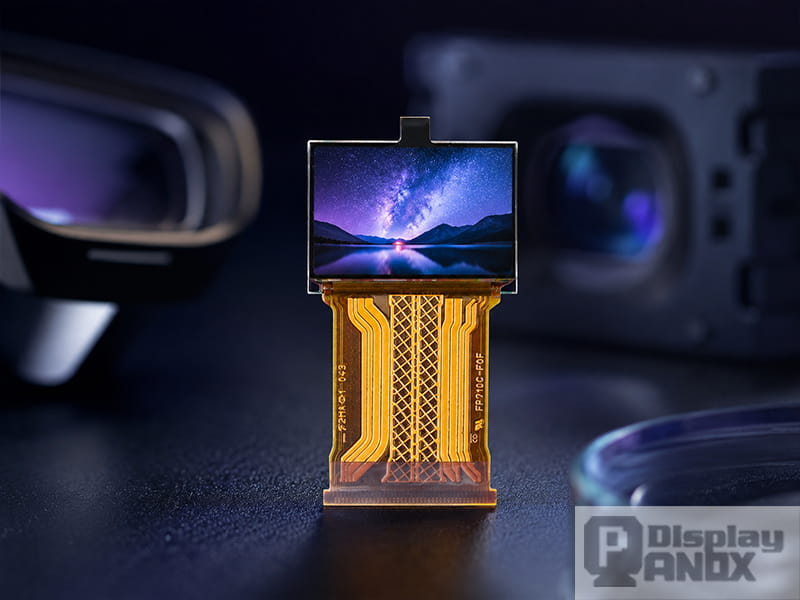
0.71 inch Micro OLED 1920x1080 LVDS 3000 nits
AR glasses are one of the most visible application areas for Micro OLED displays. In this type of device, the display panel works as the image source inside a small optical engine. The image is then enlarged and guided into the user’s field of view through a prism, birdbath structure, or waveguide system.
For everyday smart glasses, the display content may be simple: notifications, navigation arrows, translation captions, subtitles, AI assistant responses, reminders, or camera information. Even simple content needs a high-quality display because text and icons are viewed very close to the eye. Fine pixel pitch, high contrast, and stable brightness make the difference between a display that feels usable and one that causes eye strain.
Compact Micro OLED panels are especially suitable for this type of product. PanoxDisplay’s AR display panel category includes options such as 0.39-inch Micro OLED panels, a 0.49-inch Full HD Si-OLED display with 1920 × 1080 resolution and 4391 PPI, 0.5-inch Micro OLED modules, and 0.71-inch Full HD Micro OLED panels. These products cover different integration routes, including MIPI, LVDS, RGB, I2C, and SPI interfaces depending on the model.
For lightweight smart glasses, smaller panels such as 0.39-inch and 0.49-inch Micro OLED displays can help reduce optical engine volume. For glasses that need a larger virtual image or higher perceived sharpness, 0.71-inch Full HD Micro OLED panels may be more suitable. The final choice depends on field of view, optical path, housing space, brightness target, and interface design.
2. FPV Goggles and Drone Visual Systems
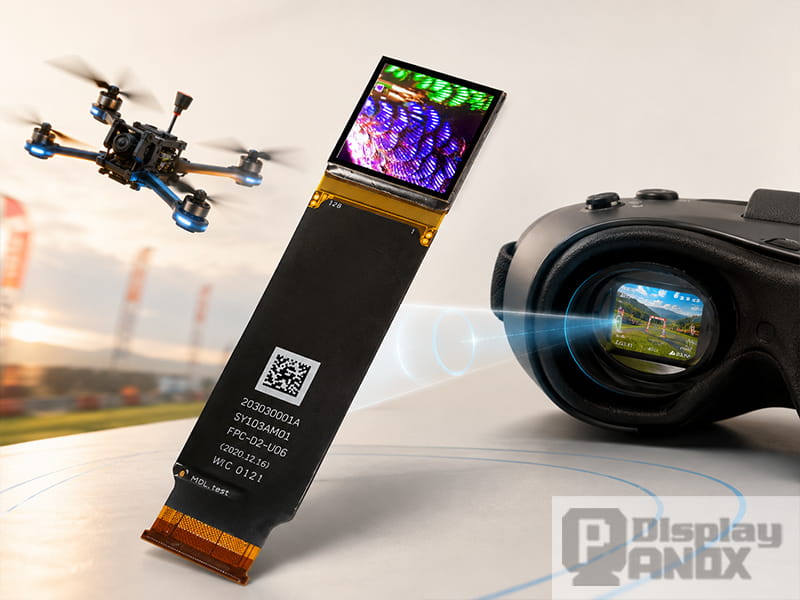
1.03 inch Micro OLED Display 2K for AR/FPV
FPV goggles are another strong application area for Micro OLED displays. In drone flying, racing, inspection, and remote operation, the display has to deliver a real-time image with good clarity, fast response, and stable viewing comfort. A low-quality panel can make the image feel delayed, blurry, or tiring during long sessions.
Micro OLED is attractive for FPV because of its high contrast and fast response. When the display is used inside goggles, the viewer is fully focused on the image, so motion clarity and resolution become very noticeable. Fast response helps reduce motion blur, while high pixel density supports sharper scenery, obstacle details, telemetry overlays, and camera feeds.
PanoxDisplay’s 1.03-inch Micro OLED display with 2560 × 2560 resolution is especially relevant for high-end AR/FPV and immersive near-eye systems. The AR product category also includes 0.68-inch WUXGA Micro OLED and 0.71-inch Full HD Micro OLED options that can support professional viewing applications where image detail matters.
For FPV goggles, the most important display requirements usually include high resolution, fast response, low latency system design, good contrast, and comfortable optical magnification. The display panel is only one part of the final latency chain, but a fast Micro OLED panel gives product developers a stronger foundation for responsive viewing.
3. Industrial Maintenance and Remote Assistance
Industrial AR is often less flashy than consumer AR, but it is one of the most practical application areas. In factories, energy facilities, logistics centers, and field service environments, AR smart glasses can display instructions, checklists, diagrams, warnings, inspection records, and remote expert guidance while keeping the worker’s hands free.
A 2023 review on augmented reality in maintenance notes that smart AR glasses are increasingly optimized and can include functions such as GPS, microphones, and gesture recognition. The same research area focuses on using AR to support maintenance instructions, remote assistance, and equipment-related workflows. Another review of AR smart glasses in industrial assembly examines their use in manufacturing from both technological maturity and manufacturing engineering perspectives, showing that AR smart glasses have become a serious topic in industrial implementation rather than a purely futuristic concept.
For industrial maintenance, the AR display panel needs to provide readable information without distracting from the physical task. The panel does not always need the largest virtual screen. In many cases, a compact and sharp Micro OLED display is more useful because it can show essential data in a controlled visual area.
Suitable product directions include compact 0.39-inch and 0.49-inch Micro OLED displays for lightweight information overlays, as well as 0.5-inch and 0.71-inch Micro OLED options for systems that require clearer diagrams, camera feeds, or more detailed visual instructions. For industrial products, interface support and driver board customization can be as important as display resolution, especially when the AR module needs to connect to a specific processor, camera system, or industrial controller.
4. Medical Viewers and Surgical Assistance
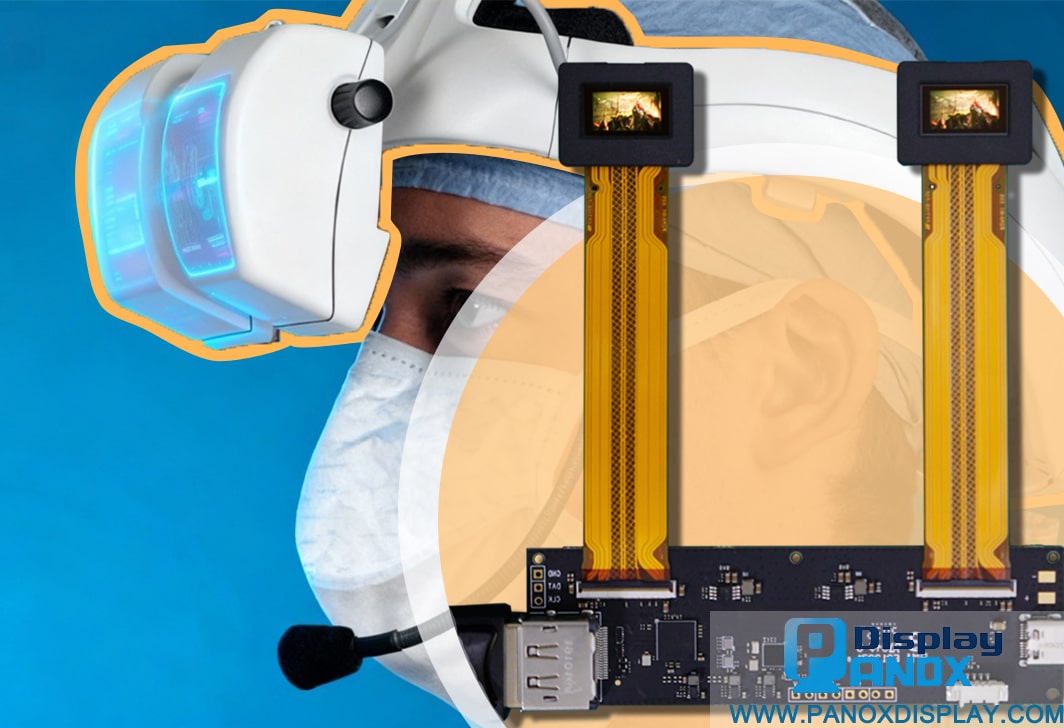
0.71 inch Micro OLED FHD For AR
Medical AR and near-eye display systems require careful design because the information must be clear, stable, and easy to interpret. Potential applications include surgical navigation, dental or surgical loupes, endoscopic image viewing, medical training, remote consultation, and assisted visualization.
A PubMed-indexed study on smart glasses for neurosurgical navigation reported successful stereoscopic image overlay in both phantom and patient cases, with hands-free neuronavigation available inside the operative field. While medical applications need strict validation beyond the display itself, this example shows why near-eye display systems are valuable: they can place visual information closer to the working field and reduce the need to look away at external monitors.
For this type of application, Micro OLED offers several relevant advantages. High contrast helps medical imagery and interface overlays appear cleaner. Fine pixel density supports small details. Fast response can help maintain clarity in live image feeds. A compact module also makes it easier to design lightweight viewers or optical attachments.
The 0.5-inch 1600 × 1200 Micro OLED module, 0.68-inch WUXGA Micro OLED, and 0.71-inch Full HD Micro OLED panels are useful directions for medical viewer concepts, depending on the required image size and optical architecture. For more demanding image detail, the 1.03-inch 2560 × 2560 Micro OLED display can support high-resolution near-eye viewing, although the full optical and system design must be evaluated together.
5. Electronic Viewfinders, Scopes, and Professional Optical Instruments
Before Micro OLED became widely discussed in AR glasses, it was already important in electronic viewfinders and professional optical systems. Sony notes that OLED microdisplays are used in electronic viewfinders for cameras, AR/VR, scopes, and other applications. Sony also explains that OLED microdisplays are mainly used in EVFs, AR/VR eyewear, HMDs, glasses, goggles, and scope applications, with small sizes and high definition as key strengths.
This application area is closely related to AR because the optical principle is similar: a small display creates a high-quality image that is viewed through magnifying optics. In camera EVFs, thermal scopes, inspection scopes, and professional viewers, the user needs a sharp image inside a compact optical body.
Micro OLED is useful here because it can provide high contrast and high resolution without a backlight. That helps optical instruments remain compact while maintaining strong image quality. For professional viewfinders and scopes, 0.5-inch, 0.68-inch, and 0.71-inch Micro OLED panels are practical choices, while higher-resolution panels can be considered for applications that need more image detail.
6. Compact Optical Engines and AR Modules
Many AR display projects begin as optical engine development rather than a finished pair of glasses. In this stage, engineers need to test panel brightness, lens design, field of view, image sharpness, thermal behavior, and driver board performance. The display panel must work with the optical path and the electronics at the same time.
A waveguide combiner, for example, works together with the light engine to form the optical display module in an AR device. Dispelix describes waveguide combiners as collecting the image stream from the light engine, expanding it, and projecting it into the user’s field of view. This means the Micro OLED panel, driver board, and waveguide cannot be evaluated separately. The system only works well when the panel and optics are matched.
PanoxDisplay’s AR product category is useful for this type of development because it includes different display sizes, resolutions, and interfaces. A 0.49-inch 1920 × 1080 Si-OLED panel may be suitable for compact Full HD optical engine testing. A 0.68-inch WUXGA panel can support higher brightness and more detailed imaging. A 1.03-inch 2560 × 2560 Micro OLED panel can be used for high-resolution AR/FPV concepts where a larger display engine is acceptable.
For optical engine developers, the best display is the one that fits the complete optical target: field of view, exit pupil, eye relief, brightness at the eye, color performance, resolution, size, power, heat, and board layout.
7. Assisted Reality and Lightweight Information Displays
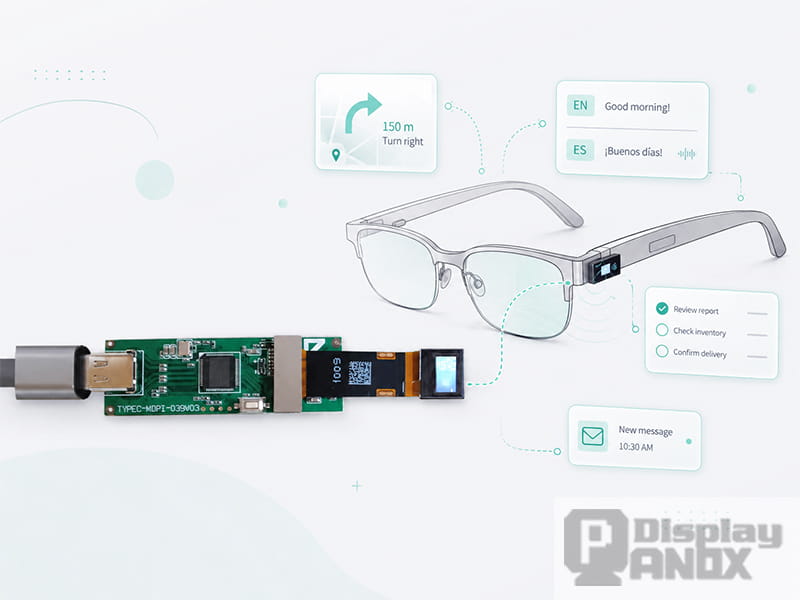
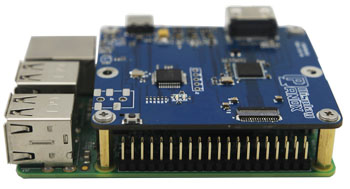
0.39 inch Micro OLED For AR Type-c Board
Not every wearable display needs full spatial AR. Many practical devices use assisted reality: a small display presents useful information near the eye without requiring complex 3D registration. These products may be used for warehouse picking, field service, logistics, translation, camera preview, cycling data, teleprompting, or hands-free checklists.
Assisted reality places strong emphasis on comfort, battery life, low weight, and readable text. A small Micro OLED panel can be a good fit because it allows the device to show key information in a compact optical module. In this type of product, the goal is often to reduce distraction and keep the interface simple.
Smaller panels such as 0.39-inch and 0.49-inch Micro OLED displays are suitable starting points for lightweight information displays. If the device needs richer graphics or a wider virtual screen, 0.5-inch or 0.71-inch panels can be considered. The right choice depends on whether the product is designed for short notifications, continuous data display, video preview, or more immersive viewing.
8. Product Selection by Application
The application determines the display requirements. Choosing a Micro OLED display only by resolution can lead to problems later in optical design, power design, or mechanical integration.
| Application | Display priorities | Suitable Micro OLED directions |
|---|---|---|
| Lightweight AR glasses | Compact size, readable text, low power, small optical engine | 0.39-inch, 0.49-inch, 0.5-inch Micro OLED |
| Smart glasses with richer UI | Full HD resolution, high PPI, good contrast | 0.49-inch Full HD Si-OLED, 0.71-inch FHD Micro OLED |
| FPV goggles | Resolution, response speed, contrast, immersive viewing | 0.68-inch WUXGA, 0.71-inch FHD, 1.03-inch 2K Micro OLED |
| Industrial maintenance | Readable overlays, stable operation, integration support | 0.39-inch, 0.49-inch, 0.5-inch, 0.71-inch Micro OLED |
| Medical viewers | Fine detail, contrast, stable image, compact optics | 0.5-inch UXGA, 0.68-inch WUXGA, 0.71-inch FHD, 1.03-inch 2K Micro OLED |
| EVF and scopes | High contrast, high resolution, optical clarity | 0.5-inch, 0.68-inch, 0.71-inch Micro OLED |
| Optical engine prototyping | Interface flexibility, board support, optical matching | MIPI, LVDS, RGB, I2C, SPI Micro OLED options |
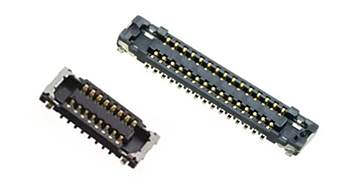
PanoxDisplay also supports customized display integration. The AR category page notes that customers may need more than display panels, including cover glass or touch panels, connectors, and customized controller or driver boards. PanoxDisplay can provide connectors and customized boards with input connections such as VGA, HDMI, DVI, DP, Type-C video input, MIPI, RGB, LVDS, and eDP.
9. How to Choose an AR Display Panel for a Real Product
A practical AR display selection process should begin with the final device, not the panel catalog. The first question is where and how the device will be used.
For smart glasses, the display needs to support a small optical engine and comfortable daily wear. For FPV goggles, motion clarity and image immersion become more important. For industrial AR, the display must show data clearly while the user works with both hands. For medical and professional viewers, image detail and stability may be more important than the smallest possible size. For optical engine development, interface and driver board support can decide how fast the project moves forward.
The following questions can help narrow the selection:
| Selection question | Why it matters |
|---|---|
| What is the main application? | Determines resolution, brightness, and optical design priorities |
| Is the device optical see-through or enclosed? | Affects brightness and contrast requirements |
| What field of view is required? | Influences panel size and lens design |
| How much space is available for the light engine? | Determines suitable display size and board structure |
| Is the display for text, video, or detailed imaging? | Determines resolution and pixel density needs |
| What interface does the system support? | MIPI, LVDS, RGB, SPI, or I2C must match the hardware platform |
| Is the project in prototype or production stage? | Evaluation boards and custom boards may be needed at different stages |
| What brightness is needed after optical losses? | Panel luminance must be judged with the optics, not alone |
A good Micro OLED display should match the optical system, electronics, thermal structure, and use environment. A display with excellent specifications may still perform poorly if the optical path wastes too much light or if the driver board does not fit the product layout.
10. Conclusion
AR display panel applications are expanding from smart glasses into FPV, industrial maintenance, medical viewers, electronic viewfinders, scopes, assisted reality, and compact optical engines. Across these applications, Micro OLED display technology provides a practical foundation because it offers high pixel density, high contrast, fast response, compact size, and self-emissive image quality.
For simple information overlays, compact Micro OLED panels can help keep AR glasses small and lightweight. For FPV and professional viewing, higher-resolution Micro OLED displays can support clearer images and more immersive near-eye experiences. For industrial and medical systems, the display must combine readability with stable integration. For optical engine developers, the panel must work together with lenses, waveguides, driver boards, power design, and mechanical constraints.
PanoxDisplay provides Micro OLED display panels for AR and near-eye applications, including compact 0.39-inch and 0.49-inch options, 0.5-inch modules, 0.68-inch WUXGA Micro OLED, 0.71-inch Full HD Micro OLED, and 1.03-inch 2K Micro OLED displays. With support for connectors, customized controller boards, and multiple interface options, these panels can be used across smart glasses, FPV goggles, wearable viewers, industrial AR devices, and optical engine development.
Learn more: Why Is Micro OLED Display Important for AR Display Panels?