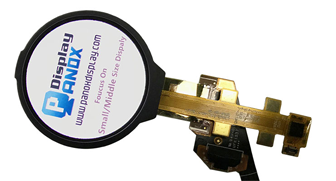




5.99-Inch 1440x2880 Flexible AMOLED Display
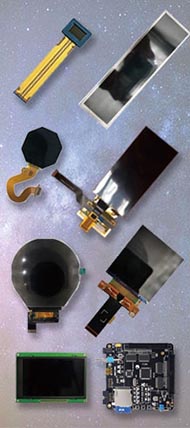
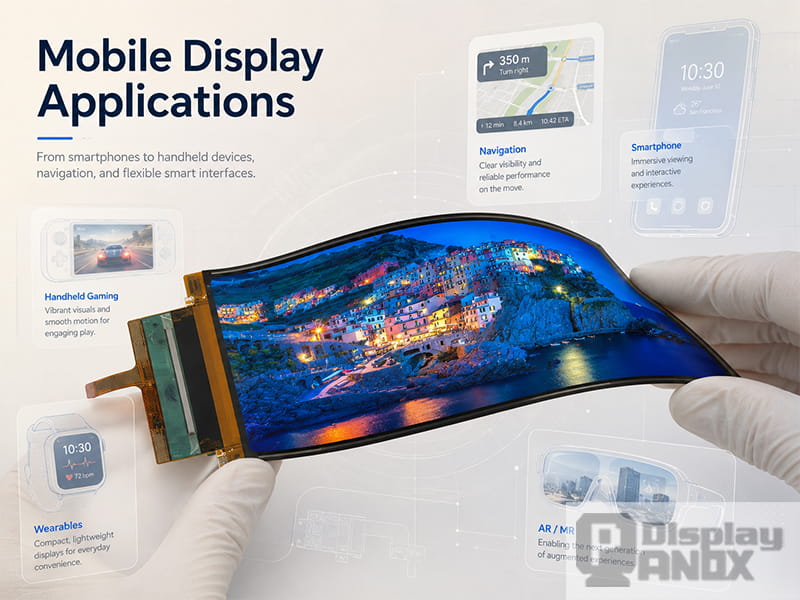
Mobile displays are most commonly associated with smartphones, but their application range is much wider. A mobile display panel can be used in any compact product that needs a thin, high-resolution, low-power, touch-enabled visual interface. This includes smartphones, handheld terminals, portable GPS units, gaming consoles, industrial controllers, medical devices, AR/MR auxiliary interfaces, and custom smart electronics.
The reason is simple: many modern devices now behave like mobile devices, even when they are not phones. They need a clear screen, fast interaction, compact structure, and reliable display performance in limited space. OLED, AMOLED, flexible OLED, and TFT-LCD panels each serve different application needs, depending on brightness, contrast, touch structure, mechanical design, interface, and cost target.
MIPI Display Serial Interface is widely used in mobile display systems because it provides a high-bandwidth link between host processors and display modules. MIPI also notes that display specifications are used beyond phones, including automotive dashboards, smart meters, video game devices, wearables, AR/VR head-mounted devices, and glass-based display systems.
1. Smartphones and Smartphone-Like Devices
Smartphones are still the most important application for mobile display panels. In this field, the display controls the first visual impression of the device: sharpness, color, contrast, brightness, touch response, and front-surface design.
AMOLED and flexible AMOLED panels are widely used in smartphone-style products because they support high contrast, deep black levels, slim module structures, and curved-edge designs. Compared with conventional backlit LCD designs, OLED pixels emit their own light, which helps create stronger contrast and thinner display modules. AMOLED displays are also commonly associated with faster response and wider viewing angles in consumer mobile products.
For smartphone-like designs, Panox Display’s 6.67 inch Flexible AMOLED 2K for Smartphone is a relevant option. It supports 1080 × 2400 resolution, 394 PPI, MIPI interface, 700 cd/m² luminance, and flexible AMOLED structure, making it suitable for slim mobile products and full-screen handheld devices.
This type of panel is suitable for:
Smartphone prototypes
Mobile terminals
Smart handheld controllers
Slim portable devices
Curved-edge product concepts
High-resolution touch interfaces
For development teams, the key is to check more than size and resolution. The active area, FPC direction, connector, touch structure, driver IC, cover glass plan, and system interface should all be confirmed before mechanical design is finalized.
2. Handheld Game Consoles and Entertainment Devices
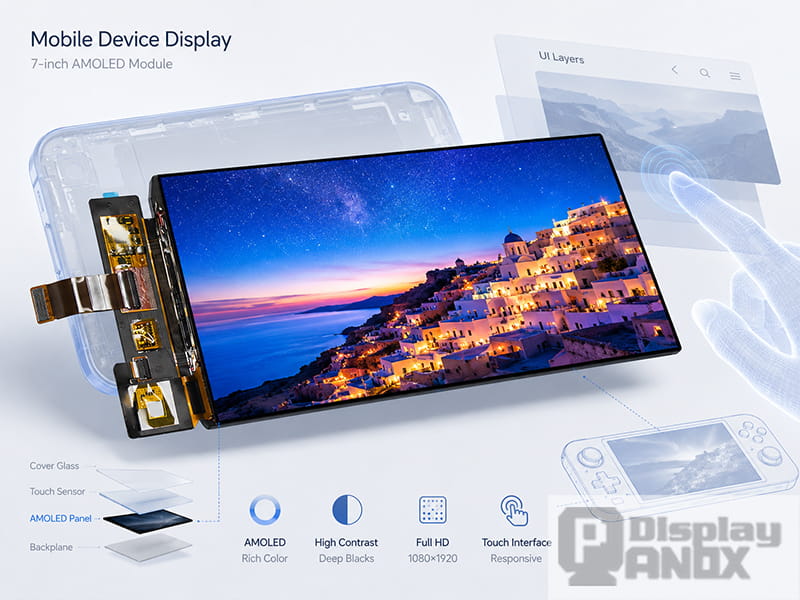
7 inch AMOLED OLED 1920X1080 Mipi
Handheld game consoles need a mobile display that can handle motion, color, contrast, and touch interaction. In this application, the display is directly tied to the entertainment experience. A dull or slow panel can make the whole device feel less powerful, even when the internal processor is strong.
AMOLED is a strong fit for handheld entertainment devices because it can deliver vivid color, fast response, and high contrast. For gaming and video playback, users are sensitive to motion clarity, color saturation, black levels, and viewing angle. A larger mobile display can also create a more immersive experience than a standard phone-sized screen.
Panox Display’s 7 inch AMOLED OLED 1920 × 1080 MIPI panel is suitable for this type of product. It features 1080 × 1920 resolution, 315 PPI, 800 cd/m² luminance, 100000:1 contrast ratio, MIPI interface, and touch support. Its product page lists applications including mobile phones, handheld GPS devices, and handheld game consoles.
This kind of display can be used in:
Portable game consoles
Cloud gaming devices
Handheld video players
Smart remote controllers
Entertainment control panels
Portable media terminals
For gaming products, it is important to evaluate refresh rate, touch latency, brightness, thermal behavior, and controller board support. A display that looks beautiful in a static photo still needs to perform well during fast interaction.
3. Portable GPS and Navigation Devices
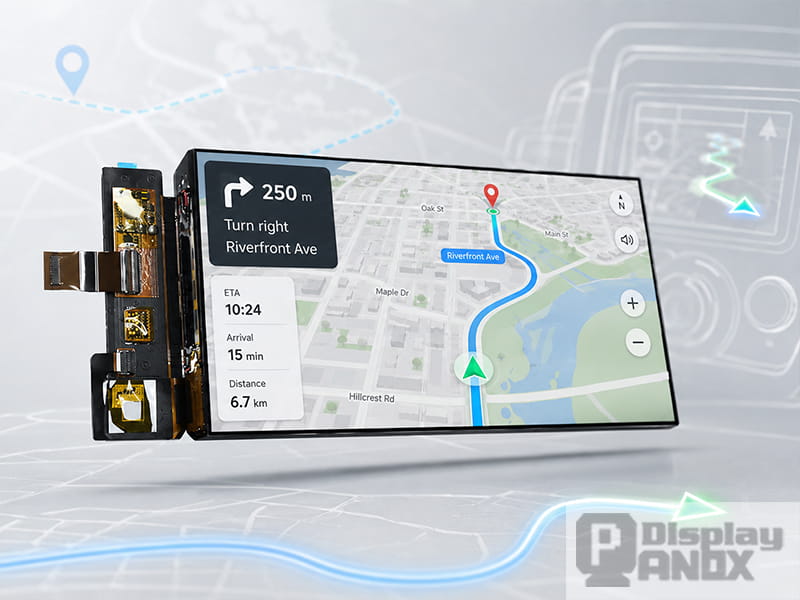
7 inch AMOLED OLED 1920X1080 Mipi
Portable GPS devices and navigation terminals need stable readability in changing light. They may be used in cars, outdoor environments, logistics systems, delivery devices, bicycles, marine equipment, or handheld mapping tools.
In these products, display brightness and viewing angle are critical. A map interface must remain readable during movement, vibration, and changing ambient light. Touch response is also important because users may need to zoom, drag, or select routes quickly.
A 7-inch AMOLED or high-brightness mobile display can work well in navigation-oriented devices when the product needs rich color, clear icons, and a larger visual area. Panox’s 7-inch AMOLED panel is relevant here because of its 800 cd/m² luminance, high contrast, and handheld GPS application positioning.
Typical applications include:
Portable GPS terminals
Vehicle navigation accessories
Outdoor route planning devices
Marine handheld displays
Logistics handheld terminals
Map-based industrial controllers
For outdoor or semi-outdoor navigation devices, brightness alone is not enough. Cover glass reflection, optical bonding, anti-glare treatment, UI color design, and power consumption should be considered together.
4. Industrial Handheld Terminals
Many industrial devices now use display structures similar to mobile phones. Barcode scanners, warehouse terminals, inspection tools, smart meters, logistics devices, medical handhelds, and field service controllers all need compact touch displays.
Compared with consumer smartphones, industrial handheld devices usually care more about durability, stable supply, readability, and interface support. They may require customized cover glass, protective housing, wide operating temperature, glove touch, waterproof sealing, or strong FPC routing.
AMOLED can be useful in ruggedized mobile devices because thinness, flexibility, readability, and optical performance are valuable for field personnel and portable equipment. Industry sources also point out that AMOLED can support smartphones, tablets, and wearables for demanding mobile environments.
For industrial handheld terminals, display selection should focus on:
Brightness under real working conditions
Touch reliability
Module thickness
Connector position
Power consumption
Cover glass strength
Long-term availability
Compatibility with the main control board
A smartphone display panel may be technically strong, but it still needs suitable integration support before it becomes useful in an industrial product.
5. Curved and Flexible Mobile Devices
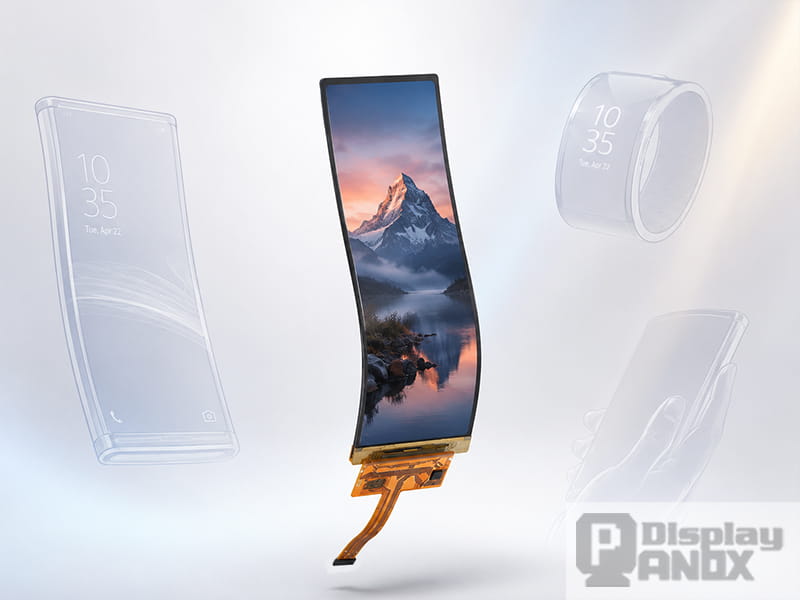
6.52 inch Flexible OLED 2520x840 Touch Panel
Flexible OLED has changed how product designers think about mobile displays. A mobile screen no longer has to remain completely flat. It can follow a curved housing, wrap around an edge, bend slightly for ergonomic design, or create a special long-format interface.
Flexible OLED uses bendable substrates instead of a traditional rigid glass-only structure, allowing the screen to be thinner, lighter, and more adaptable to curved product forms. OLED-Info describes plastic-based OLED displays as lighter, thinner, and more durable than glass-based displays, especially for mobile devices.
Panox Display’s 6.52 inch Flexible OLED 2520 × 840 Touch Panel is a good example of a mobile display for special format design. It has a 3:1 aspect ratio, 2520 × 840 resolution, 407 PPI, MIPI interface, 90 Hz refresh rate, in-cell touch, and 430 cd/m² luminance. The product page lists smart phone, MR, AR, and vehicle applications.
This type of display can be used in:
Curved handheld devices
Special-ratio mobile interfaces
Wraparound control panels
AR/MR auxiliary interfaces
Smart cockpit side displays
Compact panoramic dashboards
Custom mobile electronics
Flexible OLED is especially useful when the display becomes part of the product’s form language. In this case, the screen is not only a component hidden inside a frame. It becomes one of the main design features of the device.
6. AR/MR Auxiliary Interfaces
AR and MR products often need compact displays for control, preview, companion interaction, calibration, or auxiliary information. These screens may not always be the main optical engine, but they can support the overall user experience.
A narrow flexible OLED panel can be useful for lightweight control surfaces, side interfaces, wearable controllers, smart glasses accessories, or portable MR equipment. In these applications, the display needs to be thin, compact, responsive, and easy to integrate into an unconventional housing.
The 6.52-inch flexible OLED panel is relevant for this direction because its long 3:1 aspect ratio and flexible structure can fit interface layouts that are difficult for standard rectangular panels. Panox’s related in-cell display article also positions this product for compact smart cockpit and auxiliary interface applications, including AR/MR-related use cases.
Possible applications include:
AR/MR device side displays
Wearable control interfaces
Compact preview screens
Portable optical engine controllers
Smart glasses accessories
Gesture or touch-based companion displays
For AR/MR products, the key is usually not choosing the largest screen. The better choice is often the panel that fits the optical, mechanical, power, and interaction constraints of the device.
7. Smart Wearables and Compact Touch Devices
Mobile displays are also used in wearable and small portable devices. These products need thin modules, low power consumption, clear touch feedback, and attractive visual performance in a limited area.
Flexible AMOLED is suitable for many wearable-style concepts because it can support curved surfaces and slim structures. For smart bands, wrist-worn controllers, handheld health devices, and compact medical electronics, the display must balance visual clarity with comfort and battery life.
Research on mobile health also shows how smartphones and smartphone-connected devices continue to play a role in healthcare delivery and monitoring, which reinforces the importance of compact visual interfaces in portable health-related systems.
Typical applications include:
Wearable controllers
Portable health devices
Smart medical terminals
Compact monitoring equipment
Wrist-style control modules
Personal information devices
For this category, touch integration and cover glass design are especially important. A small display can feel premium if the touch response is precise and the front surface is clean.
8. Custom Portable Electronics and Development Projects
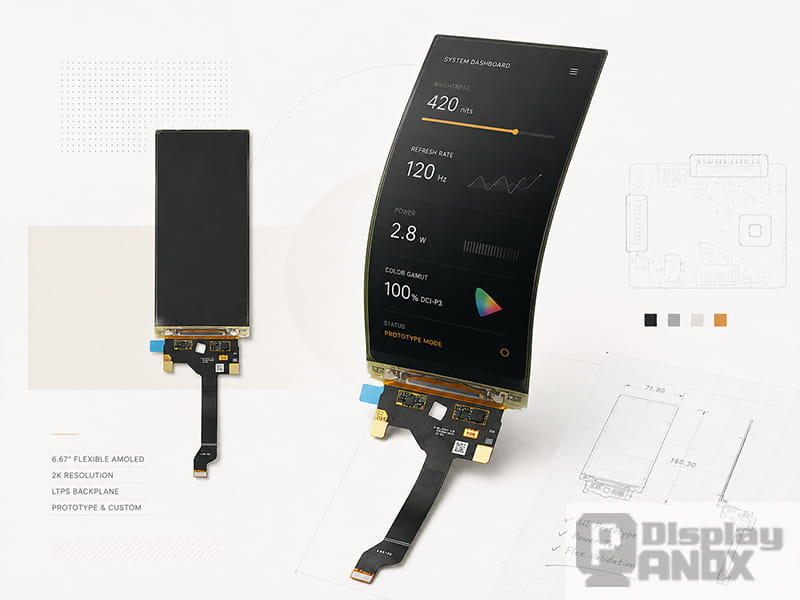
6.67inch Flexible AMOLED 2K for Smartphone
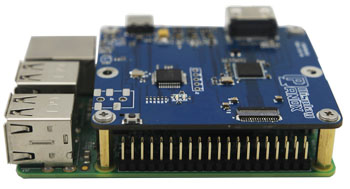
Many mobile display applications are not standard consumer products. Engineers may use smartphone-class panels for custom devices, test equipment, development boards, Raspberry Pi projects, portable dashboards, camera monitors, DIY controllers, or embedded systems.
This is where interface support becomes very important. Many mobile panels use MIPI, so they need matching host support, bridge ICs, initialization code, or controller boards. MIPI DSI is designed for high-speed data transfer between display modules and processors in mobile devices, which makes it common in smartphones, tablets, portable gaming consoles, and other compact products.
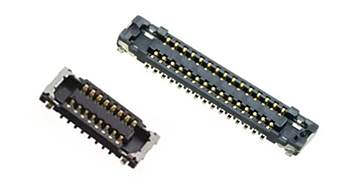
For development projects, the display supplier’s support can matter as much as the panel itself. Datasheets, drawings, connectors, FPC information, touch IC details, controller board options, and initialization code can reduce engineering risk.
Panox Display also states that for some display controller board products, customers can use online store options, while development and batch projects can request datasheets, schematics, initialization code, customized cover glass, and touch panel support.
9. Product Selection by Application
Different applications need different mobile display priorities. A smartphone-like product may need high pixel density and slim structure. A handheld game console may need a larger AMOLED screen and smooth motion. A GPS device may need brightness and readability. A flexible interface may need bendability and special aspect ratio.
| Application | Display Priorities | Suitable Panox Display Direction |
|---|---|---|
| Smartphone-style products | High PPI, slim structure, touch integration, MIPI interface | 6.67 inch Flexible AMOLED 2K for Smartphone |
| Curved mobile interfaces | Flexible structure, special aspect ratio, in-cell touch | 6.52 inch Flexible OLED 2520 × 840 Touch Panel |
| Handheld game consoles | Large viewing area, vivid color, high contrast, touch support | 7 inch AMOLED OLED 1920 × 1080 MIPI |
| Portable GPS devices | Brightness, contrast, readability, stable touch | 7 inch AMOLED OLED or high-brightness mobile panel |
| AR/MR auxiliary interfaces | Thin module, compact shape, flexible design | 6.52 inch Flexible OLED long-format panel |
| Industrial handheld terminals | Durable integration, touch reliability, interface support | AMOLED or TFT-LCD depending on brightness and cost target |
| Custom portable electronics | Datasheet support, connector matching, controller board options | MIPI mobile display panel with development support |
10. How to Choose a Mobile Display for Your Application
Start with the product scenario. A display for a phone prototype, a warehouse scanner, a GPS terminal, and a handheld game console should not be selected by the same standard.
For consumer-facing devices, image quality and touch experience usually come first. AMOLED and flexible AMOLED panels can help create a premium visual impression with high contrast, vivid color, and slim module design. For industrial or outdoor products, brightness, durability, interface support, and long-term availability may become more important.
Then check the mechanical structure. Confirm whether the product needs a flat panel, curved panel, long-strip format, narrow border, special cover glass, or flexible display. The FPC direction and connector position should match the internal layout.
Finally, confirm the development path. A mobile display panel usually needs technical files, interface support, touch debugging, and sometimes a controller board. Without these, even a high-quality display can be difficult to test or integrate.
Conclusion
Mobile display applications now extend far beyond smartphones. The same display technologies used in mobile phones are also valuable for handheld terminals, portable GPS devices, gaming consoles, smart wearables, AR/MR accessories, industrial controllers, and custom embedded electronics.
For projects that need compact size, strong image quality, slim structure, touch interaction, or flexible product design, Panox Display offers mobile display panel options such as the 6.52 inch flexible OLED touch panel, 6.67 inch flexible AMOLED smartphone display, and 7 inch AMOLED OLED MIPI display. The right choice depends on the final application, mechanical structure, interface, brightness requirement, and development support needed for the project.
Learn more: Why Is the Mobile Display Important for Smartphones and Handheld Devices?
FAQs:
What are mobile displays used for?
Mobile displays are used in smartphones, handheld terminals, portable GPS devices, gaming consoles, smart controllers, medical devices, industrial equipment, AR/MR interfaces, and custom portable electronics.
Are mobile display panels only for smartphones?
No. Smartphone display panels can also be used in many compact electronic products if the interface, mechanical size, touch function, and driver support match the project requirements.
Which display is better for handheld gaming devices?
AMOLED is often suitable for handheld gaming because it offers high contrast, vivid color, fast response, and strong visual impact. A larger 7-inch AMOLED panel can be useful when the product needs a wider viewing area.
When should I choose a flexible OLED mobile display?
Choose flexible OLED when the product needs a curved shape, slim structure, edge design, special aspect ratio, or a more design-driven form factor. It is useful for curved handheld devices, AR/MR auxiliary interfaces, smart cockpit displays, and custom mobile electronics.
Why is MIPI common in mobile display applications?
MIPI DSI is common because it provides a high-speed display link between processors and display modules. It is widely used in compact devices that need high-resolution visuals with reduced pin count and efficient signal transmission.