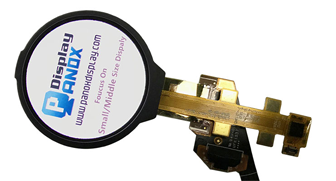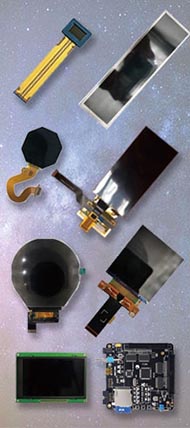




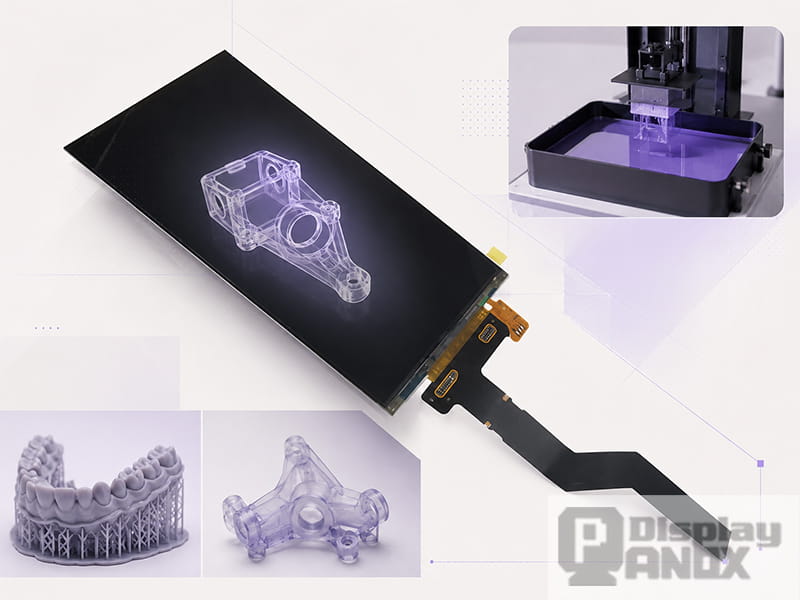
6.0 inch LCD For Cellphone/3D Printing
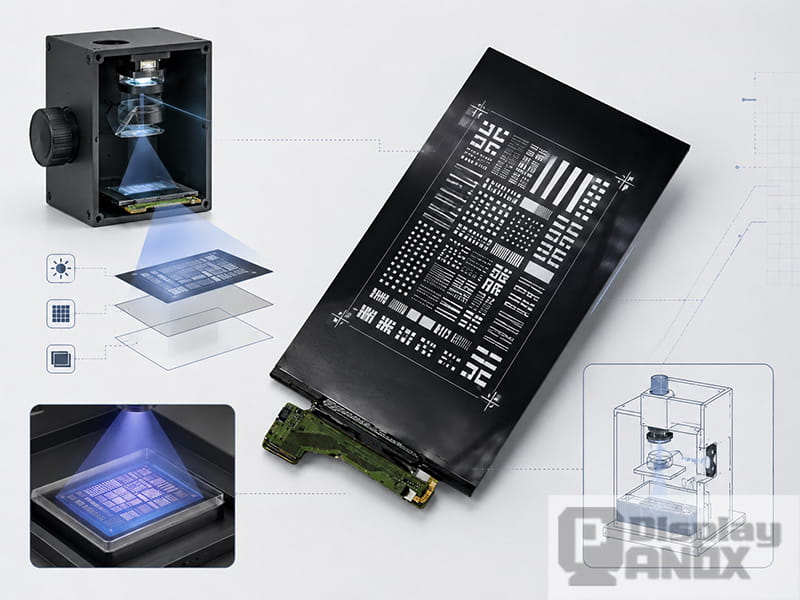
A 3D printing display panel is one of the core components inside an LCD resin 3D printer. In this system, the LCD does more than show an image. It works as a dynamic light mask, controlling which pixels allow UV light to pass through and which pixels block it. This pixel-level control turns each digital slice into a cured resin layer.
LCD 3D printing, often described as MSLA or masked stereolithography, belongs to the vat photopolymerization family. In a typical LCD resin printer, a UV light source shines through the LCD mask, and the resin cures layer by layer according to the image pattern shown on the panel. Many LCD resin printers work with UV or near-UV light around 385–405 nm, which is why the display panel, resin formulation, and light engine must be matched carefully.
For printer manufacturers, repair suppliers, and development teams, the application decides the display requirements. A compact desktop printer may need a mature 5.5-inch or 6.08-inch LCD. A professional high-detail printer may need a monochrome 4K panel with stronger UV transmission. A larger resin printer may need an 8.9-inch LCD with a wider active area. Panox Display’s 3D printing category includes 5.5-inch 2K, 5.5-inch 4K, 6.0-inch 2K, 6.08-inch 2K monochrome and 8.9-inch display options for UV curing 3D printer applications.
1. Desktop Resin 3D Printers
Desktop resin 3D printers are one of the most common application areas for 3D printing LCD panels. These machines are used by hobbyists, product designers, small workshops, repair suppliers, educators, and entry-level professional users. Their key requirements are compact size, good pixel density, stable supply, and reasonable replacement cost.
In this type of printer, 5.5-inch, 6.0-inch, and 6.08-inch LCD panels are especially common. A 5.5-inch 2K LCD can support compact printers and replacement projects, while a 5.5-inch 4K panel is suitable when the printer needs finer XY detail in a small build area. A 6.08-inch monochrome LCD is useful for printers that need better curing efficiency and faster exposure than older RGB LCD designs.
Panox Display offers several compact LCD options for this area, including a 5.5-inch 1440 × 2560 MIPI LCD, a 5.5-inch 2160 × 3840 4K MIPI LCD, a 6.0-inch 1440 × 2560 MIPI LCD, and a 6.08-inch 1620 × 2560 monochrome MIPI LCD. These models cover both replacement-oriented and new-printer development needs.
2. Dental Models and Dental Lab Printing
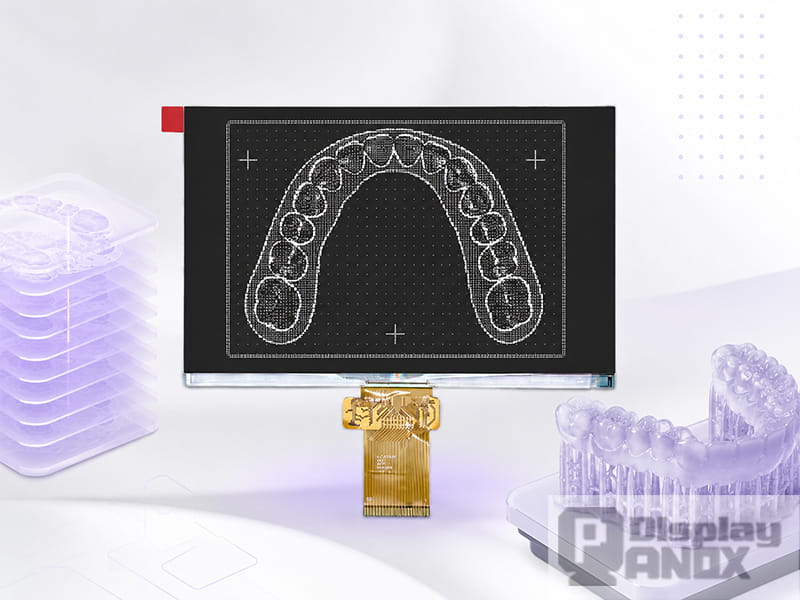
8.9-Inch Monochrome LTPS TFT-LCD Display for 3D Printer
Dental 3D printing is one of the most important professional applications for vat photopolymerization. Dental labs use resin printing for study models, aligner models, surgical guides, temporary restorations, denture bases, splints, and other patient-specific devices. A 2024 review in Materials describes vat photopolymerization as the most commonly used technological principle in dental practice, including SLA, DLP, and LCD/mSLA technologies.
For dental applications, the LCD panel affects the accuracy of tooth anatomy, margins, fine curves, contact surfaces, and the fit of printed devices. The panel must offer enough pixel density for small details, while the optical system needs stable exposure across the whole build area. Light uniformity matters because uneven irradiance can change polymerization behavior, surface texture, and part fidelity, as shown in NIST research on LCD-based vat photopolymerization light engines.
For dental model printers, an 8.9-inch LCD can be useful when the system needs to print multiple arches or models in one build. For higher-detail compact dental printers, a 5.5-inch 4K or 6.08-inch monochrome LCD can be considered when the active area and printer structure are suitable. Panox’s 8.9-inch monochrome LTPS TFT-LCD option, for example, offers 3840 × 2400 WQUXGA resolution and 508 PPI, making it suitable for high-resolution resin printing systems that need fine light masking.
3. Jewelry Casting Patterns
Jewelry 3D printing requires fine details, smooth surfaces, and accurate small features. Many jewelry workflows use castable or wax-like resins to print rings, pendants, settings, and decorative patterns before investment casting. In this application, the LCD panel must reproduce thin prongs, engraved textures, small holes, and delicate curves with consistent exposure.
The key display requirements are small pixel size, high contrast under UV exposure, stable masking, and good resin compatibility. A smaller 4K LCD can be attractive because it provides high pixel density in a compact active area. For jewelry masters and detailed casting patterns, high-resolution LCD printing is often valued because it can capture small design features without the cost of larger industrial systems.
For this type of printer, Panox’s 5.5-inch 4K LCD with 2160 × 3840 resolution and 658 PPI can be a strong option for compact high-detail exposure systems. The 6.08-inch monochrome 2K LCD can also be suitable when faster curing efficiency and monochrome light transmission are priorities.
4. Engineering Prototypes and Functional Parts
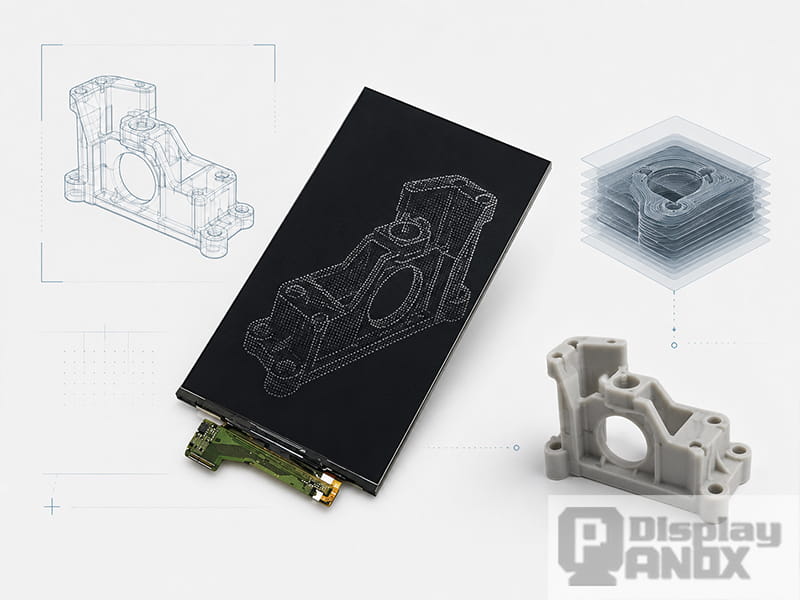
5.5 inch LCD 4K Resolution For 3D Printing/Projector
LCD resin printers are also widely used for engineering prototypes. Product teams can print housings, clips, brackets, test-fit components, fluid channels, small enclosures, and mechanical samples before tooling or CNC production. In this workflow, the display panel influences dimensional accuracy, edge clarity, surface finish, and whether small mechanical features remain readable after curing.
For engineering prototypes, the best LCD choice depends on the size of the part. Small precision components may benefit from 5.5-inch 4K or 6.08-inch monochrome LCDs. Medium-size parts and batch prototype jobs may need 8.9-inch panels. Raise3D lists engineering prototypes, functional housings, snap-fit clips, and enclosures as typical LCD 3D printing use cases, which fits the demand for fast design verification and small-batch iteration.
A larger panel does not automatically mean better detail. The real question is the relationship between active area and pixel pitch. A compact 4K LCD can produce finer XY detail than a larger panel with the same pixel count. On the other hand, a larger 8.9-inch panel can improve throughput by printing more parts in one job. This is why the application should define the screen size first, then resolution, interface, and optical design.
5. Miniatures, Models, and Collectibles
Miniatures and models are another major use case for LCD resin printing. Tabletop figures, garage kits, collectible parts, architectural models, and display prototypes often require sharp edges, thin decorative structures, facial details, armor textures, and smooth curved surfaces.
In this field, the LCD panel works directly with the slicer’s anti-aliasing and exposure settings. A high-density LCD can help preserve small details, but the printer still needs a stable light engine, suitable resin, good support strategy, and proper post-curing. Raise3D notes that tabletop miniatures can benefit from pixel sizes around 30 µm, especially when reproducing fine details and small geometries.
For compact miniature printers, 5.5-inch 4K and 6.08-inch monochrome LCDs are practical directions. For model studios that need to print multiple parts together, 8.9-inch LCDs may offer better build-area efficiency. Panox Display can provide multiple sizes across these categories, giving printer builders more flexibility when designing entry-level, prosumer, or small-studio resin printers.
6. Larger Resin Printers and Batch Production
As resin printers move from hobby use into professional workflows, the demand for larger build areas increases. Larger LCD panels allow more parts to be exposed in one layer, which can improve batch productivity. This is useful for dental labs, model studios, prototyping services, education labs, and small-scale manufacturing.
The challenge is that larger panels need stronger optical uniformity. The UV light must be distributed evenly across the active area, and the LCD must maintain stable contrast and transmission. NIST’s study on LCD-based vat photopolymerization found that variation in irradiance, spectral properties, and optical divergence across the light engine can affect polymerization and part fidelity. This is especially relevant when the exposure area becomes larger.
For larger-format resin printer designs, Panox’s 8.9-inch monochrome LTPS TFT-LCD is a notable option. It has a 202.0 × 133.0 × 0.5 mm outline, a 192 × 120 mm active area, 3840 × 2400 WQUXGA resolution, LVDS interface, and no backlight, which makes it suitable for external UV light source integration.
7. Research, Microfluidics, and High-Precision Structures
LCD-based vat photopolymerization is also used in research environments. Researchers may use resin printing to fabricate microfluidic chips, small channels, experimental structures, biomedical models, optical test pieces, and customized lab fixtures.
In these cases, the LCD panel is part of a controlled exposure system. Pixel size, optical divergence, resin absorption, light uniformity, and layer thickness all become important. A review of vat photopolymerization for photonic devices notes that this technology is used for intricate high-precision structures and explores applications such as lenses, waveguides, optical gratings, resonators, metamaterials, sensors, and actuators.
For research use, the best display choice depends on whether the priority is high pixel density, large exposure area, fast testing, or optical control. A compact high-PPI panel can be useful for fine features, while an 8.9-inch monochrome panel may be better for larger samples or batch exposure tests.
8. Projector, Exposure, and Custom UV Systems
5.5 inch LCD 4K Resolution For 3D Printing/Projector
Some LCD panels for 3D printing are also used in custom projector-like exposure systems, curing modules, and experimental optical equipment. In these systems, the LCD panel acts as a programmable mask. Engineers can test patterns, exposure windows, grayscale control, and optical alignment before building a complete printer.
Panox’s 5.5-inch 4K LCD is listed for 3D printing/projector applications, with 2160 × 3840 resolution, 658 PPI, MIPI interface, and Sharp display origin. This type of panel can be useful for compact high-resolution optical masking where a small active area and fine pixel density are required.
When using LCD panels in custom UV systems, engineers should check wavelength, heat management, polarizer durability, panel drive timing, and mechanical mounting. A normal display module with a backlight is usually unsuitable for direct resin exposure. 3D printing LCD panels are commonly used without backlight so that the external UV light source can pass through the panel and cure the resin. Panox’s 3D printing tag page specifically notes that TFT-LCDs for 3D printing are used without backlight.
9. Replacement LCD Screens for Existing Resin Printers
Replacement supply is another important application. LCD screens in resin printers are consumable components because they operate under UV exposure, heat, repeated image switching, and possible resin contamination. For printer repair companies and spare-part sellers, stable LCD availability can be just as important as resolution.
The 5.5-inch LCD used in machines such as Anycubic Photon S and Wanhao D7 is a typical example of a replacement-oriented panel. Panox lists a 5.5-inch TFT-LCD with 1440 × 2560 Quad-HD resolution, MIPI interface, and Sharp display brand for 3D printing applications.
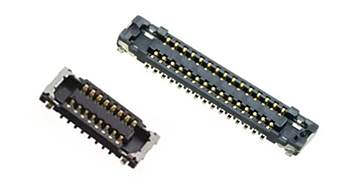
For replacement projects, panel matching should include screen size, active area, resolution, interface, FPC direction, connector type, thickness, mounting position, and whether the panel is monochrome or RGB. A small mismatch can make the panel difficult to install or impossible to drive correctly.
10. Matching Panox Display Panels to Application Needs
Different applications need different LCD specifications. The following table gives a practical starting point for selecting a 3D printing display panel.
| Application Area | Main Display Requirement | Suitable Panox Display Direction |
|---|---|---|
| Compact desktop resin printers | Mature size, stable supply, good pixel density | 5.5-inch 2K LCD, 6.0-inch 2K LCD |
| High-detail desktop printers | Smaller pixel pitch and finer mask control | 5.5-inch 4K LCD, 6.08-inch monochrome 2K LCD |
| Dental models and lab workflows | Accuracy, repeatability, larger batch area | 8.9-inch monochrome LTPS TFT-LCD |
| Jewelry casting patterns | Fine detail, small features, sharp mask edges | 5.5-inch 4K LCD, 6.08-inch monochrome LCD |
| Miniatures and collectibles | High pixel density and good surface detail | 5.5-inch 4K LCD, 6.08-inch monochrome LCD |
| Engineering prototypes | Balance of active area, resolution, and interface | 8.9-inch 2K LCD, 8.9-inch 4K monochrome LCD |
| Larger-format resin printers | Wider exposure area and optical uniformity | 8.9-inch monochrome LTPS TFT-LCD |
| Custom exposure systems | High-resolution programmable masking | 5.5-inch 4K LCD for 3D printing/projector use |
Panox Display’s current 3D-related listings include 8.9-inch monochrome LTPS TFT-LCD 3840 × 2400 WQUXGA, 5.5-inch 4K 2160 × 3840 LCD, 6.08-inch 1620 × 2560 monochrome LCD, 6.0-inch 1440 × 2560 LCD, 8.9-inch 2560 × 1600 LCD, and 5.5-inch 1440 × 2560 LCD options.
11. How to Choose a 3D Printing Display Panel by Application
The first step is to define the build area. Compact printers can use smaller LCDs, while dental labs, model studios, and batch-printing systems usually need a larger active area. The second step is to define the required XY detail. Jewelry, dental, and miniatures usually need smaller pixels. Engineering prototypes may accept slightly larger pixels if the build area and material performance are more important.
The third step is to confirm the optical system. LCD resin printers typically use a UV LED or near-UV light source beneath the LCD mask. The LCD must be suitable for the wavelength, light intensity, exposure time, and thermal environment. A monochrome LCD is often preferred for faster curing and better light transmission because it avoids the RGB color-filter structure used in normal color displays.
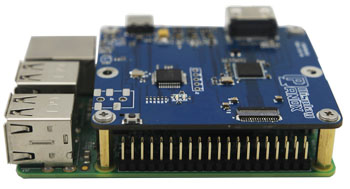
The fourth step is to check the electrical interface. Many compact panels use MIPI, while larger or higher-resolution panels may use LVDS. During development, an HDMI-to-MIPI or HDMI-to-LVDS board may be useful for testing. For production, the LCD should be matched with the mainboard, firmware, exposure control system, and mechanical structure.
Finally, consider after-sales supply. In LCD resin printers, the screen is a critical consumable. A reliable panel source can reduce maintenance pressure and help printer brands keep replacement parts available for users.
Conclusion
3D printing display panels are used across desktop resin printers, dental labs, jewelry casting workflows, engineering prototypes, miniatures, research equipment, custom exposure systems, and replacement screen supply. In every application, the LCD panel controls how UV light reaches the resin, so it directly affects resolution, exposure speed, surface quality, part consistency, and long-term maintenance.
The right panel depends on the printer’s target use. A compact machine may need a mature 5.5-inch or 6.08-inch LCD. A high-detail professional printer may need a 4K or monochrome panel. A larger resin printer may need an 8.9-inch LCD with a wider active area and stronger optical uniformity.
Panox Display provides multiple TFT-LCD and monochrome LCD options for 3D printing applications, including 2K, 4K, MIPI, LVDS, no-backlight, and high-PPI display panels. For resin printer manufacturers, repair suppliers, and hardware developers, selecting the right LCD panel is an important step toward better print quality, more stable production, and a more reliable user experience.
Learn more: Why Is the LCD Display Panel So Important in Resin 3D Printing?
FAQs:
What is the main application of a 3D printing display panel?
The main application is LCD resin 3D printing. The display panel works as a programmable mask that controls UV light exposure for each resin layer.
Is a monochrome LCD better for 3D printing?
A monochrome LCD is often preferred because it can transmit UV light more efficiently than older RGB LCD structures. This can help reduce exposure time and improve curing efficiency, depending on the printer’s optical system and resin.
Which LCD size is suitable for compact resin printers?
Common compact options include 5.5-inch, 6.0-inch, and 6.08-inch LCD panels. These sizes are suitable for desktop resin printers, replacement screens, and small-format UV curing systems.
Which LCD panel is better for larger resin printers?
Larger printers often use 8.9-inch panels. For high-resolution professional resin printers, an 8.9-inch monochrome LTPS TFT-LCD with 3840 × 2400 resolution can be a strong option.
Can normal LCD screens be used for resin 3D printing?
A normal LCD may not be suitable unless it is modified or designed for UV exposure. Resin printers usually require no-backlight LCD panels that can work with an external 405 nm UV light source and withstand the optical and thermal conditions of printing.