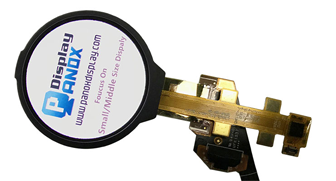




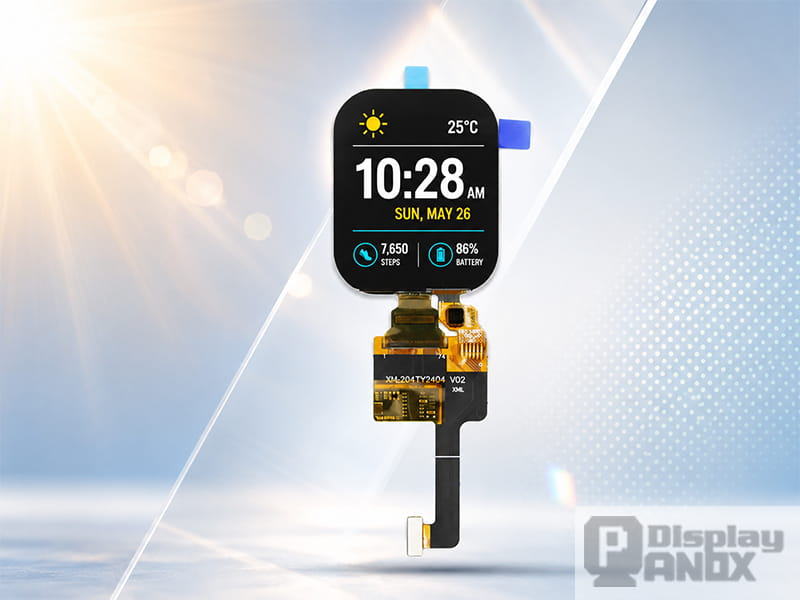
A readable-under-sun display panel, also called a sunlight readable display panel, is designed to keep text, icons, images, and touch interfaces visible under strong daylight or direct sunlight. For outdoor devices, this feature is more than a brightness upgrade. It is a full optical design problem involving luminance, reflected light, surface treatment, contrast, viewing angle, touch structure, power consumption, and thermal reliability.
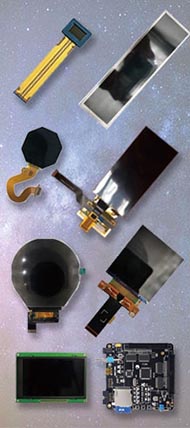
In practical product development, sunlight readability becomes important whenever a display must work outside a controlled indoor environment. Examples include EV charging piles, outdoor kiosks, marine instruments, industrial handheld terminals, smart watches, drones, vehicle dashboards, medical equipment, agricultural devices, and AR/near-eye systems. Panox Display’s product range covers OLED/LCD screens, industrial LCD, TFT-LCD, IPS-LCD, transflective LCD, Memory LCD, AMOLED, flexible OLED, and Micro OLED panels, which gives engineers several different routes for outdoor-readable product design.
1. What Does “Readable Under Sun” Actually Mean?
A display is readable under sun when the information on the screen remains recognizable under high ambient illumination. The key word is recognizable. A panel can have impressive dark-room contrast, vivid colors, or high resolution, yet still become washed out outdoors if reflected sunlight overwhelms the image.
In display engineering, the more meaningful concept is often ambient contrast ratio, or ACR. It describes how much contrast remains after ambient light is reflected by the display surface and optical stack. A 2017 Optics Express paper on LCD and OLED displays identified display brightness, ambient light illuminance, and surface reflection as major factors that influence ACR; it also noted that high static contrast is more important under low ambient light, while high brightness becomes increasingly important as ambient light rises.
A simplified way to understand it:
Ambient contrast = visible bright-state luminance / visible dark-state luminance
Under sunlight, the dark areas of the screen receive extra reflected light. Once black areas become gray, the whole image loses depth. Text looks thinner, colors appear flatter, and small UI elements become harder to read.
For professional measurement, standards treat sunlight readability as a controlled test environment, rather than a vague visual impression. IEC 62977-2-2 includes optical measurements under ambient illumination and defines daylight simulation conditions such as 15,000 lx hemispherical diffuse skylight and 65,000 lx directional daylight for display testing. SAE J1757-1 also focuses on high ambient contrast ratio because it is critical for display legibility in sunshine conditions, especially for vehicle displays.
2. Why Ordinary Displays Wash Out in Sunlight
Outdoor readability fails for two main reasons: insufficient display luminance and excessive reflection.
Most indoor displays are designed for offices, homes, or controlled lighting. In those environments, the backlight or self-emissive pixels can easily dominate the surrounding light. Outdoors, the situation changes quickly. Daylight adds a large amount of reflected luminance to the display surface. This reflected light lifts the black level and compresses the difference between bright and dark content.
The front glass is one of the first problem areas. At an uncoated air-glass interface, around 4% of incident light can be reflected at each interface due to Fresnel reflection. In a display module with cover glass, touch sensor layers, adhesive gaps, polarizers, and the display cell itself, these reflections can multiply into visible glare and ghost images.
This is why a readable-under-sun display panel should be evaluated as a complete stack:
-
panel brightness
-
contrast ratio under ambient light
-
surface reflection
-
internal reflection
-
optical bonding structure
-
cover glass material
-
touch panel design
-
viewing angle
-
thermal performance
-
power budget
-
UI contrast and font design
Brightness helps, yet brightness alone does not solve every sunlight-readable design. A technical white paper from General Digital makes the same point: increasing LCD backlight brightness is useful only when the contrast is preserved; power consumption and heat dissipation also need to be considered together.
3. The Main Technologies Behind Sunlight Readable Display Panels
3.1 High Brightness TFT LCD and IPS LCD
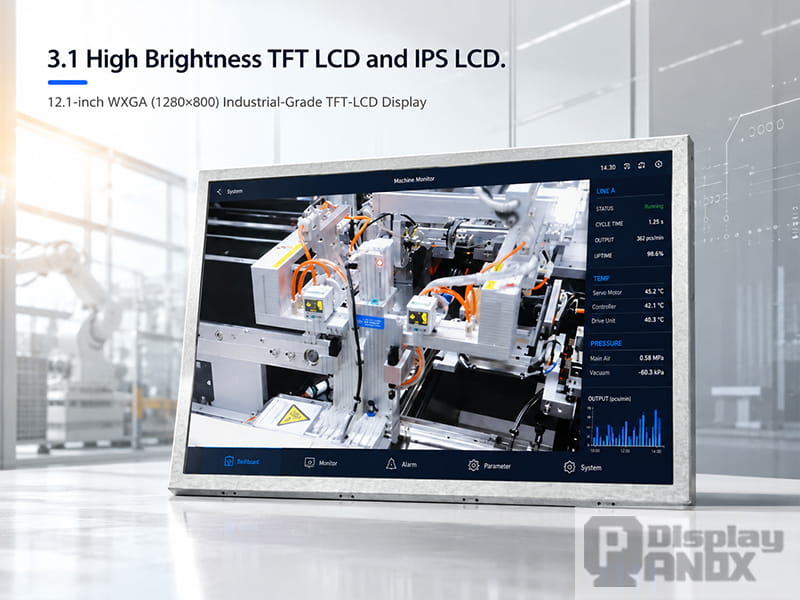
12.1-inch WXGA (1280×800) industrial-grade TFT-LCD
High brightness TFT LCD is one of the most common solutions for outdoor and industrial products. Standard indoor LCD panels often sit in a moderate luminance range, while sunlight-readable LCD modules may use 800 nits, 1000 nits, 1500 nits, or even higher brightness depending on the application.
For example, Panox Display lists a 12.1-inch industrial-grade TFT-LCD module with 1000 nits brightness for strong ambient light and rugged applications. Some bar-type and industrial display projects may also use high-luminance TFT LCD panels when the product needs outdoor visibility, long service life, and stable supply.
High brightness LCD design usually involves:
-
stronger LED backlight arrays
-
optimized light guide plates
-
high-efficiency optical films
-
improved polarizers
-
better backlight uniformity
-
thermal paths for LED heat
-
brightness control through the driver board
The advantage is clear: TFT LCD and IPS LCD panels are mature, available in many sizes, and suitable for industrial control, vehicle systems, kiosks, medical devices, marine equipment, and embedded hardware. The tradeoff is also practical: higher brightness increases power consumption and heat, so the enclosure design and working temperature range must be considered early.
3.2 Anti-Reflection Coating
Anti-reflection coating, usually called AR coating, reduces reflected light at the viewing surface. In optics, AR coatings use thin-film interference to reduce reflection and improve transmission. Edmund Optics explains that AR coatings increase transmission, enhance contrast, and reduce ghost images, which is exactly why they are useful for sunlight-readable displays.
For outdoor LCD or OLED products, AR coating is especially useful when the screen must show detailed images, small text, maps, measurement data, or color-critical information. It helps preserve image contrast without simply forcing the panel to run at maximum brightness all day.
3.3 Anti-Glare Surface Treatment
Anti-glare treatment, or AG treatment, changes the way reflected light behaves. Instead of allowing sunlight to reflect as a sharp mirror-like glare, AG surfaces scatter the reflection into a softer pattern.
This is useful for:
-
outdoor control panels
-
public terminals
-
industrial handheld devices
-
vehicle displays
-
equipment used near windows or strong lamps
AG treatment can make a display more comfortable to view, especially when the user changes position frequently. However, strong AG texture may reduce perceived sharpness, so the haze level should match the application. A rugged terminal with large icons can accept stronger diffusion; a high-resolution medical or optical display may require a more delicate balance.
3.4 Optical Bonding
Optical bonding removes the air gap between the cover glass, touch layer, and display panel by using optical adhesive. This reduces internal reflection and improves perceived contrast. General Digital describes optical bonding as a method that reduces internal reflection and increases brightness and contrast by index matching internal surfaces.
For outdoor display modules, optical bonding can improve:
-
sunlight readability
-
touch accuracy
-
mechanical strength
-
resistance to condensation
-
display ruggedness
-
perceived image depth
-
front surface durability
This is especially valuable when a product uses capacitive touch, protective cover glass, or a thick front lens. Without optical bonding, each air interface can become another reflection source.
3.5 Transflective LCD and Memory LCD
Transflective LCD and Memory LCD use ambient light more efficiently than fully transmissive LCDs. Instead of fighting sunlight with backlight power alone, these displays can reflect incoming light to help form the image.
This makes them suitable for battery-powered and always-on products such as smart watches, fitness trackers, diving computers, meters, industrial sensors, medical monitors, and outdoor measurement devices. Panox Display describes Memory LCD as a solution with embedded 1-bit memory in every pixel, always-on display capability, high-contrast content, and ultra-low power consumption; its listed advantages include “Readable Under Sun” and “Low Consumption."
Memory LCD is usually best for simple data, monochrome or limited-color interfaces, and products where battery life matters more than rich animation. It is not the first choice for colorful video UI, but it can be excellent for outdoor data visibility.
3.6 OLED and AMOLED for Outdoor Use
OLED and AMOLED panels can also be readable under sun, especially in wearables and compact consumer devices. Their biggest advantage is self-emissive pixel control: black pixels can stay very dark in low ambient light, and the panel can deliver high contrast with vivid color.
For outdoor use, OLED still needs careful optical design. Surface reflection, peak brightness, power consumption, and lifetime must be considered together. Research on sunlight readability notes that OLED displays are widely used in high-end smartphones, laptops, and smart watches due to peak brightness, strong black-state performance, and saturated color, while sustained high brightness can affect efficiency and lifetime.
AMOLED is a strong option when the product needs:
-
premium color UI
-
fast response
-
thin module design
-
round or curved form factors
-
smartwatch-style interfaces
-
dark-mode visual design
For always-on outdoor products with simple data, Memory LCD may still be more efficient. For full-color wearable products, AMOLED often delivers a better visual experience.
3.7 Micro OLED for AR and Near-Eye Displays
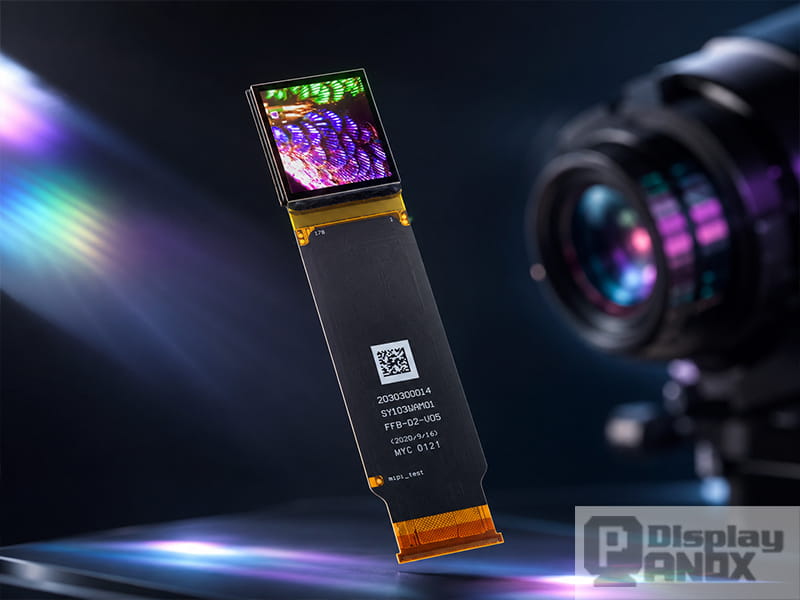
Micro OLED is a different kind of sunlight-readable challenge. The panel itself is tiny and high-resolution, but AR and optical engines lose part of the light through lenses, prisms, waveguides, or combiners. As a result, the microdisplay often needs very high luminance before the final image reaches the eye.
Panox Display lists Micro OLED products ranging from 0.39 inch to 1.3 inch, including high-resolution options for AR and near-eye applications. The Micro OLED page also includes examples such as 0.68-inch 1920×1200 Micro OLED with 5000 brightness and 0.71-inch 1920×1080 Micro OLED with 3000 nits.
For AR glasses, FPV viewers, thermal imaging viewers, and compact optical engines, sunlight readability depends on the full optical path:
-
source display brightness
-
optical efficiency
-
eye-box design
-
combiner transmittance
-
ambient light leakage
-
contrast of virtual content
-
thermal control in a small housing
A bright Micro OLED panel is only the starting point. The optical engine must preserve enough contrast after the image travels through the system.
4. How to Choose the Right Readable-Under-Sun Display Panel
Different products need different sunlight-readable strategies. Choosing only by brightness can lead to a panel that looks good on paper yet performs poorly in the real device.
Outdoor Kiosks and EV Charging Piles
Recommended direction: high brightness TFT LCD or IPS LCD with optical bonding and AG/AR cover glass
These products usually need a medium or large screen, color UI, strong touch support, and long working hours. A 1000-nit or higher TFT LCD is often a practical starting point. Optical bonding and surface treatment are important because the user may stand in front of the device under direct sun.
Industrial Handheld Terminals
Recommended direction: high brightness IPS LCD, transflective LCD, AMOLED, or Memory LCD depending on UI complexity
For barcode scanners, inspection tools, portable controllers, and field instruments, sunlight readability must work together with battery life. If the device needs maps, images, and full-color UI, high brightness IPS LCD or AMOLED can work well. If the device mainly shows simple data, Memory LCD or transflective LCD may give better outdoor visibility with lower power consumption.
Smart Watches and Wearables
Recommended direction: AMOLED for premium full-color UI; Memory LCD for always-on outdoor data
Smart watches face a difficult balance: small battery, strong sunlight, curved or round screen design, and frequent quick-glance use. AMOLED is excellent for colorful watch faces and premium interaction. Memory LCD is better for low-power outdoor data screens, especially when the content is static or semi-static.
Vehicle and Marine Displays
Recommended direction: high ambient contrast display stack with wide temperature support
Vehicle and marine displays must handle sunlight from different angles, reflections from windows, vibration, heat, cold, and long service life. SAE J1757-1’s focus on high ambient contrast ratio is especially relevant here because display legibility in sunshine affects safety and quick decision-making.
For these applications, engineers should pay close attention to:
-
high brightness
-
reflection control
-
wide viewing angle
-
polarized sunglasses compatibility
-
dimming at night
-
touch performance
-
operating temperature
-
long-term backlight decay
AR, FPV, and Optical Viewers
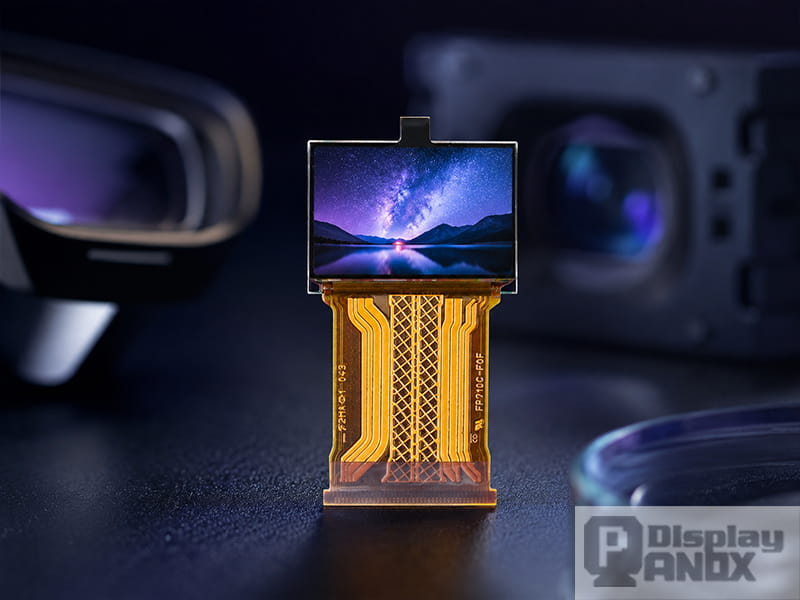
Recommended direction: high-luminance Micro OLED or Micro LCD matched with the optical system
Near-eye systems need a different evaluation method because the user does not view the bare panel directly. The display must provide enough brightness after optical loss, while keeping power and heat under control. For AR products, sunlight readability is closely related to ambient contrast, optical efficiency, and how the virtual image is blended into the real world.
5. Brightness Levels: How Many Nits Are Enough?
There is no universal nit number for every outdoor display. A readable-under-sun panel should be selected based on ambient light, viewing distance, content type, display size, surface reflection, and product power budget.
A practical selection guide:
| Use Environment | Typical Display Direction | Notes |
|---|---|---|
| Bright indoor / near window | 500–800 nits | Good for retail, equipment panels, indoor machines near strong light |
| Semi-outdoor shade | 800–1000 nits | Suitable for many handheld and kiosk applications |
| Outdoor daylight | 1000–1500 nits | Often paired with optical bonding and AG/AR treatment |
| Strong direct sunlight | 1500–2500+ nits | Requires stronger thermal design and reflection control |
| Battery-powered always-on outdoor data | Memory LCD / transflective LCD | Uses ambient light instead of relying on backlight power |
| AR / near-eye optical engine | High-luminance Micro OLED / Micro LCD | Final brightness depends heavily on optical efficiency |
The numbers above are selection ranges, not absolute rules. A 1000-nit display with excellent optical bonding and low reflectance may outperform a brighter panel with poor surface reflection. This is why professional outdoor display design should evaluate ACR, reflectance, and real viewing conditions together.
6. Why UI Design Also Affects Sunlight Readability
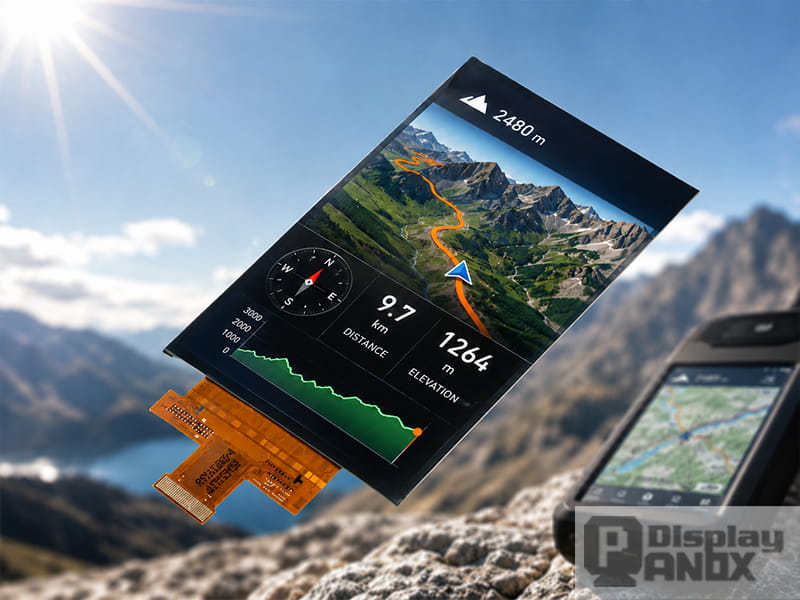
The display panel matters, but the interface design can make the same panel easier or harder to read. Outdoor UI should use strong contrast, clean hierarchy, larger fonts, high-weight icons, and simplified information density.
Good outdoor UI design usually includes:
-
larger text size
-
thicker font weight
-
fewer thin lines
-
strong contrast between text and background
-
clear button boundaries
-
limited use of low-contrast gray text
-
simplified color coding
-
adaptive brightness
-
adaptive gamma or tone mapping
Recent research on sunlight readability with tone mapping shows that high luminance displays with optimized gamma can improve readability and image quality under bright ambient light, and color rendering can help reduce color shift.
For product teams, this means the display hardware and UI should be designed together. A well-selected sunlight readable display panel can still feel weak if the interface uses small gray text, pale icons, or low-contrast backgrounds.
7. Testing Checklist for a Sunlight Readable Display Panel
Before choosing a display for outdoor production, engineers should test more than the datasheet brightness.
A useful checklist includes:
-
Dark-room luminance
Measure white luminance, black luminance, and contrast in a controlled environment. -
Ambient contrast ratio
Test the panel under simulated daylight, including diffuse and directional light. -
Surface reflection
Check mirror-like glare, haze, and visibility from different viewing angles. -
Optical bonding effect
Compare air-bonded and optically bonded structures when cover glass or touch is required. -
Thermal performance
Run the display at high brightness in a real enclosure and monitor temperature rise. -
Backlight lifetime
Confirm brightness decay, LED driving current, and long-term reliability. -
Touch performance
Test capacitive or resistive touch under sunlight, gloves, moisture, and cover glass conditions. -
Viewing angle
Check readability from the angles users will actually see. -
Night dimming
Make sure a high-brightness panel can dim comfortably for night or indoor use. -
Mechanical and environmental reliability
Consider vibration, sealing, condensation, UV exposure, and operating temperature.
8. How Panox Display Supports Sunlight Readable Display Projects
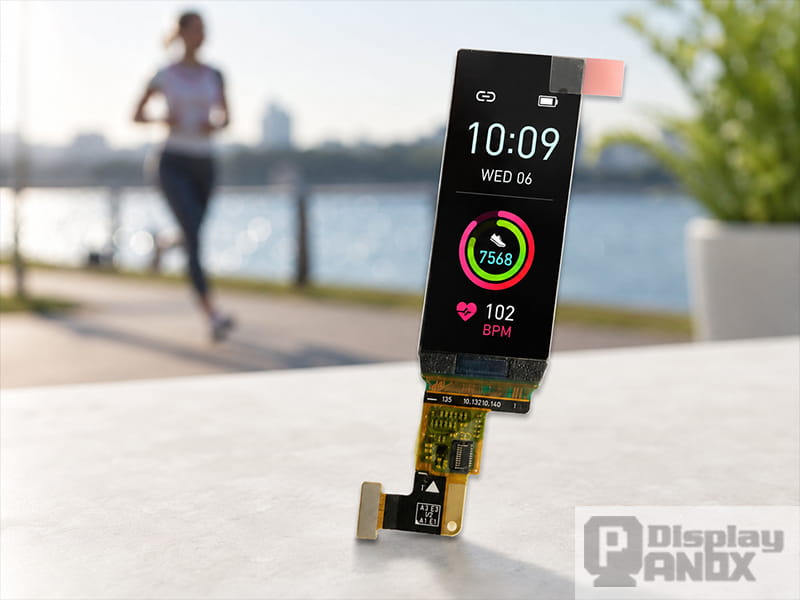
Panox Display can support readable-under-sun display projects across several product directions:
-
High brightness TFT LCD and IPS LCD for industrial equipment, kiosks, vehicle systems, outdoor terminals, and embedded devices
-
Transflective LCD and Memory LCD for low-power, always-on, outdoor-readable products
-
AMOLED and OLED for wearables, smart devices, and premium full-color interfaces
-
Micro OLED for AR, FPV viewers, compact optical engines, and near-eye display systems
-
Custom touch panel and cover glass support for products that need stronger front protection and better optical integration
-
Controller and driver board support for HDMI, Type-C, MIPI, RGB, LVDS, eDP, and other interface requirements
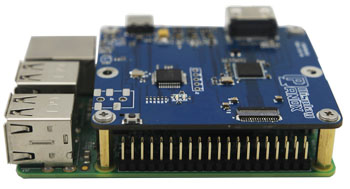
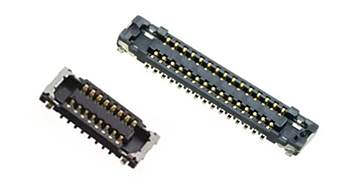
Panox Display’s website states that it provides customized touch panels, controller boards, cover lenses, connectors, FPC cables, and driver solutions to help customers build complete display systems. For outdoor applications, this system-level support is important because sunlight readability depends on the panel, optical stack, electronics, mechanical structure, and product environment working together.
9. Frequently Asked Questions
What is a readable-under-sun display panel?
A readable-under-sun display panel is a display designed to remain visible in bright daylight or direct sunlight. It usually combines high luminance, low reflectance, strong ambient contrast, surface treatment, optical bonding, and suitable UI design.
Is high brightness enough for sunlight readability?
High brightness helps, but it cannot guarantee outdoor readability by itself. Reflections, black level, optical bonding, AR/AG treatment, cover glass, touch structure, viewing angle, and thermal performance also affect the final result.
What brightness is needed for a sunlight readable LCD?
Many semi-outdoor displays use 800–1000 nits. Stronger outdoor applications often use 1000–1500 nits or higher. Direct sunlight, large display size, reflective cover glass, and long viewing distance may require 1500–2500+ nits with proper optical treatment.
Is OLED readable under sunlight?
OLED can be readable under sunlight when the panel has sufficient peak brightness and a well-controlled reflective stack. AMOLED is especially popular in wearables and premium compact devices. For long-duration maximum brightness, power consumption, heat, and lifetime should be considered.
What is the difference between AR and AG treatment?
AR coating reduces reflected light through optical thin-film interference. AG treatment diffuses reflected light so glare becomes softer and less mirror-like. Many outdoor display designs use one or both depending on the application.
Does optical bonding improve sunlight readability?
Yes. Optical bonding reduces internal reflection by removing air gaps between the cover glass, touch layer, and display panel. It can improve perceived contrast, reduce ghost images, and strengthen the display module.
Which display is best for low-power outdoor devices?
Memory LCD and transflective LCD are strong choices for low-power outdoor products because they use ambient light efficiently and can show static information with very low power consumption. AMOLED may be better when the product needs rich color, animation, and a premium UI.
Can Panox Display provide sunlight readable display panels?
Yes. Panox Display supplies multiple display technologies suitable for outdoor-readable projects, including high brightness TFT LCD, IPS LCD, transflective LCD, Memory LCD, AMOLED, OLED, and Micro OLED. Panox Display can also support touch panel, cover glass, connector, and driver board requirements for complete product integration.
Conclusion
A readable-under-sun display panel is created through a complete optical and electrical design strategy. Brightness is important, but the final outdoor experience depends on ambient contrast, surface reflection, internal reflection, optical bonding, UI design, power consumption, heat, and the actual product environment.
For outdoor kiosks, industrial control systems, handheld terminals, vehicle displays, smart watches, marine instruments, AR devices, and other bright-environment applications, choosing the right display technology early can reduce redesign cost and improve the final user experience.
If your project needs a display panel that remains clear in daylight, Panox Display can help you compare high brightness TFT LCD, transflective LCD, Memory LCD, AMOLED, OLED, and Micro OLED options for your product design.