



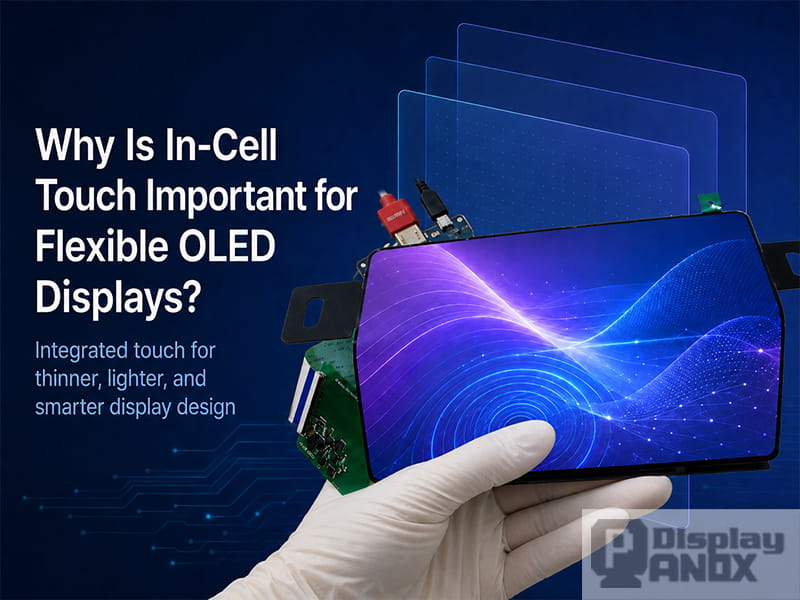
Flexible OLED displays are usually discussed in terms of bending, contrast, color and thickness. Those are important, but they do not tell the whole story. In a real device, a display has to become part of a complete front module: cover glass, touch sensing, FPC routing, mechanical support, driving electronics, firmware and housing all have to work together.
This is where In-Cell touch becomes important. By integrating touch sensing into the display panel structure, an In-Cell display can reduce the need for a separate touch sensor layer. For flexible OLED products, that integration is especially valuable because the display is already fighting for space, weight, optical efficiency and mechanical freedom.
Flexible AMOLED displays are widely used in smartphones, foldable devices, wearable products, long-strip interfaces and AR/MR-related development. Research on flexible AMOLED systems also points to the same product direction: new form factors have increased interest in flexible displays because of their thinness, light weight and optical characteristics.
The Product Problem: Flexible Displays Leave Very Little Room for Extra Layers
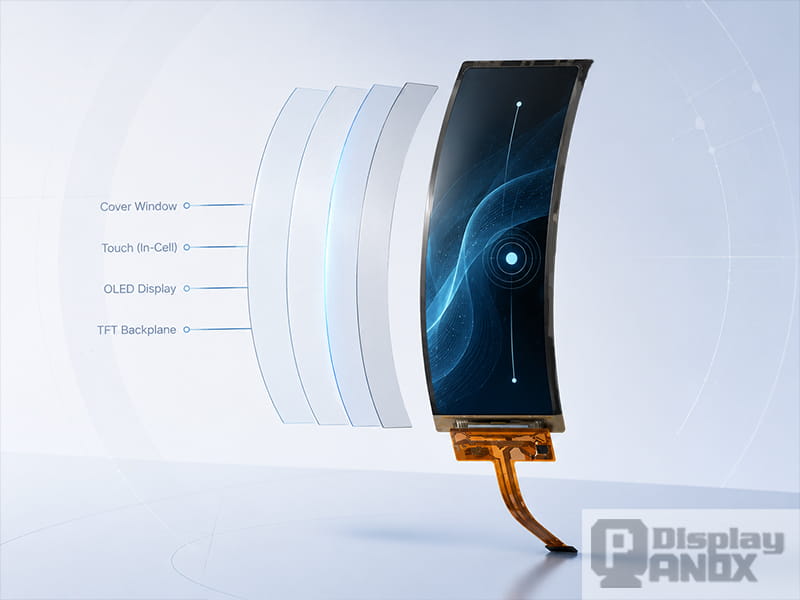
A rigid display module can sometimes tolerate an additional touch layer, extra adhesive and a thicker front stack. A flexible OLED module is less forgiving. Every layer affects bending behavior, bonding reliability, optical performance and mechanical packaging.
In a smartphone, the front module must stay thin while leaving room for battery, antenna, speakers, camera structure and thermal design. In a foldable device, the display stack must survive repeated bending while keeping the touch area responsive. In a wearable product, even a small increase in thickness or weight can affect comfort and product appearance. In a long-strip or wraparound display, the touch structure has to follow a non-standard shape without making the module bulky.
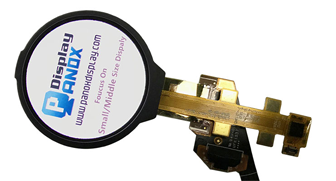
Panox Display’s In-Cell product list reflects these use cases: the tag includes a 1.2-inch round AMOLED for smartwatches, 5.99-inch and 6.67-inch flexible AMOLED smartphone displays, a 6.52-inch long-strip flexible OLED touch panel and an 8.01-inch flexible/foldable AMOLED display.
1. In-Cell Touch Helps Preserve the Thin Flexible OLED Stack
The most direct advantage of In-Cell touch is stack reduction. In traditional touch display structures, the display and touch sensor are separate layers. That usually means extra sensor material, adhesive and routing. In an In-Cell design, the touch sensor is built into the display cell or integrated into the panel structure.
Synaptics explains that In-Cell sensors use existing display layers to construct the touch sensor matrix, and full In-Cell designs place both transmitting and receiving touch sensor layers within the display cell. The same white paper also notes that full In-Cell designs can reduce the number of FPCs needed between the panel and the main board.
For flexible OLED displays, this matters because the product value often comes from being thin, light and mechanically adaptable. Panox’s 5.99-inch flexible AMOLED, for example, is listed with a 0.425 mm outline thickness, MIPI-DSI 4-lane interface and In-Cell touch panel, making it suitable for smartphones, AR/MR and vehicle-related applications.
In practice, a thinner integrated touch structure gives product designers more freedom. The saved space can be used for a slimmer housing, a larger battery, stronger cover glass, a smaller bezel area or simply a cleaner industrial design.
2. It Supports Better Optical Performance
Flexible OLED displays are often selected because they can deliver high contrast, wide color and strong visual impact. Adding a separate touch sensor above the display can introduce additional optical interfaces. Each interface may affect reflection, transmittance, haze or color appearance, depending on the materials and bonding process.
In its touch-display integration white paper, Synaptics states that removing a separate touch sensor layer can make In-Cell displays about 10 percent brighter in the discussed LCD stack, or allow the same brightness with lower backlight power. For OLED modules, the exact optical result depends on the panel stack, polarizer, cover glass, coating and bonding method. The core idea still matters: fewer front layers usually make it easier to protect the display’s original image quality.
This is especially relevant for high-resolution AMOLED products. Panox’s 8.01-inch flexible/foldable OLED uses a 2480 × 1860 AMOLED panel with In-Cell PCAP touch and 600 nits luminance, while the 6.67-inch flexible AMOLED smartphone display is listed with 1080 × 2400 resolution, 700 cd/m² typical luminance and In-Cell PCAP touch.
When a project already pays for a premium OLED panel, the front stack should avoid wasting that visual performance. In-Cell touch helps keep the optical path cleaner and the module design more compact.
3. It Simplifies Cover Glass and Mechanical Design
For many developers, touch design becomes complicated at the cover glass stage. The cover lens may need black printing, rounded edges, holes, coatings, waterproof sealing or impact resistance. If the touch sensor is separate, the team must also manage sensor shape, tail routing, lamination tolerance and touch controller matching.
With an In-Cell or On-Cell display module, Panox notes that the customer generally only needs to add cover glass; when the display does not have integrated touch, an external touch panel is required.
This is a practical advantage for early-stage product development. A team can focus on cover glass shape, ID design and housing fit instead of designing a separate PCAP sensor from the beginning. It can also reduce the risk of choosing a good display panel and then weakening the final result with a poorly matched touch sensor.
That does not mean cover glass can be treated casually. Glass thickness, coating, bonding method and grounding design can still influence touch performance. The advantage is that the most sensitive part of the touch structure is already designed into the panel system.
4. It Reduces Routing and Assembly Complexity
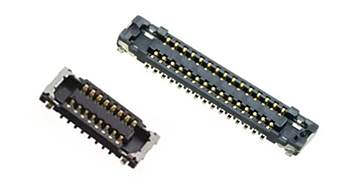
Flexible OLED products often have very tight internal layouts. A smartphone or foldable module may have several FPCs, connectors and stiffener zones near the bottom or side. A wearable product may have almost no room for extra board area. A long-strip display may require unusual placement of connectors because the housing is curved, narrow or wraparound.
In-Cell integration can reduce the number of separate touch-related parts. Synaptics describes full In-Cell displays as requiring only a single FPC for both display and touch sensor interfacing, and also connects In-Cell designs with TDDI, where touch controller and display driver functions are integrated or tightly coordinated.
That routing simplicity is useful in small and medium-size OLED modules. Panox’s 8.01-inch foldable AMOLED, for instance, uses MIPI for display and SPI for touch, while integrating In-Cell PCAP touch into the module. The 6.52-inch flexible OLED touch panel is a long-strip 2520 × 840 module with MIPI interface, 407 PPI and a 3:1 aspect ratio, which makes mechanical layout and signal routing important parts of the design conversation.
For engineers, fewer touch-related mechanical variables can make prototyping faster. For purchasing teams, fewer separate parts can make supplier communication clearer. For product managers, it can shorten the path from sample evaluation to a working prototype.
5. It Makes Touch Performance Part of the Display System
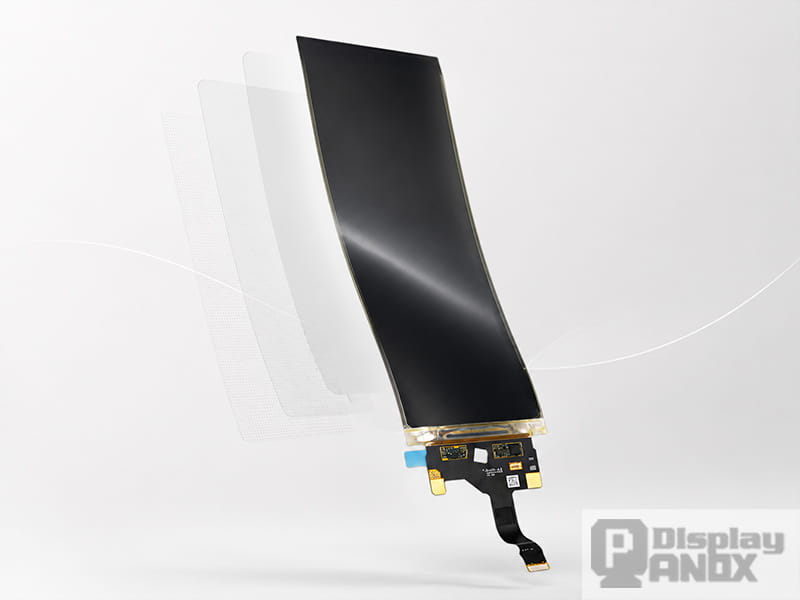
In-Cell touch is more integrated, so the engineering challenge also becomes more integrated. Touch sensing and display driving have to operate in a close electrical environment. Display noise, parasitic capacitance, grounding, scan timing and firmware filtering all affect the final touch experience.
This is especially important for AMOLED panels with high resolution or high refresh rates. A 2021 Micromachines paper on 120 Hz high-refresh-rate AMOLED displays explains that updating pixels in high-refresh-rate AMOLED panels can amplify display noise on touch screen panel electrodes, and the proposed architecture mitigates that noise by synchronizing touch and AMOLED pixel driving.
A 2022 Micromachines paper focuses on touch readout in a TSP-integrated ultrathin flexible display and highlights severe display noise interference caused by the large panel load of the touch screen panel in flexible displays.
For product selection, this means In-Cell touch should be evaluated as a complete display-touch system. A buyer should not judge only the resolution, brightness or interface. Touch stability under real conditions also matters: charger noise, EMI, cover glass thickness, temperature, glove operation, moisture and firmware settings can all change the user experience.
6. It Fits the Direction of Smartphones, Wearables and Foldable Devices
The value of In-Cell touch becomes clearer when viewed through actual product categories.
For smartphones, the priority is a thin module, narrow bezel, high visual quality and reliable touch. Panox’s 5.99-inch and 6.67-inch flexible AMOLED modules are both positioned for smartphone-related development, with MIPI interface, high contrast OLED performance and integrated touch.
For foldable devices, the display stack needs to stay thin and mechanically manageable. The Panox 8.01-inch flexible/foldable AMOLED module is listed with 2480 × 1860 resolution, 4:3 aspect ratio, In-Cell PCAP touch and a flexible/foldable form factor.
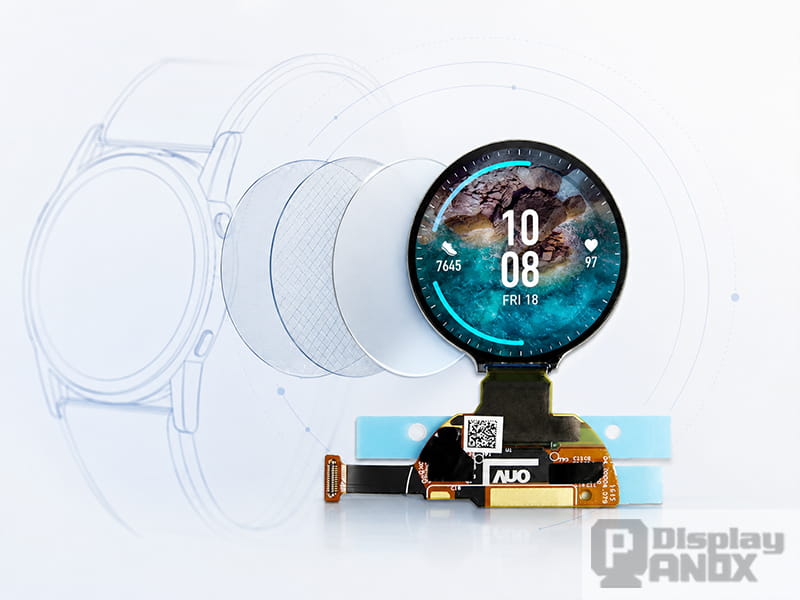
For wearable products, compact integration matters more than large size. The 1.2-inch round AMOLED module from Panox is designed for smartwatch use, with 390 × 390 resolution, SPI/MIPI interface, 350 cd/m² typical luminance and a 1:1 round format. In a small wearable device, reducing separate layers and simplifying front-module design can help keep the product thinner and easier to package.
For long-strip or curved interfaces, In-Cell touch can help preserve the unique shape. The 6.52-inch flexible OLED touch panel from Panox has a 2520 × 840 resolution, 407 PPI, 3:1 aspect ratio and flexible OLED structure, making it relevant for curved, stretched or wraparound display concepts.
When Is In-Cell Touch Especially Worth Choosing?
In-Cell touch is most useful when the product depends on thinness, clean optics and tight mechanical packaging. It is a strong fit for flexible OLED smartphones, foldable prototypes, compact handheld devices, wearable screens, AR/MR auxiliary displays and design concepts where the front module has little room for a separate touch sensor.
It is also helpful when the development team wants to move quickly from panel evaluation to prototype testing. If the display already includes integrated touch, the team can spend more time on cover glass, firmware, housing and system integration.
A separate external PCAP touch panel may still be considered when the project needs unusual cover glass thickness, very specific touch zones, special wet/glove touch behavior, or a custom sensor pattern that cannot be achieved with the built-in panel structure. The best choice depends on the full product stack.
What Engineers Should Confirm Before Using an In-Cell Flexible OLED
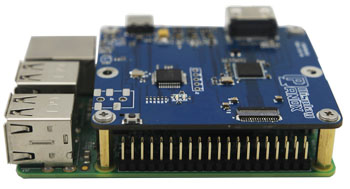
Before choosing an In-Cell flexible OLED module, the first question should be how the touch function is routed. Check whether touch uses SPI, I2C or another interface, whether the display and touch signals share one FPC or separate paths, and whether the supplier can provide the IC datasheet, circuit schematic and sample code.
The second question is cover glass. A beautiful OLED panel can still perform poorly if the final cover lens is too thick, poorly bonded or badly grounded. The cover glass should be tested with the real housing design as early as possible.
The third question is bending and mounting. For flexible OLED displays, the panel may be bendable, but the IC area, FPC, stiffener and bonding region usually have stricter limits. Panox notes on the 6.67-inch flexible OLED product page that the display can be bent when working, while warning against bending it vertically because the IC is at the bottom.
The fourth question is system noise. Touch should be tested with the real charger, main board, antenna environment and enclosure. Research on high-refresh AMOLED and ultrathin flexible touch displays shows that display noise can become a real touch-readout issue, so early system-level testing is worth the effort.
Panox Display In-Cell Flexible OLED Options
Panox Display’s In-Cell product selection includes several OLED/AMOLED modules for different development directions. The 8.01-inch flexible/foldable OLED is suitable for foldable device concepts and tablet-like mobile prototypes. The 6.67-inch flexible AMOLED is closer to smartphone display evaluation. The 6.52-inch flexible OLED touch panel is useful for long-strip, curved and wraparound interface experiments. The 5.99-inch flexible AMOLED can support smartphone, AR/MR and vehicle-related development. The 1.2-inch round AMOLED gives wearable developers a compact circular display option.
For developers, the important point is to match the display to the final product environment. Resolution and brightness are easy to compare on a table. Touch structure, cover glass, bending area, FPC routing and testing support often decide whether the module is easy to turn into a product.
Conclusion
In-Cell touch is important for flexible OLED displays because it helps protect the very qualities that make flexible OLED attractive: thin structure, clean visual performance, compact routing and modern product design freedom.
For smartphones, it supports a slimmer and more integrated front module. For foldable products, it helps keep the stack manageable. For wearables, it saves space in a tiny enclosure. For long-strip and curved displays, it reduces the burden of adding a separate touch layer to an already unusual shape.
The best way to evaluate an In-Cell flexible OLED is to treat display and touch as one system. Check the datasheet, interface, FPC layout, touch controller, cover glass plan and real operating environment before moving into mechanical design. When the module, cover glass and electronics are designed together, In-Cell touch can make a flexible OLED product feel thinner, cleaner and more complete.
Learn more:What Is an In-Cell Display? A Practical Guide to Integrated Touch Technology