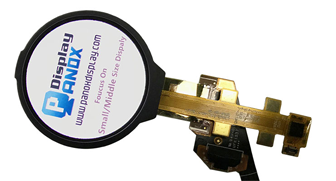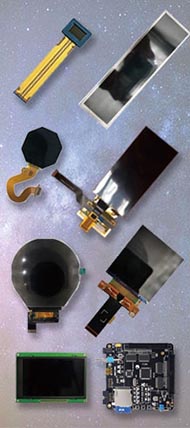




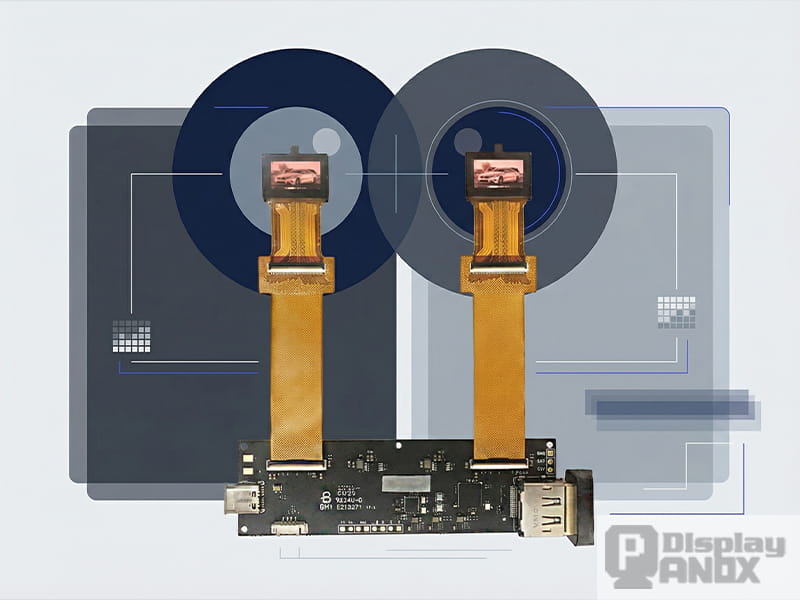
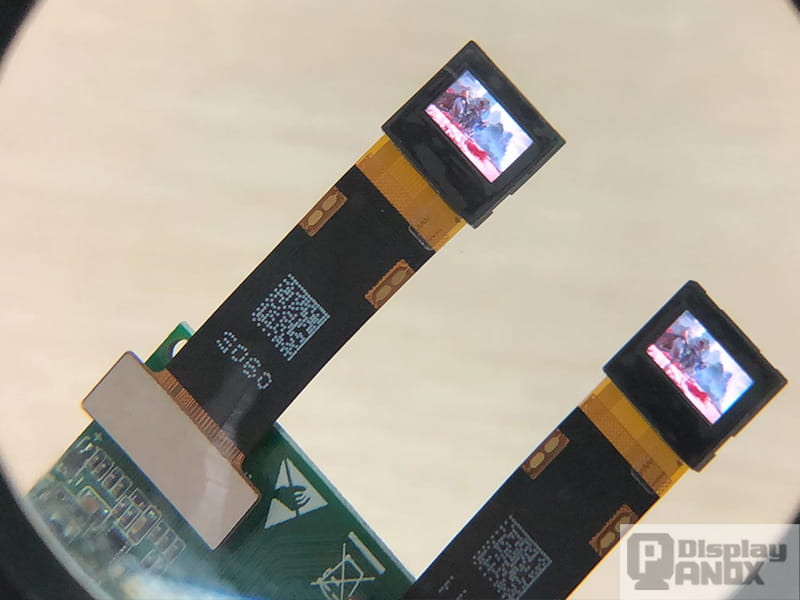
0.71 inch Micro OLED FHD For AR
AR display is no longer a side topic in consumer electronics. In 2026, it sits at the center of smart glasses, immersive AR/VR hardware, and next-generation automotive interfaces. The most important shift is that buyers are no longer judging displays by resolution alone. They are looking at the full experience: brightness, efficiency, comfort, optics, thermal limits, and how naturally digital content fits into daily life. Google’s Android XR direction, Samsung Display’s push in OLEDoS, Sony’s continued microdisplay development, and new automotive AR heads-up display systems all point in the same direction: AR display has become a system-level decision, not just a panel choice.
The reason this matters for product teams is simple. A strong AR display in 2026 is not defined by the brightest spec sheet or the smallest component. It is defined by how well the display technology matches the product category. Smart glasses need wearability and efficiency. AR/VR headsets need image density and immersion. Automotive AR heads-up display systems need clarity through the windshield, strong contrast, and reliable visibility in sunlight. That is why the AR display conversation now spans microdisplays, waveguides, optical engines, and vehicle projection systems instead of just “better screens.”
1. What Defines a Strong AR Display in 2026?
1.1 Brightness, efficiency, and image clarity
For any AR display, brightness still matters, but brightness alone is not enough. In a near-eye product, the image has to survive the optical path and still look clear, stable, and readable. That means the useful performance of an AR display depends on brightness, contrast, pixel density, response, and power efficiency together. Samsung Display’s XR messaging around OLEDoS focuses heavily on pixel density and immersive image quality, while Sony continues to position OLED microdisplays around realistic, high-definition visual reproduction for AR and VR head-mounted systems.
In practice, that changes how teams evaluate products. A great AR display should not only look sharp in demos but also stay legible in realistic usage conditions, support long sessions without unnecessary power drain, and deliver image quality that works with the device’s optics rather than fighting them. For 2026 hardware, efficiency is no longer a background spec. It directly affects product size, heat, battery life, and whether the device feels premium or unfinished.
1.2 Why optics matter as much as the panel
One of the biggest mistakes in AR display discussions is treating the display panel as if it works alone. In real products, optics decide how much of the display’s performance actually reaches the user. Dispelix describes waveguides as transparent see-through displays that combine the real and virtual worlds in the user’s field of vision, while DigiLens emphasizes lightweight form factors and optical efficiency as key to practical XR smart glasses. That means the “best” AR display is often the one that works best with the optical architecture, not the one with the most impressive isolated spec.
This is especially important for eyewear-form products. If the optics are bulky, inefficient, or visually distracting, even a strong display engine can feel compromised. In 2026, the better AR display strategy is to evaluate panel, light engine, waveguide, and power architecture as one stack. That is also why so much current AR/VR display news is really about overall platform design rather than just one display component.
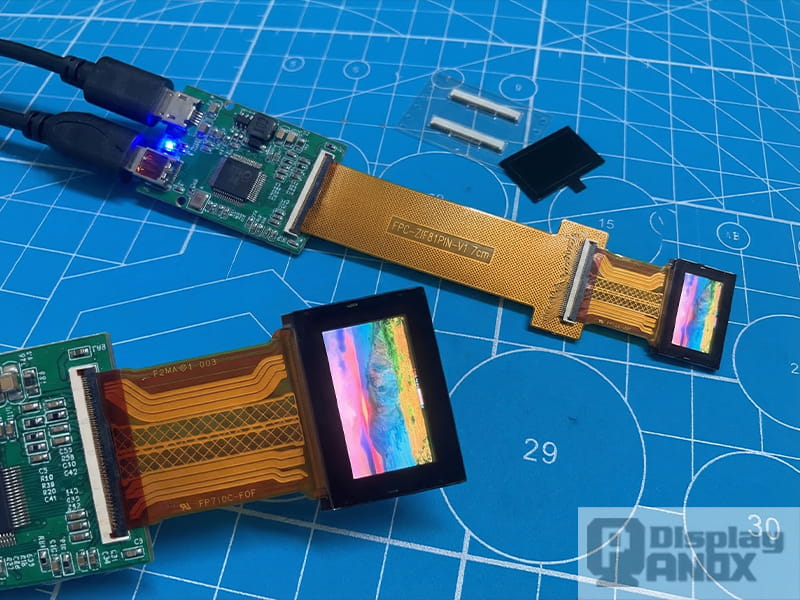
0.71 inch Micro OLED 1920x1080 LVDS 3000 nits
2. What Is Driving AR VR Display News in 2026?
2.1 Lighter near-eye systems
A major theme in AR/VR display news is the push toward lighter, more wearable hardware. Google’s Android XR roadmap clearly frames glasses as useful only if people actually want to wear them, and its public demos have centered on real-world assistance such as messaging, directions, translation, and in-lens information. That is a very different goal from older headset-first thinking. The display now has to support an always-available experience without turning the product into something too heavy, too hot, or too awkward for daily use.
Snap is pushing in the same direction. Its 2025 announcement positioned Specs as lightweight, see-through augmented reality glasses for 2026, and its April 2026 update with Qualcomm reinforced that future generations will rely on Snapdragon XR platforms for on-device, context-aware experiences. That combination matters because the future of AR display is tied directly to lower-power compute and more wearable industrial design.
2.2 Better microdisplays for immersive devices
Microdisplays remain one of the strongest answers for premium near-eye image quality. Sony continues to promote OLED microdisplays for AR and VR head-mounted displays, including a 1.3-type 4K OLED microdisplay and a 0.44-type Full HD OLED microdisplay designed for thinner, lighter, and more powerful AR glasses. Samsung Display is also putting OLEDoS at the center of its XR strategy, highlighting an RGB OLEDoS panel with up to 5,000 PPI. Together, these signals show why Micro OLED and OLEDoS are still core technologies whenever image density and visual fidelity are top priorities.
What has changed is the market context around them. In earlier years, microdisplays were often discussed like experimental components. In 2026, they are being presented as practical building blocks for real XR product roadmaps. That does not mean every AR device will use the same display engine, but it does mean high-density microdisplays are now much more central to mainstream AR and VR product planning.
2.3 Why wearable comfort is now a display issue
Wearable comfort is no longer just an industrial design topic. It is also a display issue because the display engine, optics, and compute platform directly shape frame thickness, battery demand, and heat. Qualcomm’s June 2025 demonstration of generative AI running directly on smart glasses, together with its smaller Snapdragon AR1+ platform, highlights why on-device efficiency matters so much for future eyewear. Smaller, more efficient compute opens the door to more realistic AR display form factors.
That is why the winners in AR display will not necessarily be the companies chasing the most aggressive visual spec in isolation. The winners will be the ones that balance brightness, readability, optical efficiency, and wearability well enough to build products people keep on their face instead of in a drawer.
3. How Is AR Heads-Up Display Changing Automotive Design?
3.1 Why AR HUD is moving beyond premium vehicles
Automotive AR heads-up display is becoming one of the most interesting branches of the broader AR display market because it turns the windshield into an information surface rather than forcing the driver to look down at separate screens. Hyundai Mobis has already shown both a holographic windshield display concept and an AR-HUD system capable of presenting a 70-inch high-resolution virtual image on the front windshield. This shows how AR heads-up display is evolving from a small driver aid into a much larger interface concept.
What makes this especially important is that the vehicle display conversation is changing from “How many screens can we add?” to “Where should information appear so the experience feels safer and more natural?” AR heads-up display answers that by keeping critical information closer to the driver’s line of sight. That makes it relevant not just for luxury branding, but for real usability and interface design.
3.2 What drivers expect from windshield projection
A usable AR heads-up display has to do more than float graphics onto glass. It needs to remain readable in bright daylight, preserve contrast, avoid visual clutter, and feel stable enough that the driver trusts it. Hyundai Mobis specifically highlights visibility in sunlight and even when the driver is wearing sunglasses, which shows how automotive AR display development is now being judged against real driving conditions rather than just showroom impact.
As these systems improve, driver expectations will rise quickly. Navigation cues, safety information, and situational prompts all need to look anchored, timely, and easy to interpret. In other words, automotive AR heads-up display is becoming part of the driving UX layer, not an optional novelty feature.
3.3 Key display requirements for automotive AR systems
For automotive AR display, the core requirements are different from eyewear. Large apparent image size, strong contrast, sunlight visibility, optical consistency through the windshield, and low distraction are all crucial. Unlike a headset, the automotive system shares space with the road itself, so image placement and legibility matter just as much as raw display capability. That is why AR-HUD development often feels closer to a full system integration challenge than a simple display selection exercise.
4. Which Display Technologies Are Most Relevant for AR Products?
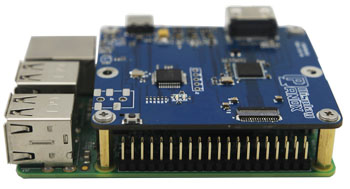
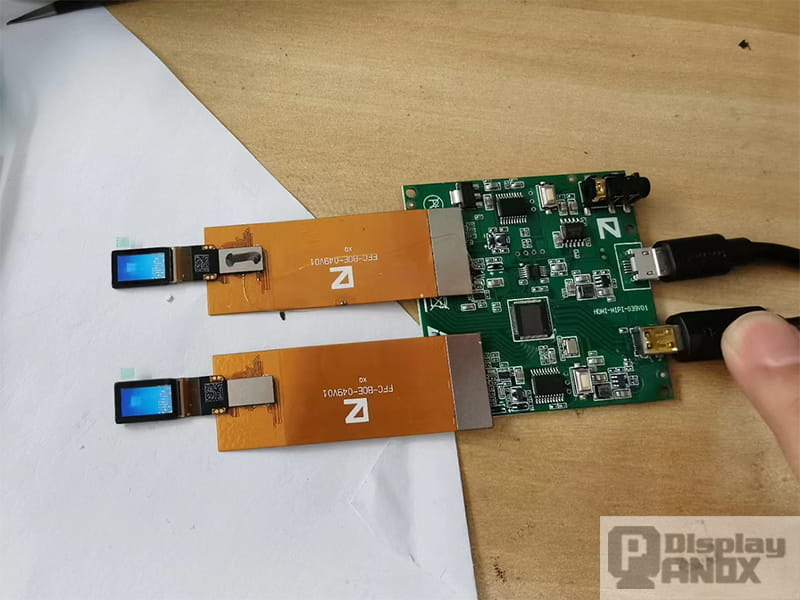
0.39 inch Micro OLED For AR Type-c Board
4.1 Micro OLED and OLEDoS
Micro OLED and OLEDoS are still among the most relevant AR display technologies in 2026 for compact, premium near-eye imaging. Their strengths are clear: very high pixel density, strong image quality, and suitability for immersive optics. Sony’s roadmap and Samsung Display’s recent XR positioning both reinforce that these technologies remain central wherever visual sharpness and small-form-factor performance matter most.
4.2 Waveguide-based AR display systems
Waveguides remain essential for true glasses-form AR display products because they enable digital overlays in a see-through format. Dispelix positions its technology around transparent displays for AR devices, while DigiLens emphasizes lightweight, scalable plastic waveguides and low eye glow. In 2026, waveguides are not just an accessory to AR display development. For many smart glasses concepts, they are the reason the product can exist in a wearable form at all.
4.3 LCoS and other selected architectures
Not every AR product needs the same display stack. Some reference designs still use LCoS-based projection approaches combined with waveguides. Pegatron and Dispelix, for example, introduced an AR glasses reference design using diffractive waveguide displays and miniature LCoS projectors. That matters because it shows the AR display market is still multi-architecture. Teams should choose the solution that best fits their brightness targets, optical design, product cost, and industrial constraints rather than assuming one technology wins every use case.
5. How Can Panox Display Support AR Display Development?
For companies developing AR-related products, the challenge is often not just finding a display, but finding one that can actually move from evaluation to integration. Panox Display can be positioned as a practical display partner for teams working on wearable, embedded, and specialty display hardware, especially when the project needs flexible sourcing, controller board support, interface matching, or custom display integration rather than off-the-shelf consumer branding.
That makes Panox Display useful in a very specific way. Instead of presenting itself as an end-device AR brand, it can speak to what many hardware teams actually need during development: display selection support, compact panel options, engineering coordination, and help shortening the distance between concept and working prototype. For lead generation, that is a stronger message than vague claims about “future technology.”
If your team is evaluating compact display solutions for wearable or near-eye hardware, Panox Display can help simplify early-stage display sourcing and integration for AR-related product development.
6. AR Display Comparison Table
| AR display direction | Best fit | Main strength in 2026 | Main challenge |
|---|---|---|---|
| Micro OLED / OLEDoS | Premium near-eye devices, immersive AR/VR | Extremely high image density and strong visual quality | Cost, integration complexity, thermal and power balance |
| Waveguide-based AR display | Smart glasses and see-through wearables | Keeps digital content in a lightweight eyewear form factor | Optical efficiency, eyebox, brightness loss through the stack |
| LCoS + waveguide systems | Reference designs, selected consumer and enterprise AR | Mature projection path with flexible system design | Bulk, complexity, and balancing brightness with wearability |
| Automotive AR heads-up display | Windshield navigation and driver information | Keeps information closer to the driver’s line of sight | Sunlight readability, contrast, optical stability, driver distraction control |
The table above reflects the way current official product and platform announcements are shaping the market: microdisplays for image quality, waveguides for wearable form, LCoS in selected system designs, and AR heads-up display for automotive UX expansion.
7. Conclusion
The most important AR display trend in 2026 is not a single technology announcement. It is the convergence of display, optics, compute, and real-world usability. Smart glasses are moving toward lighter, more context-aware designs. AR/VR hardware continues to lean on high-density microdisplays for immersion. Automotive AR heads-up display is turning the windshield into a new interface layer. The products that stand out will be the ones that match the right display architecture to the right use case instead of chasing a one-size-fits-all solution.
For companies building in this space, the better question is no longer “Which display sounds the most advanced?” It is “Which AR display stack gives my product the best balance of clarity, efficiency, comfort, and integration potential?” That is the question shaping the market now, and it is the one more buyers will be asking through 2026.
Learn more: Why Are AR Glasses Chasing 3,000 Nits? Where Does the Brightness Come From?
FAQs
What is the most important factor in choosing an AR display in 2026?
The most important factor is fit between the display architecture and the product category. Smart glasses, immersive headsets, and automotive AR heads-up display systems all need different performance balances.
Is Micro OLED still relevant for AR display products?
Yes. Micro OLED and OLEDoS remain highly relevant for near-eye devices because they offer very high image density in a compact format, which is especially useful in AR and VR head-mounted systems.
Why are waveguides so important in AR display development?
Because they allow digital content to appear in a see-through eyewear format. Without efficient waveguide design, many smart glasses concepts become too bulky or visually compromised for daily use.
What is happening in AR VR display news right now?
The biggest themes are lighter smart glasses, better microdisplays, on-device AI, and platforms designed for real-world wearability rather than only short demos. Google, Snap, Qualcomm, Samsung Display, and Sony are all pushing different parts of that direction.
Why is automotive AR heads-up display growing so quickly?
Because it can place navigation and driving information closer to the driver’s natural line of sight, reducing the need to look away to separate screens. That makes it valuable for both safety-oriented UX and next-generation cockpit design.
| Panel model | Interface | Type | Size (inch) | Resolution | P.S |
| S032WEM01 | MIPI/RGB | Micro OLED | 0.32 | 800x600 | |
| PMOF039XGAM | RGB | Micro OLED | 0.39 | 1024x768 | Full Color/Monochrome |
| BO039M1920M | MIPI | Micro OLED | 0.39 | 1920x1080 | Highest PPI =5644 |
| EP047M800T | TTL | LCOS | 0.47 | 800x600 | |
| BO049FHPMO | SPI,MIPI | Micro OLED | 0.49 | 1920x1080 | |
| S050M1600M | MIPI | Micro OLED | 0.5 | 1600x1200 | |
| ECX331DB-6 | Mini LVDS | Micro OLED | 0.5 | 1024x768 | |
| S060LDM01 | MIPI | Micro OLED | 0.6 | 1920x1080 | |
| ECX335AF | Mini LVDS | Micro OLED | 0.71 | 1920x1080 | 200 nits brightness version |
| ECX335B | Mini LVDS | Micro OLED | 0.71 | 1920x1080 | 500 nits brightness version |
| ECX335SN | Mini LVDS | Micro OLED | 0.71 | 1920x1080 | 3000 nits brightness version |
| BO071M1920M | MIPI | Micro OLED | 0.71 | 1920x1080 | |
| S072WCM04 | MIPI | Micro OLED | 0.72 | 1920x1080 | |
| S103WAM01 | MIPI | Micro OLED | 1.03 | 2560x2560 |