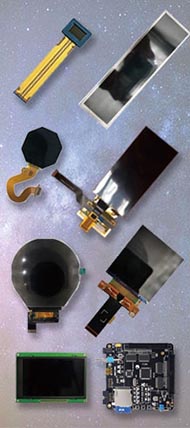







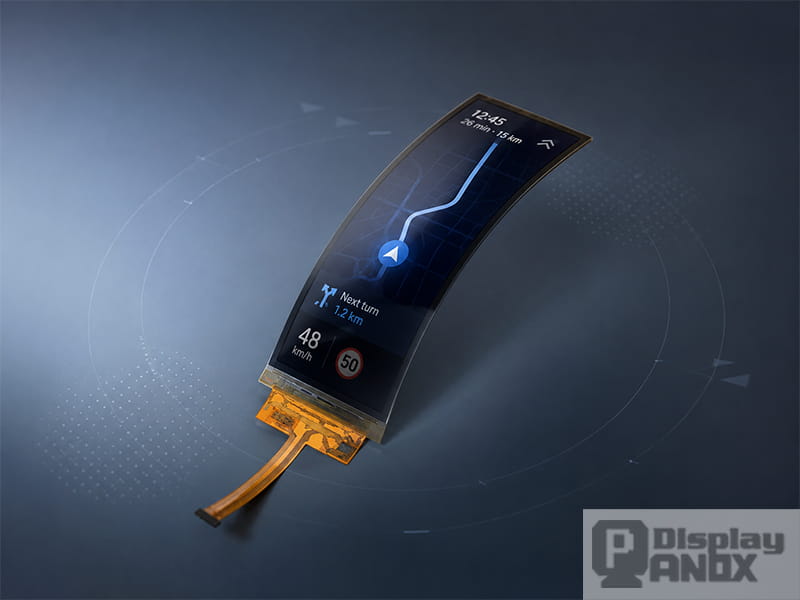
A long strip stretched display panel is a narrow, elongated display module designed for spaces where a conventional rectangular screen would waste area, block the product structure, or look visually out of place. In real products, you may see it called a long strip LCD, stretched LCD panel, bar type TFT LCD, stretched bar display, or ultra-wide display panel. The wording changes by supplier and application, but the idea is the same: the screen has a high aspect ratio and is used to show information across a slim horizontal or vertical area.
This format is increasingly common in vehicle dashboards, PC sub-displays, aviation panels, retail shelf-edge displays, smart home controls, public information systems, and embedded industrial products. Panox Display’s own Long Strip/Stretched category includes examples such as 2.99-inch, 6.8-inch, 7.84-inch, 8.8-inch, 14-inch and flexible OLED long-format panels, with resolutions ranging from compact 268 × 800 modules to 3840 × 1100 ultra-wide modules.
What makes a display “long strip” or “stretched”?
In most cases, a stretched display panel has an aspect ratio much wider or taller than the common 16:9, 16:10 or 4:3 formats. Some modules are around 3:1, while others are closer to 4:1 or even more elongated depending on the active area and resolution. For example, Panox’s 8.8-inch long strip LCD uses a 480 × 1920 pixel format and is described as a 1:4 active display area, while the 14-inch BOE-based long strip panel uses a 3840 × 1100 pixel array with an aspect ratio greater than 3:1.
The word “stretched” refers to the physical screen format. It does not mean that a normal 16:9 image should simply be stretched across the panel. For a professional product, the user interface should be designed around the native resolution. A vehicle route strip, a PC hardware monitor, a price promotion banner, or a slim status dashboard all work better when the content layout is made specifically for the panel’s active area.
How long strip display panels are built
Most long strip panels use TFT-LCD technology because it is mature, cost-effective and available in many sizes, interfaces and brightness levels. A TFT-LCD module usually consists of the LCD panel, thin-film transistor backplane, driver circuitry and a backlight system. The LCD itself controls light transmission, while the backlight provides illumination. Academic display literature describes active-matrix TFT addressing and modern LCD modes such as IPS and VA as important developments for higher-quality flat panel displays, especially where viewing angle and contrast matter.
IPS-type LCDs are especially useful for long strip displays because these panels may be installed above, below, or beside the viewer’s normal line of sight. A narrow display on a dashboard, shelf edge, or machine panel is often viewed from an angle, so stable color and contrast are more valuable than they may appear on a datasheet. Technical LCD references note that IPS and VA modes were developed to improve viewing angle performance in TFT LCDs, which is why these technologies remain common in modern display modules.
OLED is another option for certain long-format designs. Unlike LCD, OLED is emissive, so each pixel generates light without a separate backlight. A recent review in Light: Science & Applications summarizes LCD and OLED as two dominant flat panel display technologies and notes that LCDs require a backlight, while OLED technology has enabled thinner and more flexible form factors. For a long strip panel, OLED can be attractive when the design needs a thin profile, high contrast, fast response, or a gently curved/flexible screen. Panox’s 6.52-inch flexible OLED long-format panel, for example, supports 2520 × 840 resolution, a 3:1 aspect ratio, MIPI interface, in-cell touch and 90 Hz refresh rate.
Why engineers choose a long strip display
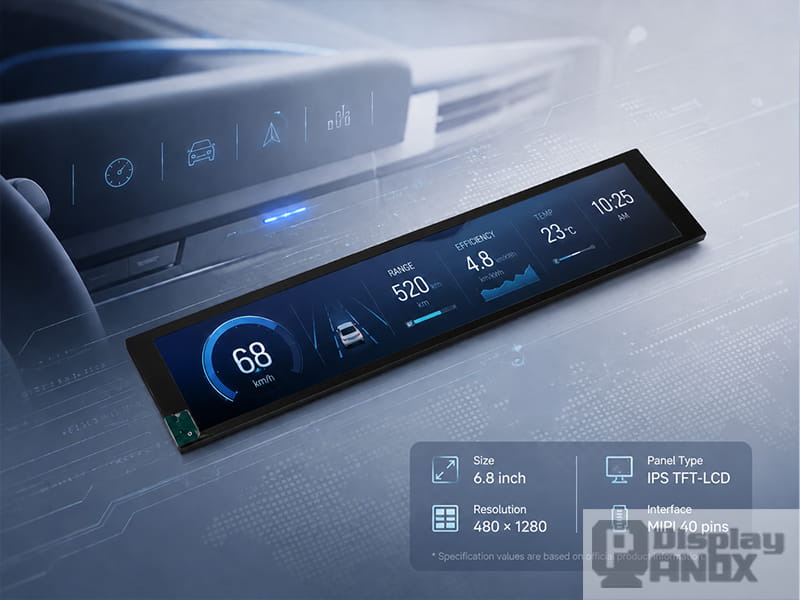
6.8 inch long strip LCD IPS TFT
The first reason is mechanical fit. Many products have a long narrow area where a standard display cannot be used efficiently: the space above a keyboard, inside a car dashboard, along a retail shelf edge, beside a control knob, or inside a slim handheld device. A long strip panel lets the designer use that area without making the whole product larger.
The second reason is information density. A stretched display is well suited to timelines, routes, sensor values, progress bars, menu categories, status indicators and scrolling messages. These content types are naturally linear. A narrow panel can show “just enough” information without forcing the user to look at a large screen.
The third reason is visual integration. A long strip screen can become part of the product’s industrial design. In a custom PC case, it can show CPU temperature, GPU load, FPS and memory usage. In a vehicle system, it can show camera status, air-conditioning information, navigation prompts, or warning messages. In a smart shelf, it can display pricing, promotions, QR codes and product information close to the actual product.
This last point is supported by broader digital signage research. ITU’s Technology Watch report describes digital signage as centrally managed digital displays used for targeted information, entertainment, merchandising and advertising, with content that can change through playlists, interaction, location data or environmental sensors. Retail studies also show that in-store digital displays can affect how customers process product messages and price promotions, especially when screen location and message relevance are planned carefully.
Common applications of long strip stretched display panels
Vehicle dashboards and rearview systems
Long strip LCDs are a natural fit for vehicle interiors because dashboards and mirror assemblies are already horizontal. Panox’s 6.8-inch long strip IPS TFT LCD is listed for AIDA64 display, rearview mirror, smart home, industrial device, security and dynamic information display applications. It uses 480 × 1280 resolution, MIPI interface and 550 cd/m² typical luminance, making it suitable for compact embedded systems where a taller-than-wide panel is needed.
For automotive or aviation-style panels, the display must be selected with more than resolution in mind. Engineers should also check operating temperature, vibration tolerance at system level, viewing angle, backlight life, connector reliability and whether the panel can be driven directly or requires an HDMI, Type-C, LVDS, eDP or MIPI controller board.
PC sub-displays and embedded dashboards
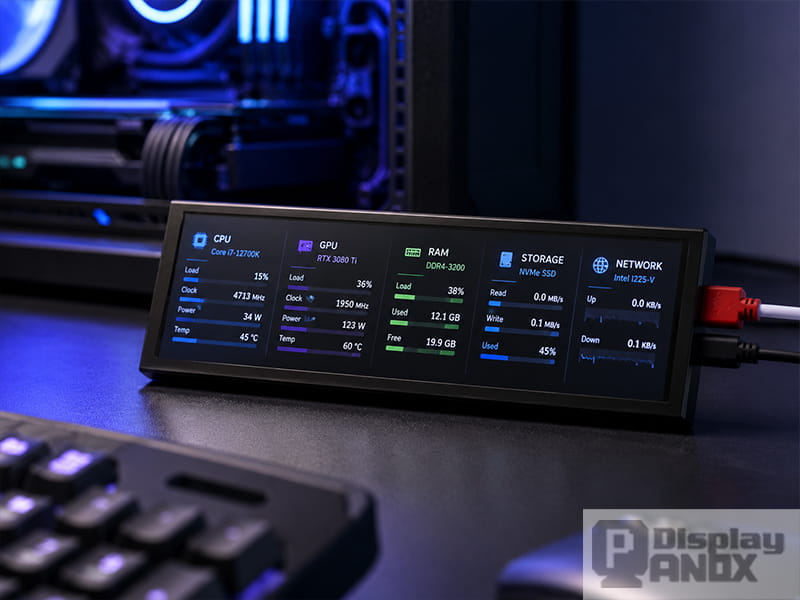
Long strip displays have become popular in custom PC builds because they fit neatly inside a case or below a main monitor. The screen can show AIDA64 dashboards, system temperatures, fan speed, GPU load, clock speed, memory usage or live status graphics. Panox’s 8.8-inch long strip LCD is specifically described as popular with PC gamers as a secondary display, and Panox also provides HDMI-to-MIPI DSI controller board support for that stretched bar LCD.
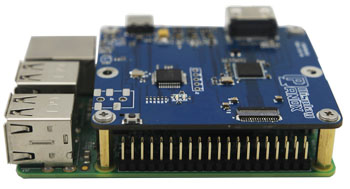
For this use case, the controller board matters as much as the panel. A beautiful panel is difficult to use if the system cannot output the correct timing, orientation or resolution. A ready-made HDMI controller board can shorten development time for PC, Raspberry Pi and media player projects.
Retail shelf-edge displays
Retail shelves are one of the clearest use cases for stretched displays. The shelf edge is long, narrow and close to the product, which makes it ideal for price labels, promotional banners, nutrition information, product comparisons and QR-based interaction. Compared with paper labels, screen-based shelf displays can update content more quickly and can carry motion, color and time-based campaigns.
The hardware requirement here is different from a PC sub-display. A retail shelf-edge panel may need higher brightness, anti-glare cover glass, reliable content playback, low heat, long operating hours and easy maintenance across many store locations. The content also needs careful design: large text, short messages and strong contrast usually work better than complex video.
Public transportation and wayfinding
Public information systems use displays to communicate timetables, routes, alerts and directions. ITU’s digital signage report lists traveller information at airports, pedestrian guidance in buildings and cafeteria menus as common scenarios for digital signage, which aligns closely with the way long strip screens are used in public spaces. In buses, metro cars, taxis and station interiors, a long strip display can show route progress, next-stop information and service messages without taking over the whole interior panel.
Key specifications to check before sourcing
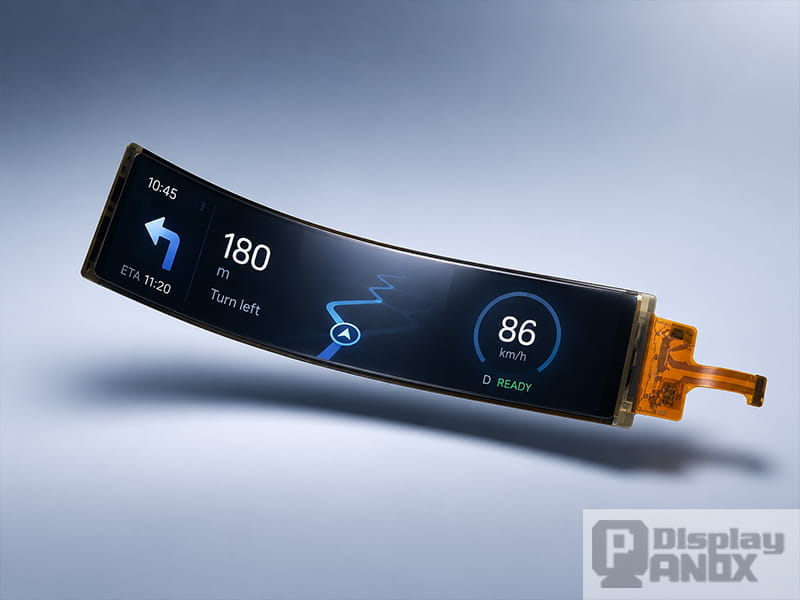
A stretched display panel should be chosen as an engineering component, not just as a screen size. The same diagonal size can behave very differently depending on resolution, interface, brightness, viewing angle and controller availability.
| Specification | Why it matters |
|---|---|
| Active area and outline size | Confirms whether the module physically fits the enclosure, bezel and mounting structure. |
| Native resolution | Determines UI layout, text clarity and whether the host system can output the required timing. |
| PPI | Important for close-viewing products such as scan pens, PC sub-displays and handheld devices. |
| Interface | MIPI is common in compact embedded systems; LVDS/eDP/HDMI may be easier for larger panels or PC-style input. |
| Brightness | Indoor dashboards may work at moderate brightness, while semi-outdoor or public-facing signage often needs higher luminance. |
| Viewing angle | Critical when the panel is installed above, below, or to the side of the viewer. |
| Operating temperature | Important for automotive, industrial, outdoor and transportation applications. |
| Touch integration | On-cell, in-cell or external PCAP touch should be selected early because it affects optical stack, cover glass and mechanical design. |
| Controller board support | A matching HDMI, Type-C, MIPI, LVDS or eDP board can reduce development risk. |
| Optical treatment | Anti-glare, anti-reflective coating and optical bonding can improve readability in bright environments. |
For measurement and comparison, display specifications should be handled consistently. The Society for Information Display’s International Committee for Display Metrology publishes the Information Display Measurements Standard, which includes around 140 display measurements and is intended to provide standard procedures for quantifying electronic display characteristics and qualities. In practical sourcing, this means brightness, contrast, response time and viewing angle should be compared under known test conditions instead of treated as isolated numbers.
Long strip display or Round Display: start with the product shape
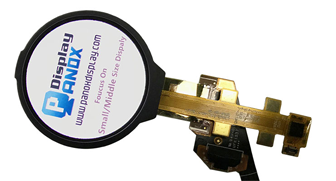
Long strip displays and Round Display modules are both part of the broader custom-shape display category, but they solve different design problems. A Round Display fits products built around a circular visual language: smartwatches, gauges, knobs, medical devices, compact smart home controllers and certain automotive interfaces. Panox’s Round Display category includes circular LCD, OLED, AMOLED and Memory LCD modules for applications such as smartwatches, medical devices, automotive displays and smart homes.
A long strip display is better when the enclosure is linear. It fits a shelf edge, dashboard, rack panel, mirror, keyboard area, industrial status bar, or slim embedded product. It gives the designer a wider canvas for sequences, labels, waveforms and scrolling data. In other words, the enclosure should lead the display choice. When the product face is circular, evaluate a Round Display. When the available area is narrow and elongated, a stretched display panel will usually feel more natural.
Cost and manufacturing should also be considered. Panox notes that round LCD/OLED modules can cost more because fewer circular displays can be cut from the same cell area and round LCD backlights are harder to produce. Long strip panels have their own challenges, especially around backlight uniformity, cutting yield, interface timing and cover glass design. Early communication with the supplier can prevent expensive redesigns later.
Panox Display options for long strip projects
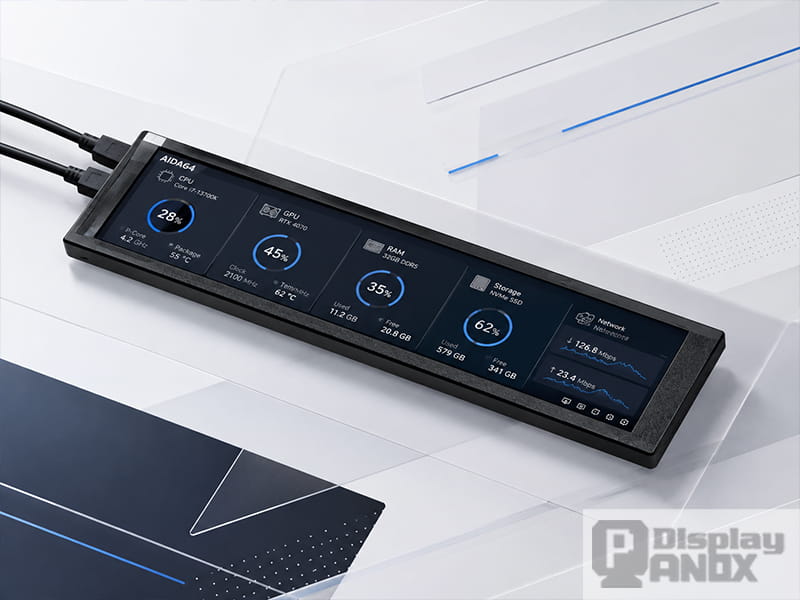
Panox Display focuses on small and medium OLED/LCD display panels and supplies multiple shapes, including rectangular, square, round/circular and long-strip displays. For long strip projects, several existing product directions are worth considering.
The 2.99-inch IPS LCD is designed for compact products such as dictionary pens and scan pens. It offers 268 × 800 resolution, 282 PPI and integrated on-cell touch, which makes it suitable for slim handheld devices that need a narrow vertical display.
The 7.84-inch long strip LCD uses a 400 × 1280 pixel format and is positioned for PC sub-screen, vehicle, car and stretched bar LCD applications. Panox also mentions HDMI-to-MIPI DSI controller board testing for this type of module, which can help developers connect the panel to common host systems.
The 8.8-inch long strip LCD uses a 480 × 1920 pixel format and is frequently used as a PC secondary display. It supports HDMI-to-MIPI DSI controller board integration and has become popular for AIDA64-style system monitoring.
The 14-inch long strip bar TFT LCD offers 3840 × 1100 resolution and 283 PPI. Panox lists it as a BOE-based TFT-LCD module with eDP signal interface, 60 Hz refresh rate, 16.7M colors, 72% NTSC color gamut and notebook touch bar long strip application.
For projects requiring thinner structure, high contrast or flexible integration, the 6.52-inch flexible OLED long-format module provides a 3:1 aspect ratio, 2520 × 840 resolution, 407 PPI, MIPI interface, 90 Hz refresh rate and in-cell touch.
Integration tips before mass production
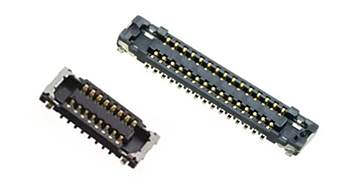
A long strip display project usually goes through fewer surprises when the display, cover lens, touch panel, FPC position and driver board are considered together. The panel outline should be checked against the enclosure, screw posts, cable route and viewing window. The active area should be aligned with the UI from the beginning so text is not cut off near the edges.
The interface also deserves early attention. MIPI DSI is widely used for compact display modules because it defines a high-speed serial interface between a host processor and a display module, reducing pin count while supporting high performance and low EMI. MIPI notes that DSI is used in smartphones, tablets, laptops, automotive dashboard displays, wearables, IoT and VR/AR applications. For a developer who wants a simple video input, however, HDMI or Type-C through a controller board may be easier than driving raw MIPI directly.
Thermal design is another practical issue. Long narrow modules can concentrate heat along a limited area, especially with high-brightness backlights or enclosed housings. For public display and vehicle applications, engineers should evaluate backlight life, temperature rise, brightness decay and readability after cover glass or touch integration.
FAQs:
Is a long strip display the same as a stretched monitor?
A long strip display panel is the module itself. A stretched monitor is a finished product that usually includes the panel, housing, controller board, power input and video input. If you are building an embedded product, you may need only the panel and controller board. If you are installing digital signage, a finished stretched monitor may be more convenient.
Can a long strip LCD be connected to Raspberry Pi or a PC?
Yes, but the connection method depends on the panel interface. Some panels use MIPI and need a compatible host or HDMI-to-MIPI controller board. Others may support LVDS, eDP or HDMI through a board. Panox provides controller/driver board options for video inputs such as VGA, HDMI, DVI, DP, Type-C, MIPI, RGB, LVDS and eDP, depending on the project.
Is LCD or OLED better for a stretched display?
LCD is usually the first choice for cost-sensitive, high-availability and high-brightness applications. OLED is attractive for thin, high-contrast, fast-response or flexible designs. The better choice depends on brightness, lifetime, power, operating temperature, mechanical structure and budget.
Do long strip displays support touch?
Some do. Touch can be integrated as on-cell, in-cell or external PCAP depending on the panel. The 2.99-inch Panox long strip IPS LCD has integrated on-cell touch, while the 6.52-inch flexible OLED long-format panel uses in-cell touch.
What should I send to a display supplier for matching?
Send the target screen size, active area, resolution, interface preference, brightness requirement, operating temperature, touch requirement, cover glass drawing, expected order volume and application environment. If the product already has an enclosure, include mechanical drawings and photos. This allows the supplier to recommend an existing long strip display or evaluate customization.